“There is a certain freedom in being a nobody. A freedom to observe, to learn, to grow, without the burden of expectation.”
— Flavia reflects on her status within the world and her family.

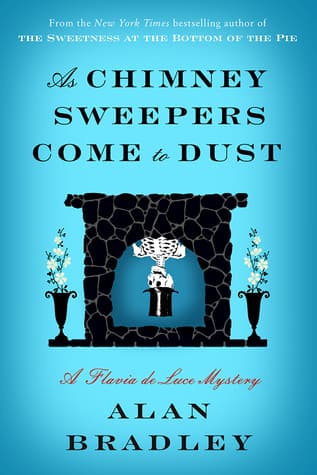
Alan Bradley (2015)
Genre
Historical Fiction / Mystery / Young Adult
Reading Time
450 min
Key Themes
See below
Sign in to track this book
Twelve-year-old amateur chemist Flavia de Luce is sent to a Canadian boarding school, where a mummified body falls from a chimney, pulling her into a mystery of disappearances and ghostly rumors.
Twelve-year-old Flavia de Luce is sent by her father and Aunt Felicity to Miss Bodycote's Female Academy in Canada, her deceased mother Harriet's old boarding school. Upon arrival, Flavia gets a room with a broken fireplace. Early on her first morning, a charred, mummified body falls down the chimney into her room. Instead of fear, Flavia's scientific curiosity takes over. She immediately starts examining the remains, noting details about its condition and possible identity, even before police arrive. This grim discovery changes her reluctant stay at the school into a complex mystery.
Flavia quickly learns Miss Bodycote's strict rules and social structure. Headmistress Miss Bodycote is stern, and the faculty includes unusual people, notably Miss Mountjoy, a history teacher rumored to be an acquitted murderess. Flavia makes friends, like the shy Poppy, and clashes with others, like the dominant Cordelia. While in classes, Flavia secretly continues her investigation into the body, which she deduces is a young woman based on its size and clothing fragments. She collects samples, makes observations, and tries to identify the victim and how she died, all while trying to avoid being caught by the staff.
As Flavia investigates, she uncovers unsettling rumors among students and staff. The school is said to be haunted by a former student's ghost, and there are whispers of several girls disappearing from Miss Bodycote's over the years. These stories make Flavia suspect the mummified body is not an isolated event but linked to a darker history within the school. She starts connecting the victim to past disappearances, seeing a pattern rather than coincidence, and questions the official stories from the headmistress and teachers.
Through careful investigation, including looking at old school records, yearbooks, and talking to older staff, Flavia identifies the mummified body as Ursula Monkton, a former student who disappeared decades ago. Ursula was known for being rebellious and for her interest in a secret society at the school. This identification gives Flavia a clearer timeline and a starting point for exploring Ursula's life and her connection to Miss Bodycote's. The discovery of Ursula's identity deepens the mystery, suggesting a long-held secret the school has tried to hide.
Flavia learns about the 'Order of the Golden Lily,' a secret society formed by students, including her mother, Harriet, and Ursula, which met in hidden passages and rooms within the school. She also uncovers the tragic history of a devastating fire at the school years ago, killing several students and a teacher. The fire and the secret society seem connected, with the fire possibly covering up something worse. Flavia realizes the school's history is more complex and dangerous than anyone lets on, and the secrets are still present.
Just as Flavia feels she is making progress, another body is found, this time in the school's chapel. This second victim is a current student, increasing the danger and confirming Flavia's fears that the killer is still active. The discovery causes panic at the school and forces local police, led by Inspector Twigg, to take the investigation more seriously. Flavia finds the official investigation too slow, pushing her to intensify her own secret efforts, believing she is closer to the truth than the adults.
Flavia carefully investigates the historical fire, examining old blueprints, interviewing former staff, and conducting small chemical experiments. She discovers the fire was not an accident but deliberately set to cover up a worse crime: the murder of a pregnant student and the theft of her baby. The fire, then, was a calculated act to eliminate witnesses and evidence. This revelation turns the cold case into a chilling story of betrayal and infanticide, with broad implications for the current murders.
Through chemical analysis, deduction, and piecing together fragmented testimonies and historical records, Flavia identifies the killer as Miss Mountjoy, the history teacher. Miss Mountjoy, driven by a twisted loyalty and a need to protect a secret, had been involved in the original cover-up of the pregnant student's murder and the baby's disappearance. She also murdered Ursula to silence her and later killed the current student who had found the truth.
Flavia confronts Miss Mountjoy, presenting her with the evidence she has gathered. In a tense meeting, Miss Mountjoy confesses, revealing the full extent of the conspiracy, including the pregnant student's identity, the child's father, and how the baby was given away. The truth behind the fire, Ursula's murder, and the recent killing is finally revealed. Inspector Twigg and the authorities arrive, arresting Miss Mountjoy and closing the case that has haunted Miss Bodycote's for decades. Flavia, though relieved, carries the weight of the grim truths she has uncovered.
With the mystery solved, Flavia reflects on her mother Harriet's time at Miss Bodycote's and the secrets she kept. She understands her mother better, beyond the idealized image she held. The experience at the boarding school, initially a punishment, sharpens Flavia's detective skills and confirms her identity as a budding forensic chemist. Her banishment ends, and she prepares to return home, changed by the grim discoveries and insights into human nature she gained in Canada.
The Protagonist
Flavia deepens her understanding of her deceased mother's past and further hones her investigative skills, solidifying her identity as a formidable sleuth.
The Supporting
Her facade of control is slowly eroded as the school's dark past comes to light, forcing her to confront the secrets she has tried to uphold.
The Antagonist
Revealed to be the primary antagonist, her carefully constructed life unravels as Flavia exposes her involvement in multiple murders and a decades-old cover-up.
The Supporting/Victim
Her unresolved past and murder become the central mystery, ultimately bringing to light long-buried truths about the school.
The Mentioned
Her character is revealed through flashbacks and the testimonies of others, providing Flavia with a deeper understanding of her mother.
The Supporting
Initially skeptical, he slowly comes to acknowledge Flavia's investigative prowess, albeit reluctantly.
The Supporting
Through her interactions with Flavia, she gains a small measure of courage and becomes more involved in the unfolding mystery.
The novel explores how past events, especially those hidden, affect the present. The old fire, the disappearances, and the school's hidden secrets directly lead to the current murders. Flavia's investigation constantly uncovers history, showing that truth, no matter how buried, will eventually emerge. The mummified body in the chimney literally shows the past refusing to stay hidden, demanding justice.
““The past is never dead. It’s not even past.””
Miss Bodycote's Academy is full of secrets, both personal and institutional. From the headmistress trying to protect the school's reputation by hiding tragedies, to individual staff members keeping dark truths, deception is common. The secret society, the 'Order of the Golden Lily,' relies on hidden knowledge. Flavia's role is to uncover these layers of deceit, revealing the web of lies that protected a killer for decades. The entire plot comes from unraveling these closely guarded secrets.
““A secret, like a poison, will always find a way to make itself known.””
Justice is a main theme, particularly the difference between official justice and an amateur's pursuit of truth. Inspector Twigg represents the formal, often slow legal system, while Flavia represents a personal, relentless search for moral justice. The novel questions if true justice can happen when institutions hide the truth, and it supports the idea that finding the full story, over time, is a form of justice. Flavia's determination comes from a strong belief that the dead deserve their stories told.
““Justice, I thought, was not merely about punishment, but about the telling of a full and honest tale.””
Beyond the mystery, the novel explores Flavia's personal growth and her changing understanding of herself and her family. Being sent to her mother's old school makes Flavia confront Harriet's past, giving her insights into her mother's character beyond the idealized image she had. This journey of discovery helps Flavia understand her own developing identity as a chemist and detective. The challenges she faces at the boarding school, both social and investigative, contribute to her maturity and confirm her unique place in the world.
““Perhaps, I thought, I was not merely solving a murder, but also piecing together the ghost of my own mother.””
Misleading clues or suspects that divert the reader's attention from the true perpetrator.
The novel employs several red herrings to deepen the mystery. The rumors surrounding Miss Mountjoy's past as an 'acquitted murderess' initially point to her as a prime suspect for the current crimes, drawing focus away from the deeper, historical conspiracy she is truly involved in. Similarly, the general air of secrecy and the strict, almost oppressive, atmosphere of Miss Bodycote's lead to suspicions about various staff members and students who ultimately prove innocent of the main crimes, keeping the reader guessing about the true villain.
Hints or clues about future events or developments in the plot.
Foreshadowing is used throughout the narrative to build suspense and hint at the dark history of the school. The initial discovery of the mummified body itself foreshadows the deep-seated secrets and past crimes that Flavia will uncover. Whispers among the students about ghosts and disappearances, and the unsettling atmosphere of certain parts of the school, all subtly hint at the tragic events and the long-held conspiracy that forms the core of the mystery. Flavia's initial discomfort with her room also subtly foreshadows the grim discovery awaiting her.
A mystery where the suspects are limited to a small, isolated group of people.
Miss Bodycote's Female Academy serves as a classic closed circle setting. Once Flavia arrives, the entire cast of potential suspects—students, teachers, and staff—is contained within the isolated boarding school grounds. This confinement creates a heightened sense of tension and suspicion, as the killer must be one of the seemingly ordinary individuals Flavia interacts with daily. The limited pool of suspects allows for a more focused character study and deepens the psychological aspect of the investigation, as everyone is under scrutiny.
Flavia's unusually advanced scientific knowledge and forensic skills for her age and era.
While not a traditional plot device in terms of narrative structure, Flavia's character itself acts as a deliberate anachronism that drives the plot. Her sophisticated understanding of chemistry, poisons, and forensic science is far beyond what would be expected of a twelve-year-old in the 1950s. This extraordinary intellect and skill set allow her to perform deductions and experiments that would be impossible for other characters, effectively serving as the primary engine for solving the complex scientific aspects of the murders and uncovering clues that adults overlook.
“There is a certain freedom in being a nobody. A freedom to observe, to learn, to grow, without the burden of expectation.”
— Flavia reflects on her status within the world and her family.
“Grown-ups are always telling you to be careful, but they're the ones who are always tripping over themselves.”
— Flavia's internal monologue about adult hypocrisy.
“The world is full of interesting things, if only you bother to look for them.”
— Flavia's general philosophy on life and discovery.
“Science, after all, is just a fancy word for curiosity.”
— Flavia's simple definition of her passion.
“Even the most ordinary things can be extraordinary if you look at them with the right eyes.”
— Flavia's perspective on finding wonder in everyday life.
“A good chemist always leaves a clean lab. A good detective always leaves a clean crime scene.”
— Flavia connects her two passions.
“Sometimes the most dangerous things are the ones that appear the most harmless.”
— Flavia's realization about deception.
“Books are like friends. You don't have to talk to them, but you know they're there, and they're full of secrets.”
— Flavia's affection for books.
“It's amazing what you can learn about people by what they leave behind.”
— Flavia's investigative approach.
“Fear is a funny thing. It can make you do the most stupid things, or the most brilliant.”
— Flavia considers the impact of fear.
“The truth, like a good chemical reaction, often takes time to reveal itself.”
— Flavia's patience in solving mysteries.
“There's nothing quite so satisfying as proving a grown-up wrong.”
— Flavia's mischievous side.
“A good mystery is like a puzzle, and I, Flavia de Luce, am rather good at puzzles.”
— Flavia's confidence in her abilities.
“Even in the darkest of places, there's always a little light to be found, if you know where to look.”
— Flavia's optimistic outlook despite grim circumstances.
Ready to see how well you understood this book? Take our interactive quiz with 10 questions.

Alan Bradley is the award-winning author of the beloved Flavia de Luce mystery series, which includes "The Sweetness at the Bottom of the Pie" and "Speaking from Among the Bones." His novels are celebrated for their witty protagonist, intricate plotting, and charming evocation of 1950s England. Bradley's work has garnered critical acclaim and a devoted international readership.