“Sometimes the things we fear most are the things we need most.”
— Aru reflecting on her journey and challenges.

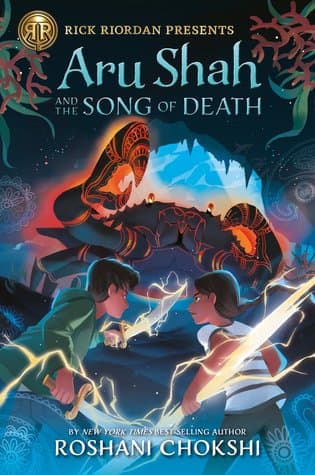
Roshani Chokshi (2019)
Genre
Fantasy / Children's / Young Adult
Reading Time
240 min
Key Themes
See below
Sign in to track this book
Framed for stealing Kamadeva's bow and unleashing zombies, Aru Shah and her friends must navigate a serpent realm and battle enemies to clear her name before she is banished from the Otherworld.
The story begins with Aru Shah's class performing a play about the Pandavas. It turns chaotic when Aru, playing Arjuna, accidentally sets off a magical projectile. After this, Kama, the god of love, reports his celestial bow and arrow, the Gandiva and Pushpaban, have been stolen. Aru, Mini, Brynne, and Aiden attend a Council of Guardians meeting where the theft is discussed. Suspicion falls on Aru, mainly because she has a history of accidentally unleashing powerful magical artifacts. The gods, including Yama, give Aru a deadline: retrieve the weapons by the next full moon, or face permanent exile from the Otherworld. This starts Aru and her friends' urgent quest.
Aru, Mini, Brynne, and Aiden start their investigation by visiting the museum where the Gandiva and Pushpaban were last seen. They find a scent of 'pine and jasmine' and a strange symbol left by the thief. Their mentor, Boo, identifies the symbol as belonging to the Naga, the serpent people, suggesting the thief went to their underwater realm, Patala. To enter, they need a special pearl. Mini's memory recalls a museum exhibit about a Naga pearl, leading them on a journey into the shimmering, aquatic world of Patala. This journey is visually stunning but also dangerous.
In Patala, the group meets the Naga Queen, who is initially suspicious. They learn the stolen arrow, the Pushpaban, can turn its victims into 'heartless' beings, without emotion and driven by a single purpose. They see this effect as some Naga citizens turn into aggressive, zombie-like creatures. During their time in Patala, Brynne reveals her connection to the Naga realm, hinting at her heritage. Aiden's quick thinking and strategy help them navigate the social dynamics and avoid confrontation with the agitated Naga guards, while Mini's history knowledge helps them interpret ancient prophecies.
Brynne tells Aru, Mini, and Aiden her true identity: she is a Naga princess. She had kept this secret to protect herself and her family. This explains her knowledge of Patala and her ability to communicate with its inhabitants. They also learn about the Pushpaban's properties. While Kama uses it to inspire love, in the wrong hands, it can amplify negative emotions or strip victims of their hearts, turning them into compliant, emotionless drones. The thief is not just stealing the arrow; they are using its power to create an army. This understanding increases the urgency of their quest, as the implications of such an army are serious for both the Otherworld and the mortal realm.
After their adventures in Patala, the group realizes only the Pushpaban, the arrow, was used to create the heartless beings. The Gandiva, the bow, is still missing. They deduce the thief separated the weapons, likely to prevent Kama from easily reclaiming them or to use their powers independently. A new clue emerges, leading them to believe the Gandiva might be hidden in a celestial armory, a place not easily accessible to mortals or or even many gods. This makes them rethink their strategy, as they now have two separate retrieval missions. Aiden's technological skills and knowledge of ancient architecture become important in deciphering the next location, which is guarded by powerful wards.
The quartet finds the celestial armory, a heavily guarded vault with ancient weapons and magical artifacts. To retrieve the Gandiva, they must face a guardian, a powerful celestial being protecting the armory. The guardian tests their resolve and worthiness. Aru, Mini, Brynne, and Aiden must work together, combining their strengths and intellect to outsmart the guardian. Aru's quick thinking and empathy are key to this challenge, showing her growth as a leader. They secure the Gandiva, but the thief's identity and the Pushpaban's location remain unknown.
As the full moon nears, the group puts together the remaining clues. They realize the scent of pine and jasmine, first thought to be minor, is a crucial identifier. This scent is unique to a specific celestial being. The thief is Uloopi, a powerful Naga once thought to be an ally. Uloopi, wanting revenge against the gods and believing she can create a better world by stripping beings of their emotions, has been manipulating events. Her motives are complex, rooted in ancient grievances and a distorted sense of justice, making her a formidable and tragic antagonist.
Aru and her friends confront Uloopi, who has gathered an army of 'heartless' beings using the Pushpaban. Uloopi reveals her plan: to use the arrow to amplify a destructive 'Song of Death,' which will strip all beings of their emotions, creating a world free from pain and conflict. This 'song' is not literal music but a magical resonance from the Pushpaban, designed to spread its heart-stripping effect. The confrontation is tense, as Uloopi's power and her emotionless soldiers pose a significant threat. The stakes are incredibly high, with the emotional landscape of the entire Otherworld hanging in the balance.
Facing Uloopi's 'Song of Death,' Aru, Mini, Brynne, and Aiden realize that conventional attacks are useless against an army that feels no pain. Instead, they must find a way to counter the Pushpaban's emotional stripping. Aru, with the Gandiva, uses her connection to the celestial weapon and her understanding of love and empathy to create a counter-force. Mini's intelligence, Brynne's strength, and Aiden's strategic mind work together. They realize that true love, in all its forms—familial, platonic, and self-love—is the only antidote to Uloopi's emotionless world. Their combined strength and their bond become their greatest weapon.
Through Aru's ability to channel the Gandiva's power, Mini's quick thinking, Brynne's resilience, and Aiden's tactical guidance, they disrupt Uloopi's 'Song of Death.' The heartless beings begin to regain their emotions. Aru confronts Uloopi directly, not with anger, but with understanding, recognizing the pain that drove her actions. They separate Uloopi from the Pushpaban, breaking her control. Uloopi is defeated, but not without revealing her suffering. The celestial weapons are returned to Kama, and the Otherworld is saved from emotional desolation. The Council of Guardians, impressed by Aru's actions, clears her name.
With the crisis over, Aru, Mini, Brynne, and Aiden return to the mortal world, their bonds strengthened. Aru's reputation among the gods is restored, and she understands her powers and responsibilities as a Pandava. Brynne embraces her Naga heritage, finding a balance between her two worlds. Aiden's mysterious past continues to intrigue Aru, hinting at future revelations. The experience leaves them all more mature and prepared for future challenges. The Otherworld is safe for now, but the events have shown them that even allies can become enemies, and that the line between good and evil is often blurred by pain and perceived injustice, leaving them wiser for their next adventure.
The Protagonist
Aru grows from a self-doubting, accident-prone demigod into a more confident leader who embraces her unique strengths and the power of empathy.
The Supporting
Mini learns to overcome some of her anxieties and trust her instincts, becoming more courageous in the face of danger.
The Supporting
Brynne embraces her true identity as a Naga princess, learning to trust her friends with her secrets and finding strength in her dual heritage.
The Supporting
Aiden slowly begins to open up to his friends, demonstrating his loyalty and revealing glimpses of his hidden abilities and past.
The Antagonist
Uloopi descends into villainy through her grief and desire for control, ultimately being defeated but her underlying pain being recognized.
The Supporting
Kama's role is largely static, serving as the victim whose loss initiates the quest and whose powers are restored by the protagonists.
The Supporting
Boo continues to guide and support Aru, growing in his trust of her abilities as she matures.
The Mentioned
Yama's character remains consistent as a symbol of cosmic law and order.
The central conflict is the theft of Kama's bow and arrow, weapons of love, and their misuse to strip beings of emotion. Uloopi believes that by removing emotions, she can create a world free from pain. However, the story shows that true strength and connection come from embracing all emotions, including vulnerability and sorrow. The 'Song of Death' represents an emotionless existence, while Aru and her friends' bond, fueled by their care for each other, is the antidote. This theme is clear when they realize that love, in all its forms, is the only way to counter the arrow's destructive power, helping the heartless beings regain their emotions through empathy and connection.
““Love wasn't just about hearts and flowers. It was about connection, about seeing someone, truly seeing them, and choosing to hold onto that even when it hurt.””
Each main character struggles with their identity. Aru struggles with being a clumsy demigod who keeps getting into trouble, feeling pressure to live up to the Pandava legacy. Brynne hides her identity as a Naga princess due to past trauma and societal expectations, fearing rejection. Mini battles her anxieties and hypochondria, often feeling inadequate despite her intelligence. Aiden also has a mysterious past he keeps secret. Their journey forces them to confront these hidden aspects, leading to self-acceptance. Brynne's confession to her friends and their acceptance of her Naga heritage is a key moment in this theme.
““Being a hero wasn't about being perfect. It was about trying, even when you were messy and scared and totally imperfect.””
The bond between Aru, Mini, Brynne, and Aiden is the emotional core of the story. Despite their quirks, fears, and secrets, their loyalty to each other is strong. They are chosen family, relying on each other's strengths to overcome obstacles. Mini's intelligence, Brynne's strength, Aiden's strategy, and Aru's empathy create a strong team. The story emphasizes that their collective strength, from their deep friendship and mutual support, is greater than any individual power. This is especially clear in their final confrontation with Uloopi, where their combined efforts and emotional connection are key to victory, showing that true family extends beyond blood.
““They were a mismatched puzzle, but somehow, they fit perfectly together. And that, Aru realized, was its own kind of magic.””
Uloopi's motivation comes from a desire for revenge against the gods and a misguided belief that she can create a better, more peaceful world by stripping beings of their emotions. Her actions, though rooted in past suffering, lead to destructive consequences, showing the dangers of allowing pain to become a desire for control and retribution. The story explores how even good intentions can be corrupted by unhealed wounds. Uloopi's tragic backstory reveals that her villainy comes from a deep sense of injustice, making her a sympathetic antagonist whose actions threaten existence, showing that peace cannot be forced through emotional suppression.
““Sometimes, the greatest monsters weren't born of evil, but of broken hearts and a twisted idea of justice.””
Kama's stolen bow and arrow, the Gandiva and Pushpaban.
Kama's celestial bow and arrow serve as the primary MacGuffin of the story. Their theft and the subsequent misuse of the Pushpaban (the arrow) to create heartless beings drive the entire plot. The retrieval of these weapons is the central goal that propels Aru and her friends on their quest through various realms. While the weapons themselves possess immense power, their main function is to motivate the characters, provide a clear objective, and facilitate their journey of self-discovery and teamwork. The specific properties of the Pushpaban also introduce the core thematic conflict regarding emotions.
The deadline of the next full moon for Aru to retrieve the weapons.
The Council of Guardians imposes a strict deadline on Aru: she must retrieve Kama's stolen weapons by the next full moon, or face permanent exile from the Otherworld. This 'ticking clock' device creates immediate urgency and suspense throughout the narrative. It forces the characters to act quickly, make difficult decisions, and constantly pushes the plot forward. The approaching full moon adds a layer of tension to every challenge they face, reminding both the characters and the reader of the high stakes involved in their mission and the personal cost of failure for Aru.
The Gandiva's power to counter the 'Song of Death' through Aru's connection.
While the Gandiva, once retrieved, possesses the power to counter the Pushpaban's 'Song of Death,' it is not a true Deus ex Machina. Its power is not arbitrarily introduced; rather, it requires Aru's developing connection to her divine heritage, her growing understanding of love and empathy, and the combined efforts of her friends to activate and wield effectively. It represents the culmination of Aru's character arc and the power of their collective bond, rather than a sudden, unearned solution. The weapon's true potential is unlocked through the protagonists' growth and understanding, making it a tool of their agency, not a magical quick fix.
Brynne's secret as a Naga princess and Aiden's mysterious background.
The device of hidden identity is used prominently through Brynne and Aiden. Brynne initially conceals her true nature as a Naga princess, a secret that is gradually revealed and has significant implications for their journey through Patala and their understanding of Uloopi's motives. Aiden, too, maintains a mysterious aura, hinting at a powerful and complex background that is not fully revealed in this book, but adds intrigue and foreshadowing for future installments. These hidden identities create suspense, provide unexpected plot twists, and allow for character development as they grapple with revealing or maintaining their secrets.
“Sometimes the things we fear most are the things we need most.”
— Aru reflecting on her journey and challenges.
“Courage isn't the absence of fear, it's doing what needs to be done despite it.”
— A wisdom imparted during a moment of doubt.
“Stories are like rivers. They flow, they change, but their source remains the same.”
— Bhoots and stories are discussed.
“The greatest treasures are not always gold and jewels, but the knowledge and love we share.”
— Aru and her friends discovering the true value of their quest.
“You can't outrun your destiny, but you can choose how you face it.”
— A character reflecting on their predetermined path.
“Even the smallest light can banish the deepest shadows.”
— A metaphor used to encourage hope in a dark situation.
“It's hard to be brave when you're also trying to be smart.”
— Aru musing about the challenges of leadership.
“Family isn't just about blood; it's about who stands by you when the world crumbles.”
— Aru realizing the depth of her bond with her friends.
“Sometimes the only way to find your way is to get a little lost.”
— A character offering guidance to Aru.
“A true hero doesn't seek glory, but strives to protect those who cannot protect themselves.”
— A lesson learned about heroism.
“The past is a tricky thing. It can haunt you, or it can teach you.”
— A character reflecting on past mistakes and their impact.
“Magic isn't just about spells and power; it's about believing in the impossible.”
— A discussion about the nature of magic in their world.
“Even the strongest walls can be brought down by a single, persistent whisper.”
— A metaphor for the power of truth and determination.
“The world is full of wonders, if only you bother to look beyond the ordinary.”
— Aru's growing appreciation for the hidden magical world.
Ready to see how well you understood this book? Take our interactive quiz with 10 questions.

Biography coming soon.







