“The boy was a genius, an evil genius, perhaps, but a genius nonetheless.”
— Describing Artemis Fowl's intellect and moral ambiguity.

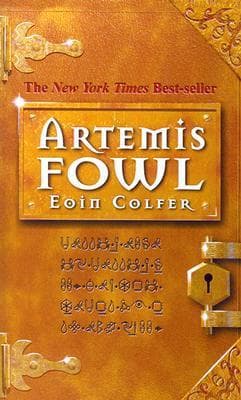
Eoin Colfer (2001)
Genre
Fantasy / Children's / Science Fiction / Young Adult
Reading Time
396 min
Key Themes
See below
Sign in to track this book
A preteen criminal mastermind kidnaps a heavily armed fairy, unwittingly igniting a high-tech magical war beneath the surface of the Earth.
Twelve-year-old criminal Artemis Fowl II, with his bodyguard Butler, travels to Ho Chi Minh City, Vietnam. There, he deciphers an ancient copy of 'The Book of the People' (the fairy bible) he got from a sprite. The book reveals an advanced fairy civilization living underground, with its own gold currency. Artemis wants to restore his family's fortune and reputation after his father disappeared. He plans to kidnap a fairy and ransom them for gold, believing this will solve his financial problems and prove his intelligence.
Captain Holly Short, an elf officer in the LEPrecon unit, is on patrol investigating a troll in Italy. After stopping the troll, she feels a strange pull to the surface, which is unusual for a fairy. She ignores rules and goes to the surface to recharge her magic under a full moon. This is a mistake, as Artemis Fowl has set a trap. Butler tranquilizes her, and she is taken to Fowl Manor in Ireland. She becomes Artemis's captive and the center of his ransom scheme.
When Commander Julius Root, head of LEPrecon, learns of Holly's capture, he gathers his forces. He starts a time-stop, a magical field that freezes time for all humans outside Fowl Manor. This allows fairies to operate unseen. Root, with reconnaissance specialist Foaly, tries to talk to Artemis. Artemis is a strong opponent, demanding a ton of 24-karat gold for Holly's safe return. He shows his knowledge of fairy technology and magic, surprising the LEP with his preparation and intelligence.
Foaly, the centaur technical expert of the LEP, uses his gadgets to get information on Fowl Manor. He sends a goblin squad to infiltrate, but Artemis uses sound-activated traps and clever methods to stop them. The goblins are easily defeated, showing Artemis's foresight and the manor's strong defenses. This failure makes the LEP rethink their direct attack and recognize the challenge Artemis presents.
While the time-stop is active, Mulch Diggums, a dwarf who steals things, is forced by the LEP to tunnel into Fowl Manor. During his infiltration, a troll, previously fought by Holly, is accidentally let into the manor by the LEP. The troll causes chaos, injuring Butler and threatening Juliet, Artemis's younger sister. Unexpectedly, Artemis releases Holly, and they fight the troll together. Holly defeats it. This shared experience creates a grudging respect and a temporary alliance between the captor and the captive.
Artemis has proven his abilities and protected Holly. He successfully negotiates the ransom. The LEP delivers a large pile of gold to Fowl Manor. However, Commander Root and Foaly do not intend for Artemis to keep the gold. They plan to use a 'blue-rinse' bio-bomb, a powerful magical device that destroys organic matter, to kill Artemis and his household and then get the gold back. They are sure no human can survive the blast, again underestimating Artemis's cleverness.
Mulch Diggums, after his failed tunneling mission and seeing the troll attack, escapes Fowl Manor through the plumbing. The LEP captures him. They are first doubtful of his claims about Artemis's preparations. However, Mulch gives important information about the manor's layout, defenses, and, most importantly, Artemis's plans, including his knowledge of the bio-bomb. This information forces the LEP to rethink their plan and recognize Artemis's intelligence.
The fairy book had warned Artemis about the bio-bomb, so he plans a daring counter-move. He plans to escape the time-stop by following Holly's advice to 'go with the flow' of time. He tells Butler to give a strong sleeping draught to everyone in the manor, including himself and Holly. Just before the bio-bomb goes off, he makes a wish for his mother's health, a human custom that fairies must grant. This allows him to briefly enter the fairy dimension, effectively resetting his position in time and letting him survive the blast with the gold.
Artemis, Butler, Juliet, and Angeline Fowl wake up after the bio-bomb has gone off, seemingly unharmed. The manor is fine, and the gold is still there. However, Artemis finds he has only kept half of the gold. The fairies, using some magic, have gotten the other half back. Still, Artemis has a significant fortune, enough to start rebuilding the Fowl family's wealth. He outsmarted the fairies, but not completely, setting the stage for future meetings.
When he wakes up, Artemis finds his mother, Angeline Fowl, completely recovered from her long mental illness. He realizes that his wish, granted by Holly, cured her. The encounter with the fairies has changed Artemis. He feels a strange connection to the fairy world and even shows a hint of magic himself, a slight glow in his eyes. The book ends with Artemis having met his immediate goals, but it clearly indicates that his interactions with the magical Lower Elements are not over, suggesting more adventures.
The Protagonist
Artemis begins as a ruthless, self-serving genius but develops a grudging respect for Holly Short and the fairy world, showing nascent signs of empathy and even a hint of magical ability.
The Protagonist/Antagonist
Holly starts as a dedicated officer whose capture challenges her resolve, leading her to form an unlikely, albeit temporary, alliance with Artemis and gain a deeper understanding of human ingenuity.
The Supporting
Butler remains steadfast in his loyalty and duty throughout the story, showcasing his unwavering commitment to protecting Artemis.
The Supporting
Root struggles to comprehend and counter Artemis's human brilliance, forcing him to confront the limitations of traditional fairy tactics.
The Supporting
Foaly's technological prowess is constantly challenged by Artemis's human ingenuity, pushing him to develop new countermeasures and adapt his strategies.
The Supporting
Mulch, a criminal, unwillingly becomes an informant for the LEP, aiding their efforts despite his self-interest.
The Supporting
Angeline begins the story in a fragile mental state and is miraculously cured at the end, fulfilling Artemis's primary objective.
The Supporting
Juliet showcases her surprising strength and loyalty during the crisis, demonstrating her readiness to defend her family.
The Mentioned
Artemis Fowl I's absence serves as the primary catalyst for the plot, with his fate remaining a mystery by the end of the book.
The main conflict in 'Artemis Fowl' is between human intelligence and advanced fairy magic. Artemis, a human, consistently outsmarts the technologically superior and magical fairy race. He does this through careful planning, foresight, and a deep understanding of strategy. Scenes where Artemis deciphers 'The Book of the People' or predicts the LEP's infiltration (like the goblin squad) show his human genius winning over raw magical power and technology. This theme questions traditional power structures, suggesting that cleverness can overcome even supernatural abilities.
“''Humans are like a virus,' Foaly grumbled. 'They multiply and spread and contaminate.' 'And they can adapt,' Root added grudgingly. 'That's what makes them so dangerous.'”
Artemis Fowl acts like a criminal, but his main reason for acting is family loyalty. His plan to steal fairy gold is not for personal gain. It is to restore the Fowl family's lost fortune and, importantly, to cure his mother, Angeline, who has been mentally unwell since his father disappeared. The wish he makes at the end of the book, giving up half his gold for his mother's health, shows this theme. His actions, while morally complex, are driven by a desire to protect and help his family, which adds depth to his character.
“'Artemis had a single-minded goal: to return his family to its former glory. And he would stop at nothing to achieve it.'”
The novel explores environmentalism and how human expansion affects nature. The fairy civilization lives underground because human pollution and destruction forced them there. This separation creates strong anti-human feelings among many fairies, who see humans as destructive. The fairies' advanced, self-sustaining underground cities show their efforts to keep their way of life. This highlights the results of uncontrolled human development and raises questions about whether different species can live together peacefully.
“'The humans,' grumbled a goblin, 'they destroy everything. Our forests, our rivers… we had to go underground to escape them.'”
The fairy world mixes ancient magic and advanced technology. While fairies have strong magic, they also rely heavily on gadgets and weapons developed by Foaly. Artemis's human cleverness often challenges this blend, finding weaknesses in their advanced systems. The LEP's use of technology, such as the time-stop and bio-bomb, is often met by Artemis's human-focused solutions or his understanding of basic principles. This shows the tension between relying on advanced tools and traditional, often underestimated, human cunning.
“'We have magic, yes. But they have brains. And a brain with a plan… that's more dangerous than any pixie spell.'”
An ancient fairy bible containing all their secrets.
This ancient, coded text is the catalyst for the entire plot. Artemis Fowl acquires and deciphers it, gaining an unprecedented insight into the fairy world's existence, technology, and customs. It serves as a crucial exposition device, providing Artemis (and the reader) with the knowledge necessary to plan and execute the kidnapping. Without 'The Book,' Artemis would never have known about the fairies, their gold, or their vulnerabilities, making it the foundational element of his criminal enterprise.
A magical field that freezes time for non-magical beings.
The time-stop is a powerful magical device deployed by the LEP around Fowl Manor. It creates a localized bubble where time is effectively frozen for humans outside its immediate influence, allowing the fairies to operate unseen and unhindered. This device heightens the tension, as Artemis and his household are isolated and vulnerable. It also provides a unique challenge for Artemis to overcome, forcing him to find a loophole in fairy magic to survive the bio-bomb, showcasing his ability to exploit even fundamental magical principles.
Advanced fairy technology used for surveillance and combat.
Foaly's various inventions, such as helmet cams, reconnaissance sprites, and the bio-bomb, are essential plot devices that showcase the advanced nature of fairy technology. They provide the LEP with intelligence, offensive capabilities, and communication. However, they also serve to highlight Artemis's genius, as he often finds ways to jam, disable, or counter these devices, demonstrating that even advanced technology has its limits when faced with a truly cunning mind. They are both tools for the fairies and obstacles for Artemis.
A magical obligation for fairies to grant a human's wish.
The concept of a fairy's obligation to grant a human's wish, particularly when under duress or in a time of need, is a traditional fairy tale trope cleverly integrated into a modern context. Artemis uses this device as a final failsafe to survive the bio-bomb and ensure his mother's recovery. It serves as a crucial plot twist, allowing Artemis to outmaneuver the LEP's ultimate weapon and achieve his personal goal, while also subtly introducing the idea of a deeper connection or interaction between humans and fairies beyond conflict.
“The boy was a genius, an evil genius, perhaps, but a genius nonetheless.”
— Describing Artemis Fowl's intellect and moral ambiguity.
“Always know your enemies, and if you don't, be sure to ask someone who does.”
— Artemis's strategic advice, reflecting his methodical approach.
“There was a fine line between genius and madness, and Artemis Fowl was dancing all over it.”
— A recurring theme about Artemis's brilliance bordering on obsession.
“Trust me, there is no magic. Just a lot of hard work and good planning.”
— Artemis's pragmatic view, initially dismissing the supernatural.
“Humans are such a primitive species. Always destroying what they don't understand.”
— Foaly the centaur's cynical observation about humanity.
“Never underestimate the power of a good disguise.”
— Holly Short's practical advice, often used in her undercover missions.
“Even a genius can make a mistake. The trick is to make sure it's a small one.”
— Artemis reflecting on the fallibility of even the most intelligent.
“Fear is a powerful motivator. Use it wisely.”
— Artemis's understanding of human psychology and manipulation.
“The world is full of wonders, if you know where to look.”
— A broader philosophical statement about discovery, applicable to both worlds.
“A Fowl never gives up. Not until he has what he wants.”
— A statement about the stubborn determination of the Fowl family.
“There's nothing a good cup of mud and a bit of magic can't fix.”
— Root's gruff, practical approach to solving problems in the Lower Elements.
“Sometimes the best way to win is to make your opponent think they've already won.”
— Artemis's cunning strategy, often involving misdirection.
“Family is the only thing that matters in the end.”
— A deeper realization for Artemis, as he begins to value more than just wealth.
“Even the most advanced technology can be undone by a simple human error.”
— Foaly's exasperation with the vulnerabilities of complex systems.
Ready to see how well you understood this book? Take our interactive quiz with 10 questions.

Biography coming soon.







