BookBrief
Arrow of God cover
Archivist's Choice

Arrow of God

Chinua Achebe (1986)

Genre

Literary Fiction / Historical Fiction / Spirituality

Reading Time

360 min

Key Themes

See below

Track Your Reading

Sign in to track this book

In a 1920s Nigerian village, an Ibo chief, torn between his priestly duties to an ancient deity and the encroaching British colonial power, inadvertently sacrifices his own son to the clash of worlds.

Synopsis

Ezeulu, the chief priest of the god Ulu in Umuaro village, sends his son Oduche to learn the ways of the white missionaries. He believes this will help him understand the colonial power. This decision causes varied reactions in Umuaro, a community already dealing with the British presence and rivalries between villages. Ezeulu's authority is further challenged when he testifies against his own people in a land dispute between Umuaro and the neighboring village of Okperi. This earns him distrust from some and anger from the colonial District Officer, Captain Winterbottom, who later calls for Ezeulu. When Ezeulu refuses to become a Warrant Chief, he is imprisoned, which further hurts his standing among his people. After his return, Ezeulu faces a problem with the New Yam Festival. Because of his imprisonment, he insists on waiting for the correct moon cycle to perform the purification rites. This delays the harvest and causes hardship. Despite pleas from elders and the community, Ezeulu does not change his mind. He believes he is an arrow for Ulu and must only obey his god's will. The Christian missionaries offer an alternative: those who convert can harvest their yams and celebrate their own festival. When Ezeulu's favorite son, Obika, dies suddenly, Ezeulu becomes more despondent and goes mad. He sees his god's power lessen as people turn to the Christian church for survival and comfort.
Reading time
360 min
Difficulty
Medium
Pacing
Slow
Mood
Somber, Reflective, Tragic, Thought-provoking
✓ Read this if...
You are interested in post-colonial literature, the clash of cultures and religions, and the tragic consequences of rigid adherence to tradition in the face of inevitable change.
✗ Skip this if...
You prefer fast-paced plots with clear-cut heroes and villains, or are uncomfortable with themes of cultural destruction and personal tragedy.

Plot Summary

Ezeulu's Prophecy and the Conflict with Okperi

The novel begins with Ezeulu, the Chief Priest of Ulu in Umuaro, thinking about his position and the recent conflict with the neighboring village of Okperi. Years before, Umuaro and Okperi had a land dispute that became violent. Ezeulu believed in truth and justice, so he testified for Okperi before the British District Officer, Captain Winterbottom. He stated that the land belonged to Okperi. Many Umuaro elders saw this act as a betrayal, especially Ezidemili, the priest of Idemili. He thought it undermined Umuaro's unity and Ezeulu's authority. Ezeulu’s decision created a lasting division in the community and caused distrust, hinting at bigger challenges for the Chief Priest and Umuaro's traditions.

The White Man's Influence and Ezeulu's Son, Obika

The British colonial administration, represented by Captain Winterbottom and his assistant, Mr. Clarke, increasingly affects Umuaro. Winterbottom wants to 'civilize' the natives. He sets up a court system and tries to enforce his will. Ezeulu also deals with problems in his own family, especially with his son, Obika. Obika is impulsive and often gets into trouble from drinking and fighting. He is caught beating a man for a small offense and is publicly whipped by the British authorities. This is a humiliating experience for both Obika and his father. This event shows the clash between traditional Igbo justice and the new colonial law, making Ezeulu's role as a spiritual and community leader more difficult.

Ezeulu Sends Oduche to Learn the White Man's Ways

Ezeulu sees the growing power of the white man. He makes a calculated decision to send his youngest son, Oduche, to the Christian mission school to learn the white man's ways. He sees this as a strategic move, believing that a 'spy' within the new system will help Umuaro understand and deal with the colonial influence. Some elders disapprove, seeing it as a dangerous adoption of foreign customs and a possible corruption of their traditional religion. Oduche, however, quickly adapts to Christian teachings. He even traps and kills a sacred python, an act that deeply offends his family and community. This shows the unexpected results of Ezeulu's plan.

Captain Winterbottom's Illness and Mr. Clarke's Summons

Captain Winterbottom becomes very sick with blackwater fever and must take leave. The inexperienced Mr. Clarke is left in charge. Clarke wants to make his mark and assert colonial authority. He decides to use the Warrant Chief system, aiming to appoint a local leader who will act as a link between the British and the Igbo people. Following Winterbottom's earlier recommendation, Clarke calls Ezeulu to the colonial headquarters in Okperi. He intends to offer him this position. Ezeulu's kinsmen warn him about the danger of responding to the white man's call, but he feels he must go. He sees it as an unavoidable interaction with the powerful new force.

Ezeulu's Imprisonment and Refusal of Warrant Chiefdom

In Okperi, Ezeulu meets Mr. Clarke. Through an interpreter, Clarke offers him the Warrant Chief position. Ezeulu understands the offer: to become a puppet ruler for the white man. He strongly refuses. He says he cannot serve two masters, Ulu and the white man, and that his loyalty is only to his god. Clarke sees this refusal as defiance and disrespect. He has Ezeulu imprisoned for two months. This imprisonment humiliates Ezeulu deeply and causes great worry for Umuaro. The community is left without a leader during an important time, further eroding trust in Ezeulu's judgment.

Ezeulu's Return and the Yam Festival Crisis

After his release, Ezeulu returns to Umuaro. He is physically weak but spiritually determined. His imprisonment has further isolated him from his people, who now see him with a mix of fear, pity, and resentment. The most important result of his absence is the disruption of the traditional calendar. Ezeulu, as Chief Priest, is responsible for eating the last yams of the old year and announcing the New Yam Festival, an important harvest celebration. During his imprisonment, he could not eat the three sacred yams required, which symbolize the passage of time and Ulu's blessing. This delay sets the stage for a spiritual crisis, as the community waits for the festival to plant their new crops.

The Refusal to Call the New Yam Festival

The Umuaro elders plead desperately, and hunger grows in the village, but Ezeulu refuses to declare the New Yam Festival. He insists he must eat all the remaining sacred yams, one for each moon of the past year, before he can announce the new planting season. He sees his suffering and imprisonment as a sign from Ulu, a punishment for Umuaro's wavering faith and their past disrespect towards him. He believes Ulu is using him to teach the people a lesson. His firm stance causes great distress. The delay means their yams will rot, and new planting will be severely hindered, threatening their survival.

The Christians Offer an Alternative

As famine approaches and Ezeulu remains firm, the Christian mission, led by Mr. Goodcountry, sees a chance to grow its influence. They offer a solution to the desperate villagers: if they convert to Christianity, they can bring their yams to the church and sacrifice them to the Christian God. This would bypass Ezeulu's decree and allow them to plant their crops. This offer directly challenges Ulu's authority and Ezeulu's spiritual power. Many villagers, driven by hunger and fear for their harvest, begin to leave the traditional religion and seek salvation in the new faith. This marks a significant moment in the decline of Umuaro's traditional beliefs.

Obika's Death and Ezeulu's Despair

During the growing crisis and the mass conversion to Christianity, tragedy strikes Ezeulu's household. His beloved son, Obika, known for his strength, participates in a strenuous ritual dance at a kinsman's funeral. He overexerts himself in the heat, collapses, and dies suddenly. This devastating loss breaks Ezeulu's spirit. He had believed he was acting as Ulu's instrument, but now he questions his god's justice. The death of Obika, at the peak of his spiritual confrontation with Umuaro, is interpreted by the villagers as Ulu's final abandonment of Ezeulu, a divine punishment for his pride, proving him wrong.

Ezeulu's Madness and the Triumph of Christianity

Obika's death, along with the community's abandonment, causes Ezeulu to experience a mental breakdown. He is seen mumbling, his mind broken by grief and his god's perceived betrayal. His spiritual authority, once absolute, completely falls apart. With Ezeulu incapacitated and the traditional religion seemingly powerless, the people of Umuaro flock to the Christian church. They sacrifice their yams to the Christian God and proceed with their planting, successfully avoiding Ezeulu's decree and ensuring their harvest. The novel ends with the triumph of Christianity and the colonial system. This signals the irreversible collapse of the traditional Igbo way of life and the tragic downfall of Ezeulu, the last great priest of Ulu.


Principal Figures

Ezeulu

The Protagonist

Ezeulu begins as a respected, albeit controversial, leader and spiritual guide, but his rigid interpretation of his role and his pride lead to his isolation, the loss of his son, and ultimately his descent into madness.

Obika

The Supporting

Obika remains largely static in his personality, serving as a catalyst for Ezeulu's suffering and eventual breakdown.

Oduche

The Supporting

Oduche transforms from a traditional Igbo child into a fervent Christian convert, signifying the triumph of the new religion over the old.

Captain Winterbottom

The Antagonist/Supporting

Winterbottom remains a consistent symbol of colonial power, his actions setting the stage for the conflict without undergoing significant personal change.

Mr. Clarke

The Antagonist/Supporting

Clarke remains static, serving as an embodiment of colonial bureaucratic power and its destructive impact.

Ezidemili

The Supporting

Ezidemili's character remains consistent, acting as a foil and antagonist to Ezeulu, whose downfall he silently welcomes.

Akueke

The Supporting

Akueke's character is largely static, representing the enduring strength and concern of the traditional Igbo woman amidst profound change.

Goodcountry

The Supporting

Goodcountry remains a consistent figure of aggressive evangelism, ultimately succeeding in his mission to convert Umuaro.

Themes & Insights

The Clash of Cultures and Religions

The main theme of 'Arrow of God' is the destructive clash between traditional Igbo culture and the British colonial administration and Christianity. Ezeulu's struggle to keep his spiritual authority against the white man's law and the Christian mission shows this conflict. The novel clearly depicts how colonial policies, like the Warrant Chief system, and the evangelism of figures like Mr. Goodcountry, dismantle Umuaro's social and religious structure. The villagers' conversion, caused by desperation during the New Yam Festival crisis, symbolizes the triumph of the new order over the old, leaving Ezeulu a broken man.

The white man was like a cunning animal, and you must first catch him and know what he is doing before you can defeat him.

Ezeulu

Pride and the Abuse of Power

Ezeulu's tragic fall is largely due to his personal pride and his strict interpretation of his power as Chief Priest. He is initially seen as a man of integrity, but his firm belief that he is only an instrument of Ulu's will leads him to make decisions that isolate him from his people, such as his refusal to compromise on the New Yam Festival. He sees the community's suffering as a necessary lesson from Ulu. He fails to see his own role and the need for flexibility. This pride, combined with his deep resentment from past offenses, blinds him to the terrible results of his actions. This ultimately leads to his madness and his god's abandonment by his people.

A man of worth never gets up to unsay what he said yesterday.

Ezeulu

Identity and Self-Determination

The struggle for identity is clear throughout the novel, for individuals and the community. Ezeulu fights to maintain his identity as the Chief Priest of Ulu and uphold Umuaro's traditions against colonial rule. The villagers also try to define themselves in a changing world. They are torn between loyalty to their ancestors and the practical need to adapt to the white man's power. The British, on the other hand, impose their own identity and systems, believing they are bringing 'civilization' to 'primitive' Africans. This clash of self-definitions leads to the loss of Umuaro's traditional identity as the community must redefine itself under colonial and Christian influence.

He was a priest, not a king. His power was no more than the power of his god.

Narrator

The Nature of Divine Authority

The novel explores the nature of divine authority and how humans interpret it. Ezeulu believes he is Ulu's arrow, a direct tool of his god's will. He acts with strong conviction based on his interpretations of divine messages. However, the tragedy lies in the unclear nature of these messages and Ezeulu's inability to tell the difference between Ulu's true will and his own resentments and pride. The community ultimately judges Ulu's authority by how effective it seems. When Ezeulu's actions cause suffering and the Christian God offers a solution, the people question Ulu's power. The theme looks at how spiritual authority is kept and lost, especially when challenged by outside forces and human flaws.

The Chief Priest of Ulu was more than a man. He was a god, one of the gods of Umuaro.

Narrator

Fate vs. Free Will

Achebe explores how fate and free will interact, especially through Ezeulu's actions. Ezeulu often credits his decisions to Ulu's will, believing he is simply following divine commands, thus avoiding personal responsibility. However, the story also shows moments where Ezeulu makes deliberate choices driven by his pride, resentment, and strategic thinking. Examples include sending Oduche to the mission or his stubborn refusal to call the New Yam Festival. The question is whether Ezeulu's downfall is a fated tragedy from the gods, or a direct result of his flawed character and the specific choices he makes in response to colonial pressures. This ambiguity shows the complexity of human action within a larger, seemingly fated historical path.

It was from that day that Ezeulu knew that he was no longer thinking for himself alone, but for Ulu.

Narrator

Plot Devices & Literary Techniques

The New Yam Festival

A crucial cultural and religious event symbolizing life, harvest, and the Chief Priest's authority.

The New Yam Festival is a pivotal plot device. It is not merely a harvest celebration but the central ritual that legitimizes Ezeulu's spiritual authority and connects Umuaro to Ulu. The timing of the festival, dictated by Ezeulu's eating of the sacred yams, directly controls the agricultural cycle. Ezeulu's refusal to call the festival due to his imprisonment and his interpretation of Ulu's will creates the central conflict, leading to widespread hunger and the community's desperate turn to Christianity. Its disruption symbolizes the breakdown of Umuaro's traditional order and Ezeulu's ultimate loss of power, making it a powerful symbol of cultural and religious integrity.

Ulu (The Deity)

The patron deity of Umuaro, whose will Ezeulu claims to interpret.

Ulu, the composite deity of the six villages of Umuaro, is more than a religious figure; it is a major plot device representing the spiritual and social cohesion of the community. Ezeulu's constant invocation of Ulu's will provides his actions with divine justification, but also creates ambiguity as his personal desires often intertwine with his divine interpretations. The perceived 'failure' of Ulu to protect Umuaro from famine, and Ezeulu's suffering, ultimately leads to the people abandoning the god for Christianity. Ulu's presence as a seemingly active, yet ultimately misinterpreted, force drives much of the narrative's tension and tragic outcome.

The Python

A sacred animal symbolizing traditional taboos and their violation.

The python serves as a powerful symbol and plot device, representing the sacredness of traditional taboos and the consequences of their violation. In Umuaro, the python is revered as a sacred creature, and harming it is considered an abomination. When Ezeulu's son, Oduche, traps and kills a python after converting to Christianity, it is a shocking act that demonstrates the profound impact of the new religion on traditional beliefs and practices. This event highlights the irreversible erosion of the old order and the younger generation's willingness to disregard ancestral customs, signaling the deep schism forming within the community.

Warrant Chief System

A British colonial administrative policy designed to control local populations.

The Warrant Chief system is a key plot device representing the direct imposition of colonial authority and its inherent flaws. The British, seeking to govern indirectly, appointed 'Warrant Chiefs' who were often not traditional leaders, thereby undermining existing power structures. Winterbottom's recommendation, and Clarke's subsequent summons, for Ezeulu to become a Warrant Chief directly triggers Ezeulu's imprisonment and further alienates him from his people. Ezeulu's refusal underscores his commitment to his spiritual role, but the system itself exemplifies the colonial project's attempt to co-opt and corrupt local leadership, ultimately contributing to the breakdown of traditional governance.

Critical analysis

Notable Quotes

A man who calls his kinsmen to a feast does not do so to save them from starving. They all have food in their own houses. When we gather together in the moonlit village ground it is not because of the moon. Every man can see the moon in his own compound. We come together because it is good for kinsmen to do so.

Oduche explaining the importance of community and tradition to his father, Ezeulu.

The white man has a religion. We have a religion. We are not like a woman who has to marry a man she does not love because he is rich.

Ezeulu reflecting on the differences between the Igbo religion and Christianity.

A man who has an only son does not put a knife to his throat to show his love for him.

Ezeulu's thoughts on the sacrifices he has to make, particularly regarding his son Oduche.

It is not enough to be a good man. You must be a wise man.

Ezeulu pondering the qualities needed for leadership and survival in changing times.

When a man says yes, his chi says yes.

A common Igbo proverb, reflecting the idea of personal destiny and free will, often referenced by Ezeulu.

The fly that has no one to advise it follows the corpse into the grave.

A proverb used to illustrate the dangers of stubbornness and isolation, particularly relevant to Ezeulu's later actions.

The world is like a mask dancing. If you want to see it well you do not stand in one place.

Akueke's advice to Oduche about understanding different perspectives and adapting to change.

No man, however great, can win judgment against the gods.

The narrator's reflection on Ezeulu's hubris and his eventual downfall.

Our fathers made their laws and followed them. If a new thing comes we must examine it and take the good and leave the bad.

Ezeulu's initial, more pragmatic approach to dealing with the changes brought by the white man.

The lizard that fell from the high iroko tree said it would praise itself if no one else did.

A proverb reflecting self-reliance and the need to acknowledge one's own efforts, even if others don't.

He saw himself as an arrow in the bow of his people.

The narrator describing Ezeulu's self-perception as the spiritual leader and protector of Umuaro.

When suffering knocks at your door and you say there is no seat for him, he tells you not to worry because he has brought his own stool.

A proverb about the inevitability and persistence of hardship.

The world has taken a turn of its own. It is like a man who has lost his head.

Ezeulu's observation on the disorientation and upheaval caused by the arrival of the colonial powers.

A man must dance the dance of his time.

Oduche's argument to his father about the necessity of adapting to new realities and embracing change.

Quiz

Test Your Knowledge

Ready to see how well you understood this book? Take our interactive quiz with 10 questions.

10
Questions
~5
Minutes
?
Best Score

Key Questions (FAQ)

Arrow of God tells the story of Ezeulu, the Chief Priest of Ulu, a deity revered by six villages in colonial Igboland during the 1920s. It explores his struggle to maintain his authority and traditional beliefs against the encroaching influence of British colonialism and Christian missionaries, leading to a tragic downfall that impacts his family and community.

About the author

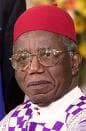
Chinua Achebe

Chinua Achebe was a Nigerian novelist, poet, and critic who is regarded as a central figure of modern African literature. His first novel and magnum opus, Things Fall Apart (1958), occupies a pivotal place in African literature and remains the most widely studied, translated, and read African novel. Along with Things Fall Apart, his No Longer at Ease (1960) and Arrow of God (1964) complete the "African Trilogy". Later novels include A Man of the People (1966) and Anthills of the Savannah (1987). In the West, Achebe is often referred to as the "father of African literature", although he vigorously rejected the characterization.