“Humanity has always reached for the stars, even when those stars were mere pinpricks in a painted ceiling.”
— Reflecting on humanity's enduring drive for exploration, even when confined.

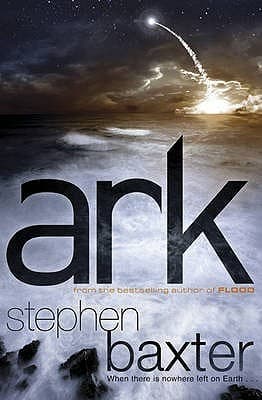
Stephen Baxter (2009)
Genre
Fantasy / Science Fiction
Reading Time
10-12 hours
Key Themes
See below
Sign in to track this book
As Earth drowns and humanity tears itself apart, a desperate few embark on an impossible starship voyage to find a new home, only to discover their nightmare has just begun.
In 2052, Earth faces catastrophic flooding. Decades earlier, Project Ark began building a starship to carry a few hundred survivors to a new habitable planet. Grace, a young woman, is chosen for the mission and works on the ship's construction. Her sister, Holle, is not chosen, causing a deep rift between them. Venus, a brilliant but ruthless scientist, is also involved, often making difficult ethical decisions for the greater good. As global conflicts erupt over dwindling land and resources, pressure to complete the Ark grows, with the world's remaining assets diverted to the project. The chosen few train for an uncertain future among the stars, while billions face a watery grave.
The launch day arrives amid global chaos and the final stages of the flood. Grace, Venus, and the other survivors board the starship, Ark One. The separation from loved ones, especially for Grace, who leaves Holle behind, is painful. The launch is a monumental engineering feat, as the Ark breaks free from Earth and begins its long journey through space. The first days are a mix of relief, grief, and the huge realization of the task ahead. The crew, a diverse group of scientists, engineers, and specialists, must now learn to live together in the Ark's confined space, their lives linked by their shared mission to find a new home.
As Ark One journeys through space, decades turn into centuries. The original crew, including Grace and Venus, age and pass away, leaving their descendants to continue the mission. A self-sustaining ecosystem is created within the Ark, providing food and oxygen. New generations are born and raised knowing only the ship. Traditions and a unique culture develop, shaped by isolation and the singular purpose of their voyage. However, life aboard the Ark has difficulties: resource management, psychological strain, and occasional technical problems test the inhabitants' resilience. Grace's granddaughter, also named Grace, becomes important in this new generation, dealing with her ancestors' legacy and the mission's responsibility.
After centuries of travel, Ark One finds a colossal, artificial structure in deep space. This discovery excites and worries the crew. Venus's great-granddaughter, also named Venus, now a lead scientist, leads the investigation. The structure, called 'The Maze,' appears to be an ancient, abandoned alien artifact of immense size and complexity. Initial attempts to understand its purpose or origin raise more questions than answers. The encounter forces the Ark's inhabitants to consider other intelligent life in the universe, adding a new element to their journey. The decision to investigate or bypass The Maze creates conflict among the crew, showing differing priorities and fears.
A small team, including the younger Grace and Venus, goes into The Maze. They find incredibly advanced technology and evidence of its creators, the 'Builders.' The Maze seems to be a vast, automated system for unknown purposes, perhaps interstellar infrastructure or a defense. However, their exploration also uncovers a dormant but potentially hostile artificial intelligence or a self-repairing system that sees their presence as an intrusion. The team faces immediate danger, barely escaping with their lives and important data. This encounter confirms humanity is not alone, but also introduces a new, formidable challenge to their survival, forcing them to change their strategies for finding a new home.
Using the advanced technology and materials from The Maze, the Ark One crew begins building a second, faster starship, Ark Two. This new vessel uses alien technology, significantly shortening the journey to their target system. Building Ark Two has critics, as it diverts resources and attention from Ark One's maintenance and poses new technological risks. However, the promise of a quicker arrival and escape from The Maze's potential threat ultimately sways the majority. The construction is difficult, requiring ingenuity and collaboration across generations, as they reverse-engineer and adapt alien systems for human use.
Ark Two, carrying a smaller, select group, including the younger Grace and Venus, arrives in the Proxima Centauri system. Their initial excitement turns to bitter disappointment when they find the target planet, Proxima Centauri b, is not the habitable world they hoped for. Its atmosphere is toxic, and the surface is hostile to human life. The centuries of hope and sacrifice seem wasted. This devastating setback forces the crew to rethink their entire mission, facing the real possibility that they might never find a suitable home. Morale drops, and leadership faces immense pressure to find an alternative quickly.
Undeterred by the failure at Proxima Centauri b, the Ark Two crew, led by the younger Grace and Venus, activate long-range probes and observation systems. They use alien technology to scan other star systems for a suitable planet. This renewed search is full of tension and urgency, as resources are finite, and the psychological toll of their long journey weighs heavily on everyone. They carefully analyze data from countless exoplanets, searching for the exact conditions for human life. The process is slow and painstaking, but a glimmer of hope appears when they identify a promising candidate in a distant system, a world with the right atmosphere and liquid water, reigniting their determination.
As Ark Two nears the newly identified habitable planet, a critical system malfunction threatens the entire mission. The ship's primary drive begins to fail, risking their ability to achieve a stable orbit and land safely. The younger Grace, now an experienced engineer, realizes a manual intervention is needed. This intervention is incredibly dangerous and likely suicidal. Remembering the sacrifices of her ancestors and the billions lost on Earth, she volunteers for the mission. With Venus coordinating from the command center, Grace navigates the treacherous, failing systems, making the ultimate sacrifice to ensure humanity's survival. Her actions secure the Ark's safe arrival, but at the cost of her own life.
Following Grace's heroic sacrifice, Ark Two successfully lands on the new, green planet, which they name 'New Earth.' The survivors, led by Venus, emerge from the Ark to a breathtaking alien landscape. The initial challenges are huge: establishing a base, adapting to the new environment, and beginning the long process of terraforming to make the planet fully hospitable. They carry the legacy of Earth and the lessons learned from their centuries-long journey. The story ends with the first steps of colonization, as humanity, though drastically reduced in number, begins to build a new civilization on a distant world, fulfilling their ancestors' desperate dream and securing the future of their species.
The Protagonist
From a young woman torn by personal loss, she evolves into a wise matriarch, embodying the enduring spirit of the mission.
The Supporting/Mentioned
Her story is a tragic constant, a poignant reminder of the sacrifices and losses that enabled the Ark's journey.
The Protagonist/Supporting
From a pragmatic leader, she becomes the architect of humanity's survival, leaving a legacy of scientific ingenuity.
The Protagonist
Born into a legacy of survival, she rises to become a heroic engineer, making the ultimate sacrifice for a new beginning.
The Protagonist/Supporting
Following in her ancestor's footsteps, she leads the scientific effort to find a new home, balancing pragmatism with the community's needs.
The Mentioned
Their ancient existence is revealed, providing both advanced technology and a sense of cosmic scale to humanity's journey.
Despite Earth's destruction and centuries of difficult travel, humanity consistently finds the will to survive. Project Ark itself, conceived when the planet faced annihilation, shows this hope. The generations aboard the Ark keep their purpose, overcoming psychological strain, resource scarcity, and threats like 'The Maze.' Grace's ultimate sacrifice for the landing on New Earth shows the enduring spirit and selflessness that drives their survival.
“We carried the memory of a drowned world, but also the blueprint of a new one, etched in our very bones.”
The story is full of sacrifice, from the billions left behind on Earth to individual acts of heroism throughout the journey. Grace's initial separation from Holle sets a poignant tone for the sacrifices made. Each generation aboard the Ark carries the weight of their ancestors' choices and the responsibility to continue the mission. The lives lived and lost are not wasted; they form a continuous chain of effort and dedication that leads to a new home. The younger Grace's sacrifice is the peak of this generational legacy.
“Every step we took was on the shoulders of those who came before, a testament to their unbearable choices.”
The book explores the difficult ethical choices made when humanity's survival is at stake. The initial selection process for the Ark, which condemned billions to death, is the clearest example. Characters like the original Venus often make practical decisions that prioritize the group over individual lives or feelings. The decision to use alien technology in 'The Maze,' despite potential dangers, also presents a moral problem. These dilemmas highlight the harsh realities of extreme survival and the blurred lines between right and wrong when extinction looms.
“When the species stands at the brink, sentiment becomes a luxury we cannot afford.”
The Ark's journey shows the immense scale of space and the often-harsh nature of the universe. The centuries of travel, the emptiness between stars, and the initial disappointment of Proxima Centauri b all emphasize humanity's smallness in the cosmos. The encounter with 'The Maze' introduces the idea of ancient, powerful alien civilizations, further highlighting the universe's complexity and indifference to human struggles. This theme reinforces that humanity's survival is a fragile effort against an overwhelming backdrop.
“The stars cared nothing for our hopes, our fears, or our desperate flight. They simply were.”
A starship designed to sustain multiple generations over centuries-long interstellar journeys.
The Ark itself is the primary plot device, a massive generation ship that serves as humanity's last refuge. It is a self-sustaining ecosystem, a mobile civilization, and a symbol of humanity's desperate gamble. The passage of generations aboard the Ark allows for the exploration of evolving cultures, the weight of legacy, and the psychological impact of prolonged isolation. It creates an enclosed, controllable environment where character development and plot progression are directly tied to the ship's systems, resources, and the passage of time.
An ancient, colossal alien structure encountered in deep space, providing both peril and opportunity.
The Maze serves as a catalyst for a significant turning point in the Ark's journey. It introduces the element of alien life, provides access to advanced technology, and presents a new, immediate threat. Its discovery breaks the monotony of interstellar travel, forcing the crew to adapt and innovate. The alien technology found within The Maze is crucial for the construction of Ark Two, accelerating their journey and providing solutions to previously insurmountable problems, while also raising questions about the intentions of its creators.
Multiple characters across different generations share the same name and thematic roles.
The use of 'Grace' and 'Venus' across different generations is a key plot device. It emphasizes the continuity of humanity's mission and the enduring traits that define its survival. While distinct individuals, the shared names highlight the legacy and responsibility passed down through time. This allows the narrative to explore how core human qualities, such as empathy (Grace) and pragmatic intelligence (Venus), manifest and evolve within different contexts and challenges over centuries, tying the past, present, and future of the mission together.
“Humanity has always reached for the stars, even when those stars were mere pinpricks in a painted ceiling.”
— Reflecting on humanity's enduring drive for exploration, even when confined.
“The past is a foreign country; the future, an unwritten novel.”
— Considering the vast gulf between different eras of human experience and the unknown ahead.
“Survival isn't just about breathing; it's about holding onto what makes you human.”
— During a desperate struggle to maintain culture and identity in extreme conditions.
“Sometimes, the greatest journey isn't across the void, but into the depths of your own heart.”
— A character grappling with internal conflicts and moral choices amidst a grand voyage.
“We built this ark not for ourselves, but for the echoes of our dreams.”
— Explaining the ultimate purpose of the Ark project, transcending individual lives.
“The universe doesn't care about your plans. It just is.”
— A stark reminder of the indifference of the cosmos to human ambition.
“Hope is a fragile thing, easily crushed, but impossible to live without.”
— As the crew faces daunting challenges and potential despair.
“Every generation believes it holds the key to the future, until the next one arrives to prove them wrong.”
— A commentary on the cyclical nature of progress and the fleeting nature of certainty.
“The stars are not just lights in the sky; they are destinations, promises, and warnings.”
— Contemplating the multifaceted significance of stellar objects to the voyagers.
“To forget where you came from is to lose sight of where you are going.”
— Emphasizing the importance of history and heritage in navigating an uncertain future.
“Even in the darkest void, there is always a flicker of light, if you know where to look.”
— Offering a message of optimism during moments of extreme difficulty.
“We are all passengers on this great ark, whether we chose the journey or not.”
— A broader metaphor for humanity's shared existence and collective fate.
“Knowledge is a burden, but ignorance is a death sentence.”
— Discussing the critical need for learning and understanding in a hostile environment.
“The greatest discovery is not out there, but within us: the capacity to adapt, to endure, to dream.”
— Reflecting on the true strength of humanity in the face of immense challenges.
Ready to see how well you understood this book? Take our interactive quiz with 10 questions.

Biography coming soon.







