“The city of a thousand and one nights is now the city of a thousand and one crimes.”
— A reflection on the state of Cairo, hinting at the moral decay of society.

Genre
Fantasy / Historical Fiction
Reading Time
240 min
Key Themes
See below
Sign in to track this book
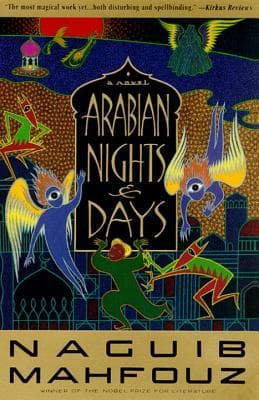
Naguib Mahfouz reworks the Arabian Nights, blending genies, flying carpets, and familiar fables with the insights of a Nobel laureate.
Sultan Shahrayar, after discovering his first wife's betrayal, has started a custom: he marries a new virgin each night and executes her at dawn. This terror has decimated the women of his kingdom, leaving families distraught and the city in despair. Vizier Dandan, burdened by his duty to provide new brides, is horrified when his daughter, Shahrazad, volunteers to marry the Sultan. Despite her father's desperate pleas and warnings, Shahrazad is determined, believing she can end the Sultan's madness through storytelling. She prepares herself, gathering tales and strengthening her spirit for the dangerous task ahead.
On her first night with Sultan Shahrayar, Shahrazad, after their initial intimacy, asks to tell a story to her younger sister, Dunyazad, who is in the chamber. She begins a captivating tale, carefully choosing narratives that interest the Sultan but always ending them on a cliffhanger as dawn approaches. Shahrayar, intrigued, finds his curiosity overriding his bloodlust. He postpones her execution, eager to hear the story's conclusion the following night. This pattern continues, with Shahrazad telling tales that subtly influence the Sultan's hardened heart, revealing human nature, justice, and fate, and slowly chipping away at his vengeful resolve.
While Shahrazad's storytelling keeps Shahrayar captive, preventing further executions, Baghdad is not entirely at peace. The initial relief gives way to new forms of unrest and moral ambiguity. Characters from Shahrazad's tales begin to appear in the real world, or their types inspire the actions of the city's inhabitants. The Sultan, no longer executing daily, becomes more thoughtful, his judgments occasionally softened or complicated by the moral questions in Shahrazad's narratives. His viziers and advisors, initially relieved, now face new challenges in governing a kingdom where the Sultan's moods are influenced by nightly fables, and society seems to reflect the stories being told.
Shahrazad tells the tale of Ma'ruf, a kind but unlucky cobbler, whose life is a series of misfortunes often stemming from the injustice and greed of others. Ma'ruf's struggles for honesty and survival in a corrupt world highlight the plight of common people. This story deeply affects the city's inhabitants, especially those who feel oppressed. The narrative subtly critiques existing power structures and the arbitrary nature of fate, prompting discussions and even small acts of defiance among citizens. Shahrayar, listening, confronts the realities of his subjects' lives and the impact of leadership on their well-being, as Ma'ruf's quest for justice mirrors the unspoken desires of many in his kingdom.
As Shahrazad continues her nightly tales, her younger sister, Dunyazad, who always listens, begins to experience her own romantic awakening. She falls deeply in love with Nur al-Din, a young man of noble spirit but modest means, who is captivated by Dunyazad's beauty and kindness. Their growing relationship brings youthful hope and tenderness into the palace, which has long been dominated by fear and despair. However, their love faces obstacles, as societal expectations, the lingering shadow of the Sultan's past cruelty, and the schemes of others threaten to separate them, adding personal drama to the kingdom's overarching narrative.
As Shahrazad's stories unfold, the line between fiction and reality blurs. Genies, djinns, and other supernatural beings, previously confined to tales, begin to appear in Baghdad, often in unexpected forms and with unpredictable consequences. These magical interventions range from benevolent assistance to mischievous meddling, affecting the lives of ordinary citizens, merchants, and even the ruling elite. Flying carpets become more than a metaphor, and wishes, both granted and twisted, create new dilemmas and opportunities. This infusion of magic reflects the deep psychological impact of Shahrazad's narratives, suggesting that collective imagination, once stirred, can reshape the world, challenging the established order and forcing everyone to confront the fantastical possibilities of existence.
The long-absent Caliph, Harun al-Rashid, a figure of legendary wisdom and justice, makes an unexpected return to Baghdad. His presence immediately brings new political intrigue and challenges Shahrayar's authority. While Shahrayar has been captivated by Shahrazad's tales, the Caliph's reappearance brings the focus back to governance, succession, and the nature of leadership. The city's inhabitants, weary of Shahrayar's past tyranny and the recent magical disruptions, look to the Caliph for stability and a return to just rule. This creates a subtle power struggle, forcing Shahrayar to consider his legacy and the responsibilities of his position beyond his personal vendetta, as the kingdom's fate hangs between two powerful rulers.
Even as Shahrazad's stories inspire hope and reflection, darker aspects of human nature, often depicted in her cautionary tales, begin to appear within the palace. Viziers, courtiers, and even members of Shahrayar's own family engage in schemes, betrayals, and conspiracies, vying for power and influence. These machinations reflect the greed, jealousy, and revenge that Shahrazad skillfully weaves into her narratives, showing that human vice is a constant threat regardless of external circumstances. Shahrayar, though softened by the stories, is still a ruler in a court full of ambition, forcing him to navigate a treacherous political landscape where trust is rare and misjudgment can have dire consequences.
After a thousand and one nights, Shahrazad reveals that she has borne Shahrayar three sons. This revelation, combined with the cumulative effect of her stories, finally breaks through Shahrayar's hardened exterior. He recognizes the love and wisdom Shahrazad has shown him, understanding that true power lies not in vengeance but in justice, compassion, and the preservation of life. He renounces his cruel custom, declaring his genuine love for Shahrazad and acknowledging her as his true queen. This transformation marks a turning point not just for the royal couple, but for the entire kingdom, as a new era of enlightened rule, guided by the lessons in Shahrazad's narratives, begins.
With Sultan Shahrayar's transformation, the various personal and political conflicts that arose throughout the narrative find resolution. Nur al-Din and Dunyazad's love story is blessed, leading to their marriage and a symbol of renewed hope. Caliph Harun al-Rashid, satisfied with Shahrayar's changed heart and commitment to justice, legitimizes his reign and offers his support. The magical entities that had infused Baghdad either retreat or integrate, leaving behind a city that has been shaped by both the fantastical and the real. The kingdom enters a new era, one where stories are valued as much as laws, and where the wisdom gained from Shahrazad's tales promises a future of greater understanding, peace, and prosperity for all its inhabitants.
The Protagonist/Antagonist
Transforms from a vengeful, paranoid tyrant to a just, compassionate ruler through the power of Shahrazad's storytelling and love.
The Protagonist
Begins as a brave woman risking her life to end tyranny and evolves into the wise queen who transforms her husband and brings peace to her kingdom.
The Supporting
Starts as a quiet listener and evolves into a woman in love, finding her own happiness in the new era.
The Supporting
Develops from a hopeful suitor to a loving husband, representing the positive change in Baghdad.
The Supporting
From a despairing vizier to a relieved father witnessing his daughter's triumph.
The Mentioned
His narrative arc within Shahrazad's tales often involves overcoming adversity through wit or unexpected fortune, serving as a parable for resilience.
The Supporting
Returns to oversee the kingdom, ultimately validating Shahrayar's transformation and ensuring a just succession.
The Supporting
Their influence escalates as the stories gain power, eventually integrating into or retreating from the transformed reality.
This is the central theme. Shahrazad's ability to tell captivating narratives not only saves her life but also transforms Sultan Shahrayar's brutal heart and ultimately saves the entire kingdom. The stories serve as a way for moral education, emotional healing, and political commentary. They show how words can build empathy, challenge preconceptions, and inspire change, demonstrating that imagination and narrative are powerful forces capable of reshaping reality. For instance, the tale of Ma'ruf directly influences the Sultan's understanding of common people's struggles, while other tales subtly introduce concepts of justice, mercy, and human nature, gradually eroding his desire for vengeance.
““Stories are not just for entertainment, my lord. They are mirrors of the soul, and guides for the heart.””
The novel explores the contrast between vengeance and true justice. Sultan Shahrayar begins as a ruler consumed by vengeance, inflicting arbitrary cruelty upon his kingdom due to personal betrayal. Shahrazad's tales, however, gradually introduce him to different forms of justice – divine, human, and poetic – and the devastating consequences of unchecked rage. The stories highlight the importance of mercy, forgiveness, and understanding the root causes of human behavior. The Sultan's transformation from a vengeful tyrant to a just and compassionate ruler is the ultimate example of this theme, proving that true justice seeks restoration and balance rather than retribution.
““Vengeance is a bitter drink that poisons the one who pours it as much as the one who drinks it.””
Mahfouz blurs the lines between the stories Shahrazad tells and the reality of Baghdad. As Shahrazad's narratives unfold, characters and events from her tales begin to appear in the real world, or their types inspire actual occurrences. Genies appear, wishes are granted (and often twisted), and the city itself seems to become a living reflection of the ongoing narrative. This theme suggests that collective imagination and the power of narrative can profoundly influence and even reshape the physical and social fabric of a society. It questions the nature of reality, implying that our stories are not just reflections of life, but active forces that create it.
““The city itself became a story, each street a paragraph, each person a character, all woven by the loom of her words.””
At its heart, the novel champions love and compassion as forces for redemption and healing. Shahrazad's love for her people and her compassion for Shahrayar, despite his initial cruelty, drive her to risk her life. Her actions are motivated by a desire to heal a broken ruler and a suffering kingdom. The growing love between Dunyazad and Nur al-Din further emphasizes this theme, representing hope and the possibility of happiness in a world previously dominated by fear. Ultimately, Shahrazad's enduring love, shown through her storytelling, breaks Shahrayar's cycle of violence and transforms him, proving that love can conquer even the deepest hatred and trauma.
““In the end, it was not the sword that conquered, but the heart that understood.””
The novel plays with the tension between predetermined fate and the choices characters make. Many events, especially those involving genies or unexpected turns of fortune, suggest destiny. However, Shahrazad's conscious decision to sacrifice herself and her strategic use of storytelling demonstrate immense free will and agency. Characters within her tales also grapple with their lot, sometimes overcoming it, sometimes succumbing. This theme explores whether individuals are merely puppets of a larger cosmic plan or if their courage, wisdom, and love can alter their paths, suggesting a complex interplay where human choice can influence, if not entirely dictate, destiny.
““Is man but a puppet of the heavens, or does he carve his own path, even in the shadow of giants?””
The overarching narrative of Shahrazad telling stories to Sultan Shahrayar.
The entire novel is structured as a frame story, where the primary narrative of Shahrazad's nightly storytelling to Sultan Shahrayar encloses numerous other embedded tales. This device is directly inherited from the original 'One Thousand and One Nights' and is crucial for Mahfouz's reimagining. It allows for the introduction of diverse characters and moral dilemmas, while simultaneously serving as the mechanism for Shahrazad's survival and the Sultan's gradual transformation. The frame story provides both continuity and variety, enabling Mahfouz to explore a multitude of themes and perspectives within a unified narrative structure.
The integration of fantastical elements into a realistic setting.
Mahfouz employs magic realism by seamlessly blending the supernatural and the mundane. As Shahrazad's stories unfold, the fantastical elements she describes – genies, flying carpets, magical creatures – begin to appear in the 'real' world of Baghdad. This blurring of lines between the magical and the ordinary is not presented as jarring or unbelievable but as an organic extension of the narrative's power. It highlights the psychological and cultural impact of storytelling, suggesting that imagination can literally alter reality, creating a world where the extraordinary coexists with the everyday, and the boundaries of possibility are constantly shifting.
References and allusions to the original 'One Thousand and One Nights' and other Arabic folklore.
Mahfouz's novel is deeply intertextual, consciously referencing and reinterpreting characters and scenarios from the classic 'One Thousand and One Nights.' Familiar figures like Aladdin, Sinbad, and Ali Baba (or their archetypes) appear, but their stories are often twisted, given new moral dimensions, or used to comment on contemporary issues. This device allows Mahfouz to engage in a dialogue with the original source material, offering a modern, philosophical, and often darker perspective on these beloved tales. It enriches the narrative by drawing upon readers' existing knowledge of the Arabian Nights while simultaneously subverting expectations and creating something entirely new.
The use of stories to subtly teach moral lessons and guide character development.
While not overtly preachy, the novel uses Shahrazad's tales as a subtle didactic tool. Each story she tells is not merely for entertainment; it carries a moral lesson, a reflection on human nature, or a commentary on justice, power, and fate. These lessons are carefully chosen to influence Sultan Shahrayar's hardened heart and guide him towards empathy and wisdom. The didacticism is effective because it is embedded within captivating narratives, allowing the Sultan (and the reader) to discover truths organically rather than being directly lectured. It's a method of teaching through parable and example, leading to a profound internal transformation.
“The city of a thousand and one nights is now the city of a thousand and one crimes.”
— A reflection on the state of Cairo, hinting at the moral decay of society.
“Justice is a dream in a land of nightmares.”
— A character's cynical view on the legal system and the pervasive injustice.
“Love is a prison with invisible bars, and we are its willing captives.”
— A philosophical musing on the nature of love and its constraints.
“Every man has his own jinni, some good, some evil, residing within his soul.”
— Explaining the internal struggle between good and evil within individuals.
“To forget is to die a little, to remember is to live forever.”
— A contemplation on the importance of memory and its connection to life and legacy.
“Power corrupts, and absolute power corrupts absolutely, even the jinn.”
— A universal truth applied to both humans and supernatural beings in the narrative.
“The past is a phantom that haunts the present and dictates the future.”
— Reflecting on how historical events and decisions impact contemporary life.
“There are more mysteries in a human heart than in all the enchanted caves of the world.”
— Highlighting the complexity and inscrutability of human emotions and motivations.
“Even the most beautiful tale can hide the ugliest truth.”
— A reminder that appearances can be deceiving, especially in storytelling and life.
“Fear is the greatest sorcerer, capable of transforming reality into illusion.”
— Discussing the powerful psychological impact of fear on perception.
“A lie travels faster than the truth, and often arrives first.”
— Observing the spread of misinformation and its immediate effects.
“Happiness is a fleeting guest, but sorrow is a resident of long standing.”
— A melancholic observation on the transient nature of joy compared to enduring grief.
“Every secret desires to be told, just as every cage desires to be opened.”
— Exploring the inherent human need for revelation and freedom.
“The greatest magic is not in conjuring spirits, but in understanding humanity.”
— Prioritizing human connection and empathy over supernatural abilities.
Ready to see how well you understood this book? Take our interactive quiz with 10 questions.

Naguib Mahfouz Abdelaziz Ibrahim Ahmed Al-Basha was an Egyptian writer who won the 1988 Nobel Prize in Literature. Mahfouz is regarded as one of the first contemporary writers in Arabic literature, along with Taha Hussein, to explore themes of existentialism. He is the only Egyptian to win the Nobel Prize in Literature. He published 35 novels, over 350 short stories, 26 screenplays, hundreds of op-ed columns for Egyptian newspapers, and seven plays over a 70-year career, from the 1930s until 2004. All of his novels take place in Egypt, and always mentions the lane, which equals the world. His most famous works include The Cairo Trilogy and Children of Gebelawi. Many of Mahfouz's works have been made into Egyptian and foreign films; no Arab writer exceeds Mahfouz in number of works that have been adapted for cinema and television. While Mahfouz's literature is classified as realist literature, existential themes appear in it.







