“It was a day to be remembered. It was a day to be spoken of in whispers. It was a day to be proud of.”
— Adam's reflection on the events of the battle.

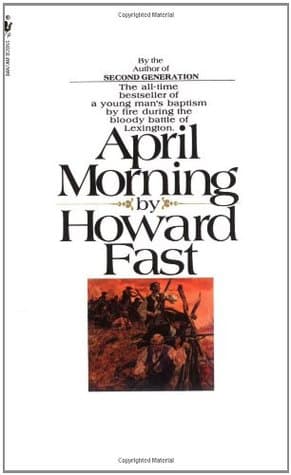
Howard Fast (1961)
Genre
Historical Fiction / Young Adult
Reading Time
240 min
Key Themes
See below
Sign in to track this book
In the harrowing dawn of April 19, 1775, a young man's hands tremble on his musket, changing from boy to veteran amidst the chaotic, bloody birth of American freedom at Lexington.
The novel opens on April 19, 1775, in Lexington, Massachusetts. Fifteen-year-old Adam Cooper wakes to a typical morning of chores. He feels the usual friction with his stern, deeply religious father, Joseph Cooper, who often finds fault with Adam and his elder brother, Levi. Adam is sent to clean the stable, a task he dislikes, and later to chop wood. His grandmother, Sarah, tries to ease the tension, but Joseph's strict Puritanical beliefs rule the household. Adam's thoughts move between his resentment of his father's authority and his growing interest in Ruth Simmons, a girl from a neighboring farm. The quiet routine of the farm has a subtle backdrop of growing political unrest in the colony, though Adam is more concerned with his personal struggles.
Later that day, Adam goes with his father and other men to the town meeting at the meetinghouse. The discussion centers on rumors of British Regulars marching from Boston. Solomon Chandler, a respected town elder and militia leader, urges caution and readiness, emphasizing the need to defend their rights and way of life. Joseph Cooper, despite his strictness, is an important figure in the community and speaks passionately about liberty. Adam, though not fully understanding the political details, feels the clear tension and fear mixed with a strong resolve among the townsfolk. He watches the men, including his father, making plans for the militia to gather. A sense of impending crisis begins to dawn on him, replacing his earlier youthful concerns.
As night falls, the Coopers are awakened by the ringing of the bell and the sound of drums. The alarm has been raised: the British are indeed marching towards Lexington. Joseph Cooper, along with Levi, quickly prepares to join the militia. Adam, despite his youth, insists on going with them, pleading with his father who reluctantly agrees, telling him to bring his musket. Adam gets his grandfather's old, heavy musket, feeling a mix of fear and excitement. The townspeople, men and boys, gather on Lexington Green, forming an uneven line. Joseph, as one of the leading men, stands with determination, and Adam takes his place beside him, his heart pounding, the cold metal of the musket feeling strange in his hands.
In the pre-dawn light, the British Regulars, a disciplined and imposing force, march onto Lexington Green. Major Pitcairn, their commander, orders the militia to disperse. There is a moment of deep tension and silence as the two groups face each other. Joseph Cooper stands firm, resolute in his belief in their rights, a stark contrast to Adam's trembling fear. Captain Parker, the militia leader, gives the order to disperse but also tells them to stand their ground if fired upon. The air is thick with anticipation, and Adam can barely breathe, his eyes fixed on the approaching red-coated soldiers, who seem like an unstoppable force against their small, disorganized group.
Suddenly, a shot rings out – no one knows from where. This single shot breaks the fragile peace, and the British open fire on the militia. Chaos erupts. Adam, disoriented and terrified, sees men falling around him. He fumbles with his musket, unable to grasp the speed and brutality of the attack. Amidst the smoke and confusion, he sees his father, Joseph, shot down. Adam watches, horrified, as his father collapses, blood staining his white shirt. The sight of his father's death, coupled with the overwhelming noise and violence, puts Adam into a state of shock and disbelief. He is frozen, unable to move or react, as the British continue their relentless assault.
Driven by instinct and terror, Adam flees Lexington Green, dropping his musket in the process. He runs into the woods, seeking shelter and escape from the terrifying scene. He hides, trembling, listening to the sounds of battle and the screams of the wounded. The reality of what he has just seen – his father's death, the chaos, the brutality of war – begins to sink in. He is no longer just a boy with chores and family arguments; he is a survivor of a massacre. The weight of his father's death, though he had often resented Joseph, now crushes him with guilt and sorrow. He is utterly alone, lost, and dealing with an experience far beyond his years.
After some time, still in shock, Adam meets Solomon Chandler, who has also escaped the initial skirmish. Chandler, a calm and wise figure, takes Adam under his wing. He helps Adam retrieve a musket and some powder, encouraging him to find his footing amidst the chaos. Chandler speaks to Adam not as a child, but as a fellow man, helping him understand the meaning of their fight. He explains that this is not just about a single battle but about defending their rights and way of life. Chandler's steady presence and words of encouragement provide Adam with a much-needed anchor, beginning to shift his focus from personal grief and fear to a sense of shared purpose and duty.
Adam, now with Solomon Chandler and a growing number of other militia members, moves towards Concord, where more fighting is expected. The groups of minutemen are more organized now, using guerrilla tactics, hiding behind trees and stone walls. This time, Adam is not frozen by fear. He aims his musket, remembering his father's lessons on marksmanship, and fires at the British columns. He sees a British soldier fall, and for the first time, he feels a strange mix of exhilaration and grim satisfaction. This is a turning point; he is no longer just a victim but an active participant, defending his home and his people. He feels a connection to the other fighting men, a sense of belonging in this new, brutal reality.
As the day progresses, the militia's constant attacks begin to affect the British Regulars. The redcoats, exhausted and demoralized, are forced to retreat from Concord back towards Boston, a long and hard march under constant fire. Adam, alongside other militiamen, participates in this relentless pursuit, firing from cover, seeing the British column break formation and suffer heavy casualties. The initial terror has been replaced by a grim determination and a growing sense of effectiveness. He sees the vulnerability of the seemingly invincible British army and the power of their collective, decentralized resistance. The sound of musket fire and shouts fills the air, a symphony of growing rebellion.
Towards evening, Adam returns to Lexington, a changed boy. The town is devastated; homes are damaged, and the dead are being gathered. He finds his mother, Sarah, and his grandmother, who are grieving Joseph and Levi, who also died in the fighting. The reunion is somber, marked by shared loss and unspoken trauma. Adam, despite his youth, is now seen as the man of the house, a role thrust upon him by the day's events. He helps with the difficult task of burying the dead, including his father and brother. The day has stripped away his innocence, replacing it with an understanding of sacrifice, duty, and the brutal cost of freedom. He is no longer the boy who resented his father, but a young man carrying the weight of his family's future and the memory of the first battle of the revolution.
The Protagonist
Adam transforms from a resentful boy into a young man forged by war, finding his voice and purpose in the fight for liberty.
The Supporting
Joseph represents the unwavering spirit of the early American patriots, making the ultimate sacrifice for his ideals.
The Supporting
Chandler acts as a steadfast guide, helping Adam navigate the trauma of battle and find his place in the larger struggle.
The Supporting
Sarah endures immense loss with quiet strength, representing the resilience of the women left behind.
The Supporting
Grandmother Cooper provides a grounding presence and a link to tradition amidst the dramatic changes.
The Supporting
Levi's death alongside his father symbolizes the widespread sacrifice of the Lexington community.
The Antagonist
Pitcairn's presence and orders initiate the conflict, serving as the antagonist to the colonial militia.
The Supporting
Captain Parker represents the stoic and determined leadership of the colonial militia at the dawn of the Revolution.
The Mentioned
Ruth symbolizes Adam's lost innocence and the possibility of a future he fights for.
The main theme is Adam Cooper's forced change from boyhood to manhood over a single day. Initially, Adam is concerned with adolescent issues—chores, his father's strictness, and a crush on Ruth Simmons. The Battle of Lexington shatters this innocence, confronting him with the brutal realities of war and death, especially the loss of his father and brother. His journey from a terrified, musket-dropping boy to a young man firing effectively at the retreating British shows this rapid maturation. The novel clearly shows how extraordinary circumstances can speed up personal growth, forcing individuals to face their deepest fears and take on adult responsibilities.
“He was no longer a boy, but a man, for he had seen his father die and had killed a man himself.”
The novel explores the idea of freedom, not as an abstract ideal, but as something fiercely defended through personal sacrifice. Joseph Cooper's strong commitment to liberty, even unto death, is a powerful example. The town meeting discussions highlight the colonists' deep belief in their rights, which they are willing to fight and die for. Adam's change shows that freedom is not free; it demands courage, unity, and ultimately, the willingness to die. The collective action of the militia, from the initial stand on the Green to the relentless pursuit of the British, embodies this theme of a community united in sacrifice for a greater cause.
“If a man does not fight for what he believes in, then he is less than a man.”
Howard Fast directly shows the raw and chaotic reality of war, removing any romanticized ideas. The opening volley at Lexington Green is sudden, confusing, and terrifying, leading to indiscriminate slaughter. Adam's initial experience is one of shock, paralysis, and flight, emphasizing the psychological toll of combat. The novel highlights the disorganized nature of the early militia alongside the disciplined, yet equally brutal, force of the British. The descriptions of fallen men, the sound of musket fire, and the pervasive fear create a clear picture of the violence and destruction in armed conflict, showing war's immediate and devastating impact on individuals and communities.
“He had never known that death could be so quick, so ugly, so final.”
Despite the conflict between Adam and his father, the novel emphasizes the deep, underlying bonds within the Cooper family and the broader Lexington community. The family's shared grief and resilience after the battle highlight their lasting connection. The town meeting and the gathering of the militia show the strong communal ties, where neighbors stand together to face a common threat. The mutual support among the militiamen, especially the mentorship Solomon Chandler offers Adam, illustrates how these bonds strengthen individuals during times of crisis. The story shows that the fight for independence was not just a political struggle, but a deeply personal one rooted in the defense of home, family, and community.
“We are a family, Adam. And a town. And we will stand together.”
Hints of impending conflict and violence.
The novel subtly builds tension through foreshadowing. Early discussions at the town meeting about the British Regulars' movements, combined with Joseph Cooper's stern resolve and the gathering of the militia, all point towards the inevitable confrontation. Adam's initial disinterest in the political discussions contrasts with the growing unease among the adults, signaling that the peaceful routine of his life is about to be shattered. This device creates a sense of dread and anticipation, preparing the reader for the violent events that ultimately unfold on Lexington Green.
The musket represents responsibility, manhood, and the burden of war.
Adam's musket serves as a powerful symbol throughout the story. Initially, it is his grandfather's old, heavy weapon, representing a responsibility he is ill-equipped for. He drops it in terror during the first volley, symbolizing his initial failure and loss of innocence. When Solomon Chandler helps him retrieve another musket, it signifies Adam's acceptance of his role in the fight and his transition into manhood. By the end, Adam's ability to effectively use the musket represents his newfound competence, courage, and the heavy burden of the fight for freedom he now carries.
Highlighting differences between innocence and experience, peace and war.
The novel effectively uses contrast to highlight Adam's transformation and the dramatic shift in his world. The peaceful, mundane opening scenes of farm chores and family friction are starkly contrasted with the sudden, brutal violence of the battle. Adam's youthful concerns about Ruth Simmons and his father's disapproval are juxtaposed with the life-or-death stakes of the war. The disciplined, red-coated British Regulars are contrasted with the loosely organized, civilian militia. These contrasts emphasize the profound and irreversible changes that occur within Adam and his community, making the impact of the revolution more vivid and immediate.
Revealing Adam's thoughts, fears, and developing understanding.
Much of Adam's journey is conveyed through his internal monologue, allowing the reader direct access to his thoughts, fears, and evolving perceptions. This device is crucial for illustrating his loss of innocence, his complex feelings towards his father, his terror during the battle, and his gradual understanding of the larger cause. It allows the reader to experience the events through his eyes, making his transformation deeply personal and relatable. His internal reflections provide insight into the psychological impact of war and the process of coming to terms with profound trauma and responsibility.
“It was a day to be remembered. It was a day to be spoken of in whispers. It was a day to be proud of.”
— Adam's reflection on the events of the battle.
“A man must stand up for what he believes, even if he stands alone.”
— Moses Cooper's advice to Adam before the confrontation.
“There's a time for talkin', and a time for shootin'. Today is the time for shootin'.”
— One of the militiamen's blunt assessment of the situation on Lexington Green.
“Freedom ain't free. It costs. It costs blood and sweat and tears.”
— Sarah Cooper's somber observation about the price of liberty.
“And it came to pass that the morning of April the nineteenth, in the year of our Lord seventeen hundred and seventy-five, was a morning of blood.”
— The narrator's opening description of the fateful day.
“You learn more from a bad day than a good one, if you're smart enough to remember it.”
— Solomon Chandler's pragmatic wisdom shared with Adam.
“When you're fighting for your home, you don't run. You stand.”
— Grandfather's firm instruction to Adam.
“The world ain't going to be the same after this, boy. Not for a long, long time.”
— A militiaman's prophetic words to Adam after the battle.
“A man's got to face what he's got to face, and if he doesn't, he ain't much of a man.”
— Moses Cooper's stern encouragement to Adam.
“Fear is a cold thing, Adam, but it can be warmed by anger, and anger can be turned into courage.”
— Mrs. Cooper's comforting words to a frightened Adam.
“It was a morning when boys became men, and men became legends.”
— Adam's realization about the transformation of the town's inhabitants.
“The sound of a musket shot, once heard, is never forgotten.”
— Adam's vivid recollection of the battle's opening.
“Sometimes, the smallest spark can set a whole forest ablaze.”
— Reflecting on how the initial conflict escalated into war.
Ready to see how well you understood this book? Take our interactive quiz with 10 questions.

Biography coming soon.







