“One is never afraid of the unknown; one is afraid of the known coming to an end.”
— Reflection by a character on fear and change.

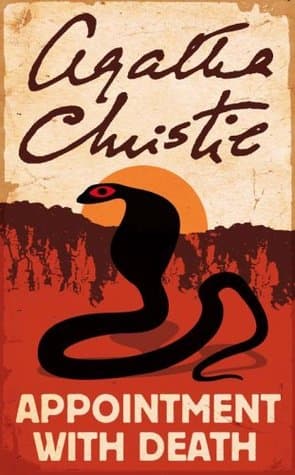
Agatha Christie (1938)
Genre
Thriller / Mystery
Reading Time
360 min
Key Themes
See below
Sign in to track this book
In the ancient, sun-baked city of Petra, Hercule Poirot must unravel a venomous family's secrets to expose the killer who silenced the monstrous matriarch, Mrs. Boynton, with a single, sinister puncture.
The story opens with Hercule Poirot on holiday in Jerusalem. While relaxing on the terrace of his hotel, he overhears a chilling conversation between a young man and a young woman. The man, later identified as Raymond Boynton, states emphatically to his sister Carol, 'You see, don't you, that she's got to be killed?' This remark, made about their stepmother, Mrs. Boynton, immediately interests Poirot. Mrs. Boynton is soon revealed to be a tyrannical matriarch, known for her psychological cruelty and complete dominance over her adult stepchildren and daughter. She keeps them in perpetual fear and subservience. Her presence casts a dark shadow over the entire family, setting the stage for potential tragedy during their upcoming travels.
The Boynton family, consisting of Mrs. Boynton, her stepchildren Lennox, Raymond, Carol, and her biological daughter Ginerva (Jinny), along with Lennox's wife Nadine and family friend Jefferson Cope, embarks on a tour of the Middle East. Their journey takes them through various sites, including Jerusalem and eventually Petra. Mrs. Boynton's oppressive nature is constantly on display. She manipulates and belittles her children, forbidding them from pursuing personal desires or forming independent relationships. Her control is absolute, and the children appear cowed, living in suppressed resentment and fear. Other tourists, including Dr. Sarah King and Lady Westholme, witness this dysfunctional dynamic, reinforcing Poirot's initial perception of the family's misery.
The tour group, including the Boyntons, Poirot, Dr. Sarah King, Lady Westholme, Jefferson Cope, and Miss Amabel Pierce, arrives at the ancient city of Petra. The remote and dramatic landscape provides a fitting backdrop for the escalating tensions within the Boynton family. Mrs. Boynton's control becomes even more suffocating. She deliberately thwarts Jinny's budding romance with Jefferson Cope and tries to sabotage Nadine's relationship with Lennox. The children, particularly Carol and Raymond, show increasing signs of desperation and resentment. Their earlier overheard remark seems less a casual comment and more a genuine desire. The atmosphere is thick with unspoken threats and dread, noticed by several members of the tour group.
On a hot afternoon in Petra, Mrs. Boynton is found dead while resting alone in a secluded alcove among the ruins. Initially, her death is attributed to natural causes, as she had a known heart condition. However, Dr. Sarah King, who examines the body, notes a tiny, almost imperceptible puncture mark on her wrist, suggesting an injection. This detail, combined with Poirot's prior knowledge of the family's desire for her death and his observation of their strained dynamics, immediately raises his suspicions. He begins to investigate, convinced that Mrs. Boynton was murdered, and that the killer is one of the members of the tour group, most likely within her own family.
With the discovery of the puncture mark, Poirot, aided by Colonel Carbury, starts his investigation. He gathers the entire group and begins a series of meticulous interrogations. He focuses on establishing the movements and alibis of each person during the critical time of Mrs. Boynton's death. He learns that many had opportunities to approach the secluded alcove where she died. The family members, despite their obvious relief, maintain their innocence, offering vague or contradictory accounts of their whereabouts. Poirot also questions the other tourists, including Dr. King, Lady Westholme, Jefferson Cope, and Miss Pierce. Each presents a different perspective on Mrs. Boynton and her family.
As Poirot continues his investigation, he uncovers more about the Boynton family's troubled history. He learns that Mrs. Boynton adopted the three stepchildren after marrying their father, and her cruelty began early, isolating them from the outside world and each other. He discovers that Mrs. Boynton had once been a sadistic prison wardress, a detail that further explains her psychological manipulation. This past life gave her knowledge of how to inflict suffering and maintain control. The children's alibis are weak, and their collective relief at her death is palpable, making them all strong suspects. Poirot also realizes that the children's loyalty to each other, despite their individual suffering, is a significant factor.
A key piece of evidence, the murder weapon—a syringe—and the poison used, are nowhere to be found. Poirot, along with Colonel Carbury, meticulously searches the area around the crime scene and the suspects' belongings. The absence of these items frustrates the investigation, suggesting a carefully planned murder and disposal. The method of injection points to someone with medical knowledge or access to such tools, which initially puts Dr. Sarah King under suspicion. However, Poirot considers all possibilities, knowing that the killer could have acquired or improvised the means. The lack of physical evidence makes the psychological aspects of the case even more important.
Poirot turns his attention to the other members of the tour group. Dr. Sarah King, a young and compassionate doctor, expresses concern for the Boynton children and is initially a suspect due to her medical background. Lady Westholme, a formidable former Member of Parliament, holds strong opinions and a hidden past. Jefferson Cope, an American family friend, is genuinely fond of Jinny and wants to free her from her mother's grip. Miss Amabel Pierce, a nervous and impressionable woman, is easily swayed and provides some unreliable observations. Poirot sifts through their statements, looking for inconsistencies, hidden agendas, or any overlooked details that might explain Mrs. Boynton's death.
Poirot's investigation takes a turn when he realizes that the puncture mark on Mrs. Boynton's wrist might not be the actual point of injection for the poison. He thinks a 'dummy' injection was administered after death or in a non-lethal manner to mislead investigators. He recalls a seemingly insignificant detail about an old scratch on Mrs. Boynton's wrist, which could have been used to simulate a fresh injection mark. This realization means that the actual poison might have been administered differently, perhaps orally, and at a different time, broadening the pool of potential methods and suspects. This insight forces him to re-evaluate the timelines and alibis he had gathered.
Through his deductions, Poirot finally reveals the true killer: Lady Westholme. He explains that Lady Westholme, a woman of public standing, had a dark secret in her past—she had been imprisoned for a serious crime many years ago. Mrs. Boynton, in her previous life as a prison wardress, had recognized Lady Westholme and was blackmailing her, threatening to expose her past and ruin her career. Desperate to protect her reputation, Lady Westholme seized the opportunity in Petra. She administered the poison orally, likely through a drugged drink, and then later used a hatpin to create the 'dummy' puncture mark on Mrs. Boynton's wrist to frame the family and mislead the investigation into believing it was an injection. Confronted with Poirot's evidence, Lady Westholme confesses and subsequently takes her own life.
With Lady Westholme's confession and suicide, the case is closed, and justice is served. The Boynton children, finally free from their mother's tyrannical grip, begin healing and forging their own paths. Lennox and Nadine can pursue their relationship without interference, Raymond and Carol are no longer bound by fear, and Jinny is free to be with Jefferson Cope. Dr. Sarah King and Jefferson Cope, who developed a mutual affection during the investigation, also find a hopeful future together. Poirot reflects on Mrs. Boynton's cruelty and the liberation her death brings to those she tormented, allowing a new dawn for the long-suffering family.
The Protagonist
Poirot begins as an observer, becomes an investigator, and successfully unmasks the killer, restoring order.
The Victim/Antagonist
Her death frees her family, and her past is revealed as the motive for her murder.
The Supporting
She helps solve the murder and finds love and a new direction in her life.
The Supporting
He tries to free Jinny, becomes a suspect, and ultimately finds love with Sarah King.
The Antagonist
Her hidden past is revealed, leading to her exposure as the killer and her ultimate suicide.
The Supporting
She is freed from her mother's control and finds hope for a future with Jefferson Cope.
The Supporting
He is freed from his mother's control and can finally lead an independent life with Nadine.
The Supporting
She endures Mrs. Boynton's malice and is eventually freed to live a normal life with Lennox.
The Supporting
He is liberated from his mother's abuse and can pursue his own life.
The Supporting
She is freed from her mother's control and gains the opportunity for a fulfilling life.
The Supporting
He assists Poirot, learns from his methods, and helps bring the killer to justice.
The novel explores tyranny, personified by Mrs. Boynton, and the devastating effects of psychological abuse. Mrs. Boynton's control over her family is absolute and insidious. It shows as constant belittling, manipulation, and the deliberate thwarting of their personal desires. Her past as a prison wardress informs her methods, turning her home into a mental prison. This theme is central to understanding the family's deep-seated resentment and the pervasive fear and desperation that surrounds them, making her death almost a mercy. The children's inability to escape her grip shows the insidious nature of this abuse.
“'You see, don't you, that she's got to be killed?'”
This theme is a direct result of Mrs. Boynton's tyranny. The Boynton children are held captive, not by physical bars, but by their mother's psychological manipulation and their own ingrained fear. Each child wants freedom—freedom to love, to work, to simply be themselves. Mrs. Boynton's death offers them the ultimate liberation, allowing them to finally break free from their prolonged mental and emotional imprisonment. The setting of Petra, an ancient city carved into rock, ironically symbolizes both the beautiful, wild freedom of the world and the 'prison' that Mrs. Boynton has created for her family within its confines.
“'They were not a family. They were a collection of prisoners.'”
Poirot's pursuit of justice is a core theme, but the novel also explores the complexities of morality. While Mrs. Boynton's murder is a crime, her victims' suffering raises questions about whether her death, even by violent means, can be seen as a form of 'justice' for the abused. Poirot believes that all murder must be solved, regardless of the victim's character. The revelation of Lady Westholme's motive (blackmail by Mrs. Boynton) adds another layer to this theme, showing how one person's past crimes can lead to another's desperate act, blurring the lines between victim and perpetrator.
“'There is evil in the world, Mademoiselle. And where there is evil, there must be justice.'”
The story is full of secrets and deception. The Boynton family operates under suppressed emotions and unspoken desires. Mrs. Boynton's past as a prison wardress is a secret she uses to maintain control, and Lady Westholme's criminal past is the crucial secret that drives her to murder. The 'dummy' injection is a deliberate act of deception designed to mislead the investigation. Poirot's task is to uncover these layers of secrecy, revealing the hidden truths and motives that lie beneath the surface of seemingly ordinary interactions and appearances, both within the family and among the other tourists.
“'Everyone has a secret, Mademoiselle. And some secrets are deadly.'”
The book explores the nature of evil, not just as a violent act, but as a pervasive psychological force. Mrs. Boynton is a unique form of evil, one that thrives on psychological torment rather than physical violence. Her cruelty is subtle, insidious, and deeply damaging, leaving emotional scars more lasting than any physical wound. Poirot observes this evil and recognizes its destructive power. The theme explores how such evil can corrupt relationships, stifle growth, and ultimately drive others to desperate acts, whether it be the children wishing her dead or Lady Westholme committing murder.
“'She was not human. She was a monster, sucking the life out of everyone around her.'”
A casual comment foreshadows the central crime.
Poirot overhears Raymond Boynton tell Carol, 'You see, don't you, that she's got to be killed?' This seemingly casual but chilling remark serves as a classic Agatha Christie plot device, immediately establishing the victim's oppressive nature and planting the seed of suspicion in both Poirot's mind and the reader's. It acts as a powerful piece of foreshadowing, setting the tone for the entire mystery and ensuring that when Mrs. Boynton is found dead, it is immediately recognized as a potential murder, rather than a mere natural death. This device also highlights the pervasive desire for Mrs. Boynton's demise among her family.
A limited group of suspects in an isolated location.
The novel employs the classic 'closed circle' or 'locked room' mystery trope, albeit in an open-air setting. The murder occurs in the remote, ancient city of Petra, effectively isolating the small tour group from the outside world. This limitation of suspects—the Boynton family and the other tourists—allows Poirot to focus his investigation intensely on a defined set of individuals, scrutinizing their relationships, motives, and alibis without external interference. The isolation of Petra heightens the tension and claustrophobia, emphasizing that the killer must be among them, trapped together until the truth is revealed.
Poirot's reliance on understanding character motives and relationships.
Rather than solely focusing on physical clues, Poirot heavily relies on psychological profiling. He meticulously observes the dynamics within the Boynton family, understanding the deep-seated resentment, fear, and manipulation at play. He recognizes Mrs. Boynton's unique brand of psychological abuse and how it affects each family member. This device allows Poirot to deduce motives that might not be immediately apparent and to understand the 'why' behind the crime, even before he uncovers the 'how.' His insights into human nature are crucial in unraveling the true killer's identity and motive, especially given the lack of obvious physical evidence.
A red herring concerning the method of murder.
The discovery of a tiny puncture mark on Mrs. Boynton's wrist initially points to an injection as the cause of death, leading investigators (and the reader) down a specific path, suspecting someone with medical knowledge or access to a syringe. However, Poirot later deduces that this mark was a 'dummy' – a misleading clue created after the actual poisoning to misdirect suspicion. This device is a clever red herring, challenging assumptions about the murder method and broadening the scope of potential killers and their means. It forces a re-evaluation of all alibis and the timeline of events, proving that appearances can be deceiving.
The victim's history provides critical insight into the motive for murder.
Mrs. Boynton's past as a sadistic prison wardress is not merely a character detail; it's a crucial plot device. It explains the depth of her psychological cruelty towards her family and, more importantly, provides the direct motive for Lady Westholme's murder. Mrs. Boynton's recognition of Lady Westholme from her time in prison, and her subsequent blackmail, directly leads to her demise. This device ensures that the murder is not random but deeply rooted in the victim's own actions and history, linking the past to the present crime and adding layers of complexity to the 'why' of the murder.
“One is never afraid of the unknown; one is afraid of the known coming to an end.”
— Reflection by a character on fear and change.
“The truth, however ugly in itself, is always curious and beautiful to seekers after it.”
— Hercule Poirot discussing the nature of truth in investigations.
“To be a successful murderer, one must have no imagination.”
— Observation about the mindset required for murder.
“The young people think love is everything. It isn't. It's a very good second.”
— Comment on the priorities in life and relationships.
“There is nothing so dangerous for anyone who has something to hide as conversation!”
— Warning about how talk can reveal secrets.
“It is a curious thought, but it is only when you see people looking ridiculous that you realize just how much you love them.”
— Reflection on love and human vulnerability.
“The impossible cannot have happened, therefore the impossible must be possible in spite of appearances.”
— Poirot's logical approach to solving the mystery.
“One must always beware of the person who is too anxious to help.”
— Caution about suspicious helpfulness in investigations.
“The dead are past helping, but the living have their future to think of.”
— Moral consideration about justice and the living.
“People who are very beautiful make their own laws.”
— Observation on the influence of beauty in society.
“It is not the past that matters, but the future.”
— Encouragement to focus on what lies ahead.
“There is no detective in England equal to a spinster lady of uncertain age with plenty of time on her hands.”
— Humorous remark about the effectiveness of amateur sleuths.
“The mind is a strange thing. It will not bear to be forced.”
— Reflection on the nature of human thought and pressure.
“To know all is to forgive all, they say. I find it isn't true. Forgiveness is a separate thing.”
— Philosophical insight on forgiveness and understanding.
Ready to see how well you understood this book? Take our interactive quiz with 10 questions.
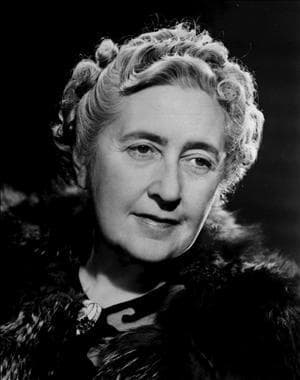
Dame Agatha Mary Clarissa Christie, Lady Mallowan, was an English writer known for her 66 detective novels and 14 short story collections, particularly those revolving around fictional detectives Hercule Poirot and Miss Marple. She also wrote the world's longest-running play, the murder mystery The Mousetrap, which has been performed in the West End since 1952. A writer during the "Golden Age of Detective Fiction", Christie has been called the "Queen of Crime". She also wrote six novels under the pseudonym Mary Westmacott. In 1971, she was made a Dame (DBE) by Queen Elizabeth II for her contributions to literature. Guinness World Records lists Christie as the best-selling fiction writer of all time, her novels having sold more than two billion copies.







