“The island was a hotel. A resort. Not in the brochure way, but in the way that the island was designed to make you forget you were on an island.”
— The protagonist's initial impression of the island of Winthrop.


Colson Whitehead (2006)
Genre
Literary Fiction
Reading Time
200 min
Key Themes
See below
Sign in to track this book
A nomenclature consultant, famous for his 'Apex Hides the Hurt' bandage, confronts a town's identity crisis as he navigates the clashing historical and commercial desires of its citizens to choose their new name.
The unnamed nomenclature consultant, a man known for his expertise in naming products, arrives in Winthrop, a town struggling with its identity. He has a noticeable limp, a physical sign of a recent personal crisis that made him leave his successful career, including his most famous creation, the 'Apex' bandage. The Winthrop town council hired him to recommend a new name for their struggling community. Key players, each with their own vision for Winthrop's future, meet his arrival with cautious anticipation. This sets the stage for a conflict over history, progress, and memory.
The consultant quickly enters the town's political scene, meeting the three influential figures who represent the competing groups. Lucky Aberdeen, a wealthy software pioneer, supports the name 'Success' or a similar business-oriented name, believing it will attract investment and revitalize the town. Albie Winthrop, from the town's founding family, strongly argues for keeping the name 'Winthrop,' seeing any change as erasing their heritage. Mayor Regina Goode, a descendant of the town's original Black settlers, proposes 'Freedom,' a name rooted in the often-overlooked history of the community's founding as a haven for freed slaves. The consultant observes their passionate, often self-serving, arguments.
Lucky Aberdeen takes the consultant on a tour of Winthrop, showing the town's rundown infrastructure and economic problems. He describes a revitalized Winthrop, changed by his proposed name and corporate investment. Lucky's arguments are practical and focused on the future, emphasizing economic growth and a modern identity. He believes the town's history is a burden, and a new name, free from the past, is the key to its potential. He offers the consultant various perks and hints at financial incentives, trying to appeal to his professional side and perhaps his own past ambition.
Albie Winthrop offers a strong contrast to Lucky, presenting a romanticized view of Winthrop's past. He takes the consultant to historical sites, highlighting his family's legacy and the town's established identity. Albie's arguments are personal and emotional, based on tradition and preserving what he sees as a noble heritage. He views the town name as an unchanging part of its soul, and any change as a betrayal of his ancestors. He dismisses economic arguments as crude and short-sighted, believing that true value lies in continuity and respect for tradition.
Mayor Regina Goode presents the consultant with a different, often hidden, story of Winthrop's origins. She reveals that freed slaves originally settled the town, a fact largely missing from official historical accounts kept by families like the Winthrops. Her proposal for 'Freedom' is not just a name but a reclaiming of this forgotten legacy, an attempt to give voice to the marginalized history of her ancestors. She argues for a name that truly reflects the town's founding ideals and acknowledges the struggles and triumphs of its diverse founders.
During his time in Winthrop, the consultant remembers his past. Flashbacks slowly reveal how he left the naming industry: a disastrous pitch meeting for a product called 'Apex Hides the Hurt,' a bandage meant to match all skin tones. The pitch went wrong, leading to his personal and professional collapse. His physical limp is the result of a fall during this period, a literal and metaphorical injury. This personal history makes him sensitive to identity, perception, and how names can both reveal and conceal truth.
As the deadline for his decision nears, the consultant feels the growing pressure and the subtle, and not-so-subtle, manipulations from Lucky, Albie, and Regina. Each tries to sway him with their own logic, historical interpretations, and appeals to his professional integrity. He finds himself caught between the desire for progress, the reverence for tradition, and the need for historical truth. The town's divided identity mirrors his own internal struggle to reconcile his past failures with his current task, making his decision more complex than a simple professional recommendation.
Beyond the council members, the consultant observes the townspeople, noting how they too are divided by the naming debate. The proposed names become symbols of different futures and pasts, stirring up old grievances and hopes. Some residents embrace Lucky's vision of economic revitalization, others cling to Albie's traditionalism, and a growing number connect with Regina's call for historical acknowledgment. The consultant realizes that his decision will not just rename a place, but will either validate or erase the identities of many who call Winthrop home. This societal tension adds another layer to his complex assignment.
The consultant often reflects on his most famous creation, the 'Apex Hides the Hurt' bandage. He remembers the ambition behind it — a universal bandage that would truly match every skin tone, going beyond the 'flesh-colored' standard that only suited one group. He sees the irony in his current situation: a town grappling with its true color, its true identity, and the pain of its past. The 'Apex' concept, designed to cover and blend, now seems to him a metaphor for how history is often smoothed over or ignored, rather than confronted and truly healed. He questions whether a new name can genuinely 'hide the hurt' or if it must expose it.
After much thought, the consultant gives his final recommendation to the town council. He acknowledges the validity of each group's arguments, but ultimately proposes a name that tries to reconcile the town's different identities without erasing any. The specific name is not explicitly stated in the summary, but the implication is that it is a name that acknowledges both the historical foundations, including the often-forgotten contributions of the Black settlers, and the potential for a new, inclusive future. His decision reflects his own journey through professional failure and personal introspection, seeking a name that truly represents, rather than just rebrands, the town's complex reality.
The Protagonist
From a detached, commercially-driven expert, he evolves into a more empathetic figure who recognizes the profound connection between names, identity, and historical truth.
The Antagonist/Supporting
He remains steadfast in his vision for Winthrop, representing the unyielding force of commercialization.
The Antagonist/Supporting
He remains entrenched in his defense of tradition, a static symbol of resistance to change.
The Antagonist/Supporting
She consistently champions the forgotten history, pushing for recognition and truth over convenience or tradition.
The novel explores how names shape identity for individuals and communities. The consultant's past success with 'Apex Hides the Hurt' ironically shows the desire to create a universal identity that sometimes erases specific details. In Winthrop, the debate over the town's name directly reflects its struggle with identity — whether it should embrace a future of economic progress (Lucky), cling to a romanticized past (Albie), or reclaim a forgotten, foundational history (Regina). The consultant's own journey of self-discovery connects with his task of naming, suggesting that true identity requires confronting, rather than hiding, the 'hurt' of the past.
““The name, the name. It was always about the name.””
A central conflict is the tension between preserving historical narratives and pursuing economic or social progress. Lucky Aberdeen represents the drive for progress, seeing history as a barrier to modernization. Albie Winthrop champions history, though a selective and sanitized version, as the town's unchanging essence. Regina Goode, however, introduces a more nuanced historical perspective, revealing the suppressed stories of the town's founding by freed slaves. She argues that true progress cannot happen without acknowledging the full, often painful, truth of the past. The consultant must navigate these competing visions to recommend a name that either reconciles or chooses between them.
““History was a burden. Or a banner. Depending on who was holding it.””
The book looks at how collective memory is built, and how certain histories are deliberately or accidentally erased. The 'official' history of Winthrop, kept by families like Albie's, conveniently leaves out the significant role of Black settlers. Regina Goode's fight for the name 'Freedom' tries to restore this forgotten memory and challenge the dominant narrative. The consultant's past failure with 'Apex' — a product meant to 'hide the hurt' by blending in — serves as a metaphor for society's tendency to gloss over uncomfortable truths, rather than confronting and integrating them into a complete historical understanding.
““The past was not a story to be told, but a wound to be bandaged.””
Whitehead satirizes modern culture's tendency to brand and market everything, even identity and history. The consultant's job itself comments on this, as he applies commercial naming principles to a town's very essence. Lucky Aberdeen embodies this theme, seeking to rebrand Winthrop as a marketable entity. The 'Apex' bandage, designed to be universally appealing by 'matching' all skin tones, criticizes the commercial solution to complex social issues. The novel questions whether true meaning and identity can survive in a world where everything is reduced to a marketable concept or a slogan.
““Every problem had a solution, and every solution needed a name.””
A physical manifestation of the protagonist's past professional and personal fall.
The consultant's unexplained limp serves as a powerful symbol of his recent professional and personal downfall. It is a constant, visible reminder of his 'fall from grace' and the 'hurt' he carries, mirroring the novel's title. The physical injury reflects a deeper emotional and psychological wound, making him more empathetic to Winthrop's own struggles with its past. It grounds his internal conflict in a tangible reality, reminding the reader of the consequences of his previous actions and the weight of his current task.
A symbolic creation representing the attempt to universally 'hide the hurt' and blend identities.
The 'Apex Hides the Hurt' bandage, the consultant's most famous creation, is a central symbol and a potent plot device. It represents the commercialization of identity and the desire to create a universal solution that paradoxically erases individual differences. Its failure, and the consultant's associated downfall, highlight the futility of trying to 'hide' complex realities. The bandage becomes a metaphor for Winthrop's own struggle to find a name that truly reflects its diverse history, rather than merely covering up its divisions or uncomfortable truths.
The protagonist's lack of a name emphasizes themes of identity, anonymity, and the universal nature of his struggle.
By leaving the protagonist unnamed, the author emphasizes the themes of identity and anonymity. It allows the consultant to function as a more universal figure, representing anyone grappling with their past, their purpose, and the construction of meaning. His lack of a personal name makes his professional role as a 'namer' ironic and highlights the paradox of his expertise in defining others while remaining undefined himself. This device draws attention to the power of names and the void created by their absence, making his task in Winthrop even more personal and profound.
The presentation of multiple, often contradictory, versions of Winthrop's past.
The novel employs conflicting historical narratives as a key plot device. Lucky, Albie, and Regina each present a different version of Winthrop's history, tailored to support their desired name. This forces the consultant, and the reader, to question the reliability of history itself and how it is constructed and manipulated. This device underscores the idea that history is not a singular truth but a collection of stories, some amplified and some suppressed, deeply impacting a community's sense of self and future direction.
“The island was a hotel. A resort. Not in the brochure way, but in the way that the island was designed to make you forget you were on an island.”
— The protagonist's initial impression of the island of Winthrop.
“Winthrop was a place of forgetting. Not because people forgot things, but because the things they forgot were themselves.”
— Further reflection on the nature of Winthrop and its effect on visitors.
“She was an apex. She was supposed to find the word. That was her job. Her calling. Her curse.”
— Describing the protagonist's unique profession as a 'word consultant'.
“A word was a thing you carried. A burden. A gift. A weapon.”
— The protagonist's philosophy on the power and weight of words.
“The past was not a thing you escaped. It was a thing you navigated.”
— The protagonist's internal struggle with her own history.
“Every island had its ghost. Winthrop had a whole graveyard of them.”
— Hinting at the troubled history and hidden secrets of Winthrop.
“The truth was not a single thing. It was a collection of things, all jostling for position.”
— The protagonist's understanding of the elusive nature of truth.
“She was a cartographer of the unseen. A diviner of the unsaid.”
— Further elaborating on the protagonist's unique skills and sensitivity.
“To name something was to claim it. To claim it was to change it.”
— The protagonist reflecting on the transformative power of language and definition.
“The word was a bandage. A temporary fix. It didn't heal the wound, but it hid the hurt.”
— The central metaphor of the book, explaining the protagonist's role.
“There was a grammar to grief. A syntax to sorrow.”
— The protagonist's observation on the structured nature of human emotion.
“The island was a mirror, reflecting back what you brought to it.”
— The protagonist's realization about how Winthrop functions for its inhabitants and visitors.
“Sometimes the right word wasn't a comfort. Sometimes it was a confrontation.”
— The protagonist's understanding that truth can be painful.
“She was looking for the word that would make everything clear. The word that would make everything stop hurting.”
— The protagonist's ultimate quest and desire.
Ready to see how well you understood this book? Take our interactive quiz with 10 questions.
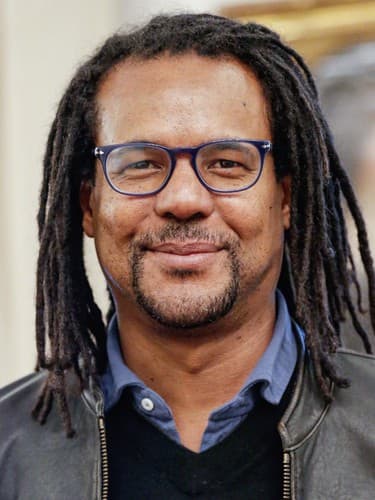
Arch Colson Chipp Whitehead is an American novelist. He is the author of eight novels, including his 1999 debut work The Intuitionist; The Underground Railroad (2016), for which he won the 2016 National Book Award for Fiction and the 2017 Pulitzer Prize for Fiction; and The Nickel Boys, for which he won the Pulitzer Prize for Fiction again in 2020. He has also published two books of non-fiction. In 2002, he received a MacArthur Genius Grant.







