“I think in pictures. Words are like a second language to me.”
— Jason, the protagonist with autism, explaining how he processes information.

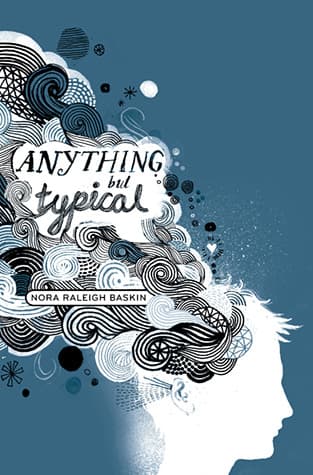
Nora Raleigh Baskin (2009)
Genre
Children's / Young Adult
Reading Time
180 min
Key Themes
See below
Sign in to track this book
Twelve-year-old Jason, who has autism, navigates the complexities of friendship and self-acceptance as he yearns to meet his online writing confidante, PhoenixBird, fearing she'll only see his diagnosis and not the imaginative boy he truly is.
Jason Blake, a twelve-year-old boy with autism, starts his day with breakfast and preparing for school. He experiences sensory overload, from the smell of toast to the texture of his clothes, and he constantly works to 'act normal.' At school, he struggles with social cues and the expectations of his teachers and peers. During lunch, he carefully arranges his food, a ritual that brings him comfort, but a classmate, Aaron, tries to talk to him, which Jason finds difficult. He wants to connect but cannot express himself in typical ways, which often leads to frustration and misunderstanding from others.
Jason's passion is writing stories, especially a fantasy saga about a hero named Tangent. He posts his chapters on an online writing forum called StoryKingdom, using the username 'Nonverbal.' Online, he feels free from the judgment and sensory challenges of the real world. He can express his thoughts and emotions through his characters and plots. StoryKingdom is his sanctuary, a place where his words define him. He crafts Tangent's adventures, finding a sense of control and purpose often missing in his daily life, and receives feedback from other users, which he likes.
While browsing StoryKingdom, Jason discovers stories by another user, 'PhoenixBird.' He likes her writing, finding a connection with her themes and style. He starts commenting on her stories, and she comments on his. Their exchanges become more frequent and personal, moving beyond just critiques of their writing. Jason feels a strong connection with PhoenixBird, who seems to understand him in a way no one else does. He shares his vulnerabilities and deepest thoughts, something he rarely does offline. He feels a true friendship growing, built purely on shared words and understanding, without the complexities of face-to-face interaction.
The StoryKingdom website announces its first annual convention, a gathering where writers can meet. PhoenixBird suggests they attend and meet there. This invitation makes Jason very anxious. He wants to meet the person who understands him so well, but he fears that his autism and his difficulties with social interaction will ruin the connection they've built online. He fears that once PhoenixBird sees the 'real' Jason, she will no longer see the articulate, imaginative writer she knows from StoryKingdom. The thought of disappointing her, or ruining their friendship, weighs heavily on him.
Jason struggles with how to tell his parents about PhoenixBird and the convention. He knows they mean well, but often struggle to understand his perspective and the nuances of his autism. He tries to explain how much his connection with PhoenixBird means to him, saying she is his 'first real friend,' but finds it hard to explain the difference between his online persona and his everyday self. His parents, especially his mother, are hesitant at first due to concerns about online safety and Jason's ability to handle the social demands of a convention. They worry about him being overwhelmed or misunderstood, but seeing his earnest desire, they agree to take him.
The day of the convention arrives, and Jason, with his parents and younger sister, spends the car ride feeling excited and anxious. He mentally practices conversations, tries to anticipate every scenario, and imagines what PhoenixBird might be like. He hopes she will see beyond his autism, but the fear of rejection is strong. His parents try to reassure him, but Jason's mind is full of 'what ifs.' He continues to develop his Tangent story in his head, finding a temporary escape in his fantasy world, even as the real-world meeting gets closer.
At the convention, Jason spots a girl wearing a phoenix pin, identifying her as PhoenixBird. Her name is Rebecca. When they meet, Jason's anxieties immediately show. He struggles to make eye contact, his voice is quiet, and he finds it difficult to make small talk. Rebecca, who is neurotypical, tries to be friendly, but the interaction is awkward. Jason feels himself failing to be the articulate, confident writer he is online. He notices her initial surprise and perhaps disappointment, which confirms his deepest fears. The easy communication they shared online is gone, replaced by social barriers.
During their brief interaction, Jason's specific behaviors – his difficulty with transitions, his literal interpretations, and his sensory sensitivities – create an awkward dynamic. He struggles to process the fast social cues and conversation. Rebecca, though trying to understand, does not know how to connect. Feeling overwhelmed and misinterpreted, Jason retreats. He finds a quiet corner, feeling the familiar sting of rejection and the confirmation of his fear that his 'typical' self is too much for the neurotypical world, even for someone who understood his writing so deeply. He feels a loss for the online connection he cherished.
Later, Rebecca finds Jason. She tries again to connect. She pulls out her laptop and suggests they read some of their favorite stories from StoryKingdom, including each other's. As they share their writing, their online connection begins to re-emerge. Jason, through his stories, can express himself fully, and Rebecca, seeing his words, remembers why she felt such a strong bond with 'Nonverbal.' The shared narrative helps them communicate and appreciate each other's inner worlds, bypassing some of the social hurdles that had initially separated them.
As they continue to talk about their stories, Jason realizes that Rebecca is looking past his 'typical' behaviors and seeing the person who creates those worlds. Rebecca, in turn, understands Jason's challenges and his way of experiencing the world better. While their in-person interactions may never be as seamless as their online ones, a new foundation of understanding is laid. Jason learns that true friendship is not about perfectly mimicking neurotypical social norms, but about finding someone who accepts and appreciates his authentic self, both the 'Nonverbal' writer and the Jason Blake who lives in the world. They part with a renewed sense of connection, promising to continue their online exchanges and perhaps meet again, with a greater understanding of each other.
The Protagonist
Jason learns to navigate the complexities of friendship, understanding that true connection involves being accepted for his authentic self, both online and offline.
The Supporting
Rebecca moves from an online admirer of Jason's writing to a real-life friend who learns to understand and accept his autism.
The Supporting
She learns to trust Jason's ability to form connections and navigate new social situations, even if they are challenging.
The Supporting
He continues to be a steady source of support and understanding for Jason, helping him navigate social challenges.
The Supporting
Sarah's understanding of her brother deepens, moving from typical sibling annoyance to a more empathetic perspective.
The Supporting
Aaron remains a consistent, if sometimes challenging, presence in Jason's school life, reflecting the ongoing attempts at connection.
The Mentioned
Tangent's journey mirrors Jason's own internal quest for self-discovery and acceptance.
The Supporting
She continues to navigate the complexities of teaching and supporting an autistic student in a neurotypical classroom.
The novel explores Jason's struggle to define his identity, both as an autistic individual and as a person with a rich internal life. Online, as 'Nonverbal,' he feels fully himself, articulate and understood. In the physical world, his autism often overshadows his true personality, making him feel like a 'typical' person trying to fit into a neurotypical mold. His journey to the StoryKingdom convention is a quest to reconcile these two identities and find acceptance for his whole self, not just the part that is easily understood. His fantasy writing also helps him explore himself.
“Online, I am Nonverbal, and I can be anything. In real life, I am Jason Blake, and I am just me, trying to be normal.”
A central theme is the nature of communication and the human need for connection. Jason finds it nearly impossible to communicate effectively in person due to his autism, leading to isolation and misunderstanding. However, through the written word on StoryKingdom, he forms a deep connection with PhoenixBird. The stark contrast between his online eloquence and his offline struggles shows that communication isn't one-size-fits-all. The book suggests that true connection can overcome traditional social barriers when there is a willingness to understand and adapt.
“Words are easier than faces. Stories are easier than real life.”
The novel shows the challenges of living as a neurodivergent individual in a predominantly neurotypical world. Jason constantly feels pressure to 'act normal,' to suppress his stims, make eye contact, and understand social cues that are not intuitive to him. The narrative shows the sensory overload, social anxiety, and misunderstandings that stem from this divide. The StoryKingdom convention becomes an example of this theme, as Jason fears that his 'typical' self will alienate Rebecca, who only knows his 'Nonverbal' persona. The book advocates for empathy and understanding across this divide.
“The hardest thing about being me is trying to be normal.”
Storytelling is a transforming force in the book. For Jason, writing his fantasy saga about Tangent is not just a hobby; it is his main way of self-expression, emotional processing, and escape. Through his characters, he can express complex feelings and navigate challenges he faces in his own life. The online writing community, StoryKingdom, provides a safe space where his words are valued above all else, allowing him to connect deeply with others. Ultimately, it is through shared stories that Jason and Rebecca overcome their initial in-person awkwardness and rediscover their connection.
“When I write, I can be anyone. I can be Tangent, brave and strong, and everyone understands me.”
Provides direct insight into an autistic mind.
The entire story is told from Jason's first-person perspective, allowing readers direct access to his thoughts, sensory experiences, and emotional world. This device is crucial for understanding the challenges and unique insights of an autistic individual, making his struggles with communication and social interaction palpable. It subverts common external perceptions of autism by revealing the rich internal life that often goes unseen, fostering empathy and challenging stereotypes about neurodivergence.
A sanctuary for authentic self-expression and connection.
StoryKingdom serves as a digital safe space where Jason can express his true self without the social and sensory barriers of the physical world. It's where his writing, not his 'typical' behaviors, defines him. This online community allows him to connect with PhoenixBird/Rebecca on an intellectual and emotional level that would be nearly impossible for him offline, highlighting the potential of digital platforms to facilitate connection for neurodivergent individuals.
A metaphor for Jason's internal journey and a means of self-expression.
Jason's ongoing fantasy story about Tangent, a hero on a quest, functions as an extended metaphor for Jason's own journey of self-discovery and navigating a challenging world. The themes, struggles, and triumphs of Tangent often mirror Jason's internal experiences and desires. It also serves as a critical plot device for character development, as Jason uses his writing to process emotions, articulate complex thoughts, and connect with others who appreciate his imaginative world.
Immerses readers in Jason's unique perception of the world.
The narrative is rich with specific sensory details – the smell of toast, the texture of clothes, the loudness of conversations, the brightness of lights. These details are not merely descriptive; they are central to Jason's experience of the world, often leading to sensory overload and anxiety. This device effectively immerses the reader in Jason's neurodivergent perspective, making his challenges understandable and fostering empathy for how seemingly mundane environments can be overwhelming for him.
“I think in pictures. Words are like a second language to me.”
— Jason, the protagonist with autism, explaining how he processes information.
“Sometimes I think I am the only real person and everyone else is just a character in my story.”
— Jason reflecting on his feelings of isolation and difference.
“I don't like surprises. I like to know what is going to happen next.”
— Jason expressing his need for routine and predictability.
“Writing is the only place I can be myself without anyone telling me I'm doing it wrong.”
— Jason discussing how writing on an online forum allows him to express himself freely.
“It's hard to explain what it's like to be me. It's like trying to describe a color to someone who has never seen it.”
— Jason attempting to convey his unique perspective on the world.
“I don't want to be fixed. I just want to be understood.”
— Jason expressing his desire for acceptance rather than change.
“The world is too loud, too bright, too everything.”
— Jason describing sensory overload in overwhelming environments.
“In my stories, I can control everything. In real life, I can't control anything.”
— Jason contrasting the predictability of his writing with the unpredictability of daily life.
“Sometimes the right words are like a puzzle I can't solve.”
— Jason struggling with verbal communication in social situations.
“I am not broken. I am just wired differently.”
— Jason asserting his self-worth and neurodiversity.
“Friendship is a code I haven't learned to crack yet.”
— Jason reflecting on the challenges of forming social connections.
“My brain is like a computer that never shuts down.”
— Jason describing his constant, analytical thought processes.
“The internet is my safe place. No one can see me here.”
— Jason finding solace and connection through online interactions.
“I don't need to be normal. I just need to be me.”
— Jason embracing his identity beyond societal expectations.
Ready to see how well you understood this book? Take our interactive quiz with 10 questions.

Dan Gemeinhart
4.5

Kate O'Hearn
4.4

Jeanne Birdsall
4.4

Jen Wang
4.4

Wendelin Van Draanen
4.3

John Marsden
4.3

Chris Van Allsburg
4.3
Jennifer A. Nielsen
4.2