“We are just a bunch of people trying to do our best, which is all we can do.”
— A reflection on the human condition and the efforts everyone makes.

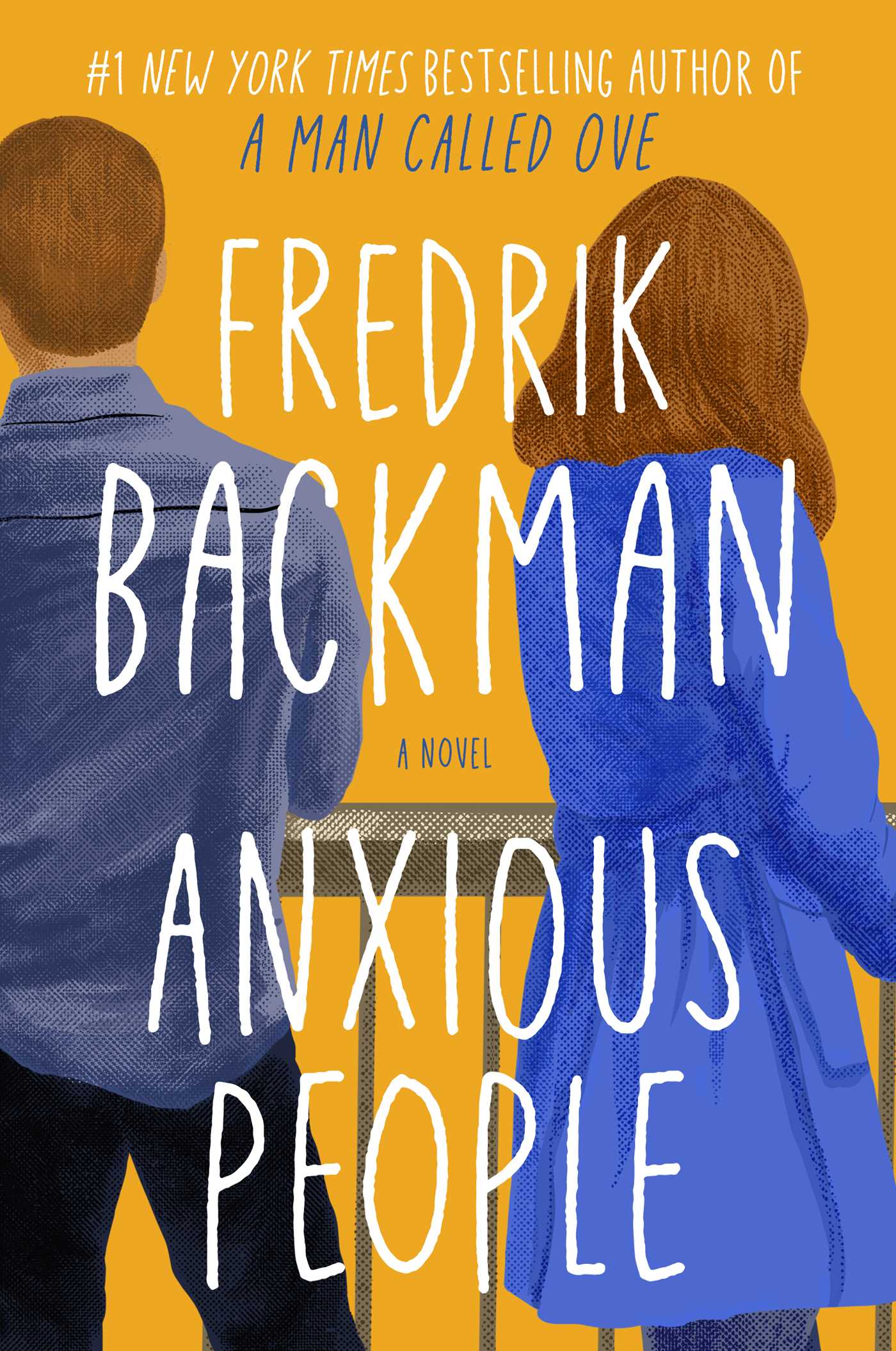
Fredrik Backman (2020)
Genre
Literary Fiction / Mystery
Reading Time
360 min
Key Themes
See below
Sign in to track this book
Eight strangers at an apartment open house, caught in a hostage situation that never happened, discover their shared humanity and paths to rescue when the 'robber' vanishes.
The story begins with a failed bank robbery. The Bank Robber, a parent needing money for an apartment for their children, tries to rob a bank with a toy gun. The bank is cashless, so the attempt fails. Panicked, the Robber runs into an open house at a nearby apartment building. The apartment is on the sixth floor and shown by real estate agent Roger. The Robber, still holding the toy gun, bursts into the apartment, accidentally starting a hostage situation with the eight people inside.
Inside the apartment are Roger and Anna-Lena, a retired couple who renovate houses; Zara, a wealthy and cynical bank director; Lennart, a seemingly distant but struggling man; Julia and Ro, a young couple expecting their first child and arguing often; Estelle, an elderly woman who is calm about the situation; and a mysterious man who locks himself in the bathroom. The Bank Robber, overwhelmed and new to this, struggles to keep control, quickly realizing they are out of their depth. The initial chaos grows with the diverse personalities and anxieties of the hostages.
The story often includes police interrogations by father-and-son officers, Jim and Jack. They investigate the aftermath of the hostage situation, which has taken an unusual turn: the Bank Robber has vanished, and all the hostages tell very different stories. Jim, the experienced but tired chief, and Jack, his well-meaning but often frustrated son, must find the truth from the conflicting accounts. Their interviews show the hostages' individual quirks, fears, and deep anxieties.
A main mystery is the Bank Robber's disappearance. After several hours, the police storm the apartment, finding the hostages but no Robber. The windows are sealed, the only exit leads to the police, and the apartment is on the sixth floor. The lack of a clear escape route for the Robber becomes the main puzzle for Jim and Jack. The hostages' vague and often contradictory stories make the investigation harder, making the police suspect a conspiracy or shared delusion.
As the hostage situation continues, the initial fear and dislike among the hostages slowly change into unexpected connections. Zara, the tough banker, reveals her deep loneliness. Roger and Anna-Lena face problems in their long marriage. Julia and Ro deal with becoming parents and their different views on life. Estelle, with her calm wisdom, acts as a steady presence. Through shared vulnerability and being forced together, they begin to see past each other's fronts, realizing they are all, in their own ways, anxious people looking for help.
Estelle, the elderly woman, plays an important role. It is revealed that the apartment where the hostage situation happens was once her home, where her husband died by suicide years ago. This adds a sad history to the setting. Her calm during the crisis comes from her long life and acceptance of sorrow. She offers quiet comfort and perspective to the other hostages, especially Zara, who struggles with her own past trauma and guilt. Estelle's presence grounds the chaotic situation, reminding everyone of the lasting human spirit.
The big reveal comes when it's discovered that the Bank Robber is Julia, the pregnant woman. She was disguised, and her desperate act was an attempt to get money for an apartment to secure a stable future for her unborn child, as Ro was not fully committed to their future. Her 'disappearance' was a clever trick helped by the other hostages, who, out of shared empathy and a desire to help, conspired to hide her. This changes the entire hostage situation, making it an act of collective compassion.
After Julia reveals her identity and her desperate reason, the other hostages, moved by her situation and their own anxieties about family and responsibility, decide to protect her. They invent the story of the Robber vanishing, each adding to the confusing and contradictory stories that baffle Jim and Jack. This act of collective deception shows their change from a group of strangers to a supportive community. They combine their resources and talents to help Julia, showing the strong bonds formed under pressure.
Throughout the investigation, the relationship between Jim and Jack is explored. Jim, near retirement, worries about his legacy and his son's perceived flaws, while Jack constantly seeks his father's approval. Their interactions are full of both arguments and deep affection, reflecting the anxieties and love in many parent-child relationships. Jack eventually proves his worth, not by solving the 'crime' in a traditional way, but by understanding the human side of it, leading to a breakthrough in their own bond.
After the hostage situation ends and Julia 'disappears' (with the others' help), the hostages' lives are changed. Roger and Anna-Lena decide to address their marital problems. Zara finds new purpose in helping others and forms a bond with Julia. Julia and Ro reconcile and begin their journey as parents with renewed commitment. The terrifying experience ultimately leads to personal growth and unexpected friendships and community, showing that even in anxious times, people can find comfort and help in each other.
The Protagonist / Hostage
Transforms from a panicked, isolated individual into a recipient of collective empathy and support, finding hope for her future.
The Supporting
Learns to trust his son's instincts and finds a renewed sense of purpose and connection in his family.
The Supporting
Gains confidence in his own abilities and earns his father's respect, strengthening their bond.
The Hostage
Moves from isolation and guilt towards connection and a renewed sense of purpose, finding a surrogate family.
The Hostages
Confront their marital issues and decide to actively work on their relationship, finding renewed intimacy.
The Hostage
Provides comfort and wisdom, finding peace in revisiting her past and helping others.
The Hostage
Overcomes his indecision and commits to his relationship with Julia and his role as a father.
The Hostage
Reveals his true identity and past, finding a degree of resolution in his connections.
The novel shows that true help comes from human connection and empathy, not outside forces. Initially strangers, the hostages, despite their anxieties, come to understand and support each other. Their collective decision to protect Julia, the 'Bank Robber,' shows this theme, as they prioritize human needs over legal justice. This is clear when Zara, at first cold, helps Julia and her baby, and when Roger and Anna-Lena, focused on their marriage problems, find common ground with the younger couple's worries about parenthood.
“Because we’re all anxious people. We all want to be loved. We all want to be seen. We all want to be saved.”
Anxiety is a main theme, presented as a universal human experience. Each character is 'anxious' in their own way—about money, parenthood, marriage, aging, loneliness, and past mistakes. The hostage situation acts as a pressure cooker, bringing these anxieties to the surface. The book suggests that everyone has fears, and acknowledging this shared vulnerability can lead to understanding and compassion. The police officers, Jim and Jack, also show different forms of anxiety: Jim's fear of becoming obsolete and Jack's anxiety about proving himself.
“This is a story about a bank robbery, a hostage drama, and people who can’t even do normal things like stand in line at the grocery store without feeling anxious. This is a story about us.”
The novel plays with the idea of truth, showing multiple, often contradictory stories from the hostages. The police, Jim and Jack, struggle to make sense of these accounts, highlighting how personal experience shapes reality. The 'truth' of the hostage situation is not a simple factual account, but a mix of individual views, fears, and a collective fictional story created to protect one of their own. This shows that sometimes, a compassionate lie can be more 'true' in its intent than a harsh reality. The unreliable narration asks the reader to look past surface events.
“Humans are complicated. We have secrets. We lie. Not always because we want to, but because we have to. Because we're afraid.”
A repeated idea is the search for 'home'—both a physical place and a sense of belonging and security. Julia's desperate act comes from her desire to get an apartment for her children. Roger and Anna-Lena's house hunting distracts from their troubled marital 'home.' Estelle's connection to the apartment as where her husband died emphasizes the emotional weight of physical spaces. Ultimately, the characters find belonging not in a specific house, but in the unexpected community formed during the hostage crisis, suggesting that home is found in people, not places.
“The greatest fear is not that you will die, but that you will die alone. And that no one will remember you lived.”
The book explores the idea that everyone deserves a second chance, and that forgiveness—of oneself and others—is important for healing. Julia gets a second chance from the hostages who protect her. Zara starts to forgive herself for past mistakes by helping Julia. Roger and Anna-Lena find a way to forgive each other and revitalize their marriage. The story suggests that mistakes and failures are part of being human, and that compassion allows for new beginnings.
“We are all just children who have grown up but forgotten how to be brave.”
The story is told through shifting viewpoints and conflicting accounts.
The narrative frequently switches between the present-day police interrogations of the hostages and flashbacks to the hostage situation itself. Each hostage offers a different, often contradictory, account of what happened, making the 'truth' elusive. This device highlights the subjectivity of memory and perception, and the way individual biases and anxieties color experiences. It keeps the reader guessing and forces them to piece together the events, much like Jim and Jack, until the collective conspiracy is revealed.
The investigation by Jim and Jack structures the unraveling of the mystery.
The ongoing police interrogations conducted by Jim and Jack serve as a crucial framing device. These scenes break up the tension of the hostage situation flashbacks and allow for character development through dialogue. The questions posed by the police, and the often evasive or contradictory answers from the hostages, propel the mystery forward while simultaneously revealing the characters' inner lives and anxieties. It allows for exposition and foreshadowing without directly telling the reader what happened.
A seemingly insignificant prop that becomes central to the plot's resolution.
The toy gun, initially dismissed by the hostages as a harmless prop in the hands of the 'Bank Robber,' is a classic Chekhov's Gun. Its innocuous nature is key to the Robber's initial desperation and later becomes a symbol of the non-violent nature of the 'crime.' It underscores that the real stakes of the story are not about physical violence, but about emotional and existential anxieties. Its presence, or rather its lack of real threat, is crucial to the hostages' eventual decision to protect Julia.
A physical barrier that creates mystery and allows for a character's secret.
The mysterious person locked in the bathroom for the duration of the hostage situation is a specific plot device. It creates immediate intrigue and suspicion among the hostages and the police. This physical barrier allows for a character (Lennart) to remain hidden and for his true identity and connection to Zara to be a later reveal. It symbolizes the emotional walls people put up and the secrets they keep, adding another layer to the novel's exploration of hidden identities and anxieties.
“We are just a bunch of people trying to do our best, which is all we can do.”
— A reflection on the human condition and the efforts everyone makes.
“You can only be brave when you are afraid.”
— Discussing the nature of courage in the face of fear.
“It's always easier to be angry at someone than to be sad on their behalf.”
— Exploring the different ways people react to difficult situations.
“We don’t know what we’re doing. We just keep going.”
— A general observation about life's uncertainties and the act of persisting.
“The truth is, it's not the fall that kills you. It's the sudden stop at the end.”
— A metaphorical statement about the impact of sudden life changes or realizations.
“Being a parent means that you are forever walking around with your heart outside your body.”
— Describing the profound vulnerability and love associated with parenthood.
“The worst thing you can do is nothing.”
— Emphasizing the importance of action over inaction, even when unsure.
“We're all just trying to make it to the next day without screwing up too badly.”
— A humorous yet poignant summary of daily struggles and aspirations.
“Love is not an equation, it is a mystery.”
— Reflecting on the complex and often inexplicable nature of love.
“You can’t control everything. Sometimes you just have to let go.”
— A lesson about acceptance and releasing the need for absolute control.
“A hostage drama is a terrible thing, but it's not nearly as terrible as being forgotten.”
— Comparing the fear of a dramatic event with the deeper fear of insignificance.
“We are all idiots, but we are all trying.”
— A self-deprecating yet empathetic view of humanity's flaws and efforts.
“Sometimes the world is just too big, and we are just too small.”
— Expressing a feeling of overwhelm and insignificance in the face of life's vastness.
“Being a grown-up is a complicated thing, and it doesn't get easier.”
— A cynical but relatable observation about the challenges of adulthood.
Ready to see how well you understood this book? Take our interactive quiz with 10 questions.

Biography coming soon.







