BookBrief
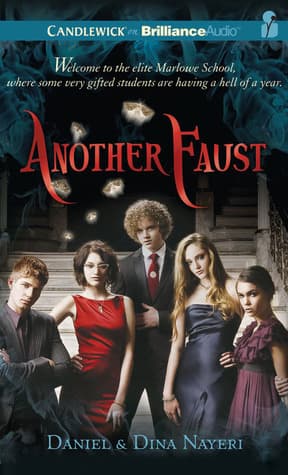
Another Faust cover
Archivist's Choice

Another Faust

Daniel Nayeri (2009)

Genre

Fantasy / Mystery / Young Adult

Reading Time

12 Minutes

Key Themes

See below

Track Your Reading

Sign in to track this book

Five children stolen by a devilish governess reappear years later at a New York high school, wielding supernatural 'gifts' that come with addictive side effects and lead them down a path of ambition, sin, and shocking revelations.

Synopsis

Five children mysteriously vanish across Europe, only to reappear years later in New York City, under the care of an enigmatic governess. These 'Faust teenagers' attend an elite high school, where they achieve extraordinary success thanks to their benefactor's supernatural 'gifts,' including mind-reading, time manipulation, and artificial beauty. However, their increasing reliance on these powers leads to dangerous addictions and unforeseen side-effects. As they make further pacts, they uncover dark secrets, forcing them to confront the true cost of their ambition, the consequences of their choices, and the possibility of redemption in this modern retelling of the Faustian bargain.
Difficulty
Medium
Pacing
Fast
Mood
Chilling, mysterious, satirical, thought-provoking

Plot Summary

The Vanishing and the Arrival

The story begins with a prologue about five children disappearing simultaneously and without explanation from different European cities. Years later, these five teenagers—Eliza, Nick, Daniel, Catherine, and Paul—reappear in New York City. They attend an exclusive party with their governess, Mrs. Devereaux, and are introduced as the 'Fausts,' a group of talented and sophisticated individuals. Their sudden appearance and unusual background spark immediate curiosity and suspicion among the city's elite. They quickly enroll in Northgate High School, immediately standing out due to their sharp intellect, refined manners, and an air of mystery. Their past is unknown, and their present is defined by an almost unnatural ability to succeed.

Northgate High and the First Gifts

At Northgate High, the Fausts quickly become academic and social leaders. Eliza excels in debate, Nick in sports, Daniel in academics, Catherine in art, and Paul in music. Their rapid success isn't entirely their own; Mrs. Devereaux gives them 'gifts'—supernatural abilities that give them an unfair advantage. Daniel, for instance, receives the ability to perfectly recall and understand information, making him a top student. These gifts, initially subtle, allow them to manipulate situations, influence peers, and secure their positions at the top of the school. Other students are first impressed, then confused, and finally, a few become suspicious of the Fausts' unusual abilities.

The Price of Power

As the Fausts use their extraordinary gifts to achieve their desires—academic success, social influence, personal gain—they begin to experience disturbing side effects. Daniel's memory gift causes headaches and a detachment from genuine understanding. Catherine's artistic talent, enhanced by a gift to manipulate perception, leads to a loss of original inspiration. The more they rely on Mrs. Devereaux's 'help,' the more these abilities become addictive, requiring stronger 'doses' to maintain their effectiveness. They feel compelled to make further deals, each one deepening their reliance and subtly changing their personalities, making them colder and more isolated. The line between their true selves and their gifted personas blurs.

Daniel's Growing Doubts

Among the Fausts, Daniel is the first to truly feel the weight of their bargain. While his gift grants him incredible intellectual prowess, it also strips him of the joy of learning and the satisfaction of earned success. He starts to notice the increasing emotional and physical toll the gifts are taking on his siblings. His headaches become more severe, and he feels a growing emptiness. He begins to scrutinize Mrs. Devereaux's actions and motivations, suspecting that her generosity comes with a hidden, malevolent agenda. He starts researching similar legends and historical accounts, seeking answers that might explain their predicament and the true nature of their benefactor. This internal conflict sets him apart from the others, who are still largely focused on their ambitions.

Eliza's Ambition and Betrayal

Eliza, driven by a desire for power and control, embraces her gifts with the least hesitation. She receives the ability to read minds and subtly influence others, making her a formidable force in the school's social and political scene. However, her ambition escalates, and she makes darker deals with Mrs. Devereaux, eventually trading away aspects of her empathy and conscience for greater influence. Her pursuit of power leads her to manipulate not only her peers but also her own siblings, seeing them as obstacles or tools. This culminates in a significant act of betrayal, where she uses her gifts to undermine one of her siblings, showing the corrosive effect of unchecked ambition and the escalating stakes of their bargains.

The Unveiling of the Past

Driven by his growing suspicions, Daniel intensifies his investigation into Mrs. Devereaux and their collective past. Through his enhanced intellect and careful observation, he pieces together fragments of information. He discovers that Mrs. Devereaux is far older and more sinister than she appears, a demonic entity preying on human desires. More horrifyingly, he uncovers the truth about their disappearances: they were not simply 'found' by Mrs. Devereaux, but were deliberately chosen and taken, their souls marked for a terrible purpose. He learns that the 'gifts' are not free, but rather fragments of their own humanity, slowly being extracted and consumed by their benefactor, leading to their ultimate damnation.

The Confrontation and the Choice

Armed with the truth, Daniel attempts to warn his siblings, revealing Mrs. Devereaux's true nature and the devastating cost of their gifts. His revelations are met with disbelief, denial, and anger from the others, who are deeply entrenched in their newfound powers and the benefits they provide. A tense confrontation ensues, first among the siblings, then directly with Mrs. Devereaux. She reveals the full extent of her plan, gloating over their entrapment. Daniel forces his siblings to choose: continue down the path of power and damnation, or reject Mrs. Devereaux and attempt to reclaim their humanity, even if it means losing everything they've gained. This moment is a turning point for each character.

The Repercussions of Rejection

Some of the Fausts, swayed by Daniel's desperate plea and the undeniable evidence of their diminishing humanity, choose to reject Mrs. Devereaux and her gifts. This decision immediately triggers severe repercussions. Their powers vanish, leaving them feeling vulnerable and exposed. The side effects they had experienced intensify, manifesting as physical ailments, mental anguish, and a deep sense of loss. They face the immediate collapse of their carefully constructed lives at Northgate High, losing their social status, academic achievements, and the respect they had commanded. Mrs. Devereaux, enraged by their defiance, unleashes her full malevolent power upon them, making their path to redemption perilous and filled with suffering.

The Battle for Souls

The Fausts who chose redemption, led by Daniel, realize that simply rejecting Mrs. Devereaux is not enough. They must actively fight her to truly break free from her grasp and reclaim their souls. They pool their remaining strengths and insights, using their collective knowledge and genuine human connections—something Mrs. Devereaux lacks—to devise a plan. This involves confronting her directly, not with supernatural powers, which they no longer possess, but with their courage, intellect, and unity. The climax involves a spiritual and psychological battle against Mrs. Devereaux, who embodies the ultimate temptation of power and the emptiness it brings. They must outwit her and sever the ties that bind them to her dark influence.

Redemption and the Aftermath

Through their collective efforts and sacrifices, the redeeming Fausts manage to defeat Mrs. Devereaux, or at least break her hold over them. The victory is not without its costs; they are forever changed by their experiences. Their powers are gone, and they are left to navigate the world as ordinary teenagers, albeit ones who have faced extraordinary evil. They must come to terms with the choices they made, the pain they caused, and the emptiness left by the loss of their gifts. The ending focuses on their journey towards rebuilding their lives, rediscovering their authentic selves, and finding genuine purpose and happiness without the shortcuts of supernatural power. It's a bittersweet redemption, emphasizing the enduring value of hard work, integrity, and true human connection over fleeting, unearned glory.

Principal Figures

Daniel

The Protagonist

Daniel transforms from a gifted but detached scholar into the moral compass and leader of the Fausts, ultimately choosing to fight for their freedom and humanity.

Mrs. Devereaux

The Antagonist

Her character remains consistently evil, serving as the primary force of temptation and destruction, ultimately defeated or thwarted by the Fausts' collective will.

Eliza

The Supporting

Eliza descends into moral corruption due to her ambition, eventually facing the consequences of her choices and potentially finding a difficult path to repentance.

Nick

The Supporting

Nick moves from an uncritical acceptance of his gifts to a realization of their emptiness, eventually choosing to reclaim his authentic self and the value of genuine effort.

Catherine

The Supporting

Catherine sacrifices her genuine artistic spirit for easy acclaim, eventually realizing the emptiness of unearned success and seeking to reclaim her true creative voice.

Paul

The Supporting

Paul moves from exploiting his musical gift for fame to understanding its manipulative potential, ultimately choosing to use his art for genuine connection rather than control.

Mr. Harrison

The Supporting

Mr. Harrison remains a watchful, skeptical observer, his suspicions indirectly reinforcing Daniel's growing doubts.

Sarah

The Supporting

Sarah experiences the negative consequences of the Fausts' power, either becoming a victim or a witness, and ultimately learns the value of genuine connection over superficial charm.

Themes & Insights

The Corrupting Nature of Power

This theme explores how unearned and unchecked power corrupts the individual. The Fausts' 'gifts,' while initially appearing beneficial, slowly erode their empathy, morality, and genuine self-worth. Each power comes with a hidden cost, turning them into addicts dependent on Mrs. Devereaux's influence. The more they achieve through their gifts, the more isolated and less human they become. This shows that true strength is not in supernatural abilities but in moral integrity and self-reliance.

Every secret strength, every whispered advantage, was a thread in a silken net, pulling them further from themselves, closer to the spider at its center.

Narrator

The Price of Ambition and Desire

The novel examines the dangerous pursuit of ambition and the consequences of desiring success at any cost. The Fausts' initial desires for academic excellence, social status, and artistic recognition are amplified and distorted by Mrs. Devereaux, leading them to make Faustian bargains. The story illustrates that while ambition can be a driving force, when pursued without ethical boundaries, it can lead to moral decay, betrayal, and an empty victory. The characters learn that true fulfillment comes from earned success and authentic connection, not from shortcuts to glory.

They had climbed to the highest peaks, but found only thin air and a crushing loneliness at the top.

Narrator

Loss and Reclamation of Humanity

A central theme is the Fausts' gradual loss of their humanity as they embrace their supernatural gifts, and the subsequent struggle to reclaim it. Their powers strip them of genuine emotion, creativity, and the ability to form meaningful relationships. The 'gifts' are not additions but subtractions, slowly consuming their souls. The journey for redemption involves a painful renunciation of these powers and a conscious effort to reconnect with their authentic selves, empathy, and the values that define true human existence. This emphasizes that humanity is more precious than any power.

The greatest trick was not the giving of power, but the slow, silent taking of everything that made them human.

Daniel

Authenticity vs. Illusion

The novel contrasts the illusion of success and happiness provided by the Fausts' gifts with the value of authentic achievement and genuine connection. Their abilities create a facade of brilliance, popularity, and talent that is not earned. This theme explores the emptiness of living a lie and the deep satisfaction that comes from true effort, self-discovery, and honest relationships. The Fausts learn that manufactured perfection is ultimately hollow, and that true identity and worth are found in embracing one's imperfections and vulnerabilities.

Every perfect grade, every flawless performance, was a lie. The truth was in the struggle, in the mistakes, in the heart that bled for its art.

Catherine

Free Will and Predestination

The story examines the tension between the Fausts' free will to make choices and the seemingly predestined path laid out by Mrs. Devereaux. While they are initially lured into a bargain, the narrative consistently highlights their capacity for choice—whether to continue accepting the gifts, to question them, or to actively fight for their freedom. This theme emphasizes that even in the face of overwhelming temptation and a powerful manipulator, individuals retain the agency to choose their own destiny and resist the forces that seek to control them. Ultimately, it affirms the power of individual choice.

She offered the chains, but it was always their hands that reached out to grasp them.

Narrator

Plot Devices & Literary Techniques

Faustian Bargain

The central deal with a supernatural entity for power.

This is the primary plot device, directly referenced in the book's title. The Fausts (children) make a deal with Mrs. Devereaux (the devil/demon) for extraordinary 'gifts' or powers—such as enhanced intellect, physical prowess, or artistic talent. These gifts come with a hidden, escalating price, slowly eroding their humanity and binding them to Mrs. Devereaux. The device drives the entire plot, from their initial rise to their eventual struggle for redemption, exploring the moral and spiritual costs of seeking power through malevolent means.

Supernatural Abilities (The 'Gifts')

Powers granted to the Fausts by Mrs. Devereaux.

The 'gifts' are the specific supernatural powers bestowed upon each Faust, tailored to their individual desires (e.g., mind-reading, enhanced memory, artistic manipulation). These abilities serve as the engine for the Fausts' rapid success and influence, but also as the source of their corruption and eventual suffering. They are plot drivers, enabling specific actions and conflicts, and also symbolic representations of the allure and danger of unearned power. The side effects and addictive nature of these gifts are crucial to the rising stakes and the characters' moral dilemmas.

Enigmatic Antagonist (Mrs. Devereaux)

A mysterious, powerful, and malevolent figure.

Mrs. Devereaux embodies the classic enigmatic antagonist, whose true nature and full extent of power are gradually revealed. Her elegant facade hides a deeply sinister, ancient evil. Her mystery fuels the plot's suspense, as Daniel and the others slowly uncover her true identity and intentions. She acts as both a tempter and a tormentor, manipulating the Fausts with a blend of charm and veiled threats. Her character serves to personify the forces of temptation and the ultimate consequences of succumbing to dark desires, making her more than just a villain but a representation of the Faustian archetype.

Memory Loss/Altered Past

The Fausts' manipulated origins and lack of true memories.

The Fausts initially have no clear memories of their lives before Mrs. Devereaux, or their pasts are subtly altered. This device creates a sense of mystery around their origins and allows Mrs. Devereaux to control their narrative. Daniel's gradual recovery of his memories and the truth about their disappearances are critical plot points. This device emphasizes the theme of identity and the importance of one's true history, contrasting it with the fabricated reality created by their benefactor. It also serves as a catalyst for Daniel's investigation and growing rebellion.

Critical analysis

Notable Quotes

Quiz

Test Your Knowledge

Ready to see how well you understood this book? Take our interactive quiz with 10 questions.

10
Questions
~5
Minutes
?
Best Score

Key Questions (FAQ)

Another Faust follows five children who vanish from Europe and reappear years later at an exclusive New York party, attended by a mysterious governess. These teenagers, now possessing extraordinary 'gifts' like mind-reading and time-stopping, navigate a prestigious high school while dealing with the consequences of their Faustian bargains and uncovering dark secrets.

About the author

Daniel Nayeri

Daniel Nayeri is an Iranian-American author known for his unique and often darkly humorous storytelling. His novel "Another Faust" explores themes of identity and morality through a modern retelling of the classic legend. Nayeri's work is characterized by its inventive prose and willingness to tackle complex subjects.






