“The first thing I remember about myself is that I was a child.”
— Opening line of the novel, setting the stage for Annie's early self-awareness.


Jamaica Kincaid (1997)
Genre
Literary Fiction / Historical Fiction / Young Adult
Reading Time
180 min
Key Themes
See below
Sign in to track this book
In Antigua, a young girl's perfect world shatters when her mother becomes an adversary, forcing her to navigate adolescence and find herself.
Annie John starts by remembering her early childhood in Antigua, a time she calls paradise. Her world revolves around her mother, also named Annie, with whom she shares a very close relationship. They do everything together, from daily chores to bathing, and Annie sees her mother as beautiful, strong, and wise. Her father, a carpenter, is a less central figure, though she notes his quiet presence. Annie's early memories are full of her mother's stories, songs, and comfort, making her feel completely safe and loved. This strong bond forms her early identity, making the outside world seem less important.
As Annie nears her twelfth birthday, her relationship with her mother subtly but deeply changes. Her mother starts treating her less like a child and more like a 'young lady,' creating a new distance between them. This shows in small ways, such as her mother no longer wanting to bathe with her or insisting she carry her own laundry. Annie sees these changes as a betrayal, feeling her mother pulling away and becoming a stranger. This marks the start of Annie's disappointment with her once-perfect world, as the unconditional love she once received begins to fade, leaving her confused and alone.
Amidst the growing tension with her mother, Annie forms a close friendship with a schoolmate named Gwen. Their bond is strong and exclusive, with Annie feeling a deep connection to Gwen that mirrors the intimacy she once shared with her mother. They spend all their time together, sharing secrets, dreams, and even a private language. This friendship gives Annie an escape from her difficult home life and a sense of belonging. However, this closeness also fuels her mother's disapproval, who sees Gwen as a distraction and a bad influence, further worsening the split between mother and daughter.
Annie becomes intensely interested in a new girl at school, a 'Red Girl' named Mineu, who comes from a poorer background and shows a wild, rebellious spirit. The Red Girl is known for her messy appearance, her defiance of school rules, and her independent nature. Annie is fascinated by her freedom and lack of inhibition, which contrasts sharply with the proper, controlled behavior expected of her. She secretly spends time with the Red Girl, doing forbidden things like stealing coins and playing marbles, finding a thrilling sense of freedom in their company, much to the displeasure of her mother and the school authorities.
During a history lesson about Christopher Columbus, Annie openly rebels against the colonial story taught in her school. When asked to copy a portrait of Columbus, she instead defaces it, writing 'The Great Man' is a 'barbarian.' This act of defiance leads to her being publicly shamed and punished by Miss Edward, her teacher. The incident highlights Annie's growing anti-colonial feelings and her rejection of the imposed history. The shame she feels is increased by her mother's disapproval, reinforcing her feeling of being separate from both her school and her family's expectations.
Annie falls into a severe, long illness, marked by tiredness, lack of appetite, and a general feeling of unwellness, which doctors struggle to diagnose. During this time, her mother's former tenderness and steady care temporarily return. Her mother nurses her back to health with traditional remedies and constant attention, reminding Annie of their earlier, loving bond. This illness provides a temporary break from their strained relationship, as Annie enjoys her mother's renewed affection. However, recovery also signals the return of their distance, leaving Annie with a bittersweet understanding of their connection.
As Annie prepares to leave Antigua to study nursing in England, she takes a final walk to the jetty with her parents. This walk is filled with memories of her surroundings and a deep sadness. She thinks about her childhood, her complex relationship with her mother, and the island she is leaving. Her mother, though seemingly accepting of Annie's departure, still tries to control her, fussing over her appearance. Annie feels a mix of excitement for the future and deep sadness for the past, especially for the idealized mother she feels she has lost forever.
At the jetty, Annie says goodbye to her family and friends. The scene is emotional, with Annie observing her mother's calmness and her father's quiet sadness. As the ship pulls away, Annie feels a deep sense of freedom, but also great sorrow for leaving her home and her mother. She has a moment of intense grief, crying for the childhood she is leaving behind and the complex, often painful, relationship with her mother. The final image is Annie looking back at the receding island, ready to embrace an unknown future while carrying the lasting marks of her past.
The Protagonist
Annie transforms from an adored, dependent child into an independent young woman who must physically and emotionally separate from her mother and her homeland to forge her own identity.
The Central Antagonist/Supporting
Her character remains largely static from Annie's perspective, transitioning from an idealized figure to an adversary as Annie's own development necessitates separation.
The Supporting
His character remains consistent as a loving and quietly supportive presence throughout Annie's childhood.
The Supporting
Gwen serves as a catalyst for Annie's exploration of intimacy and identity outside her family, though their friendship eventually fades as Annie prepares to leave Antigua.
The Supporting
The Red Girl briefly inspires Annie's rebellious streak, symbolizing an alternative path of freedom and non-conformity.
The Supporting
Miss Edward serves as a consistent figure of authority against whom Annie rebels, highlighting her growing defiance.
The novel carefully tracks Annie's change from the 'paradise' of her early childhood, where her mother was the center of her world, to the difficult realities of adolescence. This theme is most clear as Annie's relationship with her mother shifts from close adoration to conflict and distance, marking the end of her innocent view of the world. Her growing awareness of her parents' individual lives, the complexities of adult relationships, and the harshness of colonial history all add to her disappointment, forcing her to face the loss of her idealized childhood.
“It was in such a paradise that I lived.”
The main theme of the novel is the strong and often troubled relationship between Annie and her mother. What starts as an almost perfect bond turns into a fierce struggle for independence as Annie enters adolescence. Her mother's change from a caring companion to a critical figure is very painful for Annie, leading to rebellion and emotional withdrawal. This conflict represents a common coming-of-age struggle: the necessary, though painful, psychological and physical separation a child must go through to establish her own identity, even if it means breaking the deepest ties.
“The feeling I had always had, that I was in a cocoon with my mother, was gone.”
Annie's upbringing in Antigua, a British colony, greatly shapes her understanding of identity. The novel subtly critiques the colonial education system, which teaches a Eurocentric history that Annie instinctively rejects, as seen in her defiance during the Columbus lesson. She struggles with the imposition of foreign values and the loss of her own culture. This theme connects with her personal rebellion, as her rejection of colonial norms becomes part of her broader search for her true self, separate from both her mother's expectations and the colonial framework.
“The great man, Christopher Columbus, a barbarian, a beast.”
Annie's journey is marked by acts of rebellion, both obvious and subtle, as she seeks independence. From defacing a picture of Columbus to secretly spending time with the 'Red Girl' and defying her mother's wishes, Annie actively resists authority and conformity. These acts are her way of asserting her individuality and creating a space for herself apart from the expectations placed on her by her family, school, and society. Her final decision to leave Antigua for England is the peak of this desire for self-determination and freedom.
“I was twelve years old, and what with my being such a big girl now, I was sure that I could make my own decisions.”
The novel is told by an older Annie looking back on her childhood, giving the story a sense of memory and longing. She often thinks about past events, especially the early, perfect years with her mother, with a mix of longing and sadness. This backward look allows her to analyze the complexities of her past relationships and the deep impact of her childhood experiences. The act of remembering itself becomes a way for Annie to process her grief over lost innocence and the inevitable changes that come with growing up.
“For I could not be sure whether for the rest of my life I would be able to tell when it was really my mother and when it was really her shadow standing between me and the rest of the world.”
Annie John narrates her story as an adult looking back on her childhood.
The entire novel is told from Annie John's perspective, reflecting on her past as an adult. This allows for a nuanced exploration of her emotions, providing insight into the psychological impact of her experiences. The retrospective voice adds layers of reflection and analysis, enabling Annie to interpret her childhood conflicts with the wisdom of hindsight. It also creates a sense of intimacy and immediacy, drawing the reader into her subjective experience of growing up and the profound changes she underwent.
Shared names and significant descriptors carry symbolic weight.
The fact that Annie John shares her name with her mother is highly symbolic, emphasizing their initial intense bond and the subsequent struggle for individual identity. Annie's journey is largely about separating herself from the 'Annie' who is her mother. Similarly, 'The Red Girl' is not given a proper name until later, highlighting her symbolic role as a representation of wildness and rebellion rather than a fully developed character in Annie's perception. These naming choices underscore the themes of identity, connection, and separation.
Annie's unexplained illness serves as a physical manifestation of her emotional turmoil.
Annie's prolonged, debilitating illness is never given a clear medical diagnosis, suggesting it is psychosomatic. It serves as a physical manifestation of her deep emotional distress and her struggle to cope with the changes in her relationship with her mother and her impending adolescence. The illness temporarily brings her mother's care back, highlighting Annie's longing for her lost childhood comfort. It is a period of withdrawal and regression, a literal and metaphorical pause before she can move forward and ultimately separate from her past.
The act of leaving Antigua symbolizes Annie's final break and embrace of independence.
The jetty, where Annie embarks on her journey to England, is a powerful symbol of transition and separation. It represents the threshold between her childhood in Antigua and her unknown adult future. The act of departure itself is a definitive break from her mother, her family, and the island that shaped her. It symbolizes her hard-won autonomy and her willingness to venture into the world alone, even if it means leaving behind a part of herself and enduring profound sadness. It is the culmination of her journey towards self-discovery.
“The first thing I remember about myself is that I was a child.”
— Opening line of the novel, setting the stage for Annie's early self-awareness.
“My mother and I were always in the same room, but it was as if a wall had grown up between us.”
— Describing the growing distance and emotional separation between Annie and her mother as Annie enters adolescence.
“I was twelve years old, and I was going to be a bad girl.”
— Annie's declaration of her intention to rebel and defy expectations as she matures.
“It was as if I had fallen in love with a picture, a picture of myself.”
— Annie's fascination and self-absorption with her own image in a mirror, a moment of burgeoning self-discovery.
“I had gone from being a child to being a person with a history.”
— Reflecting on the accumulation of experiences and memories that shape her identity.
“I no longer loved my mother; I loved the idea of my mother.”
— Illustrating the shift in Annie's perception of her mother, from direct affection to a more idealized, distant concept.
“I was going to grow up and be a doctor, or a lawyer, or a teacher, or a nurse, or a nun, or a prostitute.”
— Annie's musings about her future, reflecting a mix of societal expectations and rebellious fantasies.
“Every time I looked at her, I felt a deep ache inside me, an ache that started somewhere around my heart.”
— Describing the intense emotional pain and longing Annie feels when observing her mother, particularly during their period of estrangement.
“I wished I could be like the girls in the stories, who never had to go to school and just played all day.”
— Annie's youthful fantasy of a carefree existence, contrasting with the realities of her education and responsibilities.
“I knew then that I would someday leave this place.”
— Annie's early realization and determination to depart her home island of Antigua.
“The world was a large place, and I was a small part of it.”
— A moment of existential reflection as Annie contemplates her place in the wider world.
“I liked the smell of the sea, the way it made me feel as if I were standing at the edge of the world.”
— Annie's connection to the natural environment of Antigua, particularly the sea, symbolizing freedom and the unknown.
“I had grown to love the smell of the dust, the way it settled on everything and made it look old.”
— A sensory detail highlighting Annie's intimate familiarity with her surroundings, even the mundane aspects.
“My mother was not just my mother; she was a world, and I was a part of it.”
— Expressing the profound and all-encompassing influence her mother had on Annie's early life and identity.
“I was going to be a new person, someone who wasn't afraid of anything.”
— Annie's hopeful and determined outlook as she prepares to leave Antigua, envisioning a transformed self.
Ready to see how well you understood this book? Take our interactive quiz with 10 questions.
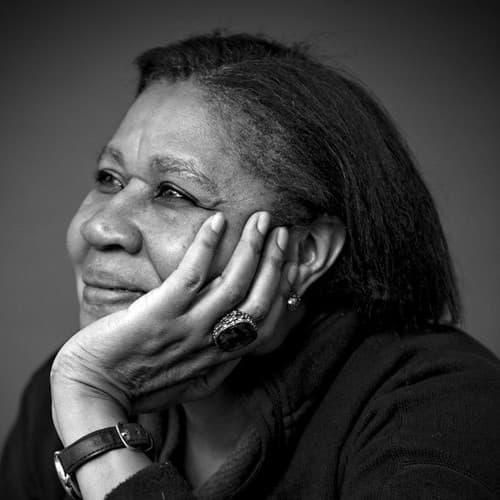
Jamaica Kincaid is an Antiguan-American novelist, essayist, gardener, and gardening writer. She was born in St. John's, Antigua. She lives in North Bennington, Vermont and is Professor of African and African American Studies in Residence at Harvard University during the academic year.







