“"It's a good thing to be happy, but it's a better thing to make others happy."”
— Anne reflecting on her life and values as a mother.

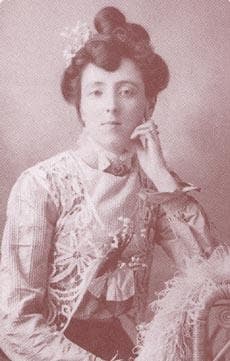
L.M. Montgomery (1939)
Genre
Children's / Historical Fiction / Young Adult / Romance
Reading Time
270 min
Key Themes
See below
Sign in to track this book
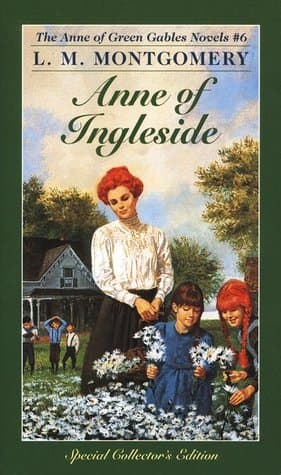
Anne Shirley Blythe, now a wife and mother of five with a new baby on the way, struggles with the fear that her husband, Gilbert, no longer loves the spirited redhead he once adored, all while dealing with an overbearing aunt.
The story begins at Ingleside, Anne and Gilbert Blythe's home, now busy with their five children: Jem, Walter, Nan, Di, and Shirley. Anne, known as Mrs. Doctor, finds joy and chaos in her daily life, managing the children's scrapes, arguments, and adventures. She is pregnant with her sixth child, which brings both excitement and tiredness. The children are shown with their distinct personalities: Jem, the oldest and responsible; Walter, the dreamer; Nan and Di, the twins with different natures; and Shirley, the youngest. Their lives are full of typical childhood escapades, from playing in the orchard to exploring the nearby woods, with Anne at the center, guiding and loving them.
A new challenge comes to Ingleside when Gilbert's Great-Aunt Mary Maria arrives. She is a strict, demanding, and hypochondriac woman, invited for a visit, much to Anne's concern. Aunt Mary Maria immediately criticizes Anne's housekeeping, her children's upbringing, and even Anne's looks. Her constant complaints about her health and her strict old-fashioned ways create a heavy atmosphere in the usually happy home. The children, especially the younger ones, find her presence confusing and annoying, and Anne tries to stay calm and keep her household peaceful despite her guest's endless negativity.
Life at Ingleside continues its lively pace through the children's daily activities. Jem, the oldest, deals with his growing sense of responsibility and his first crush. Walter, the sensitive poet, struggles with the louder parts of childhood and finds comfort in his imagination. Nan and Di, the twins, manage their different personalities, with Nan being calmer and Di more adventurous. Shirley, the youngest, provides innocent fun. Their adventures include a bad picnic, a dramatic play for the family, and various meetings with friends and neighbors in Glen St. Mary. These events show the joys and difficulties of raising a large family, often bringing Anne moments of both frustration and deep love.
Amidst the ongoing challenges, especially Aunt Mary Maria's long visit, Anne gives birth to her sixth child. The new baby is a girl, named Marilla, or 'Rilla' for short, after Anne's beloved foster mother, Marilla Cuthbert. Rilla's arrival brings great joy and a sense of completeness to the Blythe family. Even Aunt Mary Maria softens briefly at the sight of the new baby, though her critical nature soon returns. Rilla's birth emphasizes the theme of family and new beginnings, giving Anne a moment of rest and happiness, as she deeply values her growing family.
After an uncomfortably long visit, Aunt Mary Maria finally leaves Ingleside. Her departure is a clear relief for Anne, Gilbert, and especially the children. The household can finally relax, free from the heavy atmosphere of her constant complaints and criticisms. Anne, always polite, handles her aunt's departure with courtesy, but she feels a wave of peace come over her home once the demanding guest is gone. Everyone welcomes the return to their usual, happy chaos, marking the end of a difficult period and the return of Ingleside's natural warmth and joy.
Despite things returning to normal, Anne starts to worry: she fears Gilbert no longer loves her as he once did. She notices his busy schedule, his occasional distracted look, and misinterprets his quiet moments as indifference. Her strong belief in their love begins to waver, replaced by worries about her looks, her age, and her role as a busy mother. This internal struggle becomes a major source of anxiety for Anne, who, despite her outward strength, is very sensitive to her husband's affection. She begins to actively look for signs of his love, often misinterpreting innocent actions.
Anne's worries lead her to misinterpret several of Gilbert's actions. She overhears parts of conversations, sees his interactions with other women (especially his new, charming secretary, Miss Cornelia Bryant), and reads too much into his occasional tiredness or distraction. One incident involves Gilbert getting a letter he seems to keep private, which makes Anne's suspicions worse. She imagines all sorts of scenarios, from a secret affair to a growing distance between them, despite Gilbert's consistent kindness and devotion. These misunderstandings create a subtle tension in their otherwise happy marriage, mostly in Anne's worried thoughts.
Upset by her fears, Anne seeks advice from her closest friends, Diana Barry and Philippa Gordon (now Mrs. Blake). While she does not directly say she fears Gilbert is falling out of love, she hints at her general unhappiness and concern about their marriage changing. Diana, always practical and loyal, tries to reassure Anne, reminding her of Gilbert's lasting love. Philippa, with her wit and insight, offers a different view, suggesting Anne might be overthinking things but also encouraging her to address any perceived problems directly. Their advice, though well-intentioned, does not fully ease Anne's deep-seated anxieties.
Determined to regain what she sees as Gilbert's fading affection, Anne tries various ways to rekindle their romance. She tries to make herself more appealing, dressing in ways she thinks Gilbert will find attractive, trying to be more playful, and even attempting to add more 'mystery' to their relationship. These attempts, often awkward or overly self-conscious, do not work as intended, as Gilbert remains unaware of Anne's distress. Her efforts, while charming, show her vulnerability and the depth of her love for her husband, as she feels she must 'earn' his affection again.
Anne's emotional struggle reaches its peak when the truth finally comes out. Gilbert, sensing Anne's unusual mood, gently asks her to share her worries. Anne, almost in tears, admits her fear that he no longer loves her. Gilbert is completely confused and heartbroken by her confession, assuring her, with great tenderness, that his love for her has never changed. He explains that his preoccupation and the secret letter were about a professional matter — a complex medical case or a new research opportunity — and not, as Anne had feared, a sign of unfaithfulness or disinterest. He confirms his deep, lasting love for his 'irrepressible, irreplaceable redhead,' ending all of Anne's worries.
With the misunderstanding resolved, Anne feels a great weight lifted. Gilbert's heartfelt reassurance brings her peace and joy, and she realizes her insecurities were foolish. They share a tender moment of reconnection, confirming their deep love and commitment. Gilbert expresses his unwavering devotion, reminding Anne of her unique charm and beauty, inside and out. This resolution strengthens their marriage, as Anne learns to trust their lasting bond and to communicate her fears more openly. The event ultimately deepens their understanding and appreciation for each other, solidifying their partnership at Ingleside.
The Protagonist
Anne's arc involves overcoming her personal insecurities about her worth and Gilbert's love, ultimately reaffirming her confidence in their enduring bond.
The Supporting
Gilbert's arc involves recognizing Anne's unspoken anxieties and reassuring her of his steadfast love, reinforcing their marital bond.
The Supporting
Jem's arc subtly begins his transition from childhood to early adolescence, marked by burgeoning responsibility and first feelings of affection.
The Supporting
Walter's arc emphasizes his growing sensitivity and artistic inclination, setting the stage for his future character development.
The Supporting
Nan's arc shows her developing individual personality distinct from her twin, leaning towards a quieter, more reflective nature.
The Supporting
Di's arc showcases her vibrant and adventurous spirit, establishing her as the more outgoing twin.
The Supporting
Shirley's arc is less defined, serving to represent the innocent younger years of childhood within the bustling family.
The Antagonist
Aunt Mary Maria's arc is static; she arrives, causes disruption, and eventually leaves, serving as a catalyst for Anne's resilience.
The Supporting
Diana's arc is consistent; she provides unwavering support and practical advice to Anne, embodying steadfast friendship.
The Supporting
Philippa's arc is consistent; she offers a different, more worldly perspective to Anne, prompting Anne to self-reflect.
This theme explores the complexities and lasting strength of Anne and Gilbert's marriage, even after years and children. Anne's worries about Gilbert's love, fueled by his distraction and her own aging, show the internal struggles that can happen in long-term relationships. However, the resolution confirms that true love, built on deep understanding and respect, can overcome doubts and misunderstandings, as Gilbert clearly assures Anne of his constant devotion. The theme suggests that while the 'spark' may change, the core love grows deeper with time and shared experiences.
“"Oh, Anne, my Anne, don't you know? I love you more than ever, my dear. More than I loved that red-haired girl I married years ago. You are my life, my heart, my soul."”
The novel is largely a portrayal of motherhood and the busy life of a large family. Anne's life at Ingleside is centered on her six children, each with distinct personalities and needs. The daily routines, the children's adventures, their arguments, and their moments of deep affection show the joys and difficulties of raising a family. Anne's dedication to her children and her home is central, showing the sacrifices and great rewards of maternal love. Aunt Mary Maria's arrival further highlights Anne's strength in keeping her family's harmony.
“"It was a house full of life, and laughter, and tears, and squabbles, and reconciliations, and the hundred and one little things that make up the chronicle of a happy home."”
Despite her past confidence and spirited nature, Anne struggles with significant self-doubt in this part of her life. Her worries about aging, her appearance, and the perceived decrease in Gilbert's affection are central to her internal struggle. This theme explores how even strong, loved individuals can experience deep insecurities, especially when faced with time passing and the demands of adulthood. Anne's journey to overcome these doubts is a relatable part of the human experience, showing that self-acceptance is an ongoing process.
“"Was she losing her charm? Had she grown too old, too busy, too much a mother and too little a wife to hold his love?"”
Ingleside itself is a central theme, representing home as both a great comfort and an occasional challenge. It is Anne's cherished sanctuary, filled with her family's warmth and beloved memories. However, it also becomes a place of temporary tension with Aunt Mary Maria's arrival, testing Anne's ability to keep its peaceful atmosphere. The children's adventures in and around Ingleside further establish its role as a lively, living entity, a place where life unfolds in all its messy, beautiful ways. The theme highlights the importance of home as a foundation for identity and happiness.
“"There was no place like Ingleside, with its laughter and its loves, its sun and its shadows, its storms and its calms."”
Anne's internal misinterpretation of Gilbert's actions drives the central conflict.
The primary plot device is Anne's misinterpretation of Gilbert's preoccupied behavior and a 'secret' letter. Gilbert's busyness as a doctor and his discreet handling of a professional matter are misconstrued by Anne as signs of waning affection or even infidelity. This internal miscommunication fuels Anne's insecurities and propels the emotional tension of the novel, creating a conflict that exists almost entirely within Anne's mind until its eventual resolution through open dialogue. It highlights how assumptions, rather than facts, can lead to significant distress in relationships.
Aunt Mary Maria's critical nature highlights Anne's patience and the warmth of Ingleside.
Aunt Mary Maria serves as a foil to Anne. Her critical, rigid, and complaining personality starkly contrasts with Anne's imaginative, optimistic, and nurturing nature. Her presence at Ingleside, with her constant criticisms of Anne's parenting and housekeeping, serves to highlight Anne's patience, resilience, and the inherent warmth and joy of the Blythe household. She acts as an external antagonist, creating domestic friction that temporarily disrupts the family's peace and indirectly pushes Anne to assert her values and protect her home's atmosphere.
Ingleside symbolizes Anne's cherished family life and personal contentment.
Ingleside, the Blythe family home, functions as a powerful symbol throughout the novel. It represents Anne's domestic happiness, the culmination of her dreams for a loving family and a beautiful home. It symbolizes security, warmth, and the vibrant, sometimes chaotic, reality of a large family. When Aunt Mary Maria's presence threatens its harmony, it underscores the importance of protecting this cherished space. The house is not merely a setting but an embodiment of Anne's identity as a wife and mother, reflecting the state of her contentment and the life she has built.
The children's individual adventures and growth provide subplots reflecting their developing personalities.
While Anne's marital anxieties form the main plot, the various subplots involving the Blythe children function as a collective coming-of-age device. Each child, particularly Jem, Walter, Nan, and Di, experiences small, age-appropriate adventures, challenges, and personal growth. These episodes—Jem's first crush, Walter's poetic musings, the twins' contrasting personalities—show their individual development and foreshadow their future roles. This device adds depth and realism to the family dynamic, reminding the reader of the ongoing cycle of life and growth within the household, even as Anne grapples with her adult concerns.
“"It's a good thing to be happy, but it's a better thing to make others happy."”
— Anne reflecting on her life and values as a mother.
“"The world is full of interesting people, if you only know how to look for them."”
— Anne encouraging her children to observe and appreciate others.
“"There's always something to be thankful for, if you look for it."”
— Anne comforting one of her children during a difficult moment.
“"Imagination is a good thing, but it must be kept in its proper place."”
— Anne pondering the balance between imagination and practicality.
“"It isn't what you have, but what you are, that makes you happy."”
— Anne sharing a life lesson with one of her children.
“"Home isn't a place, it's a feeling."”
— Shirley, one of Anne's children, expresses his understanding of home.
“"You can't expect everyone to understand you, but you can always try to understand them."”
— Anne offering advice on interpersonal relationships.
“"Life is full of little trials, but it's also full of little joys."”
— Anne reflecting on the everyday ups and downs of life.
“"Sometimes the most ordinary things are the ones that are most important."”
— Anne appreciating the simple moments of family life.
“"Children are not a distraction from more important work. They are the most important work."”
— Anne's internal thoughts on the significance of raising her family.
“"A house is just a house, but a home is where your heart is."”
— Anne explaining the difference between a physical dwelling and a true home.
“"It's not always easy to do the right thing, but it's always worth it in the end."”
— Anne guiding her children on moral choices.
“"The best way to make a friend is to be a friend."”
— Anne offering a simple truth about friendship.
“"There's a great deal of comfort in knowing you're loved."”
— Anne appreciating the love within her family.
“"Every day is a new beginning, a chance to do things better."”
— Anne's hopeful outlook on life and personal growth.
Ready to see how well you understood this book? Take our interactive quiz with 10 questions.
Biography coming soon.

Dan Gemeinhart
4.5

Kate O'Hearn
4.4

Jeanne Birdsall
4.4

Jen Wang
4.4

Wendelin Van Draanen
4.3

John Marsden
4.3

Chris Van Allsburg
4.3

Jennifer A. Nielsen
4.2