“There are three things I know for sure: first, that I have a body. Second, that I am alive. And third, that I will die.”
— Lena's foundational truths about existence.

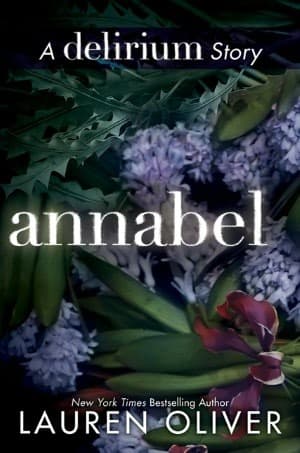
Lauren Oliver (2012)
Genre
Fantasy / Science Fiction / Young Adult / Romance
Reading Time
30 min
Key Themes
See below
Sign in to track this book
In a world where love is a disease, a mother's past of forbidden romance, failed cures, and imprisonment unfolds, revealing the defiant spirit she passed to her daughter.
Lena Halloway, at sixteen, knows the official story of her mother, Annabel, who supposedly died by suicide when Lena was six. Lena feels a void, a 'ghost' where her mother should be, and struggles with questions about Annabel's death. The story hints at an oppressive society where love is a disease, 'amor deliria nervosa,' and a 'cure' is mandatory for all adults. Lena's thoughts show her skepticism about the story she has been told, setting the stage for the truth about her mother's fate and the secrets of their world.
Annabel, in her youth, recounts meeting William Haloway at a concert. The world is less controlled then, with the 'cure' for love still new and not yet enforced. She is drawn to William's passion and their connection. Their relationship grows quickly, defying the societal norms that would later dictate sterile, arranged partnerships. This period in Annabel's life is marked by freedom, intense emotion, and falling in love before the government's regulations descend.
Annabel, now pregnant with Lena, is forced to undergo the 'cure' for amor deliria nervosa. The procedure is invasive and numbing. However, despite the doctors' assurances, Annabel realizes the cure has not worked. Her love for William persists, a silent act of defiance within her. This revelation is a moment that highlights her resistance to societal control and foreshadows the dangers she will face for harboring such an 'illegal' emotion.
After Annabel's failed cure and the birth of their first daughter, William and Annabel decide to flee to the Wilds, the unregulated territories outside the cities. Here, they live freely, raising Lena and her younger sister, Hana, without the threat of the cure or government surveillance. Annabel describes their existence as challenging but filled with love and family bonds, a contrast to the sterile lives within the city. This period represents a brief peace before the authorities' inevitable intrusion.
Their peace in the Wilds is shattered when government Regulators raid their home. Annabel recounts the chaos, the violence, and the desperate attempt to protect her children. Annabel is captured, and Lena is taken back to the city, where she is told her mother died by suicide. This event separates mother and daughter, initiating Lena's life under the government's false story and Annabel's long imprisonment.
Annabel's story shifts to her present imprisonment in a bleak, isolated cell. She endures harsh conditions, deprivation, and constant interrogation. Despite attempts to break her spirit and erase her memories of love, Annabel clings to the word 'Love,' scratching it repeatedly into the walls of her cell. This act is a symbol of her enduring spirit and her refusal to let go of the emotion that defines her. Her hope for escape and reunion with her daughters fuels her resilience.
While in prison, Annabel is subjected to another, more aggressive 'cure' designed to erase her love for William and her children. The procedure is more traumatic than the first, yet it again proves ineffective. Annabel's love persists, showing its depth and her resistance. This second failure reinforces her unique place within this dystopian society and strengthens her resolve to escape, knowing that her core identity remains intact.
Annabel dedicates herself to planning her escape. She observes the routines of her guards, the prison layout, and any security weaknesses. Her years of confinement have sharpened her intellect and resolve. She uses her time to gather information, develop a strategy, and prepare herself for the task ahead. This period shows Annabel's resourcefulness and determination, turning her hopeless situation into a calculated mission for freedom.
Annabel puts her escape plan into action. The story details the tense, dangerous moments as she navigates the prison, evading guards, using her knowledge of the facility, and overcoming physical barriers. The escape is perilous, demanding all of Annabel's strength, cunning, and courage. She faces down the system that held her captive, driven by the desire to be reunited with her daughters and to finally live free.
Annabel successfully makes it out of the prison and into the Wilds. The feeling of freedom is overwhelming, a contrast to the years of confinement. However, her journey is far from over. She is now a fugitive in a hostile world, with the immediate goal of finding her daughters, particularly Lena. The story concludes with Annabel, bruised but unbroken, walking into an uncertain future, her heart still beating with the forbidden emotion of love and a resolve to find her family.
The Protagonist
Annabel transforms from a rebellious teenager in love to a hardened, resourceful prisoner, and finally, to a determined fugitive, always driven by her enduring love.
The Supporting
Lena is introduced as a daughter unknowingly living a lie, setting the stage for her eventual discovery of the truth about her mother.
The Supporting
William's arc is largely seen through Annabel's memories, representing the love and family she lost and fights to reclaim.
The Mentioned
Hana's role is primarily to deepen Annabel's motivation for escape and reunion.
The Antagonist
The Regulators serve as the constant, unyielding opposition to Annabel's freedom and love.
The central theme is the strength of love in the face of oppression. Annabel's love for William and her children persists despite two 'cures,' years of imprisonment, and the government's efforts to eradicate it. Her act of scratching 'Love' into her prison cell walls (Plot Summary, Section 6) is a symbol of this resilience, showing that true emotion cannot be extinguished by force or medical intervention. This theme makes love a revolutionary act.
“They could not take it from me. They could not take it from me. They could not take it from me.”
The story shows the human spirit's capacity for rebellion against totalitarian control. Annabel's entire life, from her teenage romance with William (Plot Summary, Section 2) to her escape from prison (Plot Summary, Section 9), is an act of defiance. She refuses to conform to a society that dictates emotions and curtails freedom. Her flight to the Wilds and her fight for survival and freedom highlight the human desire for autonomy and the rejection of imposed conformity.
“I was a fighter. I always had been. I always would be.”
Annabel's journey is rooted in her identity as a mother. Her decision to live in the Wilds, her capture, and her hope are all driven by her love for Lena and Hana. The sacrifice of her freedom and years of her life are endured with the goal of reuniting with her daughters. The emotional weight of their separation (Plot Summary, Section 5) and Annabel's constant thoughts of them underscore the selfless nature of maternal love, making it a motivator for survival and escape.
“I had to get back to them. I had to.”
The story explores how truth can be manipulated and suppressed by those in power, and the impact of these lies. Lena grows up believing a fabricated story of her mother's suicide, a lie perpetuated by the government to maintain control and erase dissent (Plot Summary, Section 1). Annabel's story reveals the reality behind this deception, highlighting the importance of seeking truth and challenging official narratives. The contrast between Lena's belief and Annabel's experience underscores the theme.
“They told Lena I was dead. They told her I killed myself. But it was a lie.”
The story shifts between Annabel's past and present, and briefly to Lena's perspective.
The novella employs alternating chapters that jump between Annabel's past (her youth, falling in love, life in the Wilds) and her present (imprisonment, escape), with an initial brief interlude from Lena's perspective. This structure allows for a rich, layered understanding of Annabel's character and the dystopian world. It builds suspense by revealing Annabel's history and the origins of her predicament while simultaneously showing her current struggle for freedom, creating a comprehensive picture of her journey and the stakes involved.
A medical procedure designed to eradicate 'amor deliria nervosa'.
The 'cure' is a central plot device, serving as the primary tool of oppression in the dystopian society. It is a medical procedure intended to remove the capacity for love, deemed a disease. Annabel's unique resistance to two separate 'cures' (Plot Summary, Sections 3 & 7) highlights her exceptionalism and the inherent strength of her emotions. This device creates significant conflict, drives Annabel's persecution, and underscores the central theme of love's enduring power against scientific and governmental control.
The unregulated, dangerous territories outside the controlled cities.
The Wilds serve as a crucial setting and plot device, representing freedom and rebellion. It is where Annabel and William seek refuge to raise their family outside the government's purview (Plot Summary, Section 4). It is also Annabel's destination after her escape (Plot Summary, Section 10), symbolizing hope and the possibility of a life unburdened by the cure. The Wilds contrast sharply with the sterile, controlled cities, embodying the choice between conformity and a dangerous, but authentic, existence.
Annabel repeatedly scratches the word 'Love' into her prison cell wall.
This simple, repetitive act is a powerful symbol of Annabel's defiance and the enduring nature of love. Confined and stripped of everything, her physical act of carving 'Love' into the stone (Plot Summary, Section 6) represents her internal resistance. It's a silent scream against her oppressors, a tangible manifestation of her refusal to let go of her most precious emotion. This device reinforces the central theme and provides a poignant image of her resilience.
“There are three things I know for sure: first, that I have a body. Second, that I am alive. And third, that I will die.”
— Lena's foundational truths about existence.
“Love: a single word, a wispy thing, a word no bigger or longer than an insect's wing. But the thing is, it's a word that can make a whole world implod.”
— Lena reflecting on the power and danger of love.
“They say you can't be free until you've been loved. I say you can't be loved until you're free.”
— Lena's paradoxical view on freedom and love.
“It's a lot easier to be angry at someone than it is to tell them you're hurt.”
— Lena's internal struggle with expressing vulnerability.
“Things change. And friends leave. Life doesn't stop for anybody.”
— Lena realizing the inevitability of change and loss.
“I'm not going to be some hopeless girl who doesn't know what she wants.”
— Lena asserting her determination and agency.
“Maybe love is a risk, but it's a risk I'm willing to take.”
— Lena embracing the potential dangers of love.
“The cure for love is to love more.”
— Lena's surprising conclusion about dealing with love.
“We are not just the sum of our experiences, but what we choose to do with them.”
— Lena's philosophy on agency and personal growth.
“Sometimes, the only way to find yourself is to get lost.”
— Lena's journey of self-discovery through adversity.
“Fear can be a good thing. It can keep you alive. But it can also keep you from living.”
— Lena contemplating the dual nature of fear.
“There is no such thing as a perfect life. There are only perfect moments.”
— Lena's realization about the nature of happiness.
“To remember is to live. To forget is to die.”
— Lena's profound statement on the importance of memory.
“The greatest danger is not what we don't know, but what we think we know that isn't true.”
— Lena's insight into the perils of misinformation.
Ready to see how well you understood this book? Take our interactive quiz with 10 questions.

Biography coming soon.







