“There are some things even emperors cannot command.”
— Anna reflects on her father's power, specifically regarding her brother John's birth.

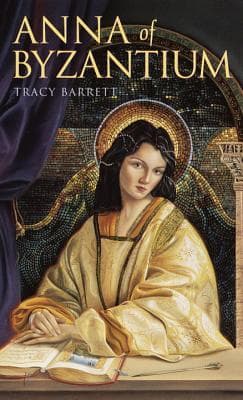
Tracy Barrett (1999)
Genre
Children's / Historical Fiction / Young Adult
Reading Time
210 min
Key Themes
See below
Sign in to track this book
A brilliant and ambitious Byzantine princess, raised for the throne, fights to reclaim her destiny when her brother's birth and her grandmother's scheming take away her inheritance.
Anna Comnena, the eldest child of Emperor Alexius I Comnenus and Empress Irene, grows up in the Great Palace of Constantinople believing she is her father's chosen successor. Her grandmother, Maria Ducas, a powerful figure, reinforces this idea, teaching Anna history, strategy, and governance. Anna, intelligent and ambitious, learns these lessons, seeing herself as the future ruler of the Byzantine Empire. A prophecy says a son will eventually rule, a detail Anna and her family mostly disregard. Her early life includes a close bond with her parents and grandmother, and a belief that the throne is hers.
The birth of Anna's younger brother, John, at first does not seem to threaten her goals. Anna, though briefly jealous of the attention he receives, believes her position as firstborn and her father's preference for her intellect will secure her succession. However, Byzantine political reality favors a male heir. While Emperor Alexius supports Anna outwardly, a son presents an undeniable alternative. Grandmother Maria, watching power dynamics, begins to change her advice, though Anna is too focused on her learning and perceived destiny to fully understand the coming changes.
To strengthen Anna's claim to the throne, Emperor Alexius arranges her betrothal to Constantine Ducas, a young co-emperor and son of the previous emperor, Michael VII Ducas. This alliance merges the Comnenus and Ducas families and gives Anna a politically powerful husband. Anna likes the arrangement, seeing it as another step towards her coronation. She develops affection for Constantine, who is kind and supportive, and they are educated together for their future joint rule. This time is the peak of Anna's perceived security in her imperial destiny.
Tragedy happens when Constantine Ducas becomes gravely ill. Despite the court physicians' efforts, his condition worsens, and he dies. This event is a great blow to Anna, personally and politically. She mourns her betrothed, but also understands how his death affects her claim to the throne. Without Constantine, her position as empress-in-waiting becomes weaker, as the main political reason for her succession (marrying into the previous imperial line) is gone. The court's focus shifts more towards John as the potential male heir.
Under pressure from the court, army, and church, all favoring a male successor, Emperor Alexius decides to proclaim John as co-emperor. This public declaration, when John is still a child, disinherits Anna and shatters her dreams of ruling. Anna is at the ceremony and feels betrayed and unjustly treated. She feels her father has abandoned her and that her lifelong preparation for the throne is meaningless. Her relationship with her parents, especially her father, becomes strained.
After John's proclamation, Anna enters a time of deep bitterness and anger. She withdraws from her family, feeling isolated and betrayed. Her once-close relationship with her grandmother, Maria Ducas, also sours as Anna sees her grandmother as having failed to protect her interests or, worse, having helped her downfall. Anna struggles to accept her perceived destiny with her new reality. She observes John, whom she now sees as the usurper, with disdain and a grudging acknowledgment of his growing importance, fueling her desire for revenge and to reclaim what she believes is hers.
As Anna becomes a young woman, she marries Nikephoros Bryennios, a general and scholar from an aristocratic family. This marriage is not for love, but a strategic alliance. Nikephoros, a respected figure, is also ambitious and gives Anna a powerful ally and a way to challenge John's succession. Anna sees her husband as a tool to further her own political goals, believing that with his influence and support, she might still be able to overturn her brother's claim to the throne. This marriage marks a turning point, as Anna begins to plot her return to power.
With Emperor Alexius's health failing, Anna sees a chance to act. She, her mother Empress Irene, and her husband Nikephoros Bryennios, begin to conspire to replace John with Nikephoros upon Alexius's death. Their plan involves using Nikephoros's military influence and Irene's imperial authority to secure the throne. Anna leads this conspiracy, fueled by her resentment and belief in her own rightful claim. They secretly gather support, but the plot is dangerous, and the loyalties of various factions are uncertain.
Emperor Alexius dies. In the chaotic moments after his death, the conspirators try to carry out their plan. However, John, warned by loyal advisors and showing unexpected determination, acts quickly. He secures the imperial seal and gains the support of the Varangian Guard and other key military figures. Despite Anna's and Irene's efforts to persuade the dying Alexius to name Nikephoros, John's prior proclamation and his decisive actions upon his father's death ensure his smooth succession. John is crowned Emperor John II Comnenus, to Anna's bitter disappointment.
Even after John's coronation, Anna does not give up. She plans to assassinate John and place Nikephoros on the throne. She urges her husband to take action. However, Nikephoros, either out of loyalty to John, fear of failure, or an aversion to killing, refuses. His refusal angers Anna, but it ends her last effort. The conspiracy is discovered, and while John shows leniency, Anna and Nikephoros are stripped of their wealth and exiled to a monastery. This marks the end of Anna's direct pursuit of political power.
In the monastery, Anna, though at first consumed by anger and despair, gradually finds a new purpose. She devotes herself to scholarship, a passion she always had but had put aside for her political ambitions. She begins writing the 'Alexiad,' a detailed historical account of her father, Emperor Alexius I Comnenus's reign. This work lets her use her intellect and preserve her family's legacy, though from a biased perspective. Through writing, Anna reclaims a sense of purpose, turning her bitterness into a lasting contribution to history and literature. Her exile becomes a time of intellectual growth, born from great loss.
The Protagonist
From an entitled, power-hungry princess, Anna is stripped of her imperial destiny, leading her through a period of intense bitterness and resentment, before finding a new purpose and legacy in writing history.
The Supporting
Starts as a strong, relatively unchallenged emperor who must make a difficult decision regarding succession, leading to a strained relationship with his favorite daughter.
The Supporting
Remains a consistent, supportive figure for Anna, even as it leads her into political intrigue.
The Supporting
Begins as a powerful mentor, but her pragmatism leads her to subtly shift allegiance, creating a rift with Anna.
The Antagonist/Supporting
Grows from an innocent child to an unexpectedly capable and merciful emperor, overcoming his sister's plots.
The Supporting
Serves as a symbol of Anna's early, seemingly secure future, whose death precipitates her downfall.
The Supporting
From an ambitious general, he becomes a reluctant conspirator, ultimately choosing morality over power, leading to his and Anna's exile.
The Mentioned
Remains a steadfast and loyal servant to Anna throughout her trials.
The novel explores the corrupting nature of ambition, especially through Anna Comnena. From a young age, Anna is groomed for power, leading her to believe the throne is her birthright. Her pursuit of power, fueled by intelligence and entitlement, drives her to conspire against her brother and alienate her family. This theme shows how unchecked ambition can lead to bitterness, betrayal, and a loss of what one truly values, as seen in Anna's repeated attempts to seize the throne and her eventual exile.
““I was born to rule. It was my destiny, my right, and they had stolen it from me.””
Betrayal is a central theme, felt most by Anna. She feels betrayed by her father, Emperor Alexius, who names John as his successor despite years of preparing Anna for the role. This initial betrayal creates deep resentment in Anna, which she carries throughout the novel, fueling her conspiracies. She also feels betrayed by her grandmother, Maria Ducas, and eventually her husband, Nikephoros, who refuses to carry out her final, most drastic plot. The theme shows how perceived betrayals can poison relationships and lead to destructive actions, shaping Anna's character and her tragic path.
““How could my father, who had always praised my mind, my spirit, cast me aside for a babe?””
The novel shows the patriarchal norms of the Byzantine Empire regarding imperial succession. Despite Anna's intelligence and training, her gender is the barrier to the throne. Pressure from the court, the army, and tradition for a male heir forces Emperor Alexius to choose John over Anna. This theme highlights the historical limitations placed on women, even those of privilege and capability, and the societal expectations that dictate who is 'fit' to rule, regardless of individual merit. Anna's struggle comes from these ingrained gender roles.
““A woman on the throne? The people would never accept it, no matter how clever she was.””
The book explores different aspects of power and leadership. Emperor Alexius shows pragmatic leadership, making difficult choices for the empire's stability, even if it means sacrificing personal sentiment. Maria Ducas shows manipulative power, using influence and strategy behind the scenes. Anna, in her ambition, seeks overt, absolute power, believing her intelligence alone qualifies her. The story questions what truly makes effective leadership: intelligence, birthright, popular support, or the ability to make hard decisions? John's unexpected, measured leadership contrasts with Anna's more volatile ambition.
““The Empire demands a strong hand, a steady hand, and sometimes, a hand that can make the hardest choices.””
A theme, especially towards the novel's end, is the creation of one's legacy and the subjective nature of historical narrative. After her exile, Anna writes the 'Alexiad,' her father's history. This allows her to shape the story of her family and her era, securing her intellectual legacy. The novel suggests that history is often written by the powerful or the articulate, and that Anna's account, while valuable, is filtered through her own experiences, biases, and resentments. This theme shows the power of storytelling to define events and individuals for the future.
““If I could not rule, then I would make sure that my voice, and my father’s story, would echo through the ages.””
Foreshadows John's ascension and Anna's downfall.
A recurring prophecy, mentioned early in the book, foretells that a son will rule the Byzantine Empire. This device serves as a constant undercurrent of tension and foreshadowing, even as Anna and her family initially dismiss it. It subtly undermines Anna's confidence and reinforces the traditional expectations for a male heir, making John's eventual proclamation less of a surprise and more of a fulfillment of an ancient decree. The prophecy highlights the struggle between individual ambition and predetermined fate or societal expectation.
Anna's historical account, serving as a framing device and her ultimate legacy.
The 'Alexiad' is the real-life historical work written by Anna Comnena, and in the novel, it functions as both a narrative endpoint and a symbolic resolution for Anna. Its mention early on grounds the story in historical fact, and its eventual creation by Anna in exile provides her with a new purpose after her political ambitions are thwarted. It represents her intellectual legacy and her way of asserting control over her family's narrative, even if she couldn't control her own political destiny. It's an example of art born from suffering.
The constant maneuvering and strategic alliances within the Byzantine court.
The Byzantine court is depicted as a hotbed of political intrigue, where alliances shift, and power is constantly negotiated. This serves as a primary plot device, driving much of the conflict. Anna's education in strategy by Maria Ducas, her strategic betrothal to Constantine, and her later conspiracies with her mother and husband are all examples of this 'political chess.' It highlights the complex, often ruthless, nature of imperial power and the constant need for vigilance and manipulation to survive and thrive within the court hierarchy.
A physical symbol of imperial authority and legitimate succession.
The Imperial Seal is a crucial symbolic and plot device, particularly during Emperor Alexius's death. Its possession signifies legitimate imperial authority. John's swift action in securing the seal immediately after his father's passing is a decisive moment that confirms his ascension and thwarts Anna's immediate plans. It represents the tangible transfer of power and the importance of symbolic acts in securing a claim to the throne, underscoring the legal and ceremonial aspects of Byzantine succession.
“There are some things even emperors cannot command.”
— Anna reflects on her father's power, specifically regarding her brother John's birth.
“The greatest glory is not in never falling, but in rising every time we fall.”
— Anna is given advice about resilience and perseverance.
“A woman's mind is a more powerful weapon than any sword.”
— Anna often uses her intellect to navigate the treacherous court.
“History is written by the victors, but truth is remembered by those who live through it.”
— Anna considers the narratives surrounding historical events and her own experiences.
“Even in the emperor's palace, a cage is still a cage.”
— Anna feels confined by her royal duties and expectations.
“Love, like a good book, can transport you to another world.”
— Anna contemplates her feelings and the escape reading provides.
“Sometimes the most dangerous enemies are those who appear to be your friends.”
— Anna learns about court intrigue and betrayal.
“Knowledge is a light in the darkness, and I will always seek its glow.”
— Anna's passion for learning and scholarship is a recurring theme.
“The future is a tapestry woven with threads of choice and destiny.”
— Anna reflects on her path and the decisions she faces.
“A princess might wear silk, but she still bleeds red.”
— Anna recognizes her shared humanity despite her royal status.
“Silence can be a shield, or it can be a sword.”
— Anna understands the strategic use of silence in court.
“To rule is not merely to command, but to understand the hearts of your people.”
— Anna considers what makes a good ruler.
“Even the strongest walls can crumble from within.”
— Anna observes the internal weaknesses and conflicts within the Byzantine Empire.
“The past is never truly gone; it echoes in the present.”
— Anna often refers to historical events and their impact on current affairs.
Ready to see how well you understood this book? Take our interactive quiz with 10 questions.

Biography coming soon.

Dan Gemeinhart
4.5

Kate O'Hearn
4.4

Jeanne Birdsall
4.4

Jen Wang
4.4

Wendelin Van Draanen
4.3

John Marsden
4.3

Chris Van Allsburg
4.3
Jennifer A. Nielsen
4.2