“She had learned that the only way to get a man to be honest was to make him feel like he was doing her a favor.”
— Anil's observations on human interaction and manipulation.

Michael Ondaatje (2011)
Genre
Literary Fiction / Historical Fiction / Mystery
Reading Time
360 min
Key Themes
See below
Sign in to track this book
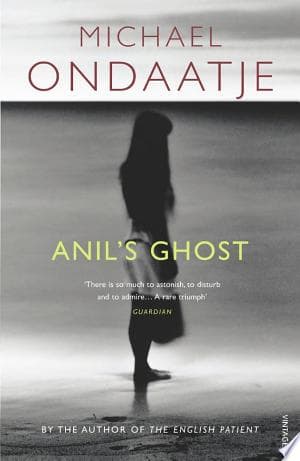
A forensic anthropologist returns to war-torn Sri Lanka to identify a murder victim found in an ancient burial site, forcing her to face her homeland's civil conflict and her own past.
Anil Tissera, a Sri Lankan-born forensic anthropologist for a human rights organization, is sent back to her home island to investigate politically motivated murders. Having lived abroad for fifteen years, she is a detached observer, but still connected to the island's trouble. She works with Sarath Diyasena, an archaeologist assigned by the government. Their first job is to examine a newly found skeleton in an ancient burial site, which Anil immediately suspects is not old but a recent victim of the civil war. This discovery sets the stage for her dangerous and emotional investigation into the island's 'disappeared' citizens.
Anil and Sarath begin their work at the archaeological site known as the 'Cave of the Reclining Buddha.' While examining a skeleton, Anil's forensic skill quickly shows that despite its placement among ancient remains, it is a modern skeleton, likely a victim of recent violence, not an ancient burial. The government's archaeologist, Sarath, is at first hesitant to accept this politically sensitive truth. They give the unidentified male victim the codename 'Sailor' because of a distinct detail found with the body. This discovery challenges the official story and marks the start of their dangerous search for truth during the civil war.
To identify 'Sailor,' Anil and Sarath begin a careful and dangerous investigation. They examine the bones closely, looking for unique marks that could lead to identification. Their work takes them across war-torn Sri Lanka, a journey full of danger and constant watch. They meet different people, some helpful, others suspicious or dangerous, all living under the shadow of violence. Anil's scientific exactness clashes with Sarath's more intuitive, culturally sensitive approach, yet their shared goal of finding the truth connects them. They follow faint clues, knowing that revealing 'Sailor's' identity could expose powerful figures responsible for atrocities.
Sarath decides to ask his estranged older brother, Palipana, for help. Palipana is a talented but reclusive archaeologist and sculptor who lost his sight years ago. Palipana lives alone, focused on his art and memories. Sarath believes Palipana's unique understanding of the human body, developed through years of sculpting and archaeology, might help them identify 'Sailor' by analyzing the bones. Anil is at first doubtful of this unusual method, preferring scientific approaches. However, Palipana's deep insight into the human form, despite his blindness, proves surprisingly valuable, offering a different view of the physical evidence and the stories within the bones.
Palipana, using his highly developed sense of touch, examines 'Sailor's' bones. He runs his sensitive fingers over the skeletal remains, feeling for unusual features and wear patterns. Through this close, almost spiritual connection with the bones, Palipana concludes that 'Sailor' was likely a gem cutter, based on specific wear on his finger bones, showing he held and worked with small, hard objects precisely for long periods. This unexpected and exact detail gives Anil and Sarath their most important lead yet, narrowing their search and suggesting a possible profession for their unidentified victim, connecting him to a specific community and trade.
Following Palipana's lead, Anil and Sarath travel to a remote gem-mining area known for its skilled gem cutters. Their journey takes them through dangerous, disputed territories, showing how widespread the civil war is. In this village, they quietly ask about missing gem cutters. The villagers are cautious and scared, used to silence and suspicion. Anil and Sarath navigate this environment carefully, trying to gain trust without attracting unwanted attention from authorities or militant groups. Their search is slow and difficult, as they gather fragments of information from fearful residents, hoping to find someone who recognizes the description of a missing gem cutter matching 'Sailor's' characteristics.
In the gem-mining village, Anil and Sarath eventually hear stories of a missing gem cutter named Gamini. His life story, his skills, and the details of his disappearance begin to match the forensic evidence from 'Sailor.' They learn that Gamini was an innocent civilian caught in the conflict, taken by unknown forces. The villagers' quiet accounts paint a picture of a talented person whose life was cut short. This breakthrough feels both successful and terrible, as the abstract 'Sailor' starts to become a concrete, tragic identity, bringing them closer to the horrifying truth of his murder and the people responsible.
As Anil learns more about the atrocities and sees the widespread fear and suffering in her homeland, her professional detachment begins to break down. The stories of the disappeared, the faces of the grieving, and the harsh reality of violence force her to confront her own identity and her connection to Sri Lanka. She feels a deep sense of responsibility and grief, moving beyond scientific inquiry to a deeply personal involvement with the victims' situation. Her talks with Sarath, who shows a more traditional, spiritual understanding of the land and its people, further deepen her emotional state, challenging her Western-trained objectivity.
Sarath continues his own investigations, often separate from Anil's, using his local knowledge and connections. He eventually finds a critical piece of information that clearly identifies 'Sailor' and implicates high-ranking officials in his murder. However, before he can fully share this with Anil or the human rights group, Sarath is brutally murdered, his body found in a public place, a clear warning. His death is a terrible blow to Anil and a harsh reminder of the extreme dangers they face in seeking justice. It also leaves Anil with the burden of continuing the investigation alone, now with a personal desire for revenge for her colleague.
After Sarath's murder, political pressure on Anil grows, and her safety is severely threatened. The human rights organization, seeing the extreme danger, orders her to leave Sri Lanka. Anil departs, heartbroken and frustrated, unable to fully expose the truth she and Sarath had uncovered. She carries with her the knowledge of 'Sailor's' identity, Gamini, and the names of those responsible, as well as deep grief for Sarath. Her departure shows the limits of outside help in a deeply rooted conflict, but also the lasting power of individual efforts to witness and seek justice, even if the full results of their discoveries are not realized.
After Anil leaves and Sarath dies, Palipana stays in his isolated home, continuing his work as a sculptor. His art, especially his Buddha carvings, takes on new meaning, representing the suffering and resilience of the Sri Lankan people. Despite his blindness, his hands continue to 'see' and create, turning raw materials into figures that hold both beauty and sorrow. He represents a different kind of resistance, one rooted in culture, memory, and the enduring human spirit, a quiet defiance against the violence around him. His work becomes a record of the lives lost and the stories that must not be forgotten.
The novel ends with the truth about 'Sailor' (Gamini) known to Anil and a few others, but the perpetrators mostly unpunished. The civil war continues, and the cycle of violence and impunity persists. Anil, back in the West, continues her work, forever changed by her experiences in Sri Lanka and the loss of Sarath. The story shows the complex nature of truth and justice in times of conflict, where complete answers are often hard to find. The story honors the victims and those who risk their lives to uncover the truth, even if the full impact of their discoveries remains unrealized.
The Protagonist
Anil transforms from a detached scientific observer to an emotionally invested advocate, grappling with her identity and the profound impact of her homeland's suffering.
The Supporting
Sarath deepens his commitment to truth and justice, ultimately sacrificing his life for it.
The Supporting
Palipana remains a steadfast source of wisdom and cultural memory, his art serving as a silent testament to the suffering and resilience of his people.
The Mentioned
Gamini's arc is posthumous; his identity is slowly revealed, transforming him from an anonymous skeleton into a symbol of the war's innocent victims.
The Supporting
Faisal's brief appearance and tragic death establish the perilous context for the main investigation.
The Supporting
Gratien remains a steady, compassionate presence, bearing witness to the human cost of the conflict.
The Mentioned
The villagers' collective narrative gradually unfolds, revealing the personal tragedy behind the broader political violence.
At its heart, the novel is a search for truth in a country where it is hidden. Anil, a forensic anthropologist, uses science to name the disappeared, while Sarath uses local knowledge and instinct. Their combined efforts show the many ways to seek truth. The quest for justice for 'Sailor' (Gamini) is not just about identifying a victim but about exposing the systematic violence and human rights abuses during the civil war. The novel suggests that while complete justice may be hard to achieve, witnessing and uncovering the truth is a strong form of resistance.
“She was a scientist, not a historian. But the skeleton was a book. She had to learn its language.”
Anil's return to Sri Lanka forces her to face her own complex identity as someone born there but educated and living in the West. She struggles with feeling like an outsider and a renewed connection to her homeland's suffering. The novel explores how personal identity is shaped by national history, culture, and conflict. Identifying 'Sailor' (Gamini) is also a central theme of identity, giving a name and a story to an anonymous victim, thus restoring his humanity and acknowledging his existence amid widespread dehumanization. The characters, especially Anil and Sarath, represent different parts of Sri Lankan identity during a crisis.
“She was a fragment of the country, and the country was a fragment of her.”
The civil war in Sri Lanka is the constant background, and the novel clearly shows the impact of political violence on individuals and society. It explores not just the physical acts of violence but also the psychological trauma, fear, and loss of trust within communities. The 'disappeared' symbolize this violence, highlighting the deliberate attempt to erase individuals and their stories. The story also looks at how people cope with or resist this violence, from Anil's scientific detachment to Sarath's quiet strength and Palipana's artistic expression. The effects of violence, including grief and the struggle for memory, are always present.
“The war had erased names, erased memory, erased history. But the bones remembered.”
A key tension exists between Anil's Western-trained scientific method and Sarath's more intuitive, culturally rooted understanding of the land and its people. Anil relies on forensic evidence, precise measurements, and logic. Sarath, in contrast, often uses local knowledge, a deep connection to history, and a more holistic, almost spiritual, way of interpreting clues. Palipana, with his unique tactile 'sight' and artistic insight, further blurs these lines. The novel suggests that both approaches are needed to fully understand the complex truths of human experience, especially in a context as rich in history and spirituality as Sri Lanka.
“She saw the body as evidence. He saw it as a life.”
Art, particularly Palipana's sculpture, helps preserve memory and express what cannot be said. Palipana, a blind sculptor, creates figures that show the suffering and strength of his people, turning trauma into lasting beauty. His ability to 'see' through touch and create form from raw materials symbolizes the human capacity to find meaning and beauty even amid destruction. The Buddha sculptures also connect to ancient traditions and spiritual strength. Naming 'Sailor' is itself an act of memory, ensuring a life is not forgotten, and that the past continues to inform the present.
“His hands knew the stories that words forgot.”
A central mystery and symbol of the 'disappeared' victims.
The skeleton, initially codenamed 'Sailor,' serves as the primary plot driver and a powerful symbol. Its presence in an ancient burial site immediately signals deception and the ongoing human rights abuses. The quest to identify 'Sailor' propels the narrative, leading Anil and Sarath across the war-torn country. More profoundly, 'Sailor' represents the countless innocent victims of the civil war whose lives were brutally cut short and whose identities were deliberately erased. Giving him a name (Gamini) is an act of restoring humanity and memory, making the abstract horror of the 'disappeared' deeply personal.
A scientific tool used to uncover truths hidden by political violence.
Anil's expertise in forensic anthropology is a key plot device, providing the scientific framework for the investigation. Her ability to read bones, interpret injuries, and determine cause of death allows the novel to explore the atrocities of the civil war through a precise, empirical lens. It grounds the narrative in observable facts, contrasting with the political obfuscation and propaganda. The scientific method becomes a weapon against lies, highlighting the objective truth that can be found even when human testimony is silenced or unreliable. It also introduces a unique perspective on the human body as a historical document.
The pervasive, dangerous context that shapes all events and character motivations.
The ongoing civil war in Sri Lanka is not merely a setting but a dynamic and oppressive force that dictates character actions, creates conflict, and drives the plot. It manifests through the constant threat of violence, the presence of various factions, the climate of fear, and the 'disappeared' individuals. The war directly impacts the investigation, making every step perilous and every piece of information hard-won. It explains the political motives behind the cover-ups and the risks taken by those seeking truth, fundamentally shaping the lives and fates of Anil, Sarath, and the wider population.
A metaphorical device for alternative forms of 'sight' and cultural memory.
Palipana's blindness is a significant plot device, ironically granting him a unique 'sight' – an extraordinary tactile sensitivity and intuitive understanding of human anatomy, which allows him to identify 'Sailor's' profession. His sculptures, particularly of the Buddha, serve as a metaphor for the enduring power of art to express suffering, resilience, and cultural memory in the face of destruction. His character contrasts Western scientific methods with traditional, spiritual, and artistic ways of knowing, suggesting that truth can be perceived through multiple lenses, even when conventional sight is lost. His art becomes a silent testament to the lives and histories threatened by the war.
“She had learned that the only way to get a man to be honest was to make him feel like he was doing her a favor.”
— Anil's observations on human interaction and manipulation.
“The past is a country from which we have all emigrated.”
— A reflection on the indelible nature of past experiences and their impact.
“He knew that the dead don't speak, but they do leave messages.”
— Anil's understanding of forensic evidence and the silent stories of the deceased.
“In the end, we are all just a collection of stories.”
— A philosophical thought on individual identity and narrative.
“The silence in the room was not empty, but full of unspoken history.”
— Describing the atmosphere in a place laden with past events.
“Truth was not a jewel, but a spider's web.”
— Anil's realization about the complex and intertwined nature of reality.
“He understood that some wounds never heal, they just become part of the landscape.”
— A poignant observation on enduring trauma and its integration into life.
“The air was thick with the smell of jasmine and forgotten violence.”
— Evocative imagery blending beauty with a sense of underlying conflict.
“Every object held a story, a whisper from the past.”
— Anil's forensic perspective on the significance of artifacts.
“There are times when the only thing you can trust is your own doubt.”
— A moment of uncertainty and self-reliance in the face of conflicting information.
“He carried the landscape within him, a map of sorrow and beauty.”
— Relating to the profound impact of one's environment and experiences.
“The light here was different, older, as if it had seen too much.”
— Describing the quality of light in a place steeped in ancient history and suffering.
“What we remember is not always what was.”
— A reflection on the subjective and often unreliable nature of memory.
“The dead were not silent, they were just speaking in a language he had to learn.”
— Anil's approach to forensic anthropology as a way to interpret the past.
Ready to see how well you understood this book? Take our interactive quiz with 10 questions.
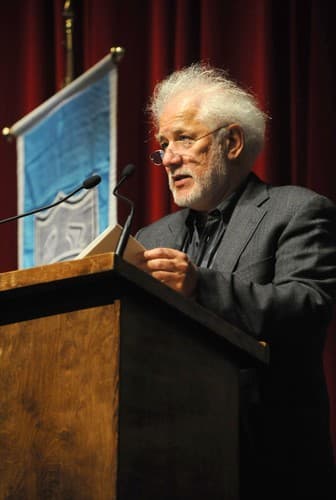
Philip Michael Ondaatje is a Sri Lankan-born Canadian poet, fiction writer, essayist, novelist, editor, and filmmaker.







