“We are all pilgrims on the same journey—but some pilgrims have better road maps.”
— Narrator Lyman Ward reflects on his grandparents' lives and his own.

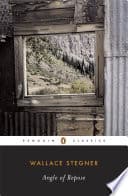
Wallace Stegner (2000)
Genre
Literary Fiction / Historical Fiction
Reading Time
964 min
Key Themes
See below
Sign in to track this book
A wheelchair-bound historian unearths the rugged, pioneering spirit and complex marital secrets of his grandparents' Western frontier life, inadvertently revealing the unvarnished truths of his own.
Lyman Ward, a retired and estranged history professor, lives in his grandparents' old home in Grass Valley, California. A debilitating degenerative bone disease has confined him to a wheelchair and led to the collapse of his marriage. His wife, Ellen, has left him for his orthopedic surgeon. Feeling adrift and bitter, Lyman decides to write a biography of his paternal grandparents, Oliver and Susan Burling Ward, using their extensive collection of letters, journals, and Susan's published writings. He hires a young woman named Shelley as his assistant to help him organize the materials. Lyman's narrative frequently shifts between his present-day struggles and his grandparents' past, as he tries to understand their lives and, in doing so, his own.
The story shifts to Susan Burling's early life in Milton, New York. She is raised in a cultured, intellectual family, surrounded by art, literature, and abolitionist ideals. She is an aspiring artist and writer, full of spirit and refined sensibilities. Oliver Ward, a promising mining engineer from a practical background, meets Susan through her family connections. He is captivated by her intelligence and beauty, and she, in turn, is drawn to his quiet strength and ambitious vision for the developing American West. Oliver dreams of building canals, dams, and mines, contributing to the nation's progress, and sees Susan as his ideal partner, despite their differing temperaments and backgrounds.
Susan and Oliver marry, and almost immediately, Susan's life of Eastern refinement is replaced by the realities of the frontier. Oliver's engineering projects take them to remote, often desolate, locations across the West, including mining camps in Leadville, Colorado, and New Almaden, California. Susan, though initially resistant to the lack of culture and comfort, attempts to adapt. She maintains her artistic pursuits and cultivates what little beauty she can find. Her letters to her friend Augusta and her mother reveal her struggles with isolation, the primitive living conditions, and her deep longing for intellectual companionship and artistic stimulation, which Oliver, though loving, cannot fully provide.
In places like Leadville and New Almaden, Susan tries to make a home, raising her children (Agnes and later, Thomas) amidst the dust, danger, and transient nature of mining communities. She establishes a school for the local children and continues her sketching and writing, but her artistic aspirations are constantly overshadowed by the demands of pioneering life and Oliver's often-failed ventures. She yearns for a life of purpose beyond domesticity and finds herself increasingly frustrated by Oliver's practical, often uncommunicative nature, and his inability to secure a stable, prosperous future for their family. Her spirit, though resilient, chafes against the limitations imposed by her circumstances.
A turning point occurs with the arrival of Frank Sargent, Oliver's charismatic and cultured assistant. Frank is everything Oliver is not: charming, witty, intellectually stimulating, and appreciative of Susan's artistic talents. Susan finds in Frank the companionship and understanding she has longed for, leading to an intense emotional, and possibly physical, affair. Oliver, absorbed in his engineering work and somewhat oblivious to the emotional nuances, slowly becomes aware of the deepening bond between Susan and Frank. The tension in the remote mining camp of New Almaden becomes palpable, leading to whispers and a growing sense of unease within the small community.
The simmering emotional crisis ends in a terrible tragedy. While Susan and Frank are together, their young son, Thomas, falls from an open window and dies. The exact circumstances are ambiguous, but the implication is that their inattention due to their affair contributed to the accident. The community, already gossiping, points fingers. Overcome by grief, guilt, and the irreparable damage to his family and reputation, Frank Sargent leaves abruptly, never to return. The incident leaves a permanent scar on Susan and Oliver's marriage, creating a chasm of unspoken resentment and sorrow that defines their relationship for decades to come, though they remain together.
Following the tragedy, Oliver's career takes him to various, often financially precarious, engineering projects, including a prolonged period working on canals in Idaho. Despite his persistent efforts, he never achieves the grand success he envisioned, often hampered by lack of funding or unforeseen challenges. Susan, meanwhile, continues her artistic pursuits with renewed determination. She publishes illustrated books and articles, gaining a measure of recognition and financial independence that Oliver's fluctuating career often failed to provide. Her work, often depicting the places and people of the West, becomes a significant part of her identity and legacy, offering her an outlet and a sense of purpose.
In their later years, the Wards eventually settle in Grass Valley, California, in the house where Lyman is now writing. Oliver attempts various small-scale ventures, while Susan becomes a respected, if somewhat formidable, figure in the community. She continues to write and paint, maintaining correspondence with a wide circle of friends and intellectuals. Despite the underlying tension and the unspoken grief from the past, they create a life together. Susan, with her strong personality and artistic sensibilities, leaves a lasting impression on her grandchildren, including Lyman, who remembers her as a powerful and sometimes intimidating presence.
As Lyman meticulously sorts through his grandparents' letters and journals, the full truth of the affair between Susan and Frank, and its devastating aftermath, gradually unfolds before him. He pieces together the hints and omissions, realizing the immense emotional cost of the tragedy and the subsequent silence that permeated their lives. This discovery deeply resonates with Lyman's own life, particularly his failed marriage and his wife Ellen's departure. He sees parallels between Susan's unfulfilled desires and Ellen's own frustrations, and between Oliver's stoic silence and his own inability to communicate effectively, leading to a re-evaluation of his own past and present.
Lyman grapples with the subjectivity of his narrative, acknowledging his own biases and the limitations of historical interpretation. He realizes that he is not merely chronicling facts but actively constructing a story, influenced by his own experiences and emotional state. The 'angle of repose,' a geological term referring to the maximum slope at which a pile of loose material remains stable, becomes a metaphor for the delicate balance in human relationships and the point at which one finds stability or peace. Lyman seeks his own angle of repose, not just in understanding his grandparents' lives, but in coming to terms with his own failures and finding a way to move forward, perhaps even reconciling with his estranged wife.
The Protagonist
Lyman begins as a cynical, self-pitying man but through his research, gains empathy and a deeper understanding of human relationships, ultimately finding a measure of self-acceptance and a new 'angle of repose'.
The Protagonist (of the historical narrative)
Susan transforms from a sheltered, idealistic young woman into a resilient, complex pioneer, constantly balancing her artistic and intellectual desires with the demands of frontier life and enduring deep personal tragedy.
The Protagonist (of the historical narrative)
Oliver maintains a consistent character, defined by his ambition and stoicism, yet he endures significant personal and professional disappointments, revealing the quiet resilience of a man dedicated to progress.
The Supporting
Frank enters as a catalyst for emotional upheaval, briefly igniting Susan's passions, but ultimately leaves in disgrace, his brief presence creating a permanent rift in the Ward family.
The Supporting
Ellen's arc is largely off-screen, but her departure serves as a catalyst for Lyman's self-reflection and his attempt to understand the complexities of relationships.
The Supporting
Shelley serves as a sounding board for Lyman, her presence prompting him to articulate his thoughts and occasionally challenging his cynical worldview, though her own arc is secondary to his.
The Supporting
Agnes's arc is largely implied, as she matures into a quiet observer of her parents' lives, embodying the resilience often required of children in pioneering families.
The Mentioned
Thomas's life is tragically cut short, and his death serves as a turning point that forever alters the dynamics and emotional landscape of his parents' marriage.
The Supporting
Augusta's arc is primarily as a recipient of Susan's letters, her consistent presence providing a stable anchor for Susan's emotional expressions and a vital historical record for Lyman.
The novel explores how individuals form their identities in challenging circumstances and through their relationships. Susan struggles to maintain her artistic and intellectual identity amidst the demands of frontier life and domesticity, while Oliver defines himself through his engineering ambitions. Lyman, in the present, seeks to understand his own identity and the roots of his cynicism by examining his grandparents' past. The process of writing the biography becomes a journey of self-discovery for Lyman, as he confronts his own marital failures and emotional incapacities through the lens of his ancestors' lives.
““We can’t live without the past, Lyman, because we are the past. It’s what we are.””
Stegner examines the complexities, compromises, and unspoken truths within marriage. The novel contrasts the passionate, yet ultimately strained, union of Susan and Oliver with Lyman's own failed marriage to Ellen. It explores the gaps between partners, the unfulfilled expectations, and the resilience required to sustain a relationship through hardship and betrayal. Susan and Oliver's marriage, though enduring, is forever marked by the affair and the death of their son. This shows how love can coexist with resentment and silence. Lyman's analysis of their relationship forces him to re-evaluate his own understanding of love and commitment.
““An angle of repose. A relationship is a slope. When it's too steep, things slide. When it's too flat, nothing moves. You want to find the angle that holds.””
The novel portrays the American West not just as a geographical setting but as a powerful force shaping character and destiny. Oliver Ward embodies the spirit of progress and development, striving to tame the wilderness through engineering. Susan, while initially resistant to its harshness, eventually finds her artistic voice by depicting its places and people. The West serves as a backdrop for both grand ambition and personal struggle, showing the tension between civilization and wilderness, and the often-brutal cost of 'progress.' Lyman, from his vantage point in the present, reflects on the legacy of this pioneering spirit.
““The West was a stage, and they were the actors, carving out their lives on its vast, indifferent surface.””
A central theme is the subjective nature of history and the challenge of reconstructing the past. Lyman, as a historian and narrator, constantly grapples with incomplete records, biased perspectives, and the inherent limitations of interpreting others' lives. He acknowledges that his narrative is not merely a factual recounting but an act of imaginative reconstruction, colored by his own experiences and emotional state. The novel questions whether a definitive 'truth' can ever be known, especially concerning the intimate details of human relationships. It suggests that history is always a form of storytelling, shaped by the storyteller.
““I am a historian, and I am supposed to deal with facts. But the facts are often like a handful of sand, and I am trying to build a castle.””
Susan Burling Ward's life is a constant tension between her aspirations as an artist and writer and the practicalities of frontier domesticity. She yearns for intellectual stimulation, beauty, and creative expression, but is often thwarted by primitive living conditions, child-rearing, and her husband's singular focus on engineering. Her struggle shows the societal expectations placed on women in the 19th century and the sacrifices often required of creative individuals, particularly women, when faced with the demands of family and pioneering life. Her eventual artistic recognition comes at a high personal cost, reflecting the difficulty of balancing these conflicting desires.
““The trouble with living in the past is that you keep running into yourself.””
Lyman Ward's present-day narration frames and interprets his grandparents' historical story.
The novel employs a dual narrative structure, alternating between Lyman Ward's present-day life in Grass Valley and his reconstruction of his grandparents' lives in the late 19th and early 20th centuries. Lyman's contemporary struggles, including his physical paralysis and marital breakdown, serve as a framing device and a lens through which he interprets the past. This allows for constant commentary and comparison, as Lyman explicitly draws parallels between his grandparents' experiences and his own, enriching both timelines and highlighting the cyclical nature of human experience and relationships. His voice is ever-present, shaping the reader's understanding of the historical events.
Letters, journals, and published writings form the primary source material for the historical narrative.
Lyman Ward's biography of Susan and Oliver is primarily constructed from their extensive collection of letters, Susan's journals, her published articles and illustrations, and other archival materials. These 'found documents' lend an air of authenticity and historical depth to the narrative. They also create a sense of detective work for Lyman (and the reader), as he pieces together fragmented information, interprets omissions, and reads between the lines to uncover the full story, particularly concerning the affair and its tragic consequences. This device emphasizes the subjective and incomplete nature of historical truth.
Lyman Ward's personal biases, bitterness, and selective interpretation influence the historical account.
Lyman Ward serves as an unreliable narrator, openly acknowledging his own biases, limitations, and emotional investments in the story he is telling. His present-day bitterness, his failed marriage, and his physical disability all color his interpretation of his grandparents' lives. He admits to filling in gaps, making assumptions, and projecting his own experiences onto the past. This device forces the reader to critically engage with the narrative, questioning the 'truth' of the historical account and recognizing that all history is, to some extent, a subjective reconstruction. It underscores the novel's theme about the nature of storytelling and memory.
A geological term used as a central metaphor for stability in relationships and life.
The geological term 'angle of repose,' referring to the maximum slope at which a pile of loose material will remain stable without sliding, serves as the central metaphor of the novel. Lyman applies this concept to human relationships, particularly marriage, suggesting that there is a delicate balance (an 'angle') at which a relationship can be stable, but if the slope becomes too steep (due to stress, betrayal, or unfulfilled needs), it will collapse. He seeks to understand his grandparents' 'angle of repose' and, in doing so, find his own, both physically (in his wheelchair) and emotionally (in his personal life after his divorce). The metaphor encapsulates themes of stability, endurance, and the forces that challenge them.
“We are all pilgrims on the same journey—but some pilgrims have better road maps.”
— Narrator Lyman Ward reflects on his grandparents' lives and his own.
“Foolishness is the same the world over. A man sees what he wants to see, and disregards the rest.”
— Lyman comments on human nature while researching his grandmother's letters.
“The angle of repose is the steepest angle at which a sloping surface formed of a particular loose material is stable.”
— Lyman explains the geological term that serves as the novel's central metaphor.
“What interests me in all these papers is not Susan Burling Ward the novelist and illustrator, but Susan Burling Ward the woman.”
— Lyman describes his approach to his grandmother's archives.
“We leave a wake of lives behind us as we go.”
— Lyman contemplates the impact of his grandparents' westward migration.
“The West is less a place than a process.”
— Lyman reflects on the American frontier experience.
“Love is not a feeling of happiness. Love is a willingness to sacrifice.”
— Lyman analyzes his grandparents' troubled marriage.
“The past is always a rebuke to the present.”
— Lyman compares his own time with his grandparents' era.
“A marriage is the fundamental political unit.”
— Lyman observes the power dynamics in his grandparents' relationship.
“Memory is not a journalist's notebook. It is an artist's sketchbook.”
— Lyman discusses how he reconstructs the past.
“Civilization is a slow process of adopting the obvious.”
— Lyman comments on social progress in the West.
“The tragedy of life is not that it ends so soon, but that we wait so long to begin it.”
— Lyman reflects on his own life choices while immobilized.
“Home is a notion that only the nations of the homeless fully appreciate.”
— Lyman considers his grandparents' rootlessness in the West.
“The real West was won not by heroes but by survivors.”
— Lyman revises romantic myths about frontier settlement.
Ready to see how well you understood this book? Take our interactive quiz with 10 questions.
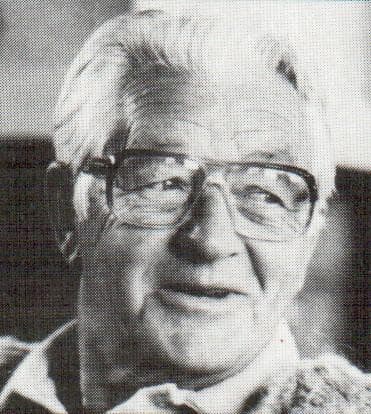
Wallace Earle Stegner was an American novelist, short story writer, environmentalist, and historian, often called "The Dean of Western Writers". He won the Pulitzer Prize in 1972 and the U.S. National Book Award in 1977.







