“There are no children on the island. My clients are not children. They are grown men and women.”
— The guests are discussing their mysterious host, U.N. Owen, and the nature of their invitation.

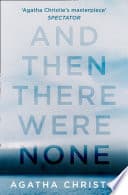
Agatha Christie (2017)
Genre
Thriller / Mystery
Reading Time
300 min
Key Themes
See below
Sign in to track this book
Ten strangers, each with a secret, are drawn to an isolated island and systematically killed, following a nursery rhyme until no one is left.
Eight guests, along with two new staff members, Fred Narracott (the boatman) and Mr. and Mrs. Rogers (the butler and cook), travel to Soldier Island off the coast of Devon. Each guest received a mysterious invitation: Vera Claythorne, a former governess, is hired as a secretary; Philip Lombard, a mercenary, is offered a vague job; Emily Brent, an older woman, is invited for a holiday by an old friend; General Macarthur thinks he is meeting old army friends; Justice Wargrave, a retired judge, is invited by a fake Lady Constance Culmington; Dr. Armstrong, a surgeon, is hired to see a patient; Anthony Marston, a reckless young man, is invited to a party; and Mr. Blore, a former detective, pretends to be Mr. Davis, hired to watch the others. When they arrive, their host, U. N. Owen, is not there.
As the ten people gather for dinner, a gramophone record plays. A voice from nowhere accuses each person of murder, for which they avoided legal punishment. The accusations are specific, describing the victims and situations. For example, Vera Claythorne is accused of letting Cyril Hamilton drown, and Justice Wargrave of unfairly sentencing Edward Seton to death. The group is shocked and reacts with anger, fear, and denial. Soon after the accusations, Anthony Marston, accused of hitting two children with his car, chokes and dies from what Dr. Armstrong first thinks is cyanide poisoning in his drink. This death matches the first line of the nursery rhyme 'Ten Little Soldier Boys' displayed in each bedroom.
The remaining nine guests are very troubled by Marston's death and the gramophone's accusations. They realize they are stuck on the island, with no way to contact the mainland or leave, as Fred Narracott, the boatman, will not return until the weather improves. The next morning, Mrs. Rogers, the cook and housekeeper, is found dead in her bed from too much chloral hydrate. Her death matches the second line of the nursery rhyme: 'One choked his little self, and then there were nine. One overslept himself, and then there were eight.' The remaining guests start to suspect each other, and the mood becomes heavy with fear and mistrust. They search the island for U. N. Owen, but find no one else.
General Macarthur, becoming more quiet and accepting, walks off alone. He is found dead on the beach, hit on the back of the head with a heavy object. This is the third death, matching the nursery rhyme's 'One said he'd stay there, then there were seven.' Finding his body increases the terror among the remaining seven. They search the island and house again, concluding that no one else can be on the island. This makes them face the truth: the killer must be one of them. Suspicion falls heavily on Dr. Armstrong, because he has access to poisons and medical knowledge, though no one is truly above suspicion.
The next morning, Mr. Rogers, the butler, is found dead in the woodshed, killed by an axe blow to the back of his head while chopping wood. This is the fourth death, fulfilling 'One chopped himself in half, and then there were six.' A key detail appears: a small porcelain soldier figurine, like the ten first on the dining room table, disappears after each death. This grim count reinforces the killer's use of the nursery rhyme. The remaining six guests, Justice Wargrave, Vera Claythorne, Philip Lombard, Emily Brent, Dr. Armstrong, and Mr. Blore, are now very afraid and suspicious, locking themselves in their rooms at night.
Emily Brent, sitting alone on the terrace, is found dead. She was injected with cyanide using a syringe, with a bee nearby, fulfilling 'A bumble-bee stung one, and then there were five.' Philip Lombard later finds the missing syringe. Suspicion changes, and the group's unity breaks down further. They search each other's belongings for weapons and keys, finding Lombard's revolver missing. The mood is full of accusations and fear, as they realize anyone could be the murderer. The constant threat makes them question every action and word spoken by the others.
Justice Wargrave is found shot in the head, appearing to be the fifth victim, fulfilling 'One got in Chancery, and then there were four.' He is dressed in judge's robes with a wig made from Emily Brent's wool. The group is now down to four: Vera Claythorne, Philip Lombard, Dr. Armstrong, and Mr. Blore. Lombard's revolver, which had been missing, is found in Wargrave's room, making him a main suspect for the other deaths. However, the apparent death of Wargrave, a symbol of justice, adds more terror and confusion to the nightmare.
The next morning, Dr. Armstrong is gone. His disappearance, rather than a clear murder, matches the nursery rhyme's 'One got in a big red bear, and then there were three.' The remaining three—Vera Claythorne, Philip Lombard, and Mr. Blore—believe Armstrong is the killer and has hidden, ready to attack again. They spend the day on high alert, trying to stay together and watching each other constantly. The psychological stress of being alone and constantly threatened is huge, pushing them to their breaking point.
While Vera and Lombard try to signal a passing boat, Mr. Blore is killed in the house. A large marble bear clock, pushed from a window above, falls onto his head, fulfilling 'A big red bear hugged one, and then there were two.' Soon after, Vera and Lombard find Dr. Armstrong's body washed ashore, confirming he was not the killer. His death, by drowning, fits the 'red herring' line in the rhyme, suggesting he was tricked to the sea. This leaves Vera and Lombard as the last two survivors, trapped in a deadly game with a killer who is still alive and among them.
Vera Claythorne and Philip Lombard, the last two, suspect each other. Vera manages to take Lombard's revolver and shoots him, believing him to be the killer, fulfilling 'One got in a big red bear, and then there were two.' She then goes back to the house, where she finds a noose hanging from her bedroom ceiling and a chair underneath. Overwhelmed by suggestion and her guilt for Cyril Hamilton's death, she kicks the chair away and hangs herself, fulfilling the final line: 'He went and hanged himself, and then there were none.' Later, the police find all ten bodies. A manuscript in a bottle, written by Justice Wargrave, shows he planned the whole plot, faking his own death, to give his own twisted justice to those who escaped the law.
The Antagonist/Protagonist
Initially appearing as a rational, authoritative figure, he is revealed to be the meticulous, psychopathic mastermind behind all the murders.
The Protagonist
From a seemingly innocent, pragmatic governess, she descends into madness and guilt-driven suicide, becoming the final victim.
The Protagonist
Starts as a self-assured, amoral survivor, but is ultimately outsmarted and killed by Vera, becoming one of the last victims.
The Supporting
Initially a figure of medical authority, he becomes an increasingly panicked and confused victim, eventually tricked into his own death.
The Supporting
From a suspicious, self-appointed detective, he becomes another victim, ironically crushed by a symbol of justice.
The Supporting
Remains unrepentant until her death, serving as an example of self-righteousness leading to downfall.
The Supporting
Starts as a guilt-ridden, resigned figure and quickly becomes one of the first victims, accepting his fate.
The Supporting
From a composed butler, he becomes increasingly terrified and is brutally murdered while performing a routine chore.
The Supporting
Starts as a nervous, guilt-ridden figure and is quickly killed, symbolizing the immediate impact of the accusations.
The Supporting
A hedonistic, unrepentant youth who is the first to die, establishing the killer's motive and method.
The main theme is justice, specifically giving punishment to those who have avoided legal penalties. Justice Wargrave, the killer, believes he is carrying out a higher form of justice, punishing people for crimes the law could not touch. Each victim on Soldier Island is accused of a murder for which they were never convicted. The events ask questions about what justice is, whether it can truly exist outside legal systems, and if it is right to take the law into one's own hands, even with a seemingly good reason.
“''I have always been a law-abiding citizen. But I have also always been a man of justice. And justice, true justice, is not always found within the confines of the law.''”
Guilt and conscience affect the characters' mental suffering. While some, like Emily Brent and Philip Lombard, show little regret at first, others, like Vera Claythorne and General Macarthur, are deeply troubled by their past actions. The island setting, along with the accusations and growing number of deaths, makes each character face their inner struggles. The nursery rhyme constantly reminds them of their coming death, increasing their guilt and leading some to despair, affecting their behavior and leading to their deaths, whether by the killer or their own mental breakdown.
“''The damned island… It's a trap. A trap to catch us all. And it's working. We're all caught, every one of us, by our own consciences.''”
Soldier Island's isolated setting causes the guests' fear. Once cut off from the mainland, the characters realize they are trapped with a killer, leading to extreme mistrust and suspicion. Each death increases the fear, making them suspect even their closest friends. Rooms are locked, alliances change, and every look or gesture is examined. This isolation removes their politeness and shows their basic fears, showing how quickly people can turn on each other when facing an unavoidable threat and no outside authority.
“''And there was no one on the island but their ten selves. And the murderer was one of them.''”
The novel looks at the nature of evil, not just through the killer's actions but also through the victims' past wrongs. Each character, though a victim of Wargrave's plot, has also committed a past crime, showing how common evil is in society. Wargrave's careful, almost artistic, way of killing makes his actions more than simple bad intent; it is a chilling form of calculated, self-justified evil. The story suggests that evil can hide behind respectable appearances and that the desire for control and 'justice' can become something terrible.
“''I have wanted to commit a murder all my life... I wanted to create an insoluble problem; a murder mystery that would defy solution.''”
Throughout the novel, there is a constant difference between how things seem and what is real. The guests first act like respectable people, but the recording breaks these appearances, showing their dark pasts. Justice Wargrave, who seems wise and authoritative, is actually the manipulative murderer. His 'death' is a clever trick, making him seem like a victim while he continues to plan the killings. This theme shows that appearances can be very misleading and that true identities and reasons are often hidden beneath layers of pretense.
“''The more you looked at him, the more you realized that the judge was a man of stone, of cold, implacable justice.''”
A macabre blueprint for the murders and a countdown to doom.
The nursery rhyme 'Ten Little Soldier Boys' serves as the central plot device, dictating the order and method of each murder. A framed copy hangs in every guest's room, and ten porcelain soldier figurines are displayed in the dining room. As each person dies, a figurine disappears, creating a chilling visual countdown. This device heightens suspense, allows the characters (and the reader) to anticipate the next type of death, and reinforces the killer's methodical, almost theatrical, approach to justice. It also contributes to the psychological horror, as the victims realize their fates are pre-ordained by a child's rhyme.
A claustrophobic, inescapable trap that fosters paranoia.
Soldier Island is not just a location; it's a character in itself, functioning as a perfect closed-circle mystery setting. Its remoteness and susceptibility to bad weather ensure that the ten individuals are completely cut off from the mainland and any hope of rescue or external intervention. This isolation is crucial for cultivating extreme paranoia and distrust among the guests, as they realize the killer must be one of them. The inability to escape amplifies the suspense and psychological terror, forcing the characters to confront their impending doom without outside help.
The initial catalyst for the plot, revealing the characters' past crimes.
The gramophone recording, titled 'Swan Song,' is the catalyst that sets the entire plot in motion. It plays a disembodied voice that systematically accuses each of the ten individuals of a past murder for which they escaped legal punishment. This device immediately establishes the premise of the story—that each person present is a murderer—and introduces the motive for the subsequent killings. It shatters the guests' initial composure and forces them to confront their hidden guilt, sowing the seeds of fear and suspicion that will grow throughout their ordeal.
A deliberate misdirection to mislead both characters and readers.
The concept of a 'red herring' is explicitly mentioned in the nursery rhyme ('A red herring swallowed one') and is a key narrative technique used by Agatha Christie. Dr. Armstrong's apparent disappearance, making him seem like the killer, serves as a major red herring. His body is later found, revealing he was a victim. This device is employed to divert suspicion from the true killer, Justice Wargrave, and to create doubt and confusion among the remaining characters and the reader, making the mystery more challenging to solve and the final revelation more impactful.
The posthumous confession that solves the 'insoluble' mystery.
The manuscript, found in a bottle by the police after all the deaths, is Justice Wargrave's detailed confession. This device is essential for providing the solution to the seemingly 'insoluble' mystery, revealing Wargrave's identity as the killer, his motives, and the intricate planning behind each murder, including how he faked his own death. It serves as a narrative 'reveal-all' that ties up all loose ends and explains the cunning methodology that allowed him to commit ten murders and still appear to be a victim, thus achieving his goal of an unsolveable crime.
“There are no children on the island. My clients are not children. They are grown men and women.”
— The guests are discussing their mysterious host, U.N. Owen, and the nature of their invitation.
“One of us is a murderer.”
— After the second death, the remaining guests realize the terrible truth about their situation.
“From now on, it is to be a question of 'who is the killer?' and not 'who is the victim?'”
— Justice Wargrave declares a shift in their thinking as the deaths continue.
“The Ten Little Soldier Boys nursery rhyme is more than just a coincidence. It's a blueprint.”
— The guests discover the chilling connection between the rhyme and the method of deaths.
“Don't you see? We're the only people on the island. We must be killing each other.”
— Vera Claythorne expresses her growing panic and the terrifying logic of their predicament.
“There was a silence, a horrible, an unbearable silence.”
— A recurring descriptive phrase highlighting the tension and dread after each death.
“All crime is a mistake. Murder is a mistake. You don't get away with it.”
— Lombard makes a statement about the nature of crime, unaware of the killer's meticulous planning.
“The killer is one of us. He's here, in this room.”
— The group confronts the terrifying reality that the murderer is among them.
“And then there were none.”
— The final line of the nursery rhyme, echoing the fate of the guests.
“I have wanted to commit murder all my life.”
— From the killer's confession, revealing their lifelong obsession.
“My object was to commit a murder, or rather, a series of murders, that should be insoluble.”
— The killer's letter explains their ultimate goal for the perfect crime.
“There was no one left alive on Soldier Island.”
— A stark statement confirming the complete success of the killer's plan.
“The damned place is like a graveyard.”
— General Macarthur's grim observation about the island as the deaths accumulate.
“It was impossible for anyone to get on or off the island.”
— The guests realize their complete isolation, adding to their terror.
Ready to see how well you understood this book? Take our interactive quiz with 10 questions.
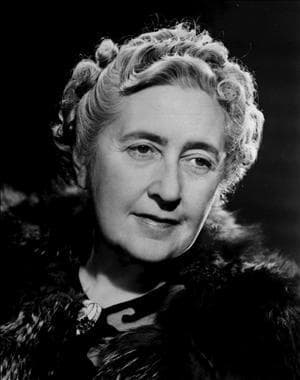
Dame Agatha Mary Clarissa Christie, Lady Mallowan, was an English writer known for her 66 detective novels and 14 short story collections, particularly those revolving around fictional detectives Hercule Poirot and Miss Marple. She also wrote the world's longest-running play, the murder mystery The Mousetrap, which has been performed in the West End since 1952. A writer during the "Golden Age of Detective Fiction", Christie has been called the "Queen of Crime". She also wrote six novels under the pseudonym Mary Westmacott. In 1971, she was made a Dame (DBE) by Queen Elizabeth II for her contributions to literature. Guinness World Records lists Christie as the best-selling fiction writer of all time, her novels having sold more than two billion copies.







