“I suspect the truth is that we are waiting to be told the story of our lives as we understand it, and if it is not forthcoming, we feel cheated.”
— Pari reflects on her childhood and the stories told to her.

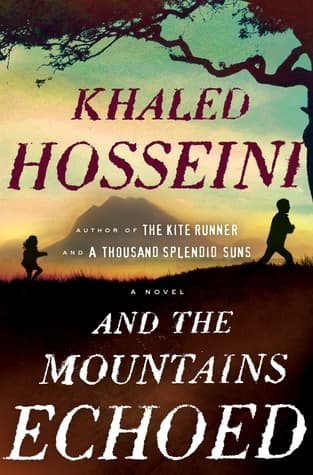
Khaled Hosseini (2015)
Genre
Literary Fiction / Historical Fiction
Reading Time
400 min
Key Themes
See below
Sign in to track this book
A story about a brother and sister separated in 1950s Afghanistan, whose bond spans generations and continents, showing the lasting effect of sacrifice and family.
In the poor village of Shadbagh, Afghanistan, young Abdullah and his younger sister, Pari, live with their father, Saboor, and stepmother. Abdullah loves Pari deeply, often giving up his own small possessions for her happiness. One day, Saboor takes the children on a long trip to Kabul. During their travels, Saboor tells them the sad fable of Baba Ayub, a farmer forced to give up his son to a div. This story hints at the painful separation to come. In Kabul, they visit the wealthy Wahdati household, where Saboor works as a gardener. There, they meet Mr. Wahdati, a kind but mysterious man, and his artistic, often sad wife, Nila.
The real, sad reason for the trip to Kabul is revealed: Saboor has come to sell Pari to Mr. Wahdati and Nila. Driven by extreme poverty and the belief that Pari will have a better life with the wealthy couple, Saboor makes this difficult choice. Abdullah is heartbroken and inconsolable, unable to understand why his father would give up his sister. The separation is harsh, leaving Abdullah with a deep sense of loss and a lifelong longing for Pari. Nila, at first unsure, comes to accept Pari as her own, believing she can offer the child a life free from the hardships of Shadbagh, though her own reasons are complex.
Pari (now called Pari Wahdati) grows up in Paris, France, after Nila, increasingly unhappy in her marriage to Wahdati and seeking a new life, takes Pari and moves there. Pari lives a comfortable, cultured life, completely unaware of her Afghan origins or the brother she left behind. Nila, a poet and intellectual, struggles with mental health issues and a feeling of dissatisfaction, eventually dying by suicide. Pari is left to navigate her adolescence and early adulthood with the memory of a complex, often distant mother. Meanwhile, Wahdati stays in Afghanistan, heartbroken by Nila's departure and the loss of Pari, whom he truly loved.
Years later, in 2003, two Afghan-American cousins, Idris and Adel, travel to Afghanistan. Idris, a doctor, plans to help rebuild the country, while Adel, younger and more idealistic, wants to connect with his heritage. They visit their old family home in Shadbagh, now run-down. Idris meets Roshi, a young girl badly disfigured by an attack, and is deeply moved, promising to help her get surgery in America. This promise becomes a significant moral challenge for him. Adel, meanwhile, connects with his father's old friend, Gholam, and begins to learn about the complexities of their family's past and the severe impact of war on their homeland.
The story moves to the Greek island of Tinos, where Markos, a young man, lives with his mother, Thea. Thea is the sister of Thalia, a childhood friend of Nila Wahdati, who was severely scarred in an accident. Markos works on the island and cares for his aging mother. Their quiet life changes with the arrival of a wealthy, elegant French woman named Pari. This Pari is a successful academic and writer, now in her seventies, who has come to Tinos to trace her mother Nila's past and reconnect with the few people who knew her. Markos and Pari become friends, and she eventually learns about Thalia and Nila's shared history.
Through her talks with Markos and Thea, Pari (the elder) starts to piece together parts of her early life and her mother Nila's complicated past. She learns about Nila's friendship with Thalia and the accident that disfigured Thalia. More importantly, she uncovers hints about her own adoption and her origins in Afghanistan. The revelations are at first confusing but spark a desire to understand her true identity. This search for self-discovery becomes a main goal for Pari as she processes the implications of having lived a life based on a hidden truth. She deals with the emotional weight of her mother's choices and the life she might have had.
Adel, still in Afghanistan, looks deeper into his family's history. He learns that his father, Timur, had taken over the Wahdati estate and business after Wahdati's death. He discovers that his father, far from being a simple caretaker, had manipulated the elderly Wahdati into signing over his property, effectively disinheriting Pari, Wahdati's adopted daughter. This revelation shatters Adel's idealized image of his father and forces him to face the moral complexities of his family's wealth and legacy. He also learns about the deep love Wahdati had for Pari and the pain of her absence, which resonates with Adel's own sense of displaced identity.
After learning the truth of her adoption and her brother Abdullah, Pari (the elder) travels to America, driven by a strong need to find him. She finds him in California, where he runs a small Afghan restaurant. However, their reunion is bittersweet and sad. Abdullah, now an old man, has severe dementia and does not recognize his sister. He cherishes a small box of memories, including a feather, which he believes belongs to Pari, his long-lost sister. Pari is devastated by his condition but finds comfort in simply being near him, even if he cannot acknowledge her. She connects with Abdullah's daughter, also named Pari.
Pari Jr., Abdullah's daughter, has spent years caring for her ailing father. She understands his deep, persistent longing for his sister, Pari, and the importance of the feather. When Pari (the elder) arrives, Pari Jr. welcomes her, recognizing the great meaning of their connection. After Abdullah's death, Pari Jr. helps her aunt (Pari Sr.) piece together the parts of their family history, sharing stories and memories that bridge the decades of separation. This shared grief and discovery create a strong bond between the two women, fulfilling, in a way, the original bond between Abdullah and Pari.
Gholam, the loyal friend of Adel's father, continues to be a moral guide for Adel. He reveals more details about the Wahdati family's past and the circumstances surrounding Timur's acquisition of their property. Deeply affected by these revelations and the injustice done to Pari, Adel decides to return the Wahdati estate to its rightful heir, Pari. This act of restitution is Adel's way of correcting his family's past wrongs and honoring the memory of Wahdati's love for Pari. It marks a significant moment of moral awakening and responsibility for Adel, moving beyond his initial idealism.
The novel ends by reflecting on how the past continues to affect generations and continents. Pari (the elder) lives with the bittersweet knowledge of her brother and the life she might have had, finding a new family in Pari Jr. and the shared memories. Adel works to right past wrongs, symbolizing hope for a more just future in Afghanistan. The various characters' lives, though seemingly separate, are linked by acts of love, sacrifice, betrayal, and compassion. The feather, a small token of a brother's love, becomes a symbol of the strong, though sometimes broken, bonds of family and memory that go beyond time and distance.
The Protagonist
Abdullah's arc is tragic; his early devotion is shattered by separation, and he spends his life longing for Pari, only to be unable to recognize her when they finally reunite due to dementia.
The Protagonist
Pari's arc moves from unconscious orphanhood to a conscious search for identity, culminating in a bittersweet reunion with her brother and a newfound understanding of her roots.
The Supporting
Saboor remains burdened by his choice, his life a testament to the difficult decisions poverty forces upon individuals.
The Supporting
Nila's arc is one of unfulfilled desires and increasing despair, culminating in her suicide in Paris.
The Supporting
Wahdati's arc is one of enduring love and quiet suffering as he loses both his wife and adopted daughter, leaving a legacy of kindness.
The Supporting
Idris's arc is one of moral conflict, struggling between his desire to help and the practicalities of his life, ultimately failing to fully follow through on his promise.
The Supporting
Adel's arc is a journey from idealism to a mature understanding of family history, culminating in a decision to rectify past wrongs.
The Supporting
Thalia's arc is one of enduring trauma and finding a quiet resilience despite her physical disfigurement, becoming a keeper of memories.
The Supporting
Pari Jr. moves from caring for her ailing father to embracing a newfound aunt, becoming a keeper and sharer of their complex family history.
The bond between Abdullah and Pari is the emotional center of the novel, surviving separation, memory loss, and decades. Abdullah's lifelong devotion to his sister, shown in his treasured feather and his persistent longing even with dementia, highlights the deep and often unexplained connection between siblings. Pari's own subconscious feeling of loss and her eventual search for her brother emphasize this theme. Even in their bittersweet reunion, the love between them, though unacknowledged by Abdullah, remains the driving force behind their intertwined lives.
“A good deed is a good deed, but a bad deed is a bad deed. No matter what, the heart remembers.”
The novel looks at various forms of sacrifice, especially Saboor's decision to sell Pari, believing it is for her greater good. This act, though born of desperation, has lasting consequences, creating a ripple effect of longing, guilt, and identity struggles across generations. Other characters also make sacrifices, like Wahdati's quiet endurance of Nila's temperament or Pari Jr.'s devotion to her ailing father. The theme questions whether sacrifices, even well-intentioned ones, truly lead to good outcomes or simply shift burdens and create new forms of pain.
“Sometimes a finger must be cut to save the hand.”
Characters deal with their sense of self and where they truly belong. Pari, raised in France with no knowledge of her Afghan roots, feels an underlying sense of displacement. Idris and Adel, Afghan-Americans, struggle to reconcile their Western upbringing with their ancestral homeland. Nila Wahdati constantly seeks an identity beyond traditional roles, ultimately failing to find peace. The search for one's origins, family, and cultural heritage motivates many characters, shaping their choices and emotional lives as they try to understand who they are.
“I suspect that for all his talk of home, even he, like so many of us, was no longer sure where home was.”
The title itself speaks to this theme: the past is never truly gone. Decisions made in one generation, like Saboor selling Pari or Timur disinheriting her, affect subsequent lives. The novel uses a non-linear narrative, constantly shifting perspectives and timelines, to show how events from decades ago continue to shape the present. Memories, both conscious and subconscious, influence characters' motivations, relationships, and even their physical surroundings, as seen in the run-down Wahdati estate. The 'echoes' are felt in the names, the objects, and the unresolved emotional legacies.
“They say, you know, that the past is like a pebble in a shoe. You can't ignore it. It just keeps rubbing.”
Hosseini explores various definitions of family—blood ties, adoptive bonds, and chosen connections. The novel questions what truly makes a family: is it shared blood, shared experience, or shared love? Pari's story shows the complex love between adoptive parents and children, while Abdullah's lasting bond with his biological sister defies separation. The narrative also shows how family can be a source of comfort, conflict, and strong obligation. Ultimately, the book suggests that family is complex, made from love, sacrifice, and the lasting human need for connection, regardless of traditional definitions.
“Family is not just blood. It's those who stand with you.”
A story told by Saboor that foreshadows the central separation.
Before selling Pari, Saboor tells Abdullah and Pari a fable about a farmer, Baba Ayub, who is forced to choose which of his beloved sons to give to a div (demon). He chooses the younger, more beautiful son, only to regret it for the rest of his life. This fable serves as a powerful instance of foreshadowing, preparing the reader for the traumatic separation of Abdullah and Pari. It also provides Saboor with a moral framework, however flawed, for his own agonizing decision, allowing him to externalize his internal conflict and justify his actions as a necessary sacrifice.
A symbolic object representing Abdullah's enduring love for Pari.
The feather is a poignant symbol of Abdullah's profound and unwavering love for Pari. He trades his only pair of shoes to get this feather for her as a child. Throughout his life, even as he succumbs to dementia, Abdullah keeps the feather, believing it belongs to his lost sister. It embodies his persistent memory and longing for Pari, serving as a tangible link to their shared past and the purity of their sibling bond. The feather's presence across decades underscores the theme of enduring love and the echoes of the past.
The story is told through various character viewpoints and jumps across time and continents.
The novel employs a fragmented, mosaic-like structure, presenting the story through the eyes of different characters across multiple decades and geographical locations (Afghanistan, France, Greece, USA). This device allows Hosseini to explore the far-reaching consequences of a single event (Pari's sale) and to reveal the complex interconnectedness of seemingly disparate lives. It also deepens the emotional impact by showing how the same events are perceived and remembered differently, highlighting the subjective nature of truth and memory, and creating a richer, more comprehensive understanding of the central themes.
A physical setting that symbolizes wealth, loss, and the shifting fortunes of Afghanistan.
The Wahdati house in Kabul initially represents wealth, comfort, and the promise of a better life for Pari. After Nila and Pari leave, and Wahdati dies, the house falls into disrepair, symbolizing the loss and decay that follow. When Timur and later Adel take possession, it becomes a physical manifestation of a moral dilemma—a stolen legacy. The house acts as a silent witness to the family's history, embodying the passage of time, the impact of war, and the complex interplay between personal lives and national events. Its changing state reflects the changing fortunes and moral landscape of Afghanistan itself.
“I suspect the truth is that we are waiting to be told the story of our lives as we understand it, and if it is not forthcoming, we feel cheated.”
— Pari reflects on her childhood and the stories told to her.
“They say, find the crack in the wall, then push it wide open.”
— Nabi tells Abdullah a proverb about seizing opportunities.
“There are books that are about the world, and there are books that are the world.”
— Thalia's thoughts on the power of literature.
“But the past is like a string. You can shorten it, you can lengthen it, but you can never quite untie the knots.”
— Idris reflects on the indelible nature of past events and relationships.
“And sometimes, when you least expect it, you find love.”
— Nabi's realization about his feelings for Nila.
“A good story, like a good friend, is something you can turn to in times of need.”
— Amra on the comfort and solace found in stories.
“Eventually, all things merge into one, and a river runs through it.”
— A general reflection on the interconnectedness of lives and events.
“It was a good thing to be loved, to be known, to be seen.”
— Pari's internal thoughts on feeling truly valued.
“Children aren't coloring books. You don't get to fill them with your favorite colors.”
— Nila expresses her frustration about societal expectations for children.
“There are so many ways to be brave in this world.”
— Markos reflects on different forms of courage.
“And the mountains echoed.”
— The recurring motif and title of the book, representing the lasting impact of actions and memories.
“What are you going to do with your one wild and precious life?”
— Thalia's mother's advice, encouraging her to live fully.
“Sometimes, the most important thing a person can do is to simply listen.”
— Amra's observation on the value of empathy and presence.
“It was a strange thing, this business of memory, the way it came and went, the way it sometimes chose to abandon you.”
— Pari's struggle with her fragmented memories of her early childhood.
Ready to see how well you understood this book? Take our interactive quiz with 10 questions.

Khaled Hosseini is an Afghan-American novelist, UNHCR goodwill ambassador, and former physician. His debut novel The Kite Runner (2003) was a critical and commercial success; the book and his subsequent novels have all been at least partially set in Afghanistan and have featured an Afghan as the protagonist.







