“Fat Charlie Nancy, unbeknownst to him, had a brother.”
— The opening line of the book, immediately introducing the central conflict and character.

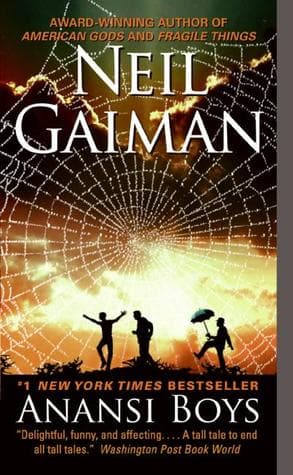
Neil Gaiman (2005)
Genre
Fantasy
Reading Time
8 hr 30 min
Key Themes
See below
Sign in to track this book
After his estranged, god-like father dies on a karaoke stage, a timid young man discovers he has an impossibly charming and dangerous brother who is about to turn his ordinary life into a mythological maelstrom.
Fat Charlie Nancy, a mild-mannered, somewhat uninspired Londoner, receives news that his flamboyant, often embarrassing father, Mr. Nancy, has died during a karaoke performance in Florida. Despite their strained relationship, Charlie feels obligated to attend the funeral. While there, Mrs. Dunwiddy, an old family friend, makes a cryptic remark about Mr. Nancy having 'two boys.' When Charlie denies having a brother, Mrs. Dunwiddy insists and advises him to tell his brother that 'the birds are calling.' Back in London, Charlie's life, already mundane and overshadowed by his father's memory, takes an unexpected turn when a charismatic, handsome young man named Spider appears on his doorstep, claiming to be his brother. Spider's arrival immediately disrupts Charlie's carefully constructed, if unremarkable, existence, setting the stage for the unfolding magical chaos.
Spider, charming and confident, quickly makes himself at home in Fat Charlie's flat, much to Charlie's discomfort and the delight of his fiancée, Rosie Noah. Spider's presence is a whirlwind, filled with late-night parties, inexplicable magic, and a general disregard for Charlie's quiet routines. He effortlessly wins over Rosie and Charlie's boss, Grahame Coats, a crooked talent agent. Spider's true nature as a god, specifically a trickster god like their father Anansi, begins to manifest through subtle but undeniable magical occurrences. This constant disruption and Spider's effortless charisma highlight Charlie's insecurities and his feeling of inadequacy, making him resent his newfound brother even as he's drawn into the magical world Spider represents. Spider's arrival completely upends Charlie's perception of his own life and reality.
Fed up with Spider's antics, which include stealing his clothes, charming Rosie, and generally making his life a misery, Fat Charlie confides his frustrations to Rosie. He wishes, in a moment of exasperation, that Spider would just 'go away.' Unbeknownst to Charlie, his father, Anansi, was a powerful god, and his children inherit certain abilities and connections to the magical world. Charlie's wish, spoken with genuine frustration and a touch of magical inheritance, inadvertently sets in motion a chain of events far beyond his comprehension. This casual wish, born of annoyance, taps into the latent power within Charlie and the inherent magic surrounding the Anansi family, leading to serious, unintended consequences for both brothers. The act serves as a catalyst for the escalating magical conflict.
Following Charlie's ill-considered wish, Spider mysteriously vanishes. Initially, Charlie feels a sense of relief, believing his life can return to normal. However, Spider's disappearance has immediate and unsettling magical repercussions. Strange, dangerous creatures begin to appear, drawn by the disruption in the balance of the world caused by a god's sudden absence. The world itself seems to fray at the edges, and Charlie finds himself increasingly vulnerable to the magical forces his father had kept at bay. Rosie, heartbroken by Spider's disappearance, blames Charlie, creating a rift in their relationship. Charlie is forced to confront the reality that his wish had genuine power and that he is now responsible for the chaos it unleashed, further complicating his already stressful existence.
Desperate to understand what has happened and how to fix it, Fat Charlie remembers Mrs. Dunwiddy's advice about the 'birds calling.' He travels back to Florida and seeks out Mrs. Dunwiddy, who, along with her friend Maeve, reveals more about his father, Anansi, and the world of the animal gods. They explain that Anansi was a powerful trickster god, and his 'boys' are also gods. Charlie learns that by wishing Spider away, he has created a void that is attracting dangerous entities. Mrs. Dunwiddy instructs him on how to call upon the other animal gods for help. Charlie performs a ritual, calling out to the 'birds,' which leads him to a gathering of ancient, powerful animal deities, including Tiger, Lion, and Hyena, who are unimpressed by Charlie's lack of divine presence and his father's legacy.
At the gathering of animal gods, Fat Charlie is mocked and dismissed by most. However, the formidable and vengeful god Tiger, Anansi's ancient rival, sees an opportunity. Tiger, still bitter about Anansi's trickery that stripped him of his stripes and power, offers Charlie a deal: he will help Charlie get his brother back, but at a price. Tiger demands Anansi's old powers, which he believes Charlie inherited, and Charlie agrees, desperate to undo his mistake. This pact with Tiger is a grave miscalculation by Charlie, as he underestimates Tiger's cunning and his deep-seated desire for revenge against the Anansi lineage. The deal sets the stage for a dangerous confrontation between Charlie and the forces that seek to exploit his family's divine heritage.
With Tiger's intervention, Spider is returned to the world, much to Charlie's relief, though he remains unaware of the price Charlie paid. Spider, though back, is more subdued than before, having experienced the 'land of the dead.' Meanwhile, Charlie's life continues to spiral out of control. His boss, Grahame Coats, is revealed to be embezzling money, framing Charlie for his crimes. Rosie, still struggling with her feelings for both brothers, pushes forward with the wedding plans, creating immense pressure on Charlie. The magical threats also intensify, with strange creatures and events besieging Charlie, seemingly connected to his deal with Tiger and the lingering magical residue of his father. Charlie is now caught between the mundane disaster of his life and the escalating magical danger.
Grahame Coats, Charlie's corrupt boss, successfully frames Charlie for embezzlement, leading to his arrest and public humiliation. This mundane crisis is intertwined with the magical one. Tiger, having used Charlie to return Spider, begins to manifest his true intentions: to eliminate the Anansi line and seize ultimate power. He manipulates events, using his influence over other animal gods and the magical world to further isolate Charlie and weaken Spider. Tiger reveals that his 'help' was merely a means to an end, a way to gain leverage and access to Anansi's remaining power. Charlie realizes he has been played, and the stakes are much higher than he initially understood, with his brother's life and the balance of the world now at risk.
As the magical and mundane crises converge, Charlie and Spider, now united, prepare to confront Tiger. They realize that physical prowess is not enough; they must outwit Tiger using the very tricks and stories that were their father Anansi's trademark. Spider, drawing on his inherent godly power, and Charlie, finally embracing his own latent trickster nature, devise a plan. They use the power of 'song' – which in this context refers to storytelling, wit, and the manipulation of reality through narrative – to challenge Tiger. The climax involves a battle of wits and magic, where the brothers must use their collective heritage and understanding of their father's legacy to defeat the powerful and vengeful Tiger, proving that Anansi's greatest power lay in his mind.
In a climactic display of Anansi's trickery, Charlie, with Spider's help, outwits Tiger, trapping him and restoring balance. Charlie also manages to clear his name regarding Grahame Coats' embezzlement, exposing his former boss's crimes. Rosie, having witnessed the magical events and Charlie's transformation, makes a choice about her future. Charlie, no longer 'Fat Charlie' but simply Charlie, finally embraces his heritage and his own unique strengths. He finds his voice, not just literally, but in understanding his place in the world, both mundane and magical. The brothers, having faced danger and grown closer, part ways, but with a newfound respect and understanding. Charlie's journey culminates in him finding confidence, love, and a sense of belonging, stepping out of his father's shadow to forge his own identity.
The Protagonist
From an insecure, overshadowed man, Charlie grows into a confident individual who embraces his trickster heritage, finds his voice, and stands up for himself and his family.
The Deuteragonist/Supporting
Spider remains largely true to his nature but deepens his bond with Charlie, learning the importance of family and responsibility through their shared ordeal.
The Posthumous Catalyst/Mentor
Though deceased, his legacy and the impact of his life's choices drive the character arcs of his sons.
The Supporting
Rosie navigates a complex emotional landscape, ultimately choosing a path that aligns with her true desires and understanding of love.
The Antagonist
Coats' arc is one of exposure and downfall, as his manipulative schemes are ultimately revealed and he faces justice.
The Antagonist
Tiger's arc is defined by his relentless pursuit of revenge, which ultimately leads to his defeat by the Anansi brothers.
The Supporting
Mrs. Dunwiddy's role is to provide exposition and guidance, facilitating Charlie's understanding of his heritage.
The Supporting
Maeve primarily serves to support Mrs. Dunwiddy in guiding Charlie and providing exposition.
The novel explores Fat Charlie's journey to define his own identity, separate from his overbearing father and charismatic brother. He starts as 'Fat Charlie,' a nickname that encapsulates his insecurities and lack of self-worth. Through confronting magical threats and embracing his latent trickster nature, he sheds this imposed identity and discovers his true self, learning that his quiet strength and wit are just as valuable as Spider's overt charm. This theme is evident when Charlie finally stands up to Tiger, not with brute force, but with his own unique brand of Anansi-esque cunning, proving he is more than just 'Anansi's other son.'
“He knew who he was, now. He was Charlie Nancy, and he was a son of Anansi, and he had a brother, and he had a girl, and he was going to be fine.”
Gaiman emphasizes that stories are not just entertainment but living, powerful entities that shape reality. Anansi's power comes from his ability to weave tales, and his sons inherit this. The 'song' in the book refers to the essence of a being, their narrative, and their connection to the world. Charlie learns to harness the power of his own story and the stories of his father to manipulate events and defeat his enemies. This is most vividly displayed in the climax where Charlie and Spider use narrative and wit, rather than physical strength, to outsmart and trap Tiger, demonstrating that the oldest magic is storytelling itself.
“Stories are a net, a web, a trap, and a liberation. They are the heart of the world, and they are the song of the world.”
At its core, the novel is about the complex bond between two brothers, Charlie and Spider, who are polar opposites but share a divine heritage. Their relationship evolves from resentment and rivalry to genuine love and mutual respect. They learn to rely on each other's unique strengths, realizing that together they are stronger. The narrative highlights that family, even a dysfunctional and magical one, is a source of both challenge and deep support. This is evident in their joint effort to defeat Tiger, where Spider's raw power and Charlie's cunning combine, showcasing their unbreakable bond.
“You're my brother, Charlie. We're family. That's what matters.”
The story constantly contrasts the ordinary, everyday struggles of Fat Charlie's life (his job, his engagement, his financial woes) with the sudden intrusion of the fantastical and divine. This contrast highlights how magic can exist just beneath the surface of reality, often unnoticed until it demands attention. Charlie's journey involves learning to navigate and integrate these two worlds, realizing that his 'normal' life is inextricably linked to the extraordinary. The embezzlement plot involving Grahame Coats runs parallel to the magical battle with Tiger, demonstrating that both mundane and magical evils must be confronted.
“The world was not a safe place, not even for people who thought they were safe. There were things in the darkness, and things in the light, and things in the cracks between them.”
A central theme is that every action, especially a wish, has unforeseen and often powerful consequences. Charlie's casual wish for Spider to 'go away' sets off a chain of magical events that threaten to unravel the world. This emphasizes responsibility and the danger of wielding power without understanding its implications. The narrative repeatedly shows how even seemingly small choices can ripple outwards, affecting both the mundane and magical realms. This is powerfully demonstrated by the arrival of dangerous creatures and the imbalance caused by Spider's disappearance, all stemming from Charlie's frustrated wish.
“Wishes are not like money; there's no change. You get what you ask for, and that's it.”
A character who uses cunning and deceit to achieve goals, often disrupting norms.
The trickster archetype is central, embodied by Anansi, Spider, and eventually Fat Charlie. Anansi's entire mythology is built on his cleverness and ability to outwit more powerful beings. Spider inherently possesses these traits, using charm and magic to navigate the world. Charlie, initially lacking these qualities, gradually develops his own trickster nature, using his intellect and his father's stories to defeat Tiger. This device allows for creative problem-solving and highlights the power of wit over brute strength, driving much of the conflict and resolution.
An object or concept that drives the plot, though its specific nature may be secondary.
Anansi's powers and legacy serve as a MacGuffin. While not a tangible object, the desire for Anansi's 'song' or inherent power drives Tiger's motivation for revenge and Charlie's initial quest to understand his heritage. The brothers are literally 'Anansi's boys,' and their connection to his power is what makes them targets and heroes. The specific nature of this power is sometimes vague, but its existence is crucial for propelling the plot forward, forcing characters to act and revealing their true intentions.
Hints or warnings about future events.
Mrs. Dunwiddy's cryptic remarks, such as 'two boys' and 'the birds are calling,' serve as early foreshadowing. These seemingly innocuous statements gradually reveal their deeper, magical meaning as the plot progresses, preparing Charlie (and the reader) for the supernatural elements. This device builds suspense and allows for a gradual introduction of the fantasy elements into Charlie's mundane world, making the revelations more impactful and giving Charlie a path to follow when he's lost.
The use of objects or concepts to represent deeper meanings.
The animal gods in the story are deeply symbolic. Anansi (the spider) represents cunning, storytelling, and trickery. Tiger embodies raw power, vengeance, and predatory nature. Lion, Hyena, and other animal gods carry their traditional mythical connotations. These animal forms are not just disguises but embody the very essence and personality of the gods, reinforcing their roles and conflicts within the narrative. The symbolism enriches the story by connecting the characters to established archetypes and cultural mythologies.
“Fat Charlie Nancy, unbeknownst to him, had a brother.”
— The opening line of the book, immediately introducing the central conflict and character.
“Gods do not like to be told they are gods.”
— Spoken by Spider to Fat Charlie, explaining the nature of their father, Anansi.
“Every story in the world is a door. A door into another world, another life.”
— Anansi's philosophy on storytelling and its power.
“The world is not always what it seems, and sometimes, the things we think are most ordinary are the most extraordinary.”
— A general theme running through the narrative, applicable to Fat Charlie's life.
“You can't choose your family, but you can choose how much they annoy you.”
— A humorous observation about the nature of family, particularly relevant to Fat Charlie and Spider.
“It's not a question of 'if' you die. It's a question of 'when' and 'how'.”
— A dark but pragmatic thought about mortality, often in the context of the gods' dealings.
“Sometimes, the hardest thing to do is to forgive yourself.”
— A moment of introspection for Fat Charlie as he deals with his past and actions.
“There are some things you can't run away from. Your past is one of them.”
— Fat Charlie's struggle to escape his father's shadow and his own history.
“The things that make us different are the things that make us who we are.”
— A message of acceptance and individuality, especially for Fat Charlie.
“Love is not a competition. It's a collaboration.”
— A reflection on the nature of relationships, particularly between Fat Charlie and Rosie.
“It's a good thing to be a little bit scared. It keeps you on your toes.”
— A piece of advice or observation about dealing with dangerous or unpredictable situations.
“Some truths are better left unspoken. Some lies are better left believed.”
— Reflecting on the complex interplay of truth and deception, especially concerning Anansi's life.
“The world is full of wonders, if you know where to look.”
— A broader philosophical statement about the magic inherent in the world, even the mundane.
“You can make a new story, if you're brave enough.”
— Encouragement for characters to take control of their lives and create their own destinies.
Ready to see how well you understood this book? Take our interactive quiz with 10 questions.
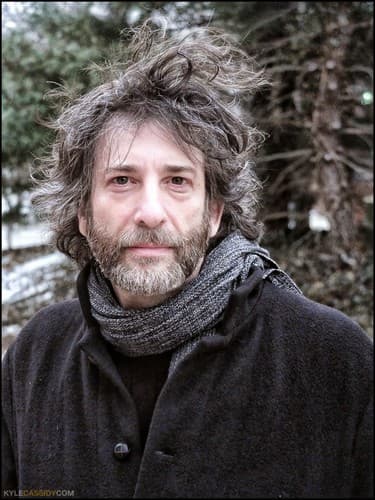
Neil Richard MacKinnon Gaiman is an English author of short fiction, novels, comic books, graphic novels, audio theatre, and a screenwriter. His works include the comic book series The Sandman and the novels Good Omens, Stardust, Anansi Boys, American Gods, Coraline, and The Graveyard Book. He has won numerous awards, including the Hugo, Nebula, and Bram Stoker awards, as well as the Newbery and Carnegie medals. He is the first author to win both the Newbery and the Carnegie medals for the same work, The Graveyard Book (2008). In 2013, The Ocean at the End of the Lane was voted Book of the Year in the British National Book Awards. It was later adapted into a critically acclaimed stage play at the Royal National Theatre in London.







