“The dead can't speak, but they can tell tales. It's the living who decide which ones to listen to.”
— Cordelia Gray reflecting on the nature of her work as a private investigator.

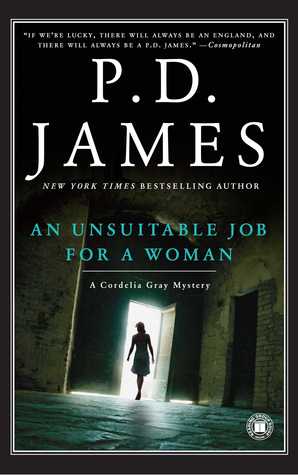
Genre
Thriller / Mystery
Reading Time
240 min
Key Themes
See below
Sign in to track this book
Hired to investigate the supposed suicide of a Cambridge dropout, private investigator Cordelia Gray uncovers hidden desires and deceptions, realizing the death was a planned murder.
Cordelia Gray, a young private investigator, recently inherited 'Pryde's Detective Agency' after her partner, Bernie Pryde, died by suicide. While still dealing with Bernie's death and trying to manage the struggling business, she receives a call from Sir Ronald Callender. Sir Ronald, a wealthy man, hires her to investigate the apparent suicide of his son, Mark Callender. Mark, a handsome Cambridge dropout, was found dead in a small cottage in Monksmere, hanged by his own belt. Sir Ronald, though seemingly accepting the suicide verdict, suspects something else and wants Cordelia to confirm the truth for his peace of mind, specifically asking her to find out 'why' Mark died.
Cordelia travels to Monksmere, a quiet, isolated village, and enters the cottage where Mark died. The cottage, owned by Mrs. Leaming, is sparsely furnished and feels sad. Cordelia carefully examines the room, noting the details of the hanging, the chair's position, and the general state of the place. She finds no clear signs of struggle or forced entry, which supports the police's suicide conclusion. However, she notices a faint trace of lipstick on Mark's mouth, a detail the police seemed to miss. This small detail makes her curious and subtly changes her view, suggesting there might be more to Mark's death.
Cordelia begins interviewing people who knew Mark in Monksmere. She first speaks with Mrs. Leaming, the cottage owner, a direct and talkative woman who shares details about Mark's private nature and his short, recent stay. Mrs. Leaming mentions that Mark had been acting strangely and had a female visitor just before his death, though she couldn't identify her. Cordelia also speaks with other villagers, including the local shopkeeper and postmistress, gathering impressions of Mark as a mysterious, somewhat distant young man. Most people thought he was a loner, but the mention of a female visitor suggests a hidden personal life.
To understand Mark's background, Cordelia travels to Cambridge. She visits his old college, where she speaks with professors and former classmates. She learns that Mark was bright but also troubled, known for his unusual views and a dislike for authority. He had a reputation for being charming but manipulative, and for having complex relationships with women. She also discovers he had a close friendship with a fellow student, Hugh Gaveston, and that he was involved in a protest or scandal that led to him leaving college. The Cambridge interviews show a more complex and unstable Mark than the villagers had described.
Cordelia seeks out Hugh Gaveston, Mark's closest friend from Cambridge. She visits the Gaveston family home, a large, somewhat rundown house, and meets Hugh, his sister Sarah, and their mother. Hugh is initially reserved but eventually talks about his intense friendship with Mark and how much Mark's death affected him. Sarah is more quiet, but Cordelia senses a deeper connection between Sarah and Mark than Sarah first admits. The family dynamic is tense, burdened by a past tragedy: the suicide of Hugh and Sarah's younger sister, Elizabeth, years ago. This revelation links Mark to another suicide, making Cordelia more suspicious.
Cordelia looks into the details of Elizabeth Gaveston's death. She learns that Elizabeth, a sensitive and fragile girl, was infatuated with Mark. Elizabeth's suicide, by drowning, was officially ruled accidental or due to depression, but the Gaveston family always had doubts. Cordelia begins to suspect a connection between Mark's death and Elizabeth's, possibly hinting at Mark's role in Elizabeth's despair. The similarities in the situations — young, troubled people, official suicide verdicts, and lingering questions — are too strong for Cordelia to ignore, suggesting a pattern rather than isolated events.
Through careful observation, Cordelia identifies the faint lipstick trace on Mark's mouth. She realizes it belongs to Sarah Gaveston. Cordelia confronts Sarah, who then tells the truth: Sarah had visited Mark at the cottage shortly before he died. Sarah confesses that Mark had told her about his guilt over Elizabeth's suicide, admitting he had encouraged Elizabeth's affections and then cruelly rejected her, which contributed to her despair. The lipstick was from a goodbye kiss, a moment of shared grief and a desperate plea for understanding. This confession finally provides a reason for Mark's own death — overwhelming guilt.
As Cordelia pieces together the events, she realizes that Mark's death was not a suicide. The evidence, especially the chair's position and the hanging's nature, points to murder. She confronts Hugh Gaveston, who finally confesses. Hugh, consumed by grief and a desire for revenge for Elizabeth's death, had confronted Mark in the cottage. During their heated argument, Hugh, seeing Mark's genuine remorse, initially planned to let him live. However, his intense hatred and the memory of Elizabeth's suffering overwhelmed him, and he killed Mark, staging it to look like a suicide. He then called Sarah to the cottage to help him arrange the scene, including placing the lipstick to create suspicion or to involve her. Sarah, out of misguided loyalty and fear, complied.
Cordelia faces a difficult moral choice. She has uncovered the truth: Mark Callender was murdered by Hugh Gaveston, with Sarah's help, as revenge for Elizabeth's suicide. If she reveals this, the Gaveston family will be destroyed. Sir Ronald Callender, though wanting the truth, also bears some responsibility for his son's actions and his own emotional distance. Cordelia considers the impact on everyone involved, weighing the demands of justice against the consequences of exposing a family already hurt by tragedy. She feels growing empathy for Hugh and Sarah, understanding their deep pain and their misguided attempt at justice.
Ultimately, Cordelia makes a decision that goes against the usual rules of a private investigator. She chooses not to reveal the full truth of Mark's murder. Instead, she gives Sir Ronald Callender a report that confirms Mark's death was a suicide, but adds that Mark felt deep guilt over his role in Elizabeth Gaveston's death. She explains that Mark's suicide was a form of self-punishment, driven by his conscience. While technically a lie, it gives Sir Ronald a believable explanation for his son's actions and offers some closure, without destroying the Gaveston family. Cordelia understands that sometimes, the truth is too harsh, and a changed version can serve a more compassionate purpose, marking her as an 'unsuitable' detective by traditional standards.
The Protagonist
Cordelia evolves from an insecure novice into a confident and morally complex investigator, making a difficult ethical choice that defines her unique approach to justice.
The Central Figure (Deceased)
Mark's character arc is explored in reverse, revealing his journey from a manipulative youth to a man consumed by guilt, leading to his eventual death.
The Supporting
He begins as a man seeking concrete answers and ends with a more nuanced, albeit incomplete, understanding of his son's suffering.
The Antagonist
Hugh moves from being a grieving brother to a vengeful murderer, burdened by the consequences of his actions.
The Supporting
Sarah is revealed to be a silent participant in the cover-up, struggling with her conscience and loyalty.
The Mentioned (Deceased)
Her tragic story is revealed retrospectively, providing the emotional core of the mystery.
The Supporting
She serves as an early source of information, highlighting the initial ambiguity around Mark's death.
The Mentioned (Deceased)
His past influence guides Cordelia, and his tragic end informs her compassionate choices.
The novel looks at the subjective nature of truth and whether absolute justice is always the kindest outcome. Cordelia faces a moral choice: reveal the full, harsh truth of Mark's murder and destroy a family already hurt by grief, or provide a partial, compassionate truth that offers closure without causing more damage. Her decision to present a modified version of events, saying Mark's death was a suicide driven by guilt, challenges the idea that a private investigator's only duty is to uncover all facts. This theme is central to Cordelia's character and the novel's 'unsuitable' title, suggesting that sometimes, compassion matters more than strict adherence to facts.
“''Truth,' he had once said, 'is a beautiful and terrible thing, and therefore has to be treated with great caution.'”
These strong feelings drive much of the novel's plot. Mark Callender's death is revealed to be an act of revenge by Hugh Gaveston, fueled by his grief for his sister Elizabeth and his own guilt for not protecting her. Mark himself feels deep guilt over how he treated Elizabeth, which leads to his own decline. Cordelia, still grieving Bernie's suicide, understands these emotional currents, allowing her to empathize with the characters and understand their reasons. The story shows how unchecked grief can become destructive revenge, and how guilt can be a heavy, unavoidable burden.
“He had loved his sister. He had killed Mark Callender. It was as simple and as terrible as that.”
The past greatly affects the present in the novel. Elizabeth Gaveston's suicide, years before the main events, starts Mark's death and the entire investigation. Mark's past actions and manipulative nature at Cambridge directly cause his guilt and Hugh's desire for revenge. Cordelia herself is affected by her partner Bernie's suicide, which shapes her perspective and ethical choices. The story constantly looks back, showing how past events, unresolved emotions, and unaddressed complaints continue to influence the characters' lives, dictating their choices and fates.
“The past, she reflected, was like a long, dark corridor with no doors, only echoes.”
Cordelia's gender and youth are shown as both a disadvantage and a unique strength in her job. Male characters often underestimate her and question her suitability as a young female private investigator. However, her empathetic approach, sharp observation skills, and ability to connect with people emotionally prove very valuable. Her 'unsuitable' nature allows her to see beyond the rigid rules of conventional detective work, leading her to a resolution that values compassion over strict legal justice. This theme challenges traditional gender roles in a male-dominated profession.
“An unsuitable job for a woman. Bernie's words, her challenge.”
A subtle detail that initially misdirects the investigation
The faint trace of lipstick on Mark Callender's mouth is a key red herring. It initially suggests a romantic involvement or a secret liaison, leading Cordelia to consider motives related to love or betrayal. This detail, initially overlooked by the police, is crucial in convincing Cordelia that Mark's death might not be a straightforward suicide. However, the true meaning of the lipstick is later revealed to be a symbol of shared grief and a deliberate planting by Hugh and Sarah to complicate the scene, rather than a clue to a romantic entanglement. It serves to deepen the mystery and highlight Cordelia's superior observational skills.
Characters' accounts of past events are often incomplete or biased
The novel largely relies on Cordelia piecing together events from the often partial, biased, or deliberately misleading accounts of other characters. Hugh and Sarah Gaveston, in particular, withhold crucial information or present a distorted version of the truth regarding Mark's death and Elizabeth's suicide. Even Sir Ronald Callender's initial request is driven by an incomplete understanding of his son. This device forces Cordelia, and the reader, to constantly question what is being told and to look for deeper, unspoken truths, emphasizing the subjective nature of memory and testimony in solving a mystery.
Suicide as a recurring motif, representing different forms of despair and guilt
Suicide is a powerful and recurring symbol throughout the novel. Bernie Pryde's suicide casts a shadow over Cordelia's life and her agency, while Elizabeth Gaveston's suicide is the catalyst for the entire revenge plot. Mark Callender's death is initially presented as a suicide, and Cordelia ultimately frames it as such, albeit a guilt-driven one. Each instance of suicide, or perceived suicide, represents different facets of human despair, guilt, and the profound impact of individual actions on others. It underscores the novel's exploration of mental anguish and the moral complexities surrounding death.
A remote location that intensifies the sense of mystery and confinement
The cottage in Monksmere, where Mark Callender dies, serves as an isolated and somewhat claustrophobic setting. Its remoteness from the bustling world of Cambridge and London creates an insular atmosphere, where secrets can be kept and where the emotional drama of the Gaveston family can play out without immediate external scrutiny. This isolation intensifies the mystery, making it harder for Cordelia to gather information and emphasizing the internal struggles of the characters. It underscores the idea that the truth is hidden, not just by people, but by the very environment itself.
“The dead can't speak, but they can tell tales. It's the living who decide which ones to listen to.”
— Cordelia Gray reflecting on the nature of her work as a private investigator.
“Even the most respectable people have their secrets, and sometimes it's the secrets that kill them.”
— Cordelia pondering the hidden lives of the people she encounters during her investigations.
“It was a job that required a certain detachment, a willingness to look at the worst of human nature without flinching.”
— Describing the emotional demands of being a private detective, especially for a young woman.
“There was a particular kind of loneliness in being the one who knew too much, who saw too clearly.”
— Cordelia's internal thoughts about the burden of her profession.
“The truth, like murder, will out. But sometimes it needs a little help.”
— A reflection on the necessity of active investigation to uncover hidden facts.
“People are rarely what they seem, and motives are even less so.”
— Cordelia's cynical but realistic view of human behavior and underlying intentions.
“An unsuitable job for a woman, they'd said. But what job was truly suitable for anyone?”
— Cordelia challenging societal expectations and gender roles regarding her profession.
“Grief is a strange thing. It can make you do things you never thought yourself capable of.”
— Observing the irrational and unpredictable behaviors of those affected by loss.
“The past is never truly dead. It just lies waiting, ready to spring out when you least expect it.”
— Highlighting how past events and secrets can resurface and impact the present.
“Justice wasn't always about punishment; sometimes it was about understanding.”
— Cordelia's evolving perspective on the ultimate goal of her investigations.
“It was not enough to know who did it; one had to understand why.”
— Emphasizing the importance of motive and psychological insight in solving crimes.
“The dead, in their silence, could be more eloquent than the living.”
— Cordelia's reflection on the clues and stories left behind by victims.
“Every family has its own particular brand of madness.”
— A cynical observation on the dysfunctional dynamics often found within families.
“She had chosen a life where the truth was often ugly, but at least it was real.”
— Cordelia's acceptance of the harsh realities of her chosen profession.
Ready to see how well you understood this book? Take our interactive quiz with 10 questions.

Biography coming soon.







