“I am an unnecessary woman. I've known it my whole life. My father used to tell me that.”
— Aaliya's self-perception and the origin of the book's title.

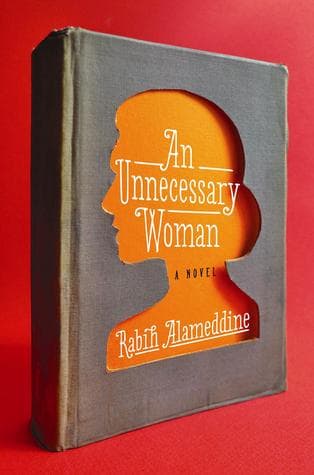
Rabih Alameddine (2014)
Genre
Literary Fiction / Historical Fiction
Reading Time
360 min
Key Themes
See below
Sign in to track this book
In war-scarred Beirut, a reclusive woman's life of secret literary translations unravels, exploring memory, identity, and quiet resilience.
Aaliya Sohbi, a seventy-two-year-old recluse in Beirut, overhears her neighbors, 'the three witches,' discussing her white hair. Self-conscious, she dyes her hair, but a mix-up results in startling blue hair. This small event triggers many memories and thoughts for Aaliya, who lives quietly with her books. She thinks about her identity, her family's dismissive attitude, and the comfort she finds in her literary world, which contrasts with Beirut's external chaos.
For decades, Aaliya has followed a personal ritual: each year, she translates a beloved book from a foreign language into Arabic. These thirty-seven translations are carefully completed and then hidden, never to be read by anyone else. This secret act of creation is her deepest connection to the world and her identity, a silent rebellion against societal expectations for women in Lebanon. She finds solace and purpose in the process of translating words, treating each translation as a sacred act of preservation and understanding.
Aaliya's story often includes vivid and traumatic memories of the Lebanese Civil War. She recalls specific incidents, like bombings, constant fear, and the deep sense of loss and displacement that filled daily life in Beirut. These memories are not chronological but appear as fragmented, intrusive thoughts, showing the psychological scars left by the conflict. The war's brutality contrasts with the quiet, intellectual world Aaliya built, yet it shaped her reclusive nature and her appreciation for literature's stability and permanence.
Aaliya's family, especially her mother and brother, always saw her as an 'unnecessary appendage.' They thought her odd, too intellectual, and a disappointment for not following traditional expectations of marriage and motherhood. She remembers their coldness, their inability to understand her love for books, and their general disinterest in her well-being. This family neglect contributed to Aaliya's decision to live an independent, solitary life, finding her true family within books rather than among her relatives.
Aaliya briefly mentions her past marriage, which ended in divorce years ago. She describes her husband as kind but incompatible, unable to understand her intellectual pursuits or her need for solitude. The divorce was not dramatic but a quiet acknowledgment of their basic differences. This experience further solidified Aaliya's belief that she was meant for an intellectually independent life, free from conventional relationships. She holds no bitterness, seeing it as a necessary step in making her own path.
Throughout her story, Aaliya has imaginary conversations with her favorite authors and literary figures, such as Roberto Bolaño, Italo Calvino, and Jorge Luis Borges. These figures are her true companions, offering comfort, intellectual stimulation, and a sense of belonging she rarely finds in the real world. She analyzes their works, thinks about their philosophies, and draws parallels between their lives and her own. This deep engagement with literature is not just an escape but a way to process her experiences and find meaning in a world that often feels chaotic and indifferent.
An elderly neighbor, Mrs. Samir, whose son has been missing since the war, asks Aaliya for help. Mrs. Samir believes her son is still alive and asks Aaliya, with her language knowledge, to help her write a letter to the authorities. This request is important because it makes Aaliya step out of her comfortable reclusion and deal directly with the war's lingering trauma. It challenges her self-imposed isolation and shows the shared grief that still fills Beirut.
A major crisis happens when a water pipe bursts in the apartment above Aaliya's, causing a leak that threatens to destroy her home and, more importantly, her beloved books and secret translations. This physical disaster reflects the emotional upheaval Aaliya feels as she deals with aging, loneliness, and her carefully built world's fragility. The threat to her books is especially serious, as they represent her life's work and identity, forcing her to confront the possibility of losing everything she holds dear.
After the water leak, Aaliya, with unexpected help from her 'three witches' neighbors, frantically tries to save her water-damaged books. This collaboration is a rare moment of community and connection for Aaliya, who has mostly lived in isolation. The women work together, drying pages and moving books, showing surprising solidarity in disaster. This scene subtly breaks down some of Aaliya's ideas about her neighbors and highlights the human connection that can emerge in crisis, even in a city scarred by division.
As the novel continues, Aaliya increasingly thinks about her own mortality. The blue hair, the aging body, and the threat to her books all bring her closer to facing the end of her life. She ponders the legacy of her secret translations—works no one has ever read—and questions the purpose of her solitary devotion to literature. Despite these anxieties, she ultimately finds a quiet peace in knowing that her life, though unconventional, has been rich with intellectual pursuit and a deep connection to ideas.
Throughout her internal monologues, Aaliya paints a vivid, multifaceted picture of Beirut. She describes its historical beauty, its culture, and its scars from the civil war. The city itself becomes a character, reflecting Aaliya's resilience and her ability to find beauty amid destruction. She observes the city's subtle changes, the mix of old and new, and its inhabitants' enduring spirit, all contributing to her complex relationship with her home and her identity as a woman of Beirut.
Towards the novel's end, Aaliya reaches a place of quiet acceptance. She embraces her identity as an 'unnecessary woman' and finds value in her solitary, intellectual existence. Her blue hair becomes a symbol of her individuality and defiance. The threat to her books, while devastating, reinforces their importance to her, and her neighbors' unexpected help offers a glimpse of connection. She understands that her life, though not conforming to societal norms, has been rich and meaningful on her own terms, defined by her love for literature and her self-possession.
The Protagonist
Aaliya begins as deeply isolated and resistant to external engagement, but through a series of events, she subtly opens herself to unexpected connections and a quiet acceptance of her unique life.
The Supporting
They evolve from symbols of societal judgment to unexpected sources of support and community for Aaliya.
The Supporting
Her brief but impactful interaction prompts Aaliya to step outside her comfort zone and engage with a neighbor's pain.
The Mentioned
Her influence is static, serving as a formative force in Aaliya's early life and self-identity.
The Mentioned
His influence is static, representing the societal norms Aaliya rejected.
The Mentioned
His role is to illustrate Aaliya's early life choices and her eventual path to solitary independence.
Literature is the core of Aaliya's life, her main source of identity, companionship, and meaning. Her secret translations are not just a hobby but a ritual, a way to connect with authors across time and culture, and to preserve knowledge. Books offer her sanctuary from Beirut's chaos and her family's indifference. She finds solace, intellectual stimulation, and belonging within their pages, having imaginary dialogues with favorite writers, like conversing with Bolaño about his writing or contemplating Calvino's narrative structures. Her life shows how literature can shape and sustain an individual's inner world, even in isolation.
“I read, therefore I am. I translate, therefore I am more. I write, therefore I am even more still. I don’t publish, therefore I am a secret.”
Aaliya lives a life of deep solitude, which she largely chooses. While her family's neglect initially pushed her to isolate, she actively cultivates her reclusive lifestyle, finding joy and fulfillment in her own company and intellectual pursuits. She distinguishes between the richness of solitude, which allows for introspection and creative work (like her translations), and the emptiness of loneliness. However, vulnerable moments, such as the blue hair incident or the water leak, show glimpses of underlying loneliness and a quiet desire for connection, which she cautiously allows herself to experience, especially with her neighbors during the book rescue.
“I am not lonely. I am alone. I am a woman who lives alone, who reads alone, who translates alone, who drinks alone. I am alone, and I am not lonely.”
The novel is filled with Aaliya's memories of the Lebanese Civil War, which appear as fragmented, vivid flashbacks amid her literary thoughts. These memories highlight the conflict's lasting trauma on individuals and Beirut itself. Aaliya's resilience is clear in her ability to build a meaningful life despite the horrors she saw and the ongoing instability. Her internal world, built on books and intellectual pursuits, helps her cope, a way to process and overcome external chaos. The war's impact is not just historical but continues to show in the present, as seen in Mrs. Samir's grief for her missing son, demonstrating how memory shapes the present.
“Beirut, my city, my heart, my wound. You are the reason I read, the reason I translate, the reason I hide.”
Aaliya's journey is about defining herself on her own terms, against societal and family expectations. Labeled 'unnecessary' by her family for not fitting traditional roles of wife and mother, she reclaims her identity through intellectual independence and secret translations. Her blue hair symbolizes her individuality and defiance. She asserts her right to a life lived by her own values, finding her true self not in external validation but in her internal world of literature and thought. The novel explores how one can build a strong identity outside conventional societal molds, finding purpose in unconventional ways.
“My life has been one long act of translation, from the language of the expected to the language of the lived.”
As Aaliya is in her early seventies, themes of aging and mortality are present throughout the narrative. She thinks about her changing body, the fading of youth, and the approach of death. The blue hair incident prompts thoughts about her appearance and the passage of time. The water leak, threatening her life's work, forces her to confront her existence's fragility and the potential loss of her legacy. These reflections are not morbid but a quiet acceptance of life's natural cycle, leading her to consider the meaning of her solitary devotion to literature and what, if anything, will remain after she is gone.
“Old age is not a battle; it is a siege. You learn to live with the enemy inside the walls.”
The narrative unfolds as Aaliya's unedited thoughts and reflections.
The entire novel is presented through Aaliya's first-person stream of consciousness, allowing readers direct access to her digressive mind. This device immerses the reader in her internal world, jumping between literary analyses, philosophical musings, childhood memories, and observations of present-day Beirut. It creates an intimate, unfiltered portrait of Aaliya, showcasing her intellect, wit, and vulnerability. The lack of a strict linear plot mirrors the associative nature of memory and thought, making the reading experience feel like a direct conversation with Aaliya herself, blurring the lines between past and present.
The narrative frequently references and interacts with other literary works and authors.
Metafiction and intertextuality are central to the novel, as Aaliya's thoughts are constantly interwoven with references to her favorite authors (Bolaño, Calvino, Borges, etc.) and their works. She not only quotes them but also engages in imaginary dialogues with them, dissects their narratives, and draws parallels between their lives and her own. This device highlights the profound impact of literature on Aaliya's identity and serves as a commentary on the act of reading, writing, and translation itself. It enriches the narrative by placing Aaliya's personal story within a broader literary and philosophical context, making the book a 'love letter to literature.'
A seemingly trivial detail that acts as a catalyst for deeper introspection.
The accidental dyeing of Aaliya's hair blue serves as a pivotal symbolic plot device. Initially a source of embarrassment and a response to her neighbors' gossip, the blue hair quickly becomes a catalyst for Aaliya's deep introspection about aging, identity, and societal expectations. It visually represents her unconventional nature and her quiet defiance. The blue hair forces her to confront her appearance and, by extension, her place in the world, triggering the flood of memories and reflections that constitute the novel's narrative. It transforms from a superficial mishap into a profound symbol of self-acceptance and individuality.
Aaliya's hidden life's work, symbolizing her inner world and defiance.
Aaliya's lifelong practice of secretly translating beloved books is a crucial plot device, symbolizing her profound inner life, her intellectual passion, and her quiet rebellion. These thirty-seven untranslated books represent her personal legacy, a testament to her dedication and her refusal to seek external validation. The act of translation itself is a metaphor for her life – interpreting and rendering the world on her own terms. The threat of their destruction during the water leak underscores their immense value to her, embodying her identity and her most cherished connection to the world of ideas.
“I am an unnecessary woman. I've known it my whole life. My father used to tell me that.”
— Aaliya's self-perception and the origin of the book's title.
“Books, for me, are a home. A house built of paper and ink, where I can live and breathe and be myself.”
— Aaliya's deep connection to literature and reading.
“Memory is a treacherous thing. One moment it's clear, the next it's a blur.”
— Aaliya reflecting on the unreliability of her own memories.
“The problem with living in a city that’s constantly being rebuilt is that you forget what it used to look like.”
— Aaliya's observations on Beirut's history of destruction and reconstruction.
“There are books that mark us, books that change us, books that open our eyes to new worlds.”
— Aaliya's belief in the transformative power of literature.
“I spend my life translating books, but what I really want to translate is silence.”
— Aaliya's core occupation and her deeper, unspoken desires.
“Sometimes, the only way to make sense of the world is to create your own.”
— Aaliya's justification for her solitary, book-filled existence.
“The greatest tragedy is not death, but life without meaning.”
— Aaliya's philosophical musings on existence.
“We are all stories in the end, if we are lucky enough to be remembered.”
— Aaliya's contemplation on legacy and human existence.
“The past is a stubborn ghost. It refuses to stay buried.”
— Aaliya's ongoing struggle with her personal history and the history of her city.
“I don't choose my books; they choose me.”
— Aaliya's intuitive and passionate approach to selecting books for translation.
“To be alone is not to be lonely. It is to be free.”
— Aaliya's embrace of her solitary lifestyle.
“Every book is a conversation. A conversation between the author and the reader, across time and space.”
— Aaliya's view on the interactive nature of reading.
“Perhaps all translation is an act of love, an attempt to bridge the unbridgeable.”
— Aaliya's profound understanding of her craft and its emotional depth.
Ready to see how well you understood this book? Take our interactive quiz with 10 questions.

Biography coming soon.







