“The world is a marketplace, and every man is a seller of himself.”
— Chinonso reflects on the human condition and the need to make one's way in life.

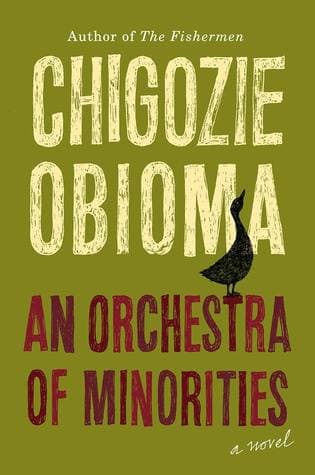
Chigozie Obioma (2019)
Genre
Literary Fiction
Reading Time
9-10 hours
Key Themes
See below
Sign in to track this book
Narrated by his ancestral spirit, a Nigerian poultry farmer's quest for love and social equality transforms into a harrowing odyssey of betrayal and displacement after he sacrifices everything for a deceitful promise of education abroad.
Chinonso, a young poultry farmer from Umuahia, Abia State, Nigeria, is on his way to sell chickens at the market when he sees a distressed woman, Ndali, on a bridge, seemingly about to commit suicide. Driven by empathy and a desire to avert tragedy, Chinonso impulsively throws two of his prized chickens from the bridge into the river below. This shocking act distracts Ndali, pulling her back from the brink. Intrigued and moved by his unconventional intervention, Ndali talks to Chinonso. This initial, dramatic meeting starts an immediate connection between them, laying the foundation for a deep and unexpected romance that will change both their lives.
Following their first meeting, Chinonso and Ndali spend more time together, and their bond quickly becomes a passionate love affair. Ndali, an educated and sophisticated woman from a prominent, wealthy family in Umuahia, is drawn to Chinonso's genuine nature, kindness, and unpretentious spirit, despite his humble background as a poultry farmer. Chinonso, in turn, is captivated by Ndali's beauty, intelligence, and grace. Their love grows rapidly, going beyond the societal expectations that typically dictate relationships in their community. They dream of a future together, unaware of the obstacles that will soon arise due to their different social standings.
As Chinonso and Ndali's relationship becomes serious, Ndali introduces Chinonso to her family. Her parents, particularly her father, Chief Okoro, strongly oppose the match. They see Chinonso as an unsuitable partner for their daughter due to his lack of education, humble profession, and lower social status. They believe he cannot provide the life and prestige they desire for Ndali. Heartbroken but determined to prove his worth and overcome these class barriers, Chinonso decides to pursue higher education abroad. He believes that getting a university degree will elevate his social standing and make him acceptable to Ndali's family, thus securing their future together.
To pay for his studies in Cyprus, Chinonso sells almost all his possessions, including his poultry farm, which is his entire livelihood and inheritance. He entrusts his life savings to a seemingly helpful young Nigerian man, whom he meets through an acquaintance, who promises to arrange his admission, visa, and accommodation at a university in Northern Cyprus. Full of hope and determination, Chinonso travels to Cyprus. However, upon his arrival, he discovers that he has been swindled. The university admission is fake, the accommodation non-existent, and his money has been stolen. He is left stranded, penniless, and alone in a foreign land, his dreams shattered.
Stranded in Cyprus with no money, no place to stay, and no way to return home, Chinonso quickly struggles for survival. He is forced to live on the streets, begging for food and shelter. The harsh realities of his situation erode his spirit and hope. He meets other Nigerian immigrants who are also struggling, some involved in petty crimes to survive. Out of necessity, and with his options dwindling, Chinonso reluctantly gets involved in illegal activities, including drug dealing, just to earn enough to eat and find a temporary roof over his head. His once-innocent nature is slowly corrupted by the brutal environment.
Chinonso's involvement in the Cypriot underworld eventually leads to his arrest. He is caught by the police during a drug bust and, despite his initial reluctance and inexperience in the illicit trade, he is convicted and sentenced to a lengthy prison term. Life in a foreign prison is brutal and dehumanizing. Stripped of his freedom and any remaining dignity, Chinonso's spirit is crushed. The news of his imprisonment eventually reaches Ndali in Nigeria, shattering her hopes and confirming her family's worst fears about him. The distance and his circumstances make communication almost impossible, further isolating him from the world he once knew and the woman he loves.
Throughout Chinonso's ordeal, his personal chi, or guardian spirit, narrates his story, providing a unique cosmic perspective on his suffering. The chi, bound to Chinonso, laments the injustices and misfortunes befalling its human counterpart. It details Chinonso's thoughts, emotions, and the external forces that shape his fate, often reflecting on destiny and free will. The chi frequently tries to intervene, offering guidance or subtle nudges, but is largely powerless against the predetermined path and the choices Chinonso makes under duress. The chi's voice adds a layer of ancient Igbo cosmology, emphasizing the spiritual dimensions of Chinonso's earthly trials.
After serving his full prison sentence, a physically and emotionally scarred Chinonso is finally released and deported back to Nigeria. The years of hardship, the betrayal, and the brutal reality of prison life have transformed him into a hardened, cynical individual. He is no longer the innocent, optimistic poultry farmer who left years ago. His appearance is gaunt, his eyes hollow, and his spirit deeply wounded. Upon his return to Umuahia, he finds that everything has changed. His family is older, his friends have moved on, and the community he once knew has shifted. He feels like a stranger in his own home, struggling to reintegrate.
Upon his return, Chinonso desperately seeks out Ndali, only to discover that she has married another man—a wealthy and educated suitor approved by her family. This devastating news crushes any lingering hope he had for their reunion. Furthermore, he begins to uncover the truth behind his disastrous journey to Cyprus. He learns that Ndali's family, particularly her father, played a more direct role in orchestrating his downfall, manipulating events to ensure he would be removed from Ndali's life. This revelation fuels a desire for revenge within Chinonso, transforming his grief into a dark resolve to make those who wronged him pay for their actions.
Driven by heartbreak, anger, and a sense of injustice, Chinonso dedicates himself to exacting revenge on Ndali's family, especially Chief Okoro, whom he holds responsible for his ruined life. He meticulously plans his retribution, no longer caring about the consequences for himself. His once gentle nature is completely overshadowed by a desire for vengeance. He seeks out those who can help him achieve his goal, moving deeper into a world of darkness and moral ambiguity. The chi observes this transformation with sorrow, understanding the tragic path Chinonso is now on, further away from the path it had intended for him.
Chinonso's planned revenge ends in a dramatic and violent confrontation. He targets Chief Okoro, Ndali's father, holding him accountable for the suffering and injustice he endured. The scene is charged with raw emotion, as years of suppressed anger and pain erupt. The specific details of the confrontation involve Chinonso carrying out a brutal act of retribution, directly impacting Chief Okoro and, by extension, Ndali's family. This act is the tragic end of Chinonso's downward spiral, driven by his belief that he was denied his rightful destiny and the love of his life. The violence leaves a lasting, irreversible mark on all involved.
In the aftermath of his vengeful acts, Chinonso faces the full legal and personal consequences. The chi, observing the tragic unfolding of events, reflects deeply on destiny, the influence of human choices, and the limitations of its own power. It questions whether Chinonso's fate was truly predetermined or if his suffering and subsequent actions were a result of a series of unfortunate choices and external manipulations. The chi's narrative provides a philosophical closing, pondering the intricate dance between spiritual guidance and human agency, leaving the reader to contemplate the true meaning of Chinonso's 'orchestra of minorities'—the minor spirits and forces that shaped his tragic life.
The Protagonist
Chinonso transforms from an innocent, hopeful lover into a bitter, vengeful man, losing his moral compass as a result of profound injustice and betrayal.
The Love Interest
Ndali is forced to choose between love and family expectations, eventually conforming to societal pressures after Chinonso's disappearance and imprisonment.
The Narrator/Supporting
The chi's understanding of destiny and human agency evolves as it witnesses Chinonso's tragic journey, grappling with its own limitations.
The Antagonist/Supporting
Chief Okoro remains steadfast in his classist beliefs, ultimately facing the tragic consequences of his manipulative actions.
The Supporting
Remains a static character, upholding traditional family values and social expectations.
The Mentioned/Supporting
A static character who represents Chinonso's past life and connection to home.
The Supporting
A static character whose actions serve as a pivotal plot device for Chinonso's tragedy.
The Supporting
A static character who represents the societal expectations Ndali eventually succumbs to.
The novel constantly addresses the interplay between predetermined fate and human agency. Chinonso's chi, as the narrator, frequently ponders whether Chinonso's tragic path was fated from birth or a consequence of his choices and the interventions of others. The chi's attempts to guide Chinonso, often thwarted by his human desires or external forces, highlight this tension. For instance, Chinonso's initial act of saving Ndali feels fated, yet his decision to travel to Cyprus, driven by love, leads to an unforeseen catastrophe, raising questions about whether his 'orchestra of minorities' (the minor spirits and influences) truly determines his life or if he makes his own tragic symphony.
““Every human being has his own orchestra of minorities—the minor gods, minor spirits, minor chi—that play in his life. And they play the music of his destiny.””
The divide between Chinonso's humble background as a poultry farmer and Ndali's wealthy, educated family forms the central conflict of the narrative. Ndali's family's rejection of Chinonso, based solely on his social status, underscores the influence of class on love, marriage, and opportunity in Nigerian society. Chinonso's desperate attempt to 'elevate' himself through education abroad is a direct response to these societal pressures. His subsequent downfall highlights how deeply entrenched these inequalities are and how they can crush individual aspirations and even lead to malicious intervention, as seen with Chief Okoro's actions.
““They told her that a man of her class does not marry a poultry farmer. That he was a commoner, a nobody.””
Betrayal is a recurring element that fuels Chinonso's downward spiral. He is first betrayed by the con man who swindles him in Cyprus, then by the justice system that imprisons him, and ultimately by Ndali's family, who actively orchestrate his removal from her life. This accumulation of betrayals transforms Chinonso from a kind, hopeful man into one consumed by a desire for revenge. His pursuit of retribution, though understandable given his suffering, ultimately leads to further tragedy, demonstrating the destructive cycle that unchecked vengeance can create and how it can corrupt the soul.
““The path of revenge is a dark river, and it drowns not only the one who is pursued but also the one who pursues.””
Chinonso's journey to Cyprus portrays the perils and exploitation faced by many African immigrants seeking a better life abroad. His hopes are dashed by a scam, leaving him stranded, homeless, and vulnerable in a foreign land. The novel exposes the harsh realities of illegal immigration, the desperation that drives individuals into crime, and the dehumanizing experience of imprisonment in a foreign country. It highlights the vulnerability of those seeking opportunities, often becoming victims of predatory individuals and systemic injustices, thus challenging the romanticized notion of 'greener pastures.'
““He had come to this foreign land, not for crime, but for love, for a future. And now he was a criminal.””
At its heart, the novel is a tragic love story defined by sacrifice. Chinonso's initial act of throwing his prized chickens off the bridge is a sacrifice to save Ndali. He then sacrifices his entire livelihood and future in Nigeria to pursue an education, believing it will make him worthy of Ndali and her family. Ndali, too, sacrifices her initial desire for Chinonso, ultimately succumbing to family pressure and marrying another. The novel explores the limits of sacrifice, questioning whether love can truly conquer all when faced with overwhelming societal obstacles and the destructive force of external manipulation.
““He had given up everything for her, even his very self. But was it enough?””
An omniscient, spiritual narrator providing a unique cosmic perspective.
Chinonso's personal chi, or guardian spirit, serves as the novel's first-person narrator. This device allows for an omniscient perspective that transcends human limitations, offering insights into Chinonso's inner thoughts, the motivations of other characters, and the spiritual forces at play. The chi's voice provides philosophical commentary on destiny, free will, and the human condition, grounding the contemporary story in ancient Igbo cosmology. It creates a sense of profound tragedy as the chi witnesses, often helplessly, its human's suffering, adding a layer of spiritual lament to the narrative.
A modern reinterpretation of Homer's epic journey of trials and return.
The novel explicitly draws parallels to Homer's *Odyssey*. Chinonso's journey to Cyprus, his subsequent trials, his imprisonment, and his eventual return to a changed home mirror Odysseus's long and arduous voyage. The 'sirens' of false promises, the 'monsters' of exploitation and betrayal, and the 'penelope' awaiting (or not awaiting) him, all echo the ancient epic. This allusion elevates Chinonso's personal tragedy to an archetypal level, suggesting that his struggles are part of a timeless human experience of quest, suffering, and the yearning for home and love.
A symbolic act of sacrifice that initiates the central conflict.
Chinonso's impulsive act of throwing his two prized chickens off the bridge to save Ndali is a potent symbolic gesture. It represents his immediate, selfless sacrifice for love and life. The chickens are his livelihood, his future, and their sacrifice initiates the entire narrative arc, setting in motion the fateful connection with Ndali. Their loss foreshadows the greater sacrifices Chinonso will make, and the profound losses he will endure, ultimately symbolizing the destruction of his innocence and his original, simple life.
A metaphorical concept representing the myriad forces shaping human destiny.
The titular 'orchestra of minorities' is a central metaphor introduced by the chi. It refers to the countless minor gods, spirits, and influences – both internal and external, human and divine – that collectively compose the 'music' of an individual's destiny. This concept emphasizes the intricate and often unseen forces that guide or disrupt a human life, suggesting that while one might have a dominant 'chi,' many other smaller 'minorities' also play a part. It provides a framework for understanding the complex interplay between fate, individual choices, and societal pressures in Chinonso's life.
A physical manifestation of Chinonso's enduring love and a source of later heartbreak.
The love letter Chinonso writes to Ndali before leaving for Cyprus serves as a tangible symbol of his devotion and hope. It is meant to bridge the distance and reassure her of his intentions. However, its delayed or non-delivery (due to Ndali's family's interference) becomes a crucial plot point, contributing to Ndali's belief that Chinonso has abandoned her. This letter, or lack thereof, becomes a source of misunderstanding and heartbreak, highlighting the manipulative tactics employed by Ndali's family and the fragility of communication across vast distances and societal divides.
“The world is a marketplace, and every man is a seller of himself.”
— Chinonso reflects on the human condition and the need to make one's way in life.
“When a man wants to cross a river, he does not stand on the bank and stare at the water. He builds a bridge.”
— Chinonso's inner monologue as he contemplates taking decisive action.
“There are some journeys that one must make alone, for the path is too narrow for two.”
— Chinonso grapples with his solitary quest and the challenges he faces.
“Love is a bird that flies without wings, and sings without a voice.”
— Chinonso's poetic reflection on his profound feelings for Ndali.
“A man's worth is not measured by the size of his yam barn, but by the goodness of his heart.”
— A proverb cited by Chinonso, emphasizing moral character over material wealth.
“The gods do not give with both hands; what they give with one, they take with the other.”
— Chinonso's understanding of the balance of fortune and misfortune in life.
“Hope is a thing with feathers, and it perches in the soul.”
— Chinonso's enduring optimism despite the hardships he faces.
“The past is a stubborn ghost, and it haunts the present.”
— Chinonso's struggle to escape the consequences of past decisions and events.
“To be truly free, one must first be free in one's mind.”
— Chinonso's realization about the nature of true liberation, beyond physical constraints.
“Every man has a story, and every story deserves to be heard.”
— A broader philosophical point about the importance of individual narratives.
“The heart is a drum, and it beats to its own rhythm.”
— Chinonso's internal conflict and the unique desires of his heart.
“Silence can be louder than any shout, and more telling than any word.”
— Chinonso observes the unspoken truths and communications in various interactions.
“Sometimes, the longest journey is the one from the head to the heart.”
— Chinonso's internal struggle to reconcile his logical understanding with his emotional truth.
“A good name is better than riches.”
— A traditional proverb that guides Chinonso's actions and values.
Ready to see how well you understood this book? Take our interactive quiz with 10 questions.

Chigozie Obioma is a Nigerian author celebrated for his evocative storytelling. His debut novel, 'The Fishermen,' was shortlisted for the Man Booker Prize. His subsequent novel, 'An Orchestra of Minorities,' was a finalist for the Kirkus Prize, further cementing his reputation as a significant voice in contemporary fiction.







