“Every secret is a weapon, and every man has a price.”
— Dreyfus reflecting on the nature of espionage and human weakness.


Robert Harris (2014)
Genre
Thriller / Historical Fiction / Mystery
Reading Time
9-10 hours
Key Themes
See below
Sign in to track this book
In 1895 Paris, a newly appointed intelligence chief uncovers a sinister conspiracy surrounding a Jewish officer's treason conviction, forcing him to risk everything to expose the truth about a spy still lurking within the French military.
In January 1895, Colonel Georges Picquart, a rising officer in French military intelligence, attends the public degradation of Captain Alfred Dreyfus in the École Militaire courtyard. Dreyfus, a Jewish artillery officer, is accused of selling military secrets to Germany, specifically the 'bordereau' — a list of classified documents. The event is a spectacle of nationalistic fervor, with a large crowd demanding Dreyfus's punishment. Picquart, observing Dreyfus's calm demeanor and his declarations of innocence, feels a flicker of unease despite believing the man is guilty. This public shaming marks the official end of the initial trial, with Dreyfus sentenced to life imprisonment on Devil's Island.
Following Dreyfus's conviction and deportation, Georges Picquart is promoted to head the Deuxième Bureau's Statistical Section, the counter-espionage unit responsible for 'proving' Dreyfus's treason. His predecessor, Colonel Sandherr, is gravely ill. Picquart, a careful and ambitious officer, takes over with a commitment to efficiency and discretion. He is initially content with the official story of Dreyfus's guilt, viewing the case as closed. His new role places him at the center of French intelligence, giving him access to all sensitive documents and the military's spy operations, a position that will soon challenge his beliefs.
Months after Dreyfus's imprisonment, Picquart's section intercepts a torn telegram, known as the 'petit bleu,' addressed to Major Ferdinand Esterhazy, an officer known for his gambling debts and shady character. The telegram is from the German military attaché, Colonel Max von Schwartzkoppen, and contains an innocuous but suspicious message. Picquart's graphologist, a new recruit, identifies the handwriting on the 'petit bleu' as matching that of the original bordereau, the key piece of evidence against Dreyfus. This discovery immediately raises Picquart's suspicions: if Esterhazy is communicating with the Germans, then Dreyfus might be innocent, and the real spy is still free in the French military.
Driven by duty and a growing unease, Picquart begins a secret investigation into Major Esterhazy, despite the official stance that the Dreyfus affair is closed. He discovers Esterhazy's extravagant lifestyle, his mounting debts, and his volatile temperament. Picquart obtains samples of Esterhazy's handwriting and compares them to the bordereau. The similarities are striking, far more convincing than the previous comparison to Dreyfus's hand. Picquart also learns of Esterhazy's connections to influential figures within the military, suggesting a possible cover-up or protection. This evidence solidifies Picquart's belief that Esterhazy is the true traitor.
Picquart compiles a detailed report outlining his findings about Esterhazy and what they mean for Dreyfus's conviction. He presents this evidence to his superiors: General Gonse, the Deputy Chief of the General Staff, and General Boisdeffre, the Chief of the General Staff. To his dismay, they are unreceptive, dismissing his findings and urging him to drop the matter. They are more concerned with protecting the army's reputation and maintaining the 'truth' of Dreyfus's guilt than with finding the real traitor. This meeting is a turning point, as Picquart realizes he is against a powerful conspiracy within the military establishment.
As Picquart continues to press his case, he becomes isolated. Colonel Hubert Henry, a subordinate in the Statistical Section and a key figure in the original Dreyfus investigation, actively works against him. Henry, under pressure from superiors who want to definitively close the case and reinforce Dreyfus's guilt, forges a new document — a letter supposedly from the Italian military attaché to the German attaché, explicitly naming Dreyfus as a spy. This 'faux Henry' is a clear attempt to silence any lingering doubts. Picquart is sidelined, his loyalty questioned, and he is eventually transferred out of Paris to a remote posting in Tunisia.
Despite Picquart's removal, the truth begins to emerge. Mathieu Dreyfus, Alfred's brother, tirelessly campaigns for his brother's innocence. He receives anonymous tips and eventually connects with Picquart's former lawyer, Maître Labori. The writer Émile Zola publishes his open letter, 'J'Accuse...!', in the newspaper L'Aurore, publicly accusing high-ranking military officers of obstructing justice and fabricating evidence against Dreyfus. The letter creates a national scandal, dividing France. Amidst the public outcry and demands for justice, Picquart is recalled from Tunisia to face questioning, bringing him back into the heart of the growing scandal.
Upon his return, Picquart is interrogated by military tribunals and civilian courts. He testifies about his discovery of Esterhazy's guilt and the subsequent cover-up by his superiors. His testimony, combined with Zola's public accusations and the growing scrutiny, forces the military to finally investigate Esterhazy. Esterhazy is eventually court-martialed, but to the astonishment of many, he is acquitted, a clear sign of the military's determination to protect its own. In a shocking turn, Picquart is then arrested and imprisoned for violating official secrecy, further showing the lengths to which the establishment will go to silence dissent. However, the pressure mounts, and Colonel Henry's forgery is eventually exposed, leading to his confession and suicide.
In 1899, Alfred Dreyfus is brought back from Devil's Island for a new court-martial in Rennes. The expectation is that he will finally be cleared, given the overwhelming evidence against Esterhazy and the exposure of Henry's forgery. However, the military establishment, deeply set in its position and determined to uphold its honor, continues to fight for Dreyfus's guilt. The trial is marred by further attempts at obfuscation and the introduction of new, questionable evidence. Despite the truth emerging, the military tribunal finds Dreyfus guilty again, though with 'extenuating circumstances,' sentencing him to ten years' imprisonment.
The verdict at Rennes sparks international outrage. To prevent further civil unrest and to quell the growing international condemnation, the President of France, Émile Loubet, pardons Alfred Dreyfus, allowing him to walk free, though his conviction is not officially overturned. This pardon is a political maneuver rather than a full exoneration. Years later, in 1906, the Supreme Court of Appeals officially annuls the Rennes verdict, fully rehabilitating Dreyfus. Georges Picquart, whose integrity and courage brought the truth to light, is reinstated into the army with the rank of brigadier general and is later appointed Minister of War, a remarkable turnaround for the whistle-blower who dared to challenge the most powerful institutions in France.
The Protagonist
Picquart transforms from a loyal, unassuming officer into a courageous whistle-blower, sacrificing his career and freedom for truth, ultimately achieving vindication and high office.
The Central Figure
Dreyfus endures unjust public humiliation, imprisonment, and continued persecution, eventually achieving full exoneration and rehabilitation after years of suffering.
The Antagonist
Henry actively participates in the cover-up and forgery, eventually confessing and committing suicide when his deceptions are exposed.
The Antagonist
Esterhazy initially evades justice through military protection, but his guilt is eventually proven, though he escapes France.
The Supporting
Gonse consistently obstructs justice, prioritizing the 'honor' of the army over the truth, and remains complicit in the cover-up.
The Supporting
Zola uses his influential voice to expose the injustice, facing legal consequences but ultimately contributing significantly to Dreyfus's exoneration.
The Supporting
Mathieu tirelessly campaigns for his brother's innocence, playing a crucial role in bringing the affair to public attention and ultimately securing his brother's freedom.
The novel explores the conflict between an individual's pursuit of truth and a powerful institution's efforts to protect its reputation. Picquart's journey is defined by his struggle against the French military's refusal to admit error, even when faced with clear evidence. The military's fear of scandal, shown by General Gonse and Boisdeffre, leads to the suppression of evidence, the fabrication of documents, and the persecution of those who seek justice. This theme is illustrated when Picquart presents his findings on Esterhazy, only to be met with dismissal and eventually exiled, highlighting the high cost of challenging a powerful, self-preserving establishment.
““There are some things so terrible that they must not be spoken, even if they are true. Especially if they are true.””
The widespread anti-Semitism within French society and the military is a core element of the Dreyfus Affair. Dreyfus's Jewish heritage makes him an easy scapegoat, allowing prejudice to cloud judgment and fuel the initial conviction. The novel shows how this bias is used by figures like Colonel Henry and Major Esterhazy, and how it makes the military reluctant to admit that a non-Jewish officer could be the real traitor. The public's initial anger against Dreyfus is often rooted in anti-Semitic sentiments, showing how prejudice can be used to manipulate public opinion and obstruct justice.
““It was not just Dreyfus they wanted to destroy. It was his kind.””
The novel examines what justice is and how easily it can be corrupted. Dreyfus's initial conviction, based on weak evidence and prejudice, is a clear example of injustice. Picquart's struggle reveals that justice is not just about following procedures but about a relentless pursuit of truth, regardless of the consequences. Esterhazy's repeated acquittals and Dreyfus's initial re-conviction at Rennes, despite overwhelming evidence of innocence, highlight how deeply ingrained biases and institutional power can twist justice. Ultimately, the story shows that true justice often requires great courage and sacrifice.
““A military secret is like a woman's secret: once it is known, it is no longer a secret.””
Picquart's transformation into a whistle-blower is central to the narrative. He is initially a loyal officer, but his commitment to truth compels him to expose the conspiracy, despite knowing the severe personal and professional risks. The novel portrays the immense pressure and isolation faced by a whistle-blower who challenges powerful institutions. Picquart loses his career, is exiled, and is eventually imprisoned, yet he continues. His story shows the critical but dangerous role individuals play in holding power accountable and the personal cost of upholding moral integrity against systemic corruption.
““I will not carry this secret to my grave.””
The incriminating document that falsely implicates Dreyfus.
The 'bordereau' is a handwritten list of classified French military documents offered for sale to Germany. It serves as the primary piece of 'evidence' used to convict Alfred Dreyfus. Its ambiguous nature and the misidentification of its handwriting are central to the initial injustice. Later, the discovery that the handwriting actually belongs to Major Esterhazy becomes the pivotal turning point in Picquart's investigation, transforming it from a symbol of Dreyfus's guilt into the key to proving his innocence and exposing the real traitor.
The intercepted telegram that reveals the true spy's identity.
The 'petit bleu' is a torn, intercepted telegram addressed to Major Esterhazy from the German military attaché. While seemingly innocuous, its existence, combined with the fact that it was addressed to Esterhazy, prompts Picquart to investigate further. Crucially, the discovery that its handwriting matches that of the bordereau is the first concrete piece of evidence that leads Picquart to suspect Esterhazy and, by extension, Dreyfus's innocence. It acts as the initial thread that unravels the entire conspiracy.
The forged document designed to definitively implicate Dreyfus and silence dissent.
The 'faux Henry' is a forged letter created by Colonel Hubert Henry, purportedly from the Italian military attaché, explicitly naming Dreyfus as a spy. This document is introduced by the military establishment to reinforce Dreyfus's guilt and to discredit any attempts to reopen the case, particularly Picquart's findings. It represents the depths of deception and corruption within the military's cover-up. Its eventual exposure is a critical moment in the affair, leading to Henry's confession and suicide, and ultimately paving the way for Dreyfus's exoneration.
“Every secret is a weapon, and every man has a price.”
— Dreyfus reflecting on the nature of espionage and human weakness.
“The truth is a terrible thing, especially when it's inconvenient.”
— Picquart grappling with the implications of the real traitor's identity.
“Doubt is the beginning of wisdom, they say. It's also the beginning of an obsession.”
— Picquart's internal struggle as he starts to question the official narrative.
“In war, truth is the first casualty. In peace, it seems, it's often the second.”
— A cynical observation on the manipulation of information.
“A man’s greatest enemy is often his own certainty.”
— Picquart realizing his initial convictions about Dreyfus were flawed.
“The machinery of justice, once set in motion, is very difficult to stop, even when it’s going in the wrong direction.”
— A reflection on the inertia of institutional power.
“What is honour? It is the last refuge of the scoundrel, and the first sacrifice of the honest man.”
— Picquart's bitter thoughts on the hypocrisy surrounding military honor.
“To be truly free, one must first be willing to be alone.”
— Picquart's isolation grows as he pursues the truth, alienating allies.
“The past is never dead. It’s not even past.”
— The lingering impact of past events and decisions on the present.
“They say the Devil is in the details. Sometimes, so is salvation.”
— Picquart meticulously examining documents for clues.
“The most dangerous lies are the ones we tell ourselves.”
— Characters facing their own biases and self-deceptions.
“It is not enough to know the truth; one must be prepared to fight for it.”
— Picquart's resolve hardening as he faces increasing opposition.
“Power does not corrupt. It reveals.”
— An observation on how power exposes a person's true character.
“The greatest trick the Devil ever pulled was convincing the world he didn't exist. The second greatest was convincing it that justice was blind.”
— A cynical view on the perceived impartiality of the justice system.
Ready to see how well you understood this book? Take our interactive quiz with 10 questions.
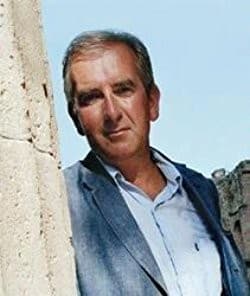
Biography coming soon.







