“Perhaps this is what it means to be a man: to be a part of the earth, to be shaped by it, to return to it.”
— Reflecting on the relationship between man and nature, and the cycle of life.

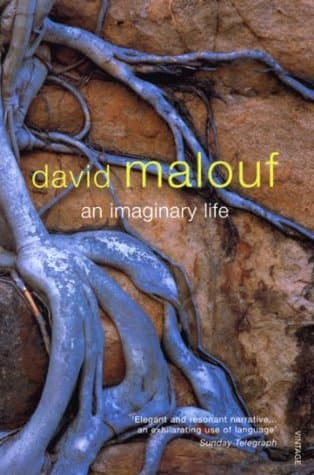
David Malouf (1978)
Genre
Literary Fiction / Historical Fiction / Philosophy
Reading Time
180 min
Key Themes
See below
Sign in to track this book
Exiled to the desolate edge of the Roman world, the sophisticated poet Ovid finds unexpected redemption and a deep connection to the wild through his guardianship of a boy raised by deer.
Publius Ovidius Naso, the celebrated Roman poet, is unexpectedly exiled by Emperor Augustus to Tomis, a desolate outpost on the edge of the Roman Empire, near the Black Sea. The exact reasons for his banishment are unclear, though Ovid thinks it involves a poem and a 'mistake.' Stripped of his luxurious Roman life and sophisticated Latin, Ovid struggles to adapt to the harsh environment and the alien culture of the Getae, the local people. He feels profoundly disconnected, his identity tied to the language and literary world he has lost. The silence of the vast, untamed landscape contrasts sharply with the intellectual bustle of Rome, and he grapples with deep displacement and despair.
Initially, Ovid is an outsider. He observes the Getae's simple, brutal, and deeply spiritual way of life, which is far removed from Roman civilization. He notes their strange rituals, their reverence for nature, and their language, which he first finds primitive. Despite his initial disdain and homesickness, Ovid gradually learns some of their language, aided by the village chief and his wife, who show him a reluctant kindness. He begins to understand their connection to the land and their ancestors, a connection he had never experienced in his urban Roman existence. His Roman clothes and manners set him apart, but he slowly starts to find a fragile sense of belonging, or at least acceptance, in this alien world.
One day, hunters from the village discover a child living wild in the forest, raised by deer. The boy is feral, unable to speak, walking on all fours, and possessing animal instincts. He is brought back to the village, a creature of pure nature, untouched by human society or language. The villagers are wary, seeing him as both a curiosity and a potential threat or omen. Ovid, intrigued by this embodiment of the wild, feels a strange connection to the boy. He sees in him a reflection of his own stripped-down existence, an extreme version of being outside the bounds of conventional society. The boy's presence stirs something deep within Ovid, a shift from his self-pity to a nascent sense of purpose.
The villagers, unsure how to handle the wild boy, eventually entrust him to Ovid's care. Ovid, with his background in rhetoric and his understanding of language, believes he can 'civilize' the boy, teach him to speak, and bring him into the human world. This task becomes Ovid's new focus, a way to reclaim a sense of purpose and meaning in his desolate exile. He names the boy 'Lusus,' meaning 'play' or 'game,' acknowledging his wild nature. The process is slow and challenging, marked by the boy's resistance and Ovid's patience. Through this endeavor, Ovid begins to look beyond himself, finding a new kind of love and responsibility that goes beyond his previous Roman life.
Ovid dedicates himself to Lusus's education, starting with simple sounds and gestures, trying to bridge the vast gap between human language and animal instinct. He uses objects, names them, and patiently repeats words. Progress is agonizingly slow, but there are small breakthroughs. Lusus, in his untamed state, also opens Ovid's eyes to a deeper connection with nature. He teaches Ovid to observe the subtle rhythms of the wild, to understand the language of the wind, the trees, and the animals. This reciprocal learning changes Ovid, softening his Roman intellectualism and making him more attuned to the primal forces of existence. He begins to shed his old self, embracing a more elemental form of being.
Their relationship deepens into a profound, almost wordless bond. While Lusus eventually begins to utter a few sounds and words, their true communication is in shared experiences, gestures, and an intuitive understanding born of their unique circumstances. Ovid finds that Lusus communicates through his body, his eyes, and his presence, revealing a pure, unadulterated form of love and trust. This connection challenges Ovid's Roman understanding of love, which was often intellectualized and performative. He discovers a love that is unconditional and rooted in shared existence, a love he had never truly experienced before. This new language of the heart begins to heal Ovid's emotional wounds.
While some villagers accept Lusus, others view him with fear and superstition, seeing him as an unsettling 'other' or a creature of ill omen. The village chief's son, in particular, is wary of the boy and Ovid's attachment to him. This suspicion highlights the tension between civilization and the wild, and the villagers' struggle to reconcile these forces. Ovid, by embracing Lusus, increasingly aligns himself with the natural world, further alienating him from the remnants of his Roman identity and, at times, from the more conservative elements of the Getae community. The threat of misunderstanding and violence always simmers beneath the surface.
As the harsh winter descends upon Tomis, Ovid feels an inexplicable pull to move deeper into the wilderness with Lusus. It is a journey driven by instinct and a desire for absolute freedom, away from the constraints of the village and the lingering shadows of his Roman past. They travel through snow-covered landscapes, relying on their primal instincts and their deep connection. This journey is symbolic of Ovid's complete shedding of his former self, embracing a life in harmony with nature. It is a spiritual pilgrimage, a quest for a more authentic existence where the boundaries between human and animal, language and silence, begin to blur.
During their journey, Ovid experiences a deep transformation. He sheds his Roman clothes, his Roman thoughts, and his Roman self, embracing the raw, elemental existence of the wild. He begins to see the world through Lusus's eyes, understanding the language of the forest and the rhythms of the earth. His Latin, once his most prized possession, slowly fades, replaced by a more primal, intuitive understanding. He finds a deep, spiritual connection to the land and its creatures, realizing that true freedom and meaning are found not in the sophisticated constructs of civilization, but in the pure nature. He is no longer an exile but a part of the world.
As Ovid's physical strength wanes, he experiences a final merging with the natural world. He dies peacefully in the wilderness, surrounded by the elements and in the presence of Lusus. His death is not an ending but a transformation, a return to the earth from which he felt so long estranged. Lusus, now more humanized but still deeply connected to the wild, understands this transition not as a loss, but as a continuation of Ovid's spirit within the natural world. Ovid's imaginary life finds its true conclusion, having moved beyond the constraints of his human identity and achieving a deep unity with the universal rhythms of existence. His legacy is not in his poems, but in his final, complete embrace of the wild.
The Protagonist
From a self-pitying, displaced Roman intellectual, Ovid transforms into a man deeply connected to nature and capable of unconditional love, finding his true self in exile.
The Supporting (Catalyst for Ovid's change)
Lusus transitions from a purely animalistic existence to a being capable of human connection and rudimentary language, while retaining his deep bond with nature.
The Supporting
Remains a steadfast figure of his community, observing Ovid's transformation with a mix of curiosity and acceptance.
The Supporting
Remains a consistent source of quiet support and practical care for Ovid.
The Mentioned (Antagonist)
Remains an unchanging, distant symbol of Ovid's past and the power that initiated his transformation.
This is the central theme, explored through Ovid's journey from the refined Roman world to the wild existence in Tomis. Ovid initially dislikes the 'barbaric' Getae and the untamed landscape, clinging to his Roman identity and language. However, through his interaction with Lusus, the feral child, he gradually sheds the artificial constructs of civilization. The novel contrasts the order, language, and artifice of Rome with the raw, intuitive, and often brutal beauty of the natural world, suggesting that true freedom and understanding might lie beyond human constructs. The final scenes of Ovid's death in the wilderness show his ultimate merging with nature.
“What has been violated, in my case, is the very notion of order. I am a blot on the white page of the world.”
For Ovid, a poet, language is linked to his identity. His banishment from Rome and from Latin is a deep loss, making him 'nameless.' The struggle to learn the Getae tongue and, more importantly, to communicate with Lusus, highlights the limitations and power of language. As Ovid loses his Latin, he gains a new, more primal form of communication, rooted in empathy, gesture, and shared experience. The novel suggests that while language shapes our understanding of the world, there are deeper, more universal forms of connection that go beyond mere words, ultimately changing Ovid's very sense of self beyond his Roman identity.
“I was a man of words. They were my life. Now I have no words. I am an empty vessel.”
Ovid's physical exile from Rome starts a deeper, spiritual exile and subsequent transformation. Initially, he experiences exile as a punishment and a loss of self. However, his forced isolation and immersion in an alien culture become a test for profound personal change. The harshness of Tomis and the challenge of raising Lusus compel him to shed his old ego, confront his vulnerabilities, and redefine what it means to be human. His journey is not just about adapting to a new environment, but about discovering a new, more authentic self, suggesting that true growth often comes from being stripped of comfort and familiarity.
“I am learning to walk another way. The earth has changed beneath my feet.”
The novel explores different forms of love and connection, moving from Ovid's sophisticated, often superficial Roman understanding of love to a deep, unconditional bond with Lusus. In Rome, love was often a subject for poetry, a game of artifice. In Tomis, Ovid experiences a raw, instinctual love for the wild boy, a love that demands patience, sacrifice, and empathy. This relationship goes beyond language and social norms, showing the universal human need for connection. It highlights how love can be a transformative force, capable of healing deep wounds and creating a sense of belonging in the most desolate circumstances.
“He taught me the language of the heart. A language that has no words, but is understood by all living things.”
A character embodying pure nature, serving as a catalyst for the protagonist's transformation.
Lusus, the wild boy, acts as a living embodiment of the 'nature' side of the civilization/nature dichotomy. His presence directly challenges Ovid's Roman assumptions about humanity, language, and social order. By becoming Lusus's guardian, Ovid is forced out of his intellectualized despair and into a primal, empathetic engagement with another being. Lusus's inability to speak Latin and his deep connection to the natural world force Ovid to shed his reliance on words and embrace a more intuitive, experiential understanding of existence, thus driving his profound transformation.
The forced removal of the protagonist from his familiar world, serving as the inciting incident and a metaphor for spiritual displacement.
Ovid's exile to Tomis is not merely a plot point; it is the fundamental condition that drives the entire narrative. It strips Ovid of his identity, his language, and his social standing, forcing him into a state of profound vulnerability. This physical displacement mirrors his spiritual displacement, creating the necessary void for him to undergo a complete transformation. The geographical remoteness of Tomis emphasizes Ovid's isolation and his gradual immersion into an alien world, making his internal journey of self-discovery more intense and unavoidable.
The gradual loss of the protagonist's native tongue, symbolizing the shedding of his former identity.
As Ovid spends more time in Tomis and interacts with Lusus, his mastery and reliance on Latin gradually diminishes. This 'disappearance' of his native tongue is a powerful symbolic device. For a poet, language is his very essence, so its loss signifies the erosion of his Roman identity and the artificial constructs of his past life. This linguistic void forces Ovid to seek new forms of communication, both with the Getae and with Lusus, leading him to a more primal, intuitive understanding of the world and himself, ultimately liberating him from the confines of his old self.
The harsh, untamed landscape serving as a symbolic setting for Ovid's internal journey.
The physical setting of Tomis and its surrounding wilderness is more than just a backdrop; it is an active force in Ovid's transformation. The harsh climate, the vast, untamed nature, and the 'barbaric' culture of the Getae stand in stark contrast to the civilized world of Rome. This environment strips Ovid of his comforts and forces him to confront the raw, elemental aspects of existence. The wilderness becomes a metaphorical landscape for his internal journey, a place where he sheds the artifice of civilization and reconnects with a more fundamental, natural self.
“Perhaps this is what it means to be a man: to be a part of the earth, to be shaped by it, to return to it.”
— Reflecting on the relationship between man and nature, and the cycle of life.
“The world is not a place of ideas, but of things. Things that breathe and bleed and have their own desires.”
— Musing on the tangible reality of the world versus abstract thought.
“Language is a way of possessing the world, of making it ours.”
— Considering the power of words and their role in understanding and shaping experience.
“What is freedom but to be alone, to be utterly oneself, to be unburdened by the expectations of others?”
— Exploring the nature of solitude and personal liberation.
“There are times when silence is the only language, when words are merely an intrusion.”
— Acknowledging the profundity of quietude and unspoken understanding.
“To be alive is to be always on the brink of dissolution, to feel the pull of the earth beneath you.”
— Contemplating the fragility of life and the ever-present shadow of death.
“Memory is a landscape, shifting and changing, but always there, waiting to be rediscovered.”
— Reflecting on the nature of memory and its persistent presence.
“The wildness in us, the untamed part, is what truly connects us to the world.”
— Considering the primal instincts and their link to nature.
“Every man carries his own wilderness within him, a place where he is truly free.”
— Musing on internal freedom and the personal, untamed self.
“We are all exiles in some way, longing for a home we may never find.”
— A reflection on the universal feeling of displacement and yearning.
“To name a thing is to claim it, to bring it into existence in a new way.”
— Exploring the power of nomenclature and its creative aspect.
“The past is not dead. It is alive in us, shaping who we are and who we will become.”
— Contemplating the enduring influence of history and personal past.
“There is a kind of knowledge that comes only from silence, from stillness, from simply being.”
— Highlighting the wisdom gained through quiet contemplation rather than active pursuit.
“The world is full of invisible presences, echoes of lives lived, stories untold.”
— Reflecting on the unseen layers of history and existence that surround us.
“To truly see is to let go of what you think you know, and to open yourself to what is.”
— Emphasizing the importance of openness and shedding preconceptions for genuine perception.
Ready to see how well you understood this book? Take our interactive quiz with 10 questions.

David George Joseph Malouf AO is an Australian poet, novelist, short story writer, playwright and librettist. Elected a Fellow of the Royal Society of Literature in 2008, Malouf has lectured at both the University of Queensland and the University of Sydney. He also delivered the 1998 Boyer Lectures.







