“I had always found the world a bewildering place, and so I painted it as I wished it to be.”
— Isobel musing on her art and her perspective on the world.

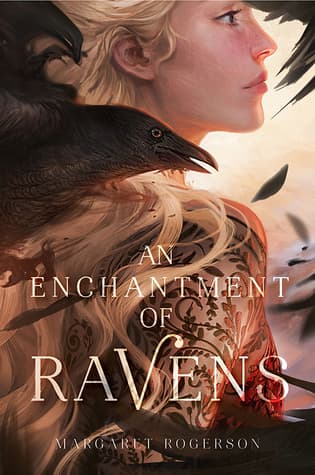
Margaret Rogerson (2017)
Genre
Fantasy / Young Adult / Romance
Reading Time
300 min
Key Themes
See below
Sign in to track this book
A human artist paints forbidden mortal emotion into an immortal fae prince's eyes. She navigates treacherous fairy courts and a perilous, blossoming love to survive a world where beauty hides deadly corruption.
Isobel, a human artist in Whimsy, a village near the Autumn Court's fae lands, paints portraits for the fair folk. Her family, including her aunt, cousin May, and childhood friend Gadfly, are skilled craftspeople, but only Isobel paints for the fae. One day, Rook, the ancient Autumn Prince, asks for a portrait. During the sitting, Isobel, drawn to his stillness, paints mortal sorrow into his eyes. This is a serious offense, as fae cannot feel human emotions, and such a depiction could weaken Rook among his kind. Furious, Rook takes Isobel from Whimsy to face trial in the Autumn Court.
Rook, with his loyal grimoire, takes Isobel through the dangerous fae lands to bring her before the Autumn Queen for judgment. Isobel is scared, knowing fae justice is often cruel. As they travel, Rook is cold but provides for her needs. Their journey is dangerous, and they are ambushed by members of the Spring Court. The Spring fae try to capture Rook. During the fight, Isobel, though mortal, uses her wits and a small knife to help Rook. Her unexpected resilience surprises them both, given the fae magic and violence. They barely escape, making their situation even more risky.
After the attack, Rook is injured and weaker, making their journey more dangerous. They take a longer, riskier route through the wilderness, constantly pursued by the Spring Court and other threats. During this time, Isobel watches Rook closely, seeing glimpses of a complex, burdened person beneath his royal appearance. She learns about the fae's inability to create, their desire for human craft, and their strict laws. Rook, in turn, starts to see Isobel not just as a human who offended him, but as a resourceful, kind companion. They share a meal of human food, rare for Rook, and a fragile trust forms between them as they navigate the fae world's dangers, relying on each other to survive.
Rook reveals that the Spring Court's aggression is unusual, and there are rumors of a prophecy about a human queen and 'Greenware' that could give the fae the ability to create. This prophecy is likely what the Spring Court seeks. Believing the answer might be in the ancient, forbidden Silver Wood, a place of great power and unpredictable magic, they go there. In the Silver Wood, they meet old, powerful fae who give cryptic warnings and reveal more about the prophecy. It suggests that a human queen, through creation or a specific item, could break the fae's inability to craft. This power is wanted by all courts, especially the manipulative Spring Queen, Lady Titania.
As they continue their journey, Isobel and Rook's bond grows, and a forbidden affection starts. However, their fragile alliance breaks with a shocking betrayal. Rook's grimoire, a seemingly loyal and sentient spellbook, is working for the Spring Court. The grimoire has subtly manipulated events and led them into a trap, orchestrating their capture by the Court of Winds fae, who are allied with the Spring Court. Isobel is horrified by the grimoire's deceit and the cold politics of the fae. Separated, they face uncertain futures, with Isobel vulnerable as a mortal in hostile fae hands, and Rook's power greatly diminished.
Isobel is held captive in the Court of Winds, a desolate, cruel place. She learns more about the grimoire's motives and the Spring Queen's ambition to take the 'Greenware' and gain ultimate power. The grimoire explains it believes the Spring Queen is the only one who can truly restore the fae's ability to create. Meanwhile, Rook is also imprisoned, his magic suppressed. Isobel, using her wits and a hidden knife, creates a diversion. She gets Rook's grimoire, not for its loyalty, but for its knowledge. Together, they make a desperate escape from the Court of Winds, fighting through guards and navigating the dangerous fae architecture. Their escape strengthens their mutual dependence and their growing love.
On the run, Isobel and Rook explore the grimoire's knowledge, piecing together clues about the 'Greenware' and the prophecy. They realize with horror that 'Greenware' is not a magical item, but a fae term for human creativity itself—the ability to 'green' or create something from nothing. The prophecy, misunderstood by the fae, refers to a human artist, a 'queen of craft,' whose unique ability to put human emotion into her creations could unlock the fae's own creative potential. This realization puts Isobel at the center of the prophecy, making her the ultimate prize for the Spring Queen and the key to either salvation or destruction for the fae world.
The prophecy's true meaning becomes clear: the 'human queen' is Isobel, and her ability to paint mortal emotions and 'craft' humanity's essence is the 'Greenware' the fae seek. Her paintings, especially the one of Rook, are not just art; they are channels of human emotion and creativity. This revelation increases their danger, as the Spring Queen will stop at nothing to get Isobel's power. Amidst this, their forbidden love for each other is undeniable. They share a kiss, a deep violation of fae law, which forbids fae from feeling human emotions, especially love for a mortal. This act seals their fate together, for better or worse.
Isobel and Rook, now in love and united against a common enemy, go to the Spring Court to confront Lady Titania. They plan, knowing that directly fighting the powerful Spring Queen is impossible. Lady Titania reveals her full ambition: she intends to drain Isobel's ability to create, believing it will give her absolute power over all fae. She sees Isobel as a tool, not a person. The confrontation is tense, with Lady Titania trying to trap Isobel with enchantments and manipulation, playing on her fears. Rook stands by Isobel, protecting her with his magic and loyalty, defying fae laws that demand he remain emotionless.
During the confrontation, Isobel realizes her art is about imbuing, not just depicting. She uses her painting skills to create a powerful illusion, a masterpiece of trickery, to mislead and trap Lady Titania. However, the Spring Queen is formidable, and the battle of wits and magic is fierce. As Lady Titania is about to defeat Isobel, Rook makes a desperate, selfless sacrifice. He drinks from the Waters of Forgetfulness, a fae artifact that erases all memories of human emotion and love, specifically his love for Isobel. This act saves Isobel from Lady Titania's immediate grasp but destroys their forbidden love, leaving Isobel heartbroken but alive and free from the Spring Queen's clutches. Lady Titania is defeated, her plans thwarted, but at a terrible cost.
After Lady Titania's defeat, Isobel returns to Whimsy, changed. The fae world, its dangers, and wonders, have left a lasting mark. She reunites with her family and friends, but the experience and the loss of Rook's love weigh on her. Rook, his memories of their journey and his love for her erased by the Waters of Forgetfulness, resumes his duties as the Autumn Prince, again cold and distant, a true fae. The fae world stabilizes, but the balance between humans and fae has shifted. Isobel continues to paint, her art now showing a deeper understanding of emotion and loss, a reflection of her journey and the price of enchantment.
Despite the heartbreak, Isobel cannot forget Rook. She realizes her art, which started this whole ordeal, might fix what was broken. She begins a new portrait of Rook, pouring all her memories, love, and sorrow into the canvas. She focuses on painting the 'mortal sorrow' that first captivated her, but this time with an understanding of its depth. The act of creation becomes an act of hope. The book ends with the idea that her art, filled with such powerful human emotion and memory, might be strong enough to reach through the magic of the Waters of Forgetfulness and stir something within Rook, offering a glimmer of hope for their lost connection and the lasting power of human craft.
The Protagonist
Isobel transforms from a sheltered village artist into a courageous woman who understands the true power of her art and the depths of love and sacrifice.
The Protagonist/Love Interest
Rook evolves from an emotionless fae prince to one capable of profound love and self-sacrifice, only to lose those memories in a tragic act.
The Antagonist
Lady Titania remains consistent in her ambition and manipulative nature, ultimately failing in her quest for power.
The Supporting/Antagonist
The Grimoire shifts from a loyal companion to a betrayer motivated by a deep-seated desire to restore fae creativity, ultimately returning to Rook's side.
The Supporting
May's character remains consistent, serving as a steadfast anchor to Isobel's human life.
The Supporting
Gadfly remains a constant, supportive figure, representing the human life Isobel leaves behind and eventually returns to.
The Supporting
Her character remains largely static, serving as a symbol of fae authority and tradition.
The Mentioned/Antagonist
Functions as an adversarial force without significant individual character arcs.
The main theme is human creativity and its effect on the fae world. Isobel's ability to 'craft' emotion into her paintings makes her valuable and dangerous. The fae, unable to create, desire human craft, which leads to their interactions with mortals. The story explores the idea that art is not just a skill, but a way to deeper truths and emotions, able to change reality and break ancient curses. This power often comes at a high price, requiring sacrifice and putting Isobel in great danger, but it proves to be the strongest force in the story.
“''Craft is the only thing we mortals have that the fair folk covet. They cannot bake bread or put pen to paper without crumbling to dust. They crave human Craft with a terrible thirst, and they trade valuable enchantments for Isobel's paintings.'”
The romance between Isobel, a human, and Rook, a fae, is central and forbidden by fae law. Fae are not supposed to feel human emotions, especially love, and such a connection is seen as a weakness. Their love grows amidst danger and betrayal, strengthening as they rely on each other to survive. This theme ends with Rook's heartbreaking sacrifice, where he erases his memories of their love to save Isobel. It highlights the high cost of their forbidden connection and tests their devotion. It questions if love can truly overcome everything, even a fae's nature.
“'He was a fae, and she was human, and between them lay a chasm of laws and ancient magic that could never be crossed.'”
Isobel deals with her identity as a human artist in the fae world. The fae treat her as a tool or a curiosity, yet she finds a sense of purpose and power there that she did not fully realize in Whimsy. Rook also struggles with his identity as a fae prince, torn between his duty and the human emotions Isobel stirs in him. The story asks where one truly belongs when caught between two very different worlds, and what defines one's true nature, whether it is blood, craft, or the choices one makes.
“'She was Isobel, a girl from Whimsy, who painted for the fair folk. But now, she was something more. She was the Greenware, the key to their salvation or their ruin.'”
The novel explores the basic differences between the fair folk and humans. Fae are immortal, beautiful, and powerful, but cannot create or feel mortal emotions. They live by ancient laws and a ruthless logic that often seems cruel to humans. Humans, conversely, are mortal and fragile, but have the unique ability to create, feel, and love. The story uses these differences to show the strengths and weaknesses of both races, suggesting that what the fae lack in creativity, they have in magic, and what humans lack in power, they have in the richness of their inner lives. The fae's desire for 'Greenware' reflects their incompleteness.
“'The fair folk were beautiful and terrible, but they were empty where humans were full.'”
Deception is a common element in the fae world, where words are twisted and appearances are often misleading. Lady Titania shows this, manipulating others for her goals. Even Rook's grimoire, a seemingly loyal companion, manipulates. Isobel, a human, often navigates this dangerous world, learning to tell truth from illusion. This theme shows the danger of the fae realm and the constant need for alertness, forcing characters to question loyalties and motives, and showing how easily power can corrupt intentions.
“'The fair folk had a talent for making the truth sound like a lie, and lies sound like the absolute truth.'”
A misunderstood prophecy term that refers to human creativity and the ability to imbue emotion into art.
The 'Greenware' is initially presented as a mysterious object or power that the fae seek. It functions as a MacGuffin, driving the plot and the actions of the fae courts. Its true nature is later revealed to be Isobel's unique human ability to create and imbue emotion into her art, specifically her paintings. This plot device highlights the core theme of the power of human creativity and its profound significance in the fae world, explaining the fae's inherent inability to create and their desperate desire for this 'gift'. It elevates Isobel's artistic skill from a simple talent to a world-altering force.
A magical fae artifact that erases memories, particularly those of human emotion and love.
The Waters of Forgetfulness serve as a powerful plot device for both resolution and tragedy. It is introduced as an ancient fae artifact capable of erasing specific memories, particularly those associated with forbidden human emotions like love. Rook's use of these waters to save Isobel by sacrificing his love for her creates a poignant and devastating climax. This device emphasizes the immense cost of their forbidden love and the harsh laws governing fae existence, leaving a lasting impact on the characters and the narrative's emotional core. It allows for a bittersweet ending while underscoring the theme of sacrifice.
Rook's magical, sentient spellbook that acts as a guide, confidant, and ultimately, a betrayer.
Rook's Grimoire is a sentient magical book that serves multiple roles. Initially, it acts as a mentor figure and source of exposition, providing Rook and Isobel with crucial knowledge about the fae world. Its dry wit also adds moments of levity. However, its betrayal, driven by its own interpretation of what's best for fae-kind, functions as a significant plot twist, raising the stakes and complicating the heroes' journey. This device explores the idea of artificial intelligence or magical sentience having its own moral compass and motivations, demonstrating that even a seemingly loyal companion can have hidden agendas.
A fundamental characteristic of the fae that drives their interactions with humans and their desire for 'Craft'.
This inherent fae characteristic is not a single object but a foundational aspect of their existence, serving as a primary motivator for all fae-human interactions. It explains why fae seek out human 'Craftspeople' and trade enchantments for their creations. This inability underscores the core difference between fae and humans and fuels Lady Titania's ambition to acquire the 'Greenware.' It's a constant backdrop that defines the fae world's economy, politics, and the very nature of their being, making Isobel's ability to create even more extraordinary and coveted.
“I had always found the world a bewildering place, and so I painted it as I wished it to be.”
— Isobel musing on her art and her perspective on the world.
“There was a certain freedom in being a monster. No one expected anything good from you.”
— Isobel's internal thought after being accused of being a monster.
“Faeries were not pretty. They were beauty, and beauty was a weapon.”
— Isobel describing the true nature and power of faeries.
“The world was not a painting, and you could not simply paint over the parts you didn't like.”
— Isobel realizing the harsh realities of the fae world.
“Love was a terrible, wonderful thing. It made you vulnerable, but it also made you strong.”
— Isobel reflecting on her growing feelings for Rook.
“To be seen, truly seen, was a dangerous thing for a faerie. It meant you could be known, and to be known was to be vulnerable.”
— Rook explaining the fae's aversion to being truly known.
“Courage was not the absence of fear, but the triumph over it.”
— Isobel's internal monologue as she faces a dangerous situation.
“Every artist paints a piece of themselves into their work, whether they mean to or not.”
— Isobel considering the connection between artist and art.
“Promises were fragile things, easily broken, but they were also the foundation of trust.”
— Isobel reflecting on the importance of promises, especially in the fae world.
“The greatest magic was not in spells or enchantments, but in the connections between people.”
— Isobel's realization about the true source of power and meaning.
“Sometimes, the only way to find your true self was to get lost first.”
— Isobel's journey of self-discovery through the fae lands.
“There was a difference between looking and seeing. One was passive, the other active.”
— Isobel distinguishing between superficial observation and true understanding.
“The world was full of stories, and some were more dangerous than others.”
— Isobel acknowledging the power and peril of narratives.
“He looked at her as if she were a painting he had always wanted to create.”
— A description of Rook's gaze towards Isobel.
Ready to see how well you understood this book? Take our interactive quiz with 10 questions.







