“An elephant is a very big animal, but it is not a monster.”
— Lizzie explaining the elephant to her brother Karli during the bombing of Dresden.

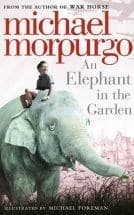
Michael Morpurgo (2009)
Genre
Children's / Historical Fiction / Young Adult
Reading Time
210 min
Key Themes
See below
Sign in to track this book
In the final days of WWII, a German girl, her family, and a rescued zoo elephant travel through war-torn Germany, evading Russian troops and bombs.
The story begins with an elderly woman named Lizzie in Canada. Her grandson, Karl, asks about her past, especially her accent and stories his mother hinted at about her childhood during World War II. Lizzie, after some hesitation, decides to share her experiences, starting with her life in Dresden, Germany, in 1945. She explains that she was then Elizabeth and lived with her mother, father, and younger brother, Karli. This sets up the flashback story, establishing the personal and historical background.
Elizabeth's mother, a zookeeper, cares for a young elephant named Marlene. As the war worsens and Allied bombing raids on Dresden become more frequent, the zoo director decides to kill all dangerous animals, including the elephants, for public safety and to prevent their escape during bombings. Elizabeth's mother cannot let Marlene be killed, so she secretly brings the elephant home to their garden. This act of compassion introduces the main companion who will share the family's fate. The family now faces the immediate danger of war plus the difficulty of housing a large elephant.
The firebombing of Dresden begins, turning the city into a firestorm. Elizabeth, Karli, their mother, and father, along with Marlene, take shelter in their cellar. When they come out, their home is a ruin, and the city is destroyed. With no home left and the city dangerous, the family decides to flee. Their father, a German soldier on leave, understands the seriousness of their situation and the need to escape the advancing Russian army. The challenge of their journey is clear as they must travel through the ruined city with an elephant.
The family, led by their mother and father, starts their journey west through the snow-covered German countryside. Marlene, calm and cooperative, becomes part of their group. They face freezing temperatures, hunger, and the constant threat of being found by Allied and Soviet forces. Their father uses his military knowledge to guide them, but conditions are harsh. They meet other refugees, some suspicious, some kind. The difficulty of traveling with an elephant in wartime is clear, yet Marlene's presence also offers comfort and a strange hope.
As they travel through the war-torn land, the family meets various groups. They avoid Russian soldiers, hiding Marlene in dense woods. They also encounter German soldiers, some sympathetic, others hardened by war. Marlene's presence is both a risk and a benefit: a potential giveaway, but also a distraction or a source of wonder that sometimes helps them. Elizabeth's mother uses Marlene to get food or safe passage, appealing to people's curiosity or compassion. These encounters show the human side of war, with both cruelty and unexpected kindness.
During their journey, the family finds a crashed American bomber and rescues the injured pilot, Peter. They help him despite the risks. Peter joins their group. They find shelter at a deserted farm, where they can rest and find food. Marlene stays with them, surprising any passing villagers or soldiers. This time gives them a short break from constant danger, allowing the family to regain strength and Elizabeth to bond with Peter. It also shows Marlene's ability to draw attention, both good and bad.
Their safety at the farm ends with news of advancing Russian troops. The family, with Peter and Marlene, must flee again. The urgency grows as the Russians are known for their harsh treatment of German civilians. They continue their westward journey, dangers increasing with the front lines' closeness. The family's determination to protect each other and Marlene stays strong. This renewed flight shows the relentless nature of their ordeal and the constant threat of capture or violence.
The family reaches the Elbe River, a barrier and a crossing point to the American-occupied zone. Getting Marlene across the wide river is a huge challenge. Their father plans how to do it. They meet other refugees trying to cross, showing the number of displaced people. Tension is high as they must cross the river under the eyes of potential enemies, knowing a mistake could cost them everything. This part builds suspense around their biggest logistical hurdle.
After crossing the Elbe River, the family is in the American-controlled sector, safe from the Russian advance. They are offered refuge in a small village. However, keeping an elephant is impossible in their new, civilian life. Elizabeth's mother, with sadness, decides to find Marlene a new, safe home. Marlene is taken to a circus, where she will be cared for. This emotional goodbye marks the end of their journey with Marlene, showing the move from wartime survival to a new, uncertain peace.
The family slowly rebuilds their lives after the war. Elizabeth's father returns to his job, and life becomes somewhat normal. Elizabeth stays in touch with Peter, the American pilot they rescued, who returned to America. Their friendship grows, and he invites her to join him in Canada. Elizabeth accepts, leaving Germany to start a new life. This explains how the elderly Lizzie came to be in Canada, connecting her past as Elizabeth with her present. It shows the lasting impact of the war and the unexpected bonds formed during crisis.
Lizzie finishes telling her story to her grandson, Karl. She thinks about the impact of her wartime experiences, especially Marlene, who represented hope, resilience, and kindness in dark times. She explains that Marlene was more than an elephant; she was a reason to keep going, a symbol of life amidst death. Karl, moved by his grandmother's story, now understands her strength and unique history. The story ends with peace and understanding, bridging the generational gap through shared history.
The Protagonist
Elizabeth transforms from an innocent child to a resilient survivor, demonstrating courage and compassion in the face of unimaginable hardship.
The Supporting
She begins as a compassionate zookeeper and evolves into a formidable and resourceful leader, embodying courage and maternal strength.
The Supporting
From a soldier on leave, he transforms into a dedicated family protector, using his military knowledge to ensure their survival.
The Supporting
As a young child, he experiences the trauma of war and displacement, finding comfort and resilience through his family and Marlene.
The Supporting
Marlene transitions from a zoo animal to an unlikely refugee, becoming a source of comfort and a symbol of survival.
The Supporting
From an enemy pilot, he becomes a grateful ally, a lifelong friend, and eventually Elizabeth's husband.
The Mentioned
He begins as a curious grandson and ends with a deeper understanding of his grandmother's past and the impact of history.
The Mentioned
His decision sets a key plot point in motion.
The story is about the resilience of Elizabeth's family facing great hardship. They endure their home's destruction, dangerous journeys through war-torn lands, freezing temperatures, hunger, and the constant threat of enemy soldiers. Their ability to adapt, maintain hope, and keep moving, often with an elephant, shows the human spirit's will to survive. Marlene herself symbolizes this toughness, surviving against the odds.
“We had to survive. We simply had to.”
Despite the brutal setting of World War II, the story highlights acts of compassion. Elizabeth's mother's decision to save Marlene, an act of empathy for an animal, is central. The family's choice to rescue and care for Peter, an 'enemy' pilot, further shows this theme. Even amidst widespread destruction, people choose kindness, offering help and forming bonds that go beyond nationality. These acts of humanity contrast with the surrounding violence.
“She was a living, breathing creature, and she needed us as much as we needed her.”
Marlene, the elephant, is a symbol of hope and an unusual companion. Her presence, while causing practical difficulties, also gives comfort, distraction, and a reason for the family to keep going. She is a source of wonder and a reminder of life's beauty amidst devastation. Her existence with them is unusual, a miraculous thread of the extraordinary woven into ordinary suffering, showing that hope can be found in unexpected ways during dark times.
“Marlene was our hope. She was our reason to keep going.”
The story, told by Lizzie to her grandson, explores the lasting effects and the importance of remembering war. Lizzie's hesitation to share her past, and the detail with which she eventually does, shows how deeply these experiences affect people for life. The story emphasizes that while physical wounds may heal, the emotional scars of war remain, and sharing these memories is important for understanding history and preventing future conflicts. It highlights the burden and importance of bearing witness.
“Some things you never forget, no matter how hard you try.”
At its heart, the book shows the strength of family bonds. Elizabeth's family—her mother, father, and younger brother Karli—stay together through every difficulty. Their love, support, and shared determination to protect each other help them survive. The journey strengthens their connections, showing that in times of crisis, the family unit is a strong source of strength and comfort. Even with Peter and Marlene joining, this core unit remains most important.
“We were a family, and we would face it all together.”
An elderly Lizzie narrates her childhood story to her grandson, Karl.
The story employs a frame narrative, where the present-day interaction between an elderly Lizzie (Elizabeth) and her grandson, Karl, sets up the main story. Lizzie's recollections of her childhood during World War II in Dresden form the core of the book. This device allows for reflection and provides a sense of gravitas and historical perspective, as the story is told from the vantage point of someone who has lived through the events and processed their meaning over time. It also emphasizes the importance of intergenerational storytelling and memory.
Marlene represents hope, life, and the extraordinary amidst the mundane horror of war.
Marlene is not just a character but a powerful symbol. In a world consumed by death and destruction, she represents life, innocence, and the unexpected. Her very presence in the family's flight is an anomaly, a touch of the fantastical that contrasts sharply with the brutal reality of war. She symbolizes hope, a reason for the family to keep going, and the enduring power of compassion. She also highlights the absurdity of war, where an elephant becomes a refugee alongside humans.
Hints of approaching danger and future events are woven throughout the narrative.
While not overt, the narrative uses subtle foreshadowing to build tension and indicate impending events. For instance, early discussions about the intensifying air raids and the zoo director's grim decision hint at the devastation to come. The constant threat of Russian troops, mentioned by Elizabeth's father, builds suspense for their eventual encounters. These hints prepare the reader for the escalating dangers and the family's desperate flight, adding to the dramatic impact of the plot developments without giving away specific outcomes.
The story is told from the perspective of an older Elizabeth looking back on her childhood.
The entire wartime narrative is recounted by Elizabeth (Lizzie) in the first person, but from the perspective of her elderly self. This allows for a blend of a child's immediate experience and an adult's reflective wisdom. The reader experiences the events through Elizabeth's eyes as a child, but also benefits from the older Lizzie's insights and emotional processing of those memories. This narrative choice adds depth and emotional resonance, making the story both immediate and profoundly reflective.
“An elephant is a very big animal, but it is not a monster.”
— Lizzie explaining the elephant to her brother Karli during the bombing of Dresden.
“We are all refugees now, all of us, running from the fire.”
— Lizzie's mother reflecting as they flee Dresden with the elephant.
“Sometimes the smallest things can make the biggest difference.”
— Lizzie observing how the elephant brings hope during their journey.
“War makes monsters of us all, but it is how we choose to act that defines us.”
— Lizzie's grandmother sharing wisdom about human nature in conflict.
“The elephant did not know about war. She only knew about kindness.”
— Narrator describing Marlene the elephant's innocent perspective.
“Home is not a place, but the people you love and who love you.”
— Lizzie realizing this while separated from her family during the escape.
“In the darkness, we found light in each other.”
— Lizzie describing how their group supported one another during the journey.
“The bombs fell like rain, but we did not drown.”
— Lizzie recalling the bombing of Dresden in her old age.
“An elephant remembers, just as we remember.”
— Lizzie noting how Marlene the elephant recalls kindness shown to her.
“We carried our past with us, but we walked toward our future.”
— Reflecting on their journey away from the destroyed city.
“The world was burning, but in our hearts, we kept a small flame alive.”
— Lizzie describing the resilience of her family during their escape.
“Sometimes you have to be brave enough to be kind.”
— Lizzie's mother encouraging her to help others despite the danger.
“The elephant was our guardian, and we were hers.”
— Lizzie explaining the mutual protection between the family and Marlene.
“In war, the ordinary becomes extraordinary.”
— Lizzie reflecting on how daily acts of survival took on great meaning.
“We learned that even in the worst times, there is goodness to be found.”
— Lizzie summarizing the lesson from their wartime experience.
Ready to see how well you understood this book? Take our interactive quiz with 10 questions.

Biography coming soon.

Dan Gemeinhart
4.5

Kate O'Hearn
4.4

Jeanne Birdsall
4.4

Jen Wang
4.4

Wendelin Van Draanen
4.3

John Marsden
4.3

Chris Van Allsburg
4.3
Jennifer A. Nielsen
4.2