“I had, I believe, a not insignificant role in the shaping of the country's mood.”
— Ono reflecting on his past influence as an artist.

Kazuo Ishiguro (2012)
Genre
Literary Fiction / Historical Fiction
Reading Time
200 min
Key Themes
See below
Sign in to track this book
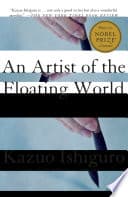
An aging Japanese artist, once celebrated for propagandist work during the war, confronts his complicity and the unraveling of his legacy as he navigates a post-war society eager to forget its past.
Masuji Ono, a retired artist living in post-war Japan, recounts the ongoing marriage negotiations for his daughter, Noriko. He is aware that his past reputation, particularly his involvement with nationalist propaganda during the war, is a sensitive topic that might be hindering the proceedings. He describes his elegant house, which he bought from a famous courtesan, and his interactions with his daughters, Noriko and Setsuko, and his grandson, Ichiro. Ono often reflects on the changing social world of Japan, where traditional values clash with new, Western influences, and where former figures of authority, like himself, are viewed with suspicion or disdain. He attempts to present himself in the best possible light, even as he subtly tries to understand why the first marriage inquiry for Noriko fell through.
Ono reflects on a previous suitor for Noriko, a young man named Miyake, who was a student of his and later became a soldier. Ono recalls a time when he had significant influence, shaping the opinions of his students and contributing to the nationalist fervor. He remembers a specific instance where he dismissed Miyake's more traditional artistic aspirations, pushing him towards art with a political message. The engagement between Noriko and Miyake was ultimately broken off. This troubles Ono, who suspects his own history might have played a part. He attempts to reconstruct the events and conversations surrounding the breakup, subtly editing his own memories to maintain a favorable self-image, even as his daughters hint at his past being a significant impediment.
Ono visits his former pupil, Kuroda, who now runs a successful art gallery. The encounter is strained, as Kuroda harbors resentment towards Ono for his past actions and their impact on his career. Ono recalls how he had denounced Kuroda's art as decadent and unpatriotic during the war, leading to Kuroda's imprisonment and the destruction of his studio. The conversation highlights the contrast between Ono's generation, which embraced imperialistic ideals, and the younger generation, who are now critical of those values and resentful of those who promoted them. Ono struggles to reconcile his past convictions with the present reality, where he is seen as a relic of a discredited era. He attempts to offer a veiled apology, but Kuroda remains distant and unforgiving.
Ono walks through the familiar pleasure district, the 'floating world' of his youth, which is now in decline. The teahouses and entertainment establishments are replaced by office buildings and empty lots, reflecting the drastic changes in post-war Japan. He reminisces about his time as a young artist, frequenting these establishments with his friends and colleagues, discussing art and life. This district represents a period of artistic freedom and youthful exuberance before he fully committed to the nationalist cause. The decay of the district mirrors his own fading influence and the obsolescence of his past ideals. He reflects on the transience of beauty and pleasure, and the inevitable march of progress, even if it means the loss of cherished memories and places.
Noriko openly expresses her anxiety about her father's past hindering her marriage prospects, urging him to be more forthcoming with the prospective in-laws. This prompts Ono to recall an incident involving his eldest son, Akira, who died during the war. He remembers Akira's disapproval of his father's nationalist art, and their strained relationship. Noriko's concerns force Ono to confront the direct consequences of his actions on his family. He grapples with the guilt of his son's death and the potential impact on his daughter's future. He begins to consider how he might 'redeem' himself in the eyes of his family and society, even if it means acknowledging his past mistakes more explicitly.
Ono vividly recounts his apprenticeship under Master Mori, a celebrated artist known for his depictions of the 'floating world.' Mori, often referred to as 'the Tortoise,' emphasized capturing beauty and pleasure in his art, devoid of political messages. Ono remembers the camaraderie among Mori's pupils and the artistic environment. However, Ono eventually grew disillusioned with Mori's apolitical stance, believing art should serve a greater purpose – specifically, the advancement of Japanese nationalism. This ideological divergence led to a dramatic confrontation and Ono's eventual departure from Mori's tutelage, a decision he now reflects on with a mixture of pride and regret, wondering if he chose the right path.
Driven by Noriko's persistent worries and his own desire to ensure her happiness, Ono decides to discreetly investigate the reasons why the first marriage negotiation with the Saito family fell through. He visits Dr. Saito, a former colleague and acquaintance, under the guise of casual conversation. During their meeting, Ono subtly probes for information, hinting at his own past and its potential role. Dr. Saito, though polite, remains somewhat evasive, reinforcing Ono's suspicion that his wartime activities are indeed a significant obstacle. The encounter leaves Ono feeling frustrated but also more determined to address his past directly, realizing that his attempts to downplay or obscure it are ultimately futile.
In a key moment, Ono visits the Mori family, specifically Mrs. Mori, Master Mori's widow. He recounts his past actions, acknowledging his betrayal of Master Mori's artistic principles and his role in promoting nationalist propaganda. This confession is a significant step towards self-reckoning, as he openly admits to the moral compromises he made and the hurt he inflicted. He expresses regret for abandoning Mori's teachings and for the impact his political art had on others. This act of humility and honesty, though painful, marks a turning point in Ono's journey, signaling his willingness to confront his past head-on rather than continue to rationalize or evade it. Mrs. Mori's reaction is subtle, but she offers a measure of understanding.
During the second, successful marriage negotiation for Noriko with the Sugimura family, Ono decides to be fully transparent about his past. He explicitly states his involvement in creating nationalist propaganda during the war, his past influence, and his regret for the consequences. This courageous act of honesty, though difficult, is met with a surprisingly understanding response from the Sugimura family, who appreciate his candor. This open acknowledgment of his past errors, rather than attempts to conceal or minimize them, ultimately secures Noriko's engagement. It signifies Ono's acceptance of responsibility and his growth as a character, as he prioritizes his daughter's happiness over his own pride.
In the final chapters, Ono observes his grandson, Ichiro, playing 'cowboys and Indians' and idolizing American heroes like the Lone Ranger. This imagery symbolizes the complete cultural shift in post-war Japan and the embrace of Western ideals by the younger generation. Ono reflects on the passing of his own era and the irrelevance of his past artistic and political endeavors. He finds a sense of peace in the knowledge that his daughter's future is secure and that he has, to some extent, atoned for his past. He acknowledges that while his generation made mistakes, they also acted with conviction, and that the new generation faces its own challenges and responsibilities in shaping the future of Japan. He sits on a bench, observing the new generation, recognizing his role as a figure of the past.
The Protagonist
Ono slowly moves from denial and subtle self-justification to a painful, but ultimately freeing, acceptance of his past mistakes and responsibility.
The Supporting
Noriko's initial anxiety and frustration evolve into relief and hope as her father confronts his past, securing her future.
The Supporting
Setsuko remains a consistent, steady force, subtly guiding her father towards self-awareness without undergoing a major personal transformation.
The Supporting
Ichiro remains a symbol of the future, embodying the cultural changes without a personal arc.
The Mentioned
As a deceased character, Mori does not have an arc, but his legacy profoundly influences Ono's journey.
The Supporting
Kuroda remains resentful, representing the unhealed wounds of the past, offering no personal arc within the narrative.
The Mentioned
Miyake's arc is inferred through Ono's recollections, representing a lost opportunity due to Ono's past.
The Mentioned
Akira, as a deceased character, has no arc, but his memory fuels Ono's guilt and self-reflection.
The novel is largely a first-person narrative, filtered through Masuji Ono's unreliable memory. He constantly revises and reinterprets his past, presenting himself in the most favorable light, often downplaying his responsibility for his actions. This self-deception is evident in his selective recollections of conversations and events, particularly concerning his departure from Master Mori's tutelage or his interactions with Kuroda. His daughters, especially Setsuko, often subtly challenge his narratives, forcing him to confront the discrepancies between his memories and reality. This theme explores how individuals construct their personal histories to cope with guilt and maintain self-worth, even at the expense of truth.
“It is, of course, a little disorienting to find oneself in a world where the things one remembers and holds to be true are no longer remembered or held to be true by anyone else.”
A central theme is Masuji Ono's struggle with the guilt and responsibility for his role in promoting Japanese nationalism and militarism during the war. In the post-war era, his past actions are viewed with shame and condemnation, leading to social ostracism and impacting his family. He grapples with the moral implications of having used his art for propaganda, and the personal cost, such as the strained relationship with his son Akira and the damage to Kuroda's career. His journey is one of slowly acknowledging his culpability and seeking a form of atonement, primarily for the sake of his daughter Noriko's future. The novel explores the difficulty of confronting one's past mistakes and accepting the consequences.
“We are, I know, an imperfect generation. We have many shortcomings. But at least we can say we were not afraid to make sacrifices.”
The novel portrays the contrast between the values and experiences of the older generation, represented by Ono, and the younger generation, represented by his daughters Noriko and Setsuko, and his grandson Ichiro. Ono's generation was shaped by a sense of duty, nationalism, and traditional Japanese values, which led them to support the war. The younger generation, however, is disillusioned by the war's outcome, critical of the past, and increasingly embracing Western influences, as seen in Ichiro's fascination with American pop culture. This conflict manifests in disagreements about how to address the past, with the younger generation urging honesty and accountability, while Ono initially attempts to preserve his pride and reputation. The novel highlights the painful transition and cultural shift in post-war Japan.
“Perhaps I am being unfair to this new generation. But I cannot help but feel a certain sorrow for them, for the world they have inherited.”
The novel explores different philosophies regarding the purpose of art. Master Mori believed in art for art's sake, capturing the ephemeral beauty of the 'floating world' without political agenda. Ono, however, rejected this in favor of art that served a 'greater purpose' – namely, promoting nationalistic ideals and militarism. This ideological split leads to Ono's departure from Mori's tutelage and shapes his career. In the post-war period, Ono is forced to confront the negative consequences of his politically charged art, questioning whether art should be a tool for social engineering or a reflection of pure aesthetic beauty. The novel implicitly asks what the true responsibility of an artist is, and the ethical dilemmas involved in aligning art with political power.
“I had come to believe that the satisfaction of depicting a lady in a garden or an old man in a teahouse was a paltry thing indeed beside the achievement of moving a nation to its feet.”
The concepts of honor and shame are deeply ingrained in Japanese culture and are central to Ono's psychological struggle. His past actions, once considered honorable in a nationalist context, are now sources of profound shame in post-war society. He is acutely aware of how this shame affects his family, particularly Noriko's marriage prospects. Ono's attempts to manipulate his memories and present himself favorably are driven by a desire to preserve a sense of honor, both for himself and his family. His eventual confession, though painful, is an attempt to regain a different kind of honor through honesty and acceptance of responsibility, thereby alleviating the shame that has burdened him and his daughters. The novel illustrates the societal and personal weight of these cultural concepts.
“We live in a time of great change, and it is not always easy to know what is right and what is wrong.”
Masuji Ono's first-person narration is filtered through his biased memory and self-deception.
The entire story is told from Masuji Ono's perspective, but he is an unreliable narrator. He frequently revises his memories, subtly altering events and conversations to present himself in a more favorable light or to avoid confronting uncomfortable truths. This is evident in his vague recollections, his use of phrases like 'I may be mistaken,' and the way his daughters sometimes offer contrasting versions of events. This device forces the reader to actively interpret the narrative, piecing together the true story by discerning Ono's subtle manipulations and omissions. It highlights the subjective nature of memory and self-perception.
Noriko's marriage negotiations provide the structure and impetus for Ono's reflections.
The ongoing marriage negotiations for Ono's youngest daughter, Noriko, serve as the primary framing device for the narrative. The repeated inquiries and their potential failures directly force Ono to confront his past reputation and its impact on his family. Each stage of the negotiations, from initial inquiries to the final acceptance, acts as a catalyst for Ono's memories and his gradual journey towards self-reckoning. This external pressure provides a concrete goal for Ono and a clear measure of his progress in coming to terms with his past.
The pleasure district symbolizes a fleeting past, beauty, and Ono's artistic choices.
The 'floating world' (ukiyo), specifically the pleasure district of his youth, is a powerful symbol. Initially, it represents a world of transient beauty, pleasure, and artistic freedom, as depicted by Master Mori. For Ono, it later symbolizes the path he abandoned when he chose politically charged art. Its post-war decay into office blocks and empty lots mirrors the decline of Ono's own influence and the obsolescence of his past ideals. It serves as a physical manifestation of the passage of time and the profound cultural shifts in Japan, contrasting the vibrant past with the stark present.
Ono's reflections move fluidly between present-day events and various points in his past.
The narrative is not strictly chronological but unfolds through Masuji Ono's subjective memories, which are triggered by present-day events or conversations. Ono frequently shifts between his current experiences and various periods of his past – his youth as Mori's apprentice, his time as a nationalist artist, and his interactions with his family during the war. This non-linear structure mimics the way memory works, gradually revealing layers of Ono's past and allowing the reader to understand the complex interplay between his history and his present struggles. It deepens the sense of Ono's internal journey.
“I had, I believe, a not insignificant role in the shaping of the country's mood.”
— Ono reflecting on his past influence as an artist.
“It is, after all, some while now since my last pupil left me.”
— Ono observing his current isolation and lack of students.
“We at our best could not have foreseen the horrors to come.”
— Ono rationalizing his past actions concerning the war.
“Our generation, it is true, made a great many mistakes.”
— Ono acknowledging the flaws of his generation.
“Indeed, it is a great relief to me to see that my daughters have chosen to marry into such modern families.”
— Ono expressing satisfaction with his daughters' progressive choices.
“A man who has been active in the world is bound to have made enemies.”
— Ono considering the consequences of his public life.
“I can only hope that I am not alone in my belief that the best of us took risks, and that the best of us, in our own ways, contributed to the well-being of our nation.”
— Ono's internal justification for his past actions.
“Indeed, it is my belief that the reputation I have established for myself is not one that will cause any embarrassment to the family.”
— Ono reassuring himself about his family's perception of him.
“But as I say, these are things which are not always so easy to explain to young people.”
— Ono reflecting on the generational gap and difficulty in conveying past experiences.
“There are, I know, some who would say that I have spent my life in a dream.”
— Ono acknowledging potential criticism of his artistic and political life.
“It is, I believe, the mark of a good artist to be able to capture the spirit of his age.”
— Ono's artistic philosophy.
“Perhaps I am not the only one who has to contend with the fact that their children are no longer children.”
— Ono observing the independence and differing views of his grown daughters.
“Perhaps, then, I have not been so successful in conveying to you the exact nature of my relationship with the younger generation.”
— Ono's self-awareness of his struggles to connect with younger people.
“Our city was rebuilt, and the world moved on.”
— Ono's observation of post-war recovery and societal change.
Ready to see how well you understood this book? Take our interactive quiz with 10 questions.
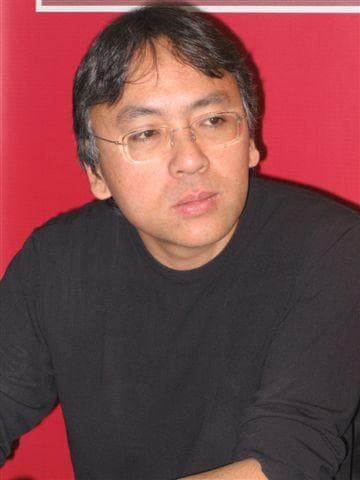
Sir Kazuo Ishiguro is a Japanese-born British novelist, screenwriter, musician, and short-story writer. He is one of the most critically acclaimed and praised contemporary fiction authors writing in English, having been awarded the 2017 Nobel Prize in Literature. In its citation, the Swedish Academy described Ishiguro as a writer "who, in novels of great emotional force, has uncovered the abyss beneath our illusory sense of connection with the world".







