“For the first time in his life Clyde realized what a terrible thing it was to be poor; how it hemmed one in, restricted one, shamed one.”
— Clyde's early life and observations of wealth disparity.

Theodore Dreiser (2022)
Genre
Historical Fiction
Reading Time
1533 min
Key Themes
See below
Sign in to track this book
A young man's desperate pursuit of wealth and status leads to moral compromises and a tragic downfall.
Clyde Griffiths grows up in extreme poverty in Kansas City, the son of street preachers, Asa and Hannah Griffiths. He dislikes their public displays of faith and the constant money problems, which make him work from a young age. He works menial jobs, first as a soda jerk, then as a bellhop at the upscale Green-Davidson Hotel. Here, he sees a world of wealth, luxury, and casual immorality that contrasts with his upbringing. He befriends other bellhops, Ratterer and Hegglund, who introduce him to drinking, gambling, and women. Clyde quickly likes this fast life and wants to move up socially.
Clyde's desire for social acceptance and love leads him into a relationship with Hortense Briggs, a flirtatious and materialistic girl. She manipulates him into buying expensive gifts he cannot afford. He likes her deeply, despite her shallowness and the financial strain she causes. One evening, after a night out with his bellhop friends and their companions, including Hortense, they are in a serious car accident. The car, driven by one of his friends, hits and kills a young girl. Panicked, Clyde and the others flee the scene to avoid arrest. Fearing the consequences, Clyde decides to leave Kansas City, abandoning his family and his past.
Clyde travels to Chicago, hoping to disappear. He eventually contacts his wealthy uncle, Samuel Griffiths, who owns a collar factory in Lycurgus, New York. Samuel, at first hesitant because of Clyde's past and lack of experience, offers him a low-level job in his factory's shrinking department. This is a step up for Clyde, as he is now connected, though distantly, to a prominent industrial family. He wants to make a good impression and rise socially, but his lack of education and social polish makes him an outsider among his affluent cousins, especially the snobbish Gilbert Griffiths.
While working at the factory, Clyde meets Roberta Alden, a shy and innocent factory girl from a poor farm background. Their relationship is kept secret because of the factory's strict rules against managers (even low-level ones like Clyde) dating female employees. Clyde likes Roberta, but his main goal is to be accepted into Lycurgus's elite social circles. He is increasingly drawn to the glamorous world of his cousin, Sondra Finchley, a sophisticated and beautiful debutante, who symbolizes the life he wants.
As Clyde's relationship with Sondra Finchley grows, giving him access to Lycurgus high society, Roberta tells him she is pregnant with his child. This news causes Clyde to panic. He sees the pregnancy as a barrier to his dreams of wealth and status, especially his growing relationship with Sondra. He tries to find a doctor for an abortion, but fails. Roberta, desperate and isolated, insists that Clyde marry her to legitimize their child. She threatens to expose their affair if he refuses. Clyde feels trapped between his ambitions and his responsibility.
Clyde, consumed by fear and wanting to escape his situation, considers a terrible solution after reading a newspaper article about a couple who drowned in a boating accident, first thought to be murder but later ruled accidental. The idea of faking Roberta's death as an accident takes hold in his mind. He researches methods, even buying a camera and a tripod, supposedly for a trip, but with the subconscious thought of using the tripod as a weapon. He struggles with his conscience, but his strong ambition and terror of social ruin push him toward this dark path, convincing himself it is his only escape.
Clyde arranges a boat trip with Roberta on Big Bittern Lake, a secluded spot. He intends to confront her and, perhaps, carry out his plan. Roberta, hoping for a resolution and marriage, does not know Clyde's true intentions. As they are on the lake, a heated argument starts. Clyde, overwhelmed by conflicting emotions and the pressure, hits Roberta with the camera tripod. She falls into the water. He hesitates, then lets her drown. He capsizes the boat to make it look like an accident, then swims to shore, abandoning Roberta's body and his conscience to the dark waters.
Roberta's body is eventually found, and the circumstances immediately cause suspicion. The local authorities, especially District Attorney Mason, start a thorough investigation. Clyde's nervous behavior, his conflicting statements, and the evidence found at the scene (including remnants of his belongings) quickly point to him as the main suspect. Despite his attempts to appear innocent and his flight from the scene, he is arrested. The news shocks Lycurgus society, especially the wealthy Griffiths family, who want to distance themselves from the scandal.
Clyde's trial becomes a sensational media event, attracting national attention. The prosecution, led by District Attorney Mason, builds a case against Clyde. They present circumstantial evidence, Clyde's contradictory statements, and the emotional testimony of Roberta's family. They portray Clyde as a manipulative seducer and cold-blooded murderer driven by social ambition. Despite the efforts of his defense lawyers, provided by his wealthy uncle but more concerned with appearances than justice, Clyde struggles to tell his side of the story. He often appears evasive and guilty because of his weakness and fear.
After a long and emotional trial, the jury finds Clyde Griffiths guilty of first-degree murder. The verdict devastates Clyde, who still struggles to understand the seriousness of his actions and the legal consequences. His defense team immediately appeals, arguing for a new trial based on legal technicalities and the sensational nature of the proceedings. The appeals process lasts for months, giving Clyde brief moments of hope, but ultimately confirming his grim fate. The legal battle shows the class differences and the relentless nature of justice.
While awaiting execution on death row, Clyde undergoes a spiritual change, influenced by the prison chaplain, Reverend McMillan, and his mother, Hannah. He begins to think about his life, his moral failures, and the full extent of his guilt. Though he never fully admits to premeditated murder, he confesses to his mother and the chaplain that he wished Roberta dead, and that his indecision and inaction directly led to her drowning. This qualified confession brings him some peace as he considers his actions and their results.
Despite all appeals being exhausted, Clyde Griffiths is led to the electric chair. His final moments are filled with fear, regret, and a new spiritual acceptance. His execution ends a life marked by ambition, moral weakness, and tragic choices. The novel ends by looking at the lasting impact of the tragedy on those connected to Clyde – Roberta's grieving family, Sondra's moved-on life, and his own parents, who continue their missionary work, forever changed by their son's fate. Clyde's story comments on the American Dream and the societal forces that shape individual lives.
The Protagonist
Clyde's arc is one of moral descent, from naive ambition to desperate crime, culminating in a complex reckoning with his guilt and a spiritual awakening before his execution.
The Victim/Supporting
Roberta's arc is tragic, from hopeful love to desperate plea, ending in her death and becoming the central figure in Clyde's legal battle.
The Supporting
Sondra remains largely static, a symbol of the unattainable dream for Clyde, eventually moving on from the scandal relatively unscathed.
The Supporting
Samuel remains a steadfast, if somewhat distant, figure of authority and financial power, whose primary concern is his family's standing.
The Supporting
Hannah's arc is one of enduring maternal love and spiritual conviction, remaining steadfast despite her son's tragic path.
The Antagonist
Mason's arc is defined by his successful prosecution, solidifying his reputation and demonstrating the power of the legal system.
The Mentioned/Supporting
Hortense remains a static figure, representing Clyde's early misjudgments and the superficial allure of the 'fast life.'
The Supporting
Gilbert remains consistently antagonistic and disdainful towards Clyde, serving as a constant reminder of Clyde's outsider status.
The novel explores the negative side of the American Dream, where the pursuit of wealth and social status can lead to moral decline and tragedy. Clyde's strong desire for a life of luxury, represented by Sondra Finchley and the Lycurgus elite, overrides any sense of ethics. His belief that he deserves a better life, combined with his lack of opportunity and moral guidance, pushes him to desperate actions. Dreiser criticizes a society that values material success without providing fair ways to achieve it, suggesting that the dream itself can become destructive when pursued without moral foundation.
“For the first time he began to feel that he had a right to something better than he had ever had.”
A main theme is the sharp contrast between social classes and the pressure it puts on people. Clyde's journey from extreme poverty to the edge of high society highlights the rigid class structure of early 20th-century America. He constantly feels the weight of his background, leading to a strong desire to leave his past and join the wealthy elite. The novel shows how class dictates not only opportunity but also perception, as seen in how Clyde and his wealthy cousins are treated differently, and how the justice system can be affected by social standing. Roberta's fate further shows the vulnerability of the lower classes.
“He wanted to be in the swim, to be one of those who were important, who were at least considered.”
Clyde Griffiths' character is defined by his moral weakness and constant indecision. He is easily influenced by outside forces and lacks the inner strength to make ethical choices, often choosing the easiest path or the one with the most personal gain. His inability to confront Roberta honestly, his wavering conscience about the murder, and his struggles to speak his truth during the trial all come from this basic flaw. Dreiser shows how this weakness, rather than clear malice, can lead to terrible consequences, suggesting that character, or its absence, greatly affects one's fate.
“He was weak, but he was not evil.”
The novel explores the tension between predetermined fate and individual choice. While Clyde makes choices that lead to his downfall, Dreiser often emphasizes the powerful external forces—poverty, social ambition, societal pressures, and even chance events—that seem to work against him. The car accident, Roberta's unexpected pregnancy, and the newspaper article about the drowning all play roles in pushing Clyde toward his tragic end. This theme suggests that while people are responsible for their actions, they are also products of their environment and circumstances, caught in a web of events that limit their true freedom.
“He was a creature of a thousand moods, and a thousand circumstances.”
The legal proceedings against Clyde look closely at the American justice system. Dreiser shows the trial as a sensationalized event, influenced by public opinion and the prosecutor's political ambitions, rather than a purely objective search for truth. The novel questions guilt and innocence, especially regarding Clyde's complex, qualified responsibility, and whether the system truly delivers justice or just punishment. The contrast between Clyde's internal struggle and the legal system's black-and-white judgment highlights the limits of formal justice in dealing with moral complexities.
“The law was a machine, and he was caught in its gears.”
A literary movement depicting life with objective detail and focus on social issues.
Dreiser employs social realism to meticulously detail the lives of his characters, particularly focusing on the impact of socio-economic conditions. He provides extensive descriptions of Clyde's impoverished upbringing, the inner workings of the factory, the rituals of high society, and the minutiae of the legal process. This device grounds the narrative in a believable reality, allowing the reader to understand the systemic pressures that shape Clyde's choices and fate. The objective, almost journalistic, portrayal of events and environments underscores the novel's critique of American society and its class structures.
A literary movement emphasizing environmental, social, and hereditary forces on human character.
Naturalism is a dominant force in 'An American Tragedy,' portraying Clyde as a victim of forces beyond his control, including his heredity (the weak will from his parents), his environment (poverty, the allure of wealth), and social pressures (class aspirations, the demands of Roberta). Dreiser often depicts Clyde as a 'sport of circumstance,' emphasizing how his inherent weaknesses and external pressures combine to drive him towards his tragic destiny. This device reduces the role of free will, suggesting that human beings are largely determined by their biological and social environments, leading to an almost scientific observation of human behavior.
Hints or clues about future events, building suspense and inevitability.
Dreiser uses foreshadowing extensively, particularly in building the sense of impending doom for Clyde. The initial car accident in Kansas City, where a girl is killed and Clyde flees, subtly foreshadows the later, more direct tragedy involving Roberta. Clyde's morbid fascination with the newspaper article about the drowned couple explicitly plants the idea of a staged accident in his mind. These narrative hints create a powerful sense of inevitability, making Clyde's eventual crime feel less like a sudden act and more like the culmination of a series of predetermined steps and moral compromises.
Big Bittern Lake as a symbol of escape, temptation, and moral abyss.
Big Bittern Lake functions as a potent symbol in the novel. Initially, it represents a potential escape for Clyde, a secluded spot where he can confront Roberta and perhaps resolve his predicament. However, it quickly transforms into a symbol of moral temptation and the abyss into which Clyde plunges. The dark, isolated waters become the scene of his most heinous act, reflecting the moral darkness within him. Post-crime, the lake becomes a place of concealment and ultimately, discovery, embodying the inescapable consequences of his actions and the inability to truly 'drown' one's guilt.
The ironic contrast between Clyde's name and his actual character/fate.
The name 'Clyde Griffiths' itself can be seen as a subtle ironic device. 'Clyde' might evoke a sense of strength or a river flowing, suggesting direction or force, while 'Griffiths' could imply a connection to griffins, mythical creatures of power and nobility. Yet, Clyde's character is marked by weakness, indecision, and a lack of true nobility. This ironic contrast highlights the gap between his aspirations and his reality, and between the potential implied by a name and the tragic reality of his life. It underscores Dreiser's naturalistic view of an individual often failing to live up to societal or inherent ideals.
“For the first time in his life Clyde realized what a terrible thing it was to be poor; how it hemmed one in, restricted one, shamed one.”
— Clyde's early life and observations of wealth disparity.
“Life seemed to him a thing of gaudy, glittering surfaces, and he longed to plunge into it, to be of it, to enjoy it.”
— Clyde's youthful aspirations and attraction to the material world.
“He was not strong enough to take a stand against the desires that surged within him, nor yet to face the possible consequences of satisfying them.”
— Clyde's internal conflict regarding his desires and lack of moral fortitude.
“It was the perfect type of American tragedy, that of the man who is trying to climb, and who is pulled down by the very conditions that make his attempt possible.”
— A reflection on the nature of Clyde's downfall within American society.
“He was like a fly caught in a spider's web, struggling feebly, but inevitably doomed.”
— Clyde's feeling of being entrapped by circumstances and his own actions.
“For a long time he sat there, staring into the blackness, seeing nothing, thinking nothing, feeling only a vast, formless despair.”
— Clyde's state of mind after a critical event.
“The law was a thing of terror, a great, cold, impersonal machine that ground relentlessly on, crushing everything in its path.”
— Clyde's perception of the legal system after his arrest.
“He wanted to be rich, to be admired, to be envied, to be sought after, to be a figure.”
— Clyde's core motivations and aspirations for social status.
“The world was full of beautiful things, beautiful women, beautiful clothes, beautiful houses. And he wanted them all.”
— Clyde's overwhelming desire for material possessions and a lavish lifestyle.
“It was not a question of good or evil, but of success or failure.”
— Clyde's warped moral compass, prioritizing worldly success.
“He felt that he was being pursued by some evil, relentless destiny from which there was no escape.”
— Clyde's growing sense of being predetermined for misfortune.
“And the world, the great, beautiful, indifferent world, went on its way, heedless of his small tragedy.”
— A poignant observation on the world's indifference to individual suffering.
“He had wanted so much, and now he had nothing. Less than nothing.”
— Clyde's ultimate realization of his loss and failure.
“He was merely a creature of circumstance, a puppet pulled by invisible strings.”
— A characterization of Clyde's lack of agency in the face of larger forces.
Ready to see how well you understood this book? Take our interactive quiz with 10 questions.
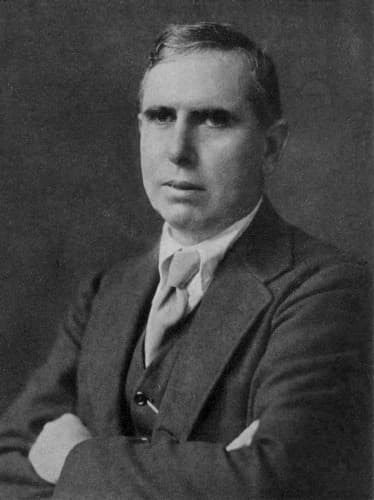
Theodore Herman Albert Dreiser was an American novelist and journalist of the naturalist school. His novels often featured main characters who succeeded at their objectives despite a lack of a firm moral code, and literary situations that more closely resemble studies of nature than tales of choice and agency. Dreiser's best known novels include Sister Carrie (1900) and An American Tragedy (1925).