Arrival at the Farm and the First Quiver
Sixteen-year-old Polly O'Keefe arrives at her grandparents' Vermont farm, home to her famous scientist grandmother and grandfather, the Murrys. She hopes for a peaceful summer, perhaps even a chance to work on her own scientific theories. Soon after she arrives, she feels a strange, localized earthquake, a 'quiver' that seems to affect only the area around the Murry's property. This event is unsettling and feels different from a typical tremor. Her grandparents, used to unusual events, don't dismiss her experience, but they don't immediately recognize its importance. Polly, however, feels a deep unease and a sense that something extraordinary has happened or is about to.
The Mysterious Standing Stones
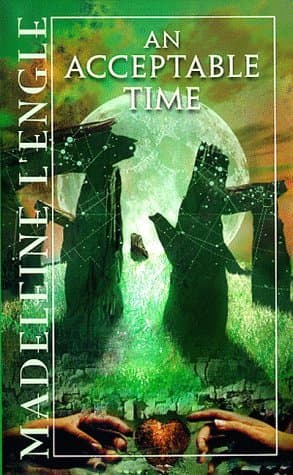
While exploring the woods near her grandparents' house, Polly finds a clearing with a circle of ancient standing stones, like Stonehenge. She feels an inexplicable pull toward them. As she approaches, the air around the stones seems to shimmer, and she senses a presence, almost a whisper from another time. This experience is both thrilling and terrifying. She tries to explain it scientifically, but the feeling is too strong to ignore. She returns to the stones repeatedly, drawn by their mystery, and begins to suspect they are more than just old rocks; they seem to hum with a hidden energy, a silent promise of something beyond her current understanding. The stones become central to her growing sense of the uncanny.
Through the Time Gate
During one of her visits to the standing stones, a powerful flash of lightning, a loud thunderclap, and another 'quiver' of the earth strike the clearing. When the light clears, Polly finds herself in a dramatically altered setting – jagged, unfamiliar mountains, dense mist, and a strong sense of ancientness. The farm is gone. From the mist, she sees a group of young men, dressed in animal skins and carrying spears, moving toward her with suspicion and awe. She has accidentally stepped through a time gate, a thin place between eras, and landed three thousand years in the past, in a prehistoric, Celtic-like society. Her modern clothes and appearance make her an immediate outsider.
Meeting the People of the Past
The young men, led by a cautious but curious individual named Karmi, bring Polly to their village. At first, she causes both fear and fascination. The villagers, who speak an ancient form of Gaelic, struggle to understand her, and she, them. She quickly learns that their society is deeply rooted in nature, ritual, and a strong connection to the land and its spirits. She meets the tribe's wise woman, Anaral, who seems to intuitively understand Polly's unique situation. Polly observes their daily lives, their hunting practices, their family structures, and their belief system, which includes reverence for nature and a darker aspect involving human sacrifice to appease their gods during hard times.
The Threat of Sacrifice
As Polly spends more time in the past, she learns about the tribe's desperate customs. During famine, plague, or other disasters, they believe that offering a human sacrifice to their gods is the only way to restore balance and ensure survival. Polly sees the preparations for such a ritual, and her modern sensibilities are horrified. She realizes the extreme danger she is in. Her foreignness, her unusual appearance, and her sudden arrival make her a prime candidate for such a sacrifice. She understands that while some, like Karmi, might be intrigued by her, others, especially those in power or driven by fear, might see her as an ideal offering to their deities, a way to appease angry spirits.
Encounters with Bran and the Druids
Polly encounters Bran, a powerful and mysterious figure who seems to understand the land and its mysteries more deeply than the common villagers. He is connected to ancient Druidic traditions, a precursor to later, more formalized Druid orders. Bran recognizes something special in Polly, sensing her unique connection to the 'thin places' and the flow of time. He speaks in riddles and offers cryptic advice, hinting at the true nature of the standing stones and the time gate. He is a protector of sorts, but also a figure of immense power, capable of great good and potentially great harm. Through Bran, Polly begins to grasp the spiritual and temporal importance of her predicament.
The Search for a Way Back
Polly becomes increasingly desperate to find a way back to her own time. She understands that the time gate is not always open and might close permanently, trapping her in the ancient past. She revisits the standing stones, trying to replicate the conditions of her arrival, but without success. She discusses her predicament with Karmi and Anaral, trying to explain the concept of different times, which is incredibly difficult for them to grasp. Bran, however, seems to understand, offering guidance that is more mystical than scientific. Polly begins to realize that her return might not depend solely on scientific principles but also on a deeper, spiritual alignment with the forces that govern time and space.
The Growing Bond with Karmi
During her time in the ancient past, Polly develops a complex and tender relationship with Karmi. He is one of the first to encounter her and shows genuine curiosity and kindness. Despite the language barrier and their vastly different worlds, a connection forms between them. Karmi is intrigued by Polly's knowledge and her unusual ways, while Polly finds herself drawn to his strength, his connection to nature, and his earnest desire to protect her. This relationship adds another layer of emotional complexity to her predicament, making her eventual departure, if it happens, even more poignant. She feels a pull toward this ancient world, not just out of fear, but also out of a growing affection.
The Intervention and the Ritual
As the time for the human sacrifice ritual approaches, Polly cannot stand by. Driven by her modern moral compass, she attempts to intervene, to reason with the villagers, and to disrupt the ancient custom. Her actions are met with confusion, anger, and suspicion from some, while others, like Karmi, are torn. Her defiance puts her in even greater peril, as she is seen as challenging the very fabric of their beliefs and possibly angering the gods further. This intervention highlights the vast cultural and ethical gap between her time and theirs, and she risks becoming the sacrifice herself in her desperate attempt to save another.
The Return and the Lingering Effects
Through a combination of Bran's mystical guidance, her own desperate will, and another powerful convergence of natural forces at the standing stones, Polly is finally able to step back through the time gate. She finds herself returned to her grandparents' farm, just moments after she left, but deeply changed. The experience has left a lasting mark on her soul and mind. She is no longer the same girl who arrived at the farm. She carries the memories, the sounds, the smells, and the emotional weight of her time in the ancient past. While her grandparents are relieved, they sense a new depth and wisdom in her. The ancient world, though unseen, now coexists within her.
Reconciling Past and Present
Back in her own time, Polly struggles to reconcile her extraordinary experience with the mundane reality of her present. The world of television, cars, and scientific instruments seems foreign and sterile after the raw life of the ancient past. She grapples with the ethical implications of what she witnessed and her inability to truly change the past. Her grandparents offer support, recognizing the depth of her journey, and help her process the scientific and philosophical implications of time travel. Polly realizes that her encounter with the past has been a lesson in humanity, history, and the interconnectedness of all times and peoples.
A Glimpse of the Future, Acknowledging the Past
Polly begins to see that her experience has given her a unique perspective on life, time, and human nature. She understands the power of ancient beliefs and the human struggle for survival and meaning. While she carries a sense of loss for the ancient world and the connections she made, she also gains a deeper appreciation for her own time and the progress of humanity. The book concludes with Polly finding a measure of peace, recognizing that the past is not truly gone, but continues to resonate. She is left with the understanding that her journey was a spiritual and intellectual awakening that will shape her future.