BookBrief
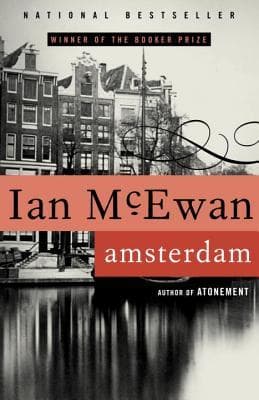
Amsterdam cover
Archivist's Choice

Amsterdam

Ian McEwan (1998)

Genre

Literary Fiction / Historical Fiction

Reading Time

12 Minutes

Key Themes

See below

Track Your Reading

Sign in to track this book

Two men, former lovers of a deceased woman, make a pact that unravels their lives and threatens a powerful politician's future.

Synopsis

At the funeral of their shared ex-lover, Molly Lane, two prominent figures of British society, composer Clive Linley and newspaper editor Vernon Halliday, make a pact. Each man, facing a moral quandary in their respective careers – Clive with a demanding new symphony and Vernon with a potentially career-defining exposé on a high-ranking politician – agrees to assist the other if they ever find themselves in a state of 'moral or physical decrepitude.' This seemingly innocuous agreement quickly unravels into a darkly comedic and tragic series of events as their individual moral compromises escalate, leading to a bitter rivalry, a betrayal of their friendship, and ultimately, a shocking climax with fatal consequences for both.
Difficulty
Medium
Pacing
Moderate
Mood
Cynical, Witty, Darkly Humorous, Tense, Reflective

Plot Summary

Molly's Funeral

The novel begins at Molly Lane's funeral. She was a lively woman who died from a brain aneurysm. Among those mourning are two of her past boyfriends: Clive Linley, a famous composer, and Vernon Halliday, editor of 'The Judge' newspaper. They think about Molly's life and their relationships with her, as well as their current careers. Julian Garmony, the controversial Foreign Secretary and another ex-boyfriend of Molly's, is also there. He is a top candidate for Prime Minister. The mood is serious but also filled with unspoken past events and rivalries among the guests, setting up the story.

The Pact

After the funeral, Clive and Vernon meet to talk about their career pressures. Clive struggles to finish a major millennium symphony and has writer's block. Vernon is under great pressure to boost 'The Judge's' circulation to avoid a media takeover. They make a serious, if vague, agreement: if one cannot make rational decisions, the other will step in and, if needed, help end their life. This pact, meant as mutual support, later becomes much darker and more literal.

Garmony's Photos

Vernon Halliday helps Molly's widower, George, sort through her belongings. He finds highly damaging photographs Molly took. These photos show Julian Garmony in various compromising cross-dressing scenes. Vernon immediately sees the political power of these images, especially given Garmony's conservative public image and his ambition for Prime Minister. He faces a moral choice: publish them for a huge journalistic scoop that could save his newspaper, or protect Garmony's privacy.

Clive's Dilemma

While on a walking trip in the Lake District, looking for symphony inspiration, Clive sees a violent mugging. A woman is attacked and robbed, but Clive does not intervene, fearing for his safety and his creative process. This act of cowardice deeply troubles him, causing a moral crisis and guilt. The incident adds to his already strained mental state as he struggles with his music, increasing his self-doubt and his wish for an easy end to his inner conflict.

The Publication

Despite his early doubts and the possible ethical problems, Vernon gives in to the pressure to increase his newspaper's sales and decides to publish Julian Garmony's photos. The photos' publication causes an immediate, massive political scandal, endangering Garmony's career and shaking the government. Vernon says he published them because Garmony's private life shows hypocrisy relevant to his public office. However, many, including Clive, see it as a ruthless attack and a betrayal of Molly's memory.

The Confrontation

Clive is angry about Vernon publishing the Garmony photos. He sees it as a major invasion of Molly's privacy and an opportunistic act that uses her memory. He confronts Vernon, accusing him of lacking morals and using their friendship for his own career. The argument grows, showing deep cracks in their long friendship. Clive feels Vernon broke their pact's spirit by not consulting him, and their mutual respect disappears, leading to a bitter, permanent split.

Garmony's Response

Julian Garmony, facing intense public and political pressure, holds a press conference to address the scandal. He denies any wrongdoing and calls the photos' publication a politically motivated smear campaign meant to ruin his career. He does not explicitly deny the photos' truth but portrays himself as a victim of a media witch hunt, gaining some public sympathy and temporarily deflecting the worst criticism. His defiant stance further complicates how the public views the scandal.

Clive's Revenge

Angry with Vernon and misinterpreting their pact, Clive decides to act. He subtly leads Vernon to believe Garmony is unstable and a threat, suggesting Garmony needs to be 'taken care of' as per their agreement. Clive then contacts a discreet doctor, Dr. Perowne, and arranges for Garmony to receive a fatal injection. He frames this as a compassionate act under their pact, but secretly intends it as revenge against Vernon for his perceived betrayal.

Vernon's Revenge

Unknown to Clive, Vernon is equally enraged. Misunderstanding Clive's intentions about Garmony, Vernon sees Clive's actions as a dangerous escalation. Believing Clive has lost his mind and poses a threat, Vernon also decides to invoke their pact, but against Clive. He contacts Dr. Perowne, the same doctor Clive used, and arranges for Clive to receive a fatal injection. Vernon believes he is acting in Clive's best interest and fulfilling their agreement, while also seeking a twisted form of revenge.

Amsterdam

Both Clive and Vernon, each convinced they are acting according to their pact to mercifully end the other's suffering, arrange to meet in Amsterdam. Each has independently contacted Dr. Perowne for a lethal injection for the other, believing they are fulfilling their agreement for a dignified exit. In a dark, ironic turn, they both arrive at the location, unaware they have each been poisoned by the same doctor. They die simultaneously, victims of their own misunderstandings, pride, and escalating revenge, ending their lives and feud in a final, shared misunderstanding.

Principal Figures

Clive Linley

The Protagonist

Clive descends from a position of artistic and moral confidence into a state of guilt, paranoia, and ultimately, vengeful murder, leading to his own demise.

Vernon Halliday

The Protagonist

Vernon compromises his ethics for professional gain, leading to a bitter feud with his best friend and his eventual, ironic death.

Molly Lane

The Supporting

Molly's death and her posthumous revelations serve as the catalyst for the entire narrative, shaping the fates of the living characters.

Julian Garmony

The Antagonist

Garmony's political career is jeopardized by the exposure of his private life, making him a victim of both tabloid journalism and the twisted revenge plot of Clive.

George Lane

The Supporting

George serves as a catalyst for the plot by discovering and sharing Molly's photos, remaining largely oblivious to the ensuing moral and physical conflict.

Dr. Perowne

The Supporting

Dr. Perowne acts as a detached facilitator for the characters' deadly plans, unknowingly participating in a double murder-suicide.

Rose

The Supporting

Rose observes Clive's increasing detachment and self-absorption, serving as a witness to his decline rather than an active participant in the main plot.

Themes & Insights

Moral Relativism and Hypocrisy

The novel explores moral relativism through Clive and Vernon. Both characters, seemingly principled, justify their unethical choices. Vernon publishing Garmony's photos is a journalistic duty; Clive's inaction during the mugging is protecting his artistic integrity. Their 'pact' for a dignified end becomes a tool for revenge, showing the hypocrisy in their self-serving reasons. The story questions if moral standards are absolute or just convenient ideas.

It was a question of taste, not of morality. Or rather, of a morality so refined it barely registered as such.

Narrator

Friendship and Betrayal

'Amsterdam' is a tragic story of a long friendship that turns into bitter hatred and mutual destruction. The bond between Clive and Vernon, built over years, breaks under career pressures, personal ambition, and different moral views. Vernon's perceived betrayal in publishing the photos ignites Clive's desire for revenge, which Vernon then returns. The pact, initially a sign of their trust, becomes the means of their ultimate betrayal, showing how easily loyalty can turn to hostility when self-interest takes over.

Friendship, like any other intimacy, had its limits, its breaking points.

Narrator

Media Ethics and Public vs. Private Life

The novel critiques modern journalism and media intrusion. Vernon Halliday's decision to publish Julian Garmony's private, compromising photos raises questions about the public's right to know versus privacy. The story examines the press's sensationalism, driven by sales and the need for a scoop, and the devastating impact such revelations have on a person's life and career. It makes the reader consider the line between public interest and gossip.

There was no privacy left, only degrees of exposure.

Vernon Halliday

The Nature of Artistic Creation

Clive Linley's struggle to finish his millennium symphony is a subplot about the pressures, inspirations, and self-focus of artistic creation. His writer's block, his search for inspiration in nature, and his failure to finish a meaningful work are central to his character. The novel suggests that ego, moral failings, and a detachment from real-world events can compromise artistic integrity, leading to empty work. Clive's art reflects his moral decline.

Art, like life, was a matter of choices, of what to include and what to leave out.

Clive Linley

Plot Devices & Literary Techniques

The Pact

A mutual assistance agreement that becomes an instrument of death.

The pact between Clive and Vernon is a central ironic plot device. Initially conceived as a solemn agreement for mutual euthanasia in the event of incapacitating decline, it is progressively misinterpreted and weaponized by both friends. Each uses the pact as a justification for plotting the other's demise, convinced they are acting mercifully or justly. The device highlights the dangers of ambiguous agreements and how personal grievances can twist noble intentions into murderous acts, leading directly to their tragic double death.

Incriminating Photographs

Molly's hidden photos of Garmony, the catalyst for the main conflict.

Molly Lane's posthumously discovered photographs of Julian Garmony in compromising positions serve as the primary inciting incident of the plot. These photos are a classic MacGuffin, driving Vernon's ethical dilemma and subsequent decision to publish, which in turn fuels Clive's outrage and desire for revenge. The existence and publication of these images expose the hypocrisy of a public figure and ignite the media scandal that sets the friends on their collision course, making them a crucial element in the narrative's progression.

Dramatic Irony

The audience's awareness of intentions unknown to the characters.

Dramatic irony is heavily employed, particularly in the climax. The reader becomes aware that both Clive and Vernon have independently contacted the same physician to administer a lethal injection to the other, each believing they are acting under the terms of their pact and without the other's knowledge. This creates a profound sense of tragic inevitability as the two friends head towards their simultaneous, self-inflicted demise, making their final meeting in Amsterdam fraught with an unbearable tension for the knowing reader.

Foreshadowing

Early hints and implications of future tragic events.

The novel uses foreshadowing to build suspense and a sense of impending doom. The casual, almost flippant discussion of the pact early on hints at its later, darker application. Clive's moral failing during the mugging foreshadows his later, more severe ethical compromises. The initial tension and unspoken rivalries at Molly's funeral subtly suggest the unraveling of relationships to come. These early hints create an atmosphere of unease and prepare the reader for the tragic trajectory of the plot.

Critical analysis

Notable Quotes

Quiz

Test Your Knowledge

Ready to see how well you understood this book? Take our interactive quiz with 10 questions.

10
Questions
~5
Minutes
?
Best Score

Key Questions (FAQ)

Amsterdam follows two old friends, Clive Linley (a composer) and Vernon Halliday (a newspaper editor), who meet at the funeral of their former lover, Molly Lane. In the days following her death, they make a pact that leads to disastrous moral decisions, testing their friendship and impacting the political career of another of Molly's former lovers, Julian Garmony.

About the author

Ian McEwan

Ian Russell McEwan is an English novelist and screenwriter. In 2008, The Times featured him on its list of "The 50 greatest British writers since 1945" and The Daily Telegraph ranked him number 19 in its list of the "100 most powerful people in British culture".