“All children have to be broken. They're like wild horses. If you don't break them, they'll destroy you.”
— Michael Moran's harsh philosophy on raising children, often directed at his sons.

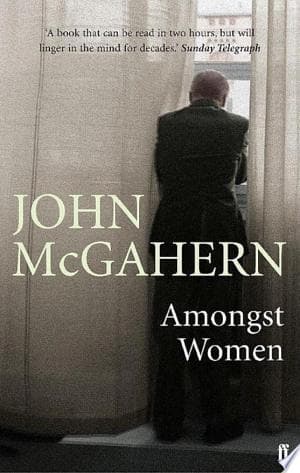
John McGahern (2009)
Genre
Literary Fiction / Historical Fiction
Reading Time
2-3 hours
Key Themes
See below
Sign in to track this book
After Irish independence, a tyrannical widower on a struggling farm fights a losing battle to control his five children as the modern world approaches.
The novel begins by introducing Michael Moran, a former IRA officer and widower, living on a small farm in rural Ireland with his five children: sons Luke and Michael Jr., and daughters Maggie, Mona, and Sheila. Moran, still affected by his past and his first wife's death, tries to bring military discipline into his home. He demands complete obedience, especially from his daughters, and enforces a strict schedule of chores, prayers, and study. The children, particularly the older ones, resent his control but largely obey, fearing his unpredictable anger and emotional manipulation. Their isolated lives are completely shaped by his presence and will, with little outside influence allowed.
Years after his first wife's death, Moran decides to remarry. He brings Rose, a gentle woman from a nearby town, to live on the farm. Rose is at first overwhelmed by Moran's intense personality and the stifling atmosphere of the house. She tries to connect with the children, offering them a kindness and understanding their father rarely provides. Her presence changes the dynamic, as she tries to soften Moran's harshness and bring some warmth and normalcy into their lives, though she often finds herself caught between Moran's demands and the children's quiet resentment.
As the children grow into young adults, their desire for independence clashes more often with Moran's strict rule. Luke, the oldest son, is the first to directly challenge his father, often through defiance and eventually by leaving home to live his own life. Maggie, Mona, and Sheila develop their own quiet ways of rebelling, finding ways to show their individuality despite Moran's constant watch. Their longing for freedom and outside experiences grows, leading to secret meetings and plans to escape the suffocating farm and their father's influence. Rose often sees these struggles, understanding the children's situation but feeling unable to truly help.
Luke, unable to stand his father's tyranny any longer, decides to leave the farm. This act of defiance deeply hurts Moran, who sees it as a betrayal and a challenge to his authority. Luke's departure sets a precedent for the other children and clearly shifts the family dynamic. It shows the growing weaknesses in Moran's carefully built world and his inability to hold onto his children as they seek their own paths. Rose, though sad about the family's broken state, secretly admires Luke's courage and hopes it might inspire the others.
One by one, the daughters also begin to break free. Maggie, Mona, and Sheila pursue education and jobs, building lives away from the farm. Maggie becomes a teacher, Mona finds work in Dublin, and Sheila eventually marries. Each departure is met with Moran's resistance and emotional manipulation, but he cannot stop them from creating their own futures. Despite their physical distance, Moran's influence remains a powerful, often unsettling, presence in their lives, subtly shaping their choices and relationships. Rose provides a quiet anchor for them, a source of stable affection and a link to their home.
With his children grown and scattered, Moran's power over them significantly lessens. He becomes more isolated on the farm with only Rose for company. His attempts to maintain control through letters, visits, and emotional pleas become less effective. He struggles to adapt to the changing world and his children's independence, often retreating into memories of the War of Independence and his past glory. Rose becomes his main confidante and caretaker, bearing the brunt of his worries and frustrations as his world shrinks.
Moran's past as an IRA officer during the Irish War of Independence is always present in his life and his family's lives. He often tells stories of his wartime experiences, sometimes exaggerating them, but these memories also show a man scarred by violence and longing for a lost purpose. His need for control and order in his family can be seen as an attempt to recreate the structure and authority he once had. The children, though not alive during the war, inherit the psychological legacy of their father's past, which shapes their upbringing and their understanding of him. The past is not just remembered; it actively dictates the present.
Throughout Moran's life, Rose is a figure of immense patience and quiet strength. Despite his temper, emotional demands, and often cruel treatment, she continues to care for him with unwavering devotion. She understands the complex man beneath the bluster, recognizing his deep insecurities and past trauma. Rose's love is a quiet force, providing crucial stability and a rare source of genuine affection in a home often defined by fear. Her presence softens Moran's harshness and offers the children a glimpse of unconditional love.
As Moran ages, his health declines, and he becomes increasingly frail and dependent. His once powerful physical presence diminishes, and his mind begins to weaken. He relies more and more on Rose for daily care, a role she fulfills with her characteristic quiet dedication. During these final years, the children visit less often, though they maintain a sense of duty. Moran's tyranny softens into a more vulnerable, though still demanding, dependence, highlighting Rose's profound impact on his life and the family's ability to cope with his difficult nature.
Moran eventually dies, leaving Rose and his children to deal with his complex legacy. His death brings a sense of release, but also a deep awareness of how much he shaped their identities and relationships. The children, now adults with their own lives, reflect on the love, fear, and resentment he inspired. They recognize that while they escaped his direct control, his influence continues to resonate in their choices, their fears, and their understanding of family. Rose, freed from her caregiving duties, continues to live a quiet life, embodying the enduring power of gentle strength amidst hardship.
The Protagonist/Antagonist
Moran's arc is one of gradual decline in power and increasing isolation, as his children escape his control and he becomes dependent on Rose.
The Supporting
Rose's arc shows her growing from an overwhelmed newcomer to the enduring, patient matriarch who sustains Moran and the family.
The Supporting
Maggie develops from a compliant daughter into an independent woman, finding her own path despite her father's lingering influence.
The Supporting
Mona's arc shows her actively seeking and achieving a life of independence in Dublin, distancing herself from her father's control.
The Supporting
Sheila's arc culminates in her marriage, which provides her with a different form of independence from her father.
The Supporting
Luke's arc is one of direct rebellion and successful escape from his father's tyranny, setting a precedent for his siblings.
The Supporting
Michael Jr. struggles to define himself apart from his father's influence, remaining physically closer to the family home.
The novel explores tyranny, specifically within the home. Moran, a former IRA officer, controls his family completely, replicating military discipline. This appears in his children's lives through strict rules, emotional manipulation, and unpredictable anger. For example, he dictates their studies, chores, and social interactions, making their lives revolve around his will. The children's struggles for independence are direct responses to this control, showing the damaging psychological effects of such a system and the universal desire for freedom.
“He wanted them to be a monument to himself, a disciplined army, and they, being alive, were always in danger of becoming themselves.”
The past, especially Moran's experiences in the Irish War of Independence, affects the present. Moran often tells stories of his wartime exploits, sometimes romanticizing them, but these memories also show a man scarred by violence and longing for a lost purpose. His need for control and order in his family can be seen as an attempt to recreate the structure and authority he once had. The children, though not in the war, inherit the psychological legacy of their father's past, which shapes their upbringing and their understanding of him. The past is not just remembered; it actively dictates the present.
“He lived in the past, and it was a more real place to him than the present.”
Despite Moran's oppressive rule, the novel shows the resilience of his children and, especially, his second wife, Rose. The children, one by one, find ways to assert their individuality and escape his direct control, whether through education, work, or marriage. Rose, in particular, shows this theme; her patience and care for Moran, despite his difficult nature, show her inner strength and capacity for love. Their ability to survive and even thrive under challenging circumstances highlights the human spirit's capacity to adapt and find strength.
“Her strength was not in resisting him, but in simply enduring, like a stone in a stream.”
The novel examines the complex and often destructive dynamics within the Moran family. Moran's tyranny creates a home filled with fear, resentment, and a distorted kind of love. As the children grow, their individual desires clash with their father's need for control, leading to a gradual breakdown of the family as they seek independence. The departures of Luke, Maggie, and Mona show this breakdown, leaving Moran more isolated. The story explores how family bonds, even under pressure, can be both a source of deep connection and profound pain, and how seeking individual freedom can lead to family fragmentation.
“He had wanted to keep them all close, but in trying to keep them, he had driven them away.”
Love in 'Amongst Women' appears in various, often contradictory, forms. Moran's love for his children is possessive and controlling, mixed with his need for dominance and his own insecurities. He believes his strictness is a form of protection and guidance, yet it stifles their growth. In contrast, Rose's love is selfless, patient, and unconditional, serving as a source of warmth in the home. The children's love for each other is a bond forged in shared experience and resilience. The novel suggests that love, especially within a family, can be a complex mix of affection, fear, duty, and resentment, and its expression can be both nurturing and destructive.
“He loved them, in his own way, a love that was like a cage.”
Moran's frequent recounting of his past as an IRA officer.
Moran's character is heavily shaped by his past as an IRA officer, and the novel frequently employs flashbacks and his personal recollections of the War of Independence. These are not always linear or reliable, often colored by his need to maintain a heroic image. This device serves to explain Moran's authoritarian nature and his need for control, linking his present behavior to his traumatic and formative past. It also provides historical context, anchoring the family's story within a specific period of Irish history and showcasing the lasting psychological impact of conflict on individuals and subsequent generations.
The farm as a microcosm of Moran's control and the children's confinement.
The Moran family farm serves as a powerful symbol throughout the novel. Initially, it represents Moran's domain, a contained world where he can exert absolute control, mirroring his desire for order and discipline. Its isolation reflects the family's detachment from wider society. As the children grow, the farm becomes a symbol of their confinement and the oppressive atmosphere they seek to escape. Their eventual departures from the farm symbolize their breaking free from Moran's tyranny and their journey toward individual autonomy, highlighting the contrast between the stifling rural life and the allure of the outside world.
A third-person omniscient narrator who observes without overt judgment.
The novel utilizes a detached, third-person omniscient narrator who observes the events and characters with a quiet, almost clinical, precision. This narrative voice rarely offers explicit judgments or emotional commentary, instead presenting events and character motivations in a matter-of-fact manner. This device allows the reader to form their own conclusions about Moran's tyranny and the children's suffering, making the emotional impact more profound through understatement. It also lends a sense of universality to the family's struggles, presenting them as an almost inevitable unfolding of human nature under specific conditions, rather than a unique melodrama.
Silence as a means of communication, control, and emotional repression.
Silence is a pervasive and significant plot device in 'Amongst Women'. It functions in multiple ways: as a tool of Moran's control (his children often remain silent out of fear), as a form of communication (unspoken understandings and resentments), and as a representation of emotional repression. The children's quiet rebellion, Rose's patient endurance, and Moran's moments of brooding reflect the power of silence in conveying unspoken truths and suppressed feelings. It underscores the difficulty of direct communication within the family and highlights the psychological weight of their unexpressed emotions, making the few instances of direct confrontation all the more impactful.
“All children have to be broken. They're like wild horses. If you don't break them, they'll destroy you.”
— Michael Moran's harsh philosophy on raising children, often directed at his sons.
“Life wasn't what it was meant to be, but it was all they had.”
— A reflection on the Moran family's resigned acceptance of their difficult existence.
“He lived in the past, and everything he touched turned to the past.”
— Describing Michael Moran's inability to move beyond his own past grievances and experiences.
“The women were like a hedge, holding the family together, keeping it from falling apart.”
— An observation on the central, often unacknowledged, role of the women in the Moran household.
“Love was not a feeling, but a decision, a daily act of will.”
— Rose's pragmatic understanding of love within her marriage to Michael.
“He wanted to be understood, but he was incapable of explaining himself.”
— Michael Moran's internal struggle with communication and his own isolation.
“The long, slow pull of memory, like a salmon fighting upstream.”
— A vivid metaphor for the persistent and often difficult nature of remembering.
“There was no escape from the past, only a continuous re-enactment.”
— Another quote highlighting the inescapable influence of history and personal experience.
“The silence was not empty, but full of things unsaid, things understood.”
— Reflecting on the unspoken dynamics and deep understanding within the family.
“He carried his history like a hump on his back.”
— Describing Michael Moran's burden of past experiences and grievances.
“The world outside their gate was a mystery, and they preferred it that way.”
— Illustrating the Moran family's insular nature and their resistance to external influences.
“Children were a mirror, reflecting back all that was good and bad in their parents.”
— A general observation on the impact of parental behavior on children.
“The years had passed, but the wounds remained, unhealed, beneath the surface.”
— A poignant reflection on the enduring nature of emotional pain and past hurts.
“It was a life lived by instinct and routine, by the turning of the seasons.”
— Describing the simple, cyclical nature of rural existence for the family.
Ready to see how well you understood this book? Take our interactive quiz with 10 questions.

John McGahern was an Irish writer and novelist. He is regarded as one of the most important writers of the latter half of the twentieth century.







