“Every time you break a rule, you risk being sent to the Population Police. And you know what that means.”
— Matthew warns Luke about the dangers of breaking the rules in their society.

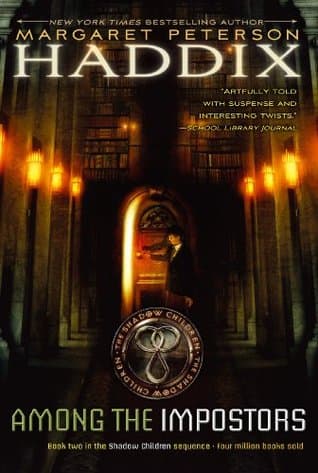
Margaret Peterson Haddix (2001)
Genre
Fantasy / Children's / Science Fiction / Young Adult
Reading Time
180 min
Key Themes
See below
Sign in to track this book
In a world where a third child means death, Luke Garner must navigate a mysterious boarding school, posing as another boy while uncovering the dark secrets of a society that wants him erased.
Luke Garner, a 'third child' who has lived his entire life in hiding, enters Hendricks School for Boys, posing as Lee Grant, a deceased baron's son. He feels overwhelmed by the unfamiliar environment, which lacks windows and has many identical-looking students. Luke struggles to adapt to the school's strict routines and the confusing social dynamics among the boys. He feels immense pressure to maintain his false identity, fearing that any mistake could expose him to the Population Police. His initial interactions are marked by isolation and bewilderment, as he tries to understand the unspoken rules and the strange behavior of his peers, all while dealing with the constant threat of discovery.
Luke experiences harsh hazing from the other boys, especially Jackal, who seems to enjoy tormenting him. The boys force him to perform chores, steal food, and endure other indignities. Luke finds it impossible to distinguish between many of his classmates due to their similar appearances and lack of unique identifiers. This confusion increases his fear of being exposed, as he cannot tell who is a genuine student and who might be an informant. The teachers appear oblivious to the bullying, further isolating Luke and making him question the true purpose of Hendricks School. He longs for the simple privacy he had in his attic, despite its confinement.
During a chaotic moment, Luke finds an unlocked door that leads outside. This discovery shocks him, as he had believed the school was a secure, inescapable environment. Driven by curiosity and a longing for fresh air and natural light, he begins to sneak out periodically. His initial forays are cautious, exploring the immediate surroundings of the school. He observes the fences, the guards, and the general layout of the property, slowly creating a mental map. These secret excursions provide a sense of freedom and a growing determination to uncover the school's secrets, despite the dangers.
Luke's explorations lead him to a surprising discovery: some of the other boys are also 'third children' in hiding, just like him. He first encounters a group of boys, including Carlos, who are secretly cultivating a garden. This revelation shatters his initial perception of Hendricks as a school for privileged legal children. He learns that the school is a deceptive front, designed to house and control third children, providing them with new identities and a controlled environment. This realization is both a relief and a new source of anxiety, as it means the stakes are even higher, and the true purpose of the Population Police's involvement is more complex than he imagined.
Carlos, one of the third children, takes Luke under his wing and explains the network of resistance operating within Hendricks. He reveals that many of the supposed 'legal' children are actually third children, and some of the staff are secretly sympathetic to their cause. Carlos is a charismatic and resourceful leader, and he quickly involves Luke in their covert activities, which include communicating with the outside world and gathering information. Luke is both thrilled and terrified by this new role, finding a sense of purpose he never had in his attic, but also facing the constant threat of exposure and severe consequences.
Luke discovers that the Population Police are not just external enforcers but are deeply involved in the operations of Hendricks School. The 'Baron' and other seemingly authoritative figures are actually high-ranking Population Police officers. The school is a sophisticated trap, designed to bring third children out of hiding under the guise of offering them a future, but ultimately to control and potentially eliminate them. This revelation confirms Luke's worst fears, making him question the true intentions behind the school's existence and the ultimate fate of the third children housed there.
Luke learns that the Barons, the elite ruling class, are behind the Population Police and the creation of schools like Hendricks. Their agenda is not just to enforce the two-child law but to systematically identify, track, and control all third children. The 'Lee Grant' identity Luke assumed belonged to a Baron's son, and the Barons are using the identities of deceased legal children to bring third children into their system. This elaborate scheme aims to prevent any future uprisings and maintain their power, solidifying the oppressive regime and ensuring no third children can ever truly escape their grasp. Luke realizes the full extent of the danger he is in.
Driven by a desperate need for more information and potential aid, Luke and Carlos make a concerted effort to contact sympathetic individuals outside the school. They use the secret communication channels established by the resistance, exchanging coded messages and attempting to gather intelligence about the Barons' true plans and the broader political landscape. These efforts are dangerous, as any intercepted message could lead to their immediate capture and severe punishment. Luke's resourcefulness and courage are tested as he participates in these high-stakes operations, knowing that the fate of many third children depends on their success.
A key event occurs when the Barons host a lavish ball at the school, attended by powerful figures. Luke and Carlos, using their access and cunning, decide to infiltrate the event to eavesdrop on conversations and gather crucial intelligence. This is a risky endeavor, as they are surrounded by the very people who seek to control and eliminate them. Luke, disguised and blending in, overhears fragments of conversations that confirm the Barons' sinister intentions and the true purpose of the school. The tension is palpable as they navigate the crowded rooms, trying to glean information without drawing suspicion.
Luke, emboldened by the information gathered and the growing support among the third children, confronts Baron Hendrick, the supposed benevolent founder of the school, who is actually a high-ranking Population Police officer. In a moment of courage, Luke reveals his true identity as a third child and challenges the Baron's authority and the oppressive system he represents. This direct confrontation is a dangerous gamble, but Luke believes it is necessary to expose the truth and ignite a wider rebellion. The Baron is surprised by Luke's defiance, setting the stage for a critical turning point in the resistance movement.
Following the confrontation, Luke and Carlos, along with other key members of the resistance, finalize an elaborate escape plan for the third children at Hendricks. This plan involves coordinating with outside allies, using secret passages, and creating diversions to draw the attention of the guards. They meticulously detail each step, considering every contingency, knowing that the lives of many depend on their precision and stealth. Luke plays a crucial role in rallying the other third children, instilling hope and courage in them, and preparing them for the dangerous journey ahead.
The escape plan is put into action, leading to a tense and dangerous breakout from Hendricks School. The third children, guided by Luke and Carlos, navigate the school's hidden pathways and outer perimeter, encountering guards and other obstacles. There are moments of near-discovery and narrow escapes, testing the children's resolve and the efficacy of their plan. The climax of the escape involves a daring dash through the surrounding grounds, with the Population Police close behind. Not all escape, but a significant number manage to break free, marking a victory against the oppressive regime and a new chapter in the fight for third children's rights.
The Protagonist
Luke transforms from a fearful, isolated boy into a courageous leader who actively fights for the rights of other third children.
The Supporting
Carlos continues to lead the resistance, effectively expanding its reach and impact with Luke's help.
The Antagonist
Baron Hendrick remains committed to his oppressive agenda, ultimately being challenged by Luke and the resistance.
The Supporting
Jackal remains a bully, representing the internal strife and power dynamics among the students.
The Antagonist
The Barons' power is challenged by the growing resistance, but their overall dominance remains a significant threat.
The Antagonist
The Population Police continue to enforce the law, but their methods are increasingly exposed and challenged by the resistance.
The Supporting
Jason moves from cautious survival to active participation in the resistance.
The main theme is the struggle for identity in a society that denies existence. Luke, forced to become 'Lee Grant,' constantly battles with who he is versus who he must pretend to be. Hendricks School is a deception, presenting itself as a normal institution while secretly being a holding pen for third children. This theme is clear in Luke's constant fear of discovery and his internal conflict about embracing his new persona versus clinging to his true self. The use of deceased children's identities further highlights the loss of self and forced anonymity.
“He was Lee Grant now. He had to be. He had no choice.”
The novel explores the tension between the desire for freedom and the perceived security of a controlled environment. Luke initially longs for the outside world, but once at Hendricks, he grapples with the relative 'safety' of a known prison versus the unknown dangers of true freedom. The school provides food, shelter, and a new identity, but at the cost of liberty and self-determination. The third children must decide whether to accept this false security or risk everything for genuine freedom, as seen when Carlos and Luke plot their escape, knowing the immense risks involved.
“Was it better to be safe, but trapped, or free, but hunted?”
The emergence of a secret resistance movement among the third children at Hendricks shows the human spirit's refusal to be oppressed. Despite facing overwhelming odds and the constant threat of the Population Police, characters like Carlos and eventually Luke choose to fight back. Their rebellion is not just about physical escape but about reclaiming their dignity and demanding recognition of their right to exist. The secret garden, the coded messages, and the eventual escape plan all demonstrate that even in the most controlled environments, rebellion can begin.
“We're not just hiding anymore. We're fighting.”
The book explores how authority can be used for oppressive means, especially through deception and control. The Barons and the Population Police use their power to enforce a harsh law, justifying their actions as necessary for societal order. Hendricks School is an example of this, where a seemingly benevolent institution is actually a tool for surveillance and control. The unquestioning obedience of some students and the manipulative tactics of the staff show how easily a populace can be controlled through fear and manufactured consent, making Luke's defiance all the more significant.
“They don't want to kill us. They want to control us.”
A crucial plot device where characters assume new names and backstories to survive.
The use of false identities, particularly Luke's transformation into Lee Grant, is central to the plot. It creates constant tension as Luke fears discovery and struggles to embody a persona that isn't his own. This device highlights the theme of identity loss and the oppressive nature of the regime, which forces individuals to erase their pasts. It also serves as a narrative mechanism for introducing Luke into the 'legal' world, giving him access to information and opportunities he wouldn't otherwise have had, while simultaneously putting him in extreme peril.
A seemingly legitimate school that is actually a front for the Population Police.
Hendricks School functions as a major plot device, initially appearing as a safe haven for privileged boys, but gradually revealed to be a sophisticated trap for third children. Its deceptive nature creates a sense of unease and mystery, driving Luke's investigation. The school's lack of windows, identical uniforms, and strict routines contribute to its oppressive atmosphere, while its hidden passages and secret activities facilitate the resistance movement. This device allows the author to explore themes of control, surveillance, and the hidden realities beneath a polished surface.
A seemingly insignificant detail that provides Luke with access to the outside and crucial discoveries.
The unlocked door is a pivotal plot device that serves as a catalyst for Luke's investigations and the unfolding of the school's secrets. It represents a crack in the facade of control and offers Luke a tangible path to freedom and knowledge. Its accidental discovery underscores Luke's resourcefulness and curiosity, as he seizes this opportunity despite the risks. This device allows for the gradual revelation of the resistance movement and the true nature of the Population Police's involvement, moving the plot from Luke's internal struggles to his active participation in rebellion.
A hidden garden cultivated by third children, symbolizing hope and defiance.
The secret garden, discovered by Luke, serves as a powerful symbolic plot device. It represents life, growth, and the quiet defiance of the third children against a system that denies their existence. It's a place where they can reclaim a piece of nature and nurture something of their own, providing a stark contrast to the sterile, controlled environment of the school. The garden also acts as a meeting point for the resistance, fostering community and hope, and demonstrating that even in the most oppressive circumstances, the human spirit finds ways to flourish and resist.
“Every time you break a rule, you risk being sent to the Population Police. And you know what that means.”
— Matthew warns Luke about the dangers of breaking the rules in their society.
“He knew he was a third child. He'd always known. But he'd never fully grasped what that meant.”
— Luke reflects on his identity as a forbidden third child and the implications.
“Sometimes, when you have to, you do things you never thought you could.”
— Luke contemplates the difficult choices he must make to survive at the school.
“Being an impostor was harder than he thought. Every smile, every nod, every casual remark felt like a lie.”
— Luke struggles with maintaining his fake identity as Lee at Hendon School.
“He was a shadow, a whisper, a ghost in a world that didn't want him.”
— Luke feels his isolation and invisibility as a hidden child.
“The truth was a weapon, and sometimes, it was better to keep it sheathed.”
— Luke considers when and how to reveal his true identity or intentions.
“He had to be strong. For himself. For his family. For all the third children.”
— Luke finds motivation to persevere despite the dangers he faces.
“Freedom wasn't just about being able to go outside. It was about being able to be yourself.”
— Luke ponders the true meaning of freedom beyond physical confinement.
“The world was full of secrets, and he was just beginning to uncover them.”
— Luke realizes the vastness of the conspiracy and hidden aspects of his society.
“Trust was a fragile thing, easily broken, and once broken, almost impossible to mend.”
— Luke learns about the complexities of trust within his deceptive environment.
“He was no longer just Luke Garner. He was also Lee Grant. And both of them were fighting to survive.”
— Luke acknowledges his dual identity and the internal struggle.
“Sometimes the biggest lies were the ones people told themselves.”
— Luke observes how characters rationalize their actions or beliefs.
“Hope was a dangerous thing in a world like theirs, but he couldn't help but hold onto it.”
— Luke feels a flicker of hope despite the grim reality.
“He had to learn to blend in, to become invisible, even when he desperately wanted to stand out.”
— Luke understands the necessity of conformity for his safety.
Ready to see how well you understood this book? Take our interactive quiz with 10 questions.

Biography coming soon.







