“Freedom is a gift you give yourself.”
— Lina often reflects on the meaning of freedom and her personal journey to achieve it.

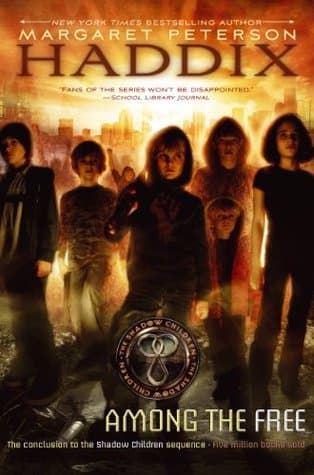
Margaret Peterson Haddix (2006)
Genre
Fantasy / Children's / Science Fiction / Young Adult
Reading Time
180 min
Key Themes
See below
Sign in to track this book
After sparking a revolution that overthrew a totalitarian regime, third-born Luke must navigate the new world of freedom, questioning if liberation brings peace or just a new fight for control.
After the Population Police headquarters is bombed, Luke Garner, using the name Sebastian, finds himself in the ruins and confusion. He is separated from his friends and mentors, Nina and Oscar, and tries to understand what happened. The air is thick with smoke, and debris covers the ground. Luke, lost and alone, sees both fear and a growing sense of hope among survivors. He realizes his actions, even if accidental, played a big part in this event, and the weight of this responsibility begins to affect him. He tries to make sense of the new, uncertain reality.
As Luke walks through the destroyed city, a group of resistance members finds him. They were working against the Population Police. They recognize him as Sebastian, the boy who entered the headquarters and accidentally started the rebellion. The resistance, led by Natalia, a serious but practical woman, explains that the bombing was a trigger, but the fight for freedom is not over. They see Luke as a symbol, an accidental hero who can inspire others, and they immediately include him in their plans for the future, which makes Luke uncomfortable and confused about his role.
Luke, guided by Natalia and the resistance, joins the new temporary government. He attends their secret meetings, often in makeshift places, where various groups and leaders try to build a new society. Luke watches the intense debates among leaders, including representatives from different regions and social classes. He sees how hard it is to unite people who were long oppressed and to create a fair system. Discussions focus on immediate needs like food and security, and the long-term goal of writing a new constitution, all while the threat of remaining Population Police loyalists exists.
Luke eventually has an emotional reunion with Nina and Oscar, who also survived the bombing. They share their experiences and tell Luke what he missed. Nina, deeply involved with the resistance, reveals more about the extensive network and years of planning to undermine the Population Police. Oscar, always practical, focuses on the challenges of rebuilding. Their reunion brings Luke relief, giving him familiar faces and a sense of belonging amid the changes. They discuss the future and their individual roles in the new society.
As the temporary government tries to gain power and structure, Luke notices the internal divisions and power struggles among its members. Different leaders compete for influence, and conflicting ideas about how the new society should run appear. Some want immediate, radical changes, while others prefer a cautious, gradual approach. Luke sees the fragility of their new unity, fearing that the oppression they fought could return in a different form if these divisions are not resolved. He sees how easily power can corrupt, even with good intentions.
Luke, using his observation skills and lingering distrust from his past, suspects that some individuals in the temporary government are not as good as they seem. He overhears quiet talks and notices subtle behaviors that suggest a desire for personal power rather than collective good. Working quietly with Nina and Oscar, he finds evidence that certain groups are trying to centralize control, manipulate public opinion, and possibly create a new authoritarian rule, mirroring the system they overthrew. This discovery fills Luke with dread, realizing that freedom is not guaranteed just by removing the old regime.
Facing the grim reality of a possible new dictatorship, Luke can no longer be a passive observer. He feels a deep responsibility to ensure the sacrifices made during the rebellion were not in vain. Despite his shyness and fear of public speaking, he understands that his unique position as a 'third child' and accidental hero gives his voice weight. He consults with Nina and Oscar, who support his decision to expose the manipulative individuals in the government. Luke realizes that true freedom requires constant watchfulness and a willingness to challenge injustice, even when it comes from within their own ranks.
At a public gathering where the temporary government plans to announce new, possibly restrictive policies, Luke Garner steps forward. Overcoming his fears, he gives an emotional speech, revealing the plans of those trying to seize power and warning people against falling under another form of oppression. He speaks from his heart, sharing his personal experience as a shadow child and his belief in true freedom and equality for all. His words resonate with the crowd, many of whom are former shadow children or suffered under the old regime. His honesty and bravery spark a new wave of determination among the people.
Luke's powerful speech causes immediate reactions. Some corrupt leaders try to discredit him, but the crowd supports Luke. With Nina, Oscar, and other genuine resistance members, Luke presents the evidence they gathered, exposing the true intentions of those who sought to establish new autocratic rule. The public outcry is huge, forcing the would-be dictators to back down and face consequences. This confrontation is a key moment, showing the power of an informed and united public to resist oppression, even from within their own ranks. The temporary government must rethink its structure and leadership.
With the corrupt elements removed, the temporary government begins to work toward establishing a democratic and fair society. Luke, now Luke Garner, is recognized not only as a symbol but as a voice for the previously voiceless. He, Nina, and Oscar remain involved, ensuring that new laws protect all citizens, especially the 'third children' who are now free to live openly. The path ahead is still long and challenging, but there is a clear sense of cautious hope for a future where everyone belongs. Luke, though changed, finds peace knowing he helped create a truly free world.
The Protagonist
Luke evolves from a fearful, hidden child to a reluctant but powerful public speaker, embracing his identity and leadership to ensure true freedom for all.
The Supporting
Nina continues her fight for justice, transitioning from underground resistance to an active participant in building a new, fair society.
The Supporting
Oscar maintains his pragmatic outlook, contributing his common sense and loyalty to the establishment of a stable new government.
The Supporting
Natalia transitions from a covert resistance leader to a key figure in the provisional government, striving to build a stable new society.
The Mentioned
Not present in this book, but her previous actions enabled the events of 'Among the Free'.
The Antagonist
Mr. Hendrick attempts to usurp power in the new government but is ultimately exposed and thwarted by Luke.
The Antagonist (former)
Their power is overthrown, but their legacy of oppression necessitates the careful construction of a new, truly free society.
This theme explores the idea that achieving freedom is only the first step; maintaining it requires constant effort. After the Population Police are overthrown, Luke sees new power struggles and attempts at control emerge within the temporary government (Scene 5, 6). The narrative shows how easily good intentions can be corrupted by ambition, and how people, even after being freed, must remain active and questioning to prevent new forms of oppression. Luke's decision to speak out against the new potential tyrants (Scene 7, 8) directly shows this theme, proving that freedom is not a gift, but an ongoing struggle.
“Freedom isn't just the absence of chains; it's the constant work of ensuring no new ones are forged.”
Luke Garner, initially a hidden 'shadow child' who fears attention, eventually finds his voice and uses it to shape the new world. His accidental role in the rebellion and his status as a 'third child' give his words unique importance. Despite his shyness, he recognizes the need to speak truth to power, especially when new forms of tyranny appear (Scene 7). His public address (Scene 8) is a key moment, showing how one person, speaking from genuine experience and belief, can motivate people and prevent injustice. This theme emphasizes that even the most unassuming individuals can cause big change.
“Sometimes, the quietest voices hold the most truth, and when they finally speak, the world listens.”
The book explores the complex question of what makes a society truly just and equal after a revolution. With the old oppressive regime gone, the temporary government struggles with how to create a fair system for everyone, especially those who were marginalized, like the 'third children.' Luke observes the debates (Scene 3) and realizes that simply removing old laws is not enough; the new laws must embody true equality. The struggle against Mr. Hendrick (Scene 6, 9) shows the ongoing fight to ensure that the new society does not just replace one set of oppressors with another, but truly upholds the rights and dignity of all citizens, particularly the previously voiceless.
“Justice isn't just about punishing the wrongdoers. It's about building a world where wrongdoing can't easily take root again.”
Luke deals significantly with the unintended results of his actions and the great responsibility placed on him. His entry into the Population Police headquarters, while accidental in its final outcome, led directly to the bombing and the revolution (Scene 1). He feels the weight of this, understanding that he is seen as a symbol, an accidental hero. This responsibility pushes him beyond his comfort zone, forcing him to face new threats and take on a leadership role he never sought (Scene 7). The theme explores how individuals, even when their actions are not planned, can be put into positions of great influence, and the moral obligation that comes with such power.
“Being a hero wasn't a choice; it was a burden, a responsibility he hadn't asked for but couldn't shirk.”
Luke's actions, though often unintentional, lead to profound societal changes.
Luke Garner's journey throughout the series, and especially in 'Among the Free,' is characterized by accidental heroism. He never sets out to be a leader or a revolutionary, but his desperate attempts to survive and uncover truth inadvertently trigger monumental events, such as the bombing of the Population Police headquarters. This device highlights that significant change can arise from unexpected sources and that ordinary individuals, through their personal struggles, can become catalysts for revolution. It positions Luke as a relatable protagonist who, despite his fears, is repeatedly thrust into extraordinary circumstances, forcing him to rise to the occasion.
Luke, as a 'third child,' embodies the hopes and fears of the oppressed populace.
Luke's identity as a 'third child' makes him a powerful symbolic figure for the entire oppressed population. His mere existence, and later his public emergence, represents the defiance against the old regime's tyrannical laws. After the revolution, he becomes a symbol of the newly won freedom and the potential for a just society. This device allows the narrative to explore broader societal issues through the lens of one character's personal experience. His voice carries weight not just because of what he says, but because of who he is and what he represents to millions who were once silenced.
The primary conflict shifts from fighting an external oppressor to internal struggles within the liberated society.
Initially, the conflict of the series was clearly external: the Population Police. In 'Among the Free,' this shifts dramatically. While the old regime is largely dismantled, the new and more insidious threat comes from within the provisional government itself (Mr. Hendrick and his faction). This plot device creates a more complex and nuanced conflict, demonstrating that achieving freedom is not the end of the struggle. It forces Luke and the other characters to confront the difficult truth that power can corrupt anyone, and vigilance against tyranny must be maintained even among allies. This elevates the stakes by making the enemy less obvious and more psychologically challenging to overcome.
“Freedom is a gift you give yourself.”
— Lina often reflects on the meaning of freedom and her personal journey to achieve it.
“The past is a story we tell ourselves. The future is a story we write.”
— As Lina and others try to build a new life, they look forward rather than dwelling on the ruined past.
“Even in the darkest places, there is always a flicker of light.”
— A recurring theme as characters face despair but find reasons to persevere.
“Sometimes the greatest courage is simply to keep going.”
— Lina and her companions face numerous setbacks and dangers on their journey.
“The world is bigger than you think, and full of wonders you can't imagine.”
— Lina's perspective changes dramatically as she leaves the underground city.
“You can't truly be free until you're free in your mind.”
— Lina struggles with the psychological impact of her past even after escaping physical confinement.
“Every choice you make writes a new chapter in your life.”
— Lina and her friends make critical decisions that shape their future and the future of others.
“The truth, once seen, cannot be unseen.”
— Refers to the revelations about the true nature of Ember and the outside world.
“It's not about what was, but what can be.”
— A focus on rebuilding and creating a better future after the collapse of Ember.
“Even a small spark can light a great fire.”
— Reflecting on how individual actions can lead to significant change or inspire others.
“Fear can be a prison, but hope is the key.”
— Characters overcome their fears by holding onto the hope of a better existence.
“Home isn't a place, it's the people you share it with.”
— Lina finds a sense of belonging with her chosen family and community.
“The greatest treasures are not things, but experiences.”
— Lina values her newfound experiences and the natural world over material possessions.
“Sometimes, the only way forward is to let go of what holds you back.”
— Characters must shed old beliefs and attachments to embrace their new reality.
Ready to see how well you understood this book? Take our interactive quiz with 10 questions.

Biography coming soon.







