BookBrief
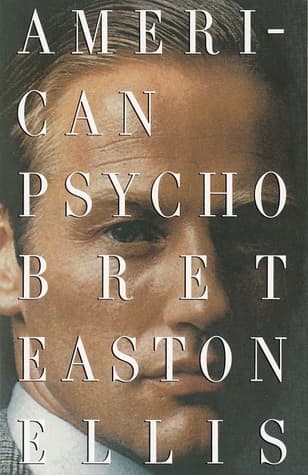
American Psycho cover
Archivist's Choice

American Psycho

Bret Easton Ellis (1991)

Genre

Thriller / Mystery

Reading Time

9-12 hours

Key Themes

See below

Track Your Reading

Sign in to track this book

Behind the polished facade of 1980s Wall Street, a young investment banker's obsession with designer labels and fine dining hides a horrifying descent into depravity and murder, exposing the dark side of American consumerism.

Synopsis

Patrick Bateman, a wealthy, handsome, and well-dressed Wall Street investment banker in late 1980s New York, maintains a perfect image while secretly committing extreme acts of violence. His days are full of designer clothes, exclusive restaurants, and status-driven conversations with his equally superficial friends. Meanwhile, he plans and carries out murders of colleagues, prostitutes, homeless people, and strangers. Bateman's thoughts show a mind obsessed with brands, social status, and a cold detachment from his violent acts. He constantly compares himself to others, especially regarding business cards, and his intense insecurities fuel his rage. As his crimes grow, the line between reality and hallucination blurs, making both Bateman and the reader question what is real. He tries to confess his crimes many times, but people always disbelieve or dismiss him. Evidence of his acts often disappears, suggesting either his narration is unreliable or society is too self-absorbed to notice the horror around it. The novel ends ambiguously; Bateman's confession is again dismissed, and he remains stuck in his cycle of violence, unpunished and unnoticed.
Reading time
9-12 hours
Difficulty
Hard
Pacing
Variable
Mood
Disturbing, Satirical, Nihilistic, Unsettling, Detached
✓ Read this if...
You are interested in a dark, satirical critique of 1980s consumerism and wealth culture, are comfortable with graphic descriptions of violence, and enjoy unreliable narrators and ambiguous endings.
✗ Skip this if...
You are sensitive to extreme gore, misogyny, and psychological horror, or prefer a clear, linear plot with a definitive resolution.

Plot Summary

The Morning Routine and the Facade of Perfection

The novel begins with Patrick Bateman, a wealthy, twenty-six-year-old investment banker on Wall Street, describing his detailed morning grooming. He lists every high-end product, exercise, and aesthetic concern, showing an obsessive pursuit of physical perfection and focus on consumerism. This scene immediately establishes his superficial life and the importance of outward appearances in his social group. He then meets colleagues, including Timothy Price, David Van Patten, and Craig McDermott, at a high-end restaurant, discussing minor things like reservations, business cards, and fashion. Beneath this sophisticated exterior, Bateman's thoughts are full of contempt for his friends and unsettling, violent ideas that hint at his true nature, sharply contrasting with his polished look.

Business Cards and Social Hierarchy

Patrick Bateman and his colleagues compete over their business cards. When Paul Owen, a more successful colleague, shows his superior card, Bateman feels intense envy and inadequacy. This minor interaction triggers deep humiliation and rage in Bateman, highlighting the superficial values and competitive nature of his social and professional world. The scene shows the deep insecurity beneath Bateman's carefully built persona and hints at the violent ways he deals with such feelings. The obsession with tiny details like font, paper stock, and raised lettering reveals the absurdity and emptiness of their materialistic world.

The First Victim: Paul Owen

Driven by envy, perceived insults, and a need for control, Patrick Bateman plans and carries out Paul Owen's murder. He gets Owen drunk, brings him to his lavish apartment, and has a superficial conversation before brutally attacking him with an axe. Bateman describes the act with clinical detachment, focusing on the gore and his own physical sensations rather than any moral issues. After the murder, he dismembers Owen's body and disposes of the remains, meticulously cleaning his apartment to remove any trace of the crime. This act marks a significant increase in Bateman's violence and shows his chilling ability to separate his life, keeping his normal facade even after committing terrible acts.

Dating Evelyn and the Charade of Engagement

Patrick Bateman continues his strained relationship with his fiancée, Evelyn Williams, a woman as superficial and materialistic as he is. Their interactions lack real emotion, mainly consisting of talks about social events, designer brands, and their peers' expectations. Bateman often shows his dislike for Evelyn in his thoughts, finding her boring and annoying. Despite this, he goes through the motions of their engagement, attending social events and making plans for their future, which he secretly dreads. This relationship shows the performative nature of his life and the social pressure to maintain a certain image, even if it means an unfulfilling partnership. He often thinks about breaking up with her but fears social backlash.

The Hookers and Escalating Violence

Bateman often invites prostitutes, like Bethany and Christie, to his apartment for sex. However, these meetings quickly turn into horrific acts of torture and murder. He subjects them to long physical and psychological abuse, using various tools and describing the acts in graphic detail. These scenes are mixed with his everyday thoughts about fashion, music, and social worries, creating a stark and disturbing contrast. The increasing violence against these marginalized women shows Bateman's deep depravity and complete lack of empathy, further cementing his identity as a serial killer. He often records these acts, suggesting a desire for documentation or a perverse artistic expression.

Jean and the Glimmer of Humanity

Jean, Patrick Bateman's timid and loyal secretary, represents a brief possibility of real human connection in his otherwise empty life. Unlike his peers, Jean is not consumed by materialism; she genuinely cares for Bateman, often showing concern for him. Bateman, in turn, sometimes feels a touch of protectiveness or even affection for her. He fantasizes about murdering her but never does, and at one point, he almost confesses his crimes to her, but stops himself. These moments with Jean are rare times when Bateman's monstrous image seems to falter, suggesting a buried humanity or at least a recognition of innocence he cannot bring himself to destroy.

The Homeless Man and the Dog

In one disturbing scene, Patrick Bateman meets a homeless man and his dog on the street. Instead of helping or ignoring them, Bateman has a brief, condescending conversation before brutally stabbing the man to death. He then kicks the dog to death, enjoying the power he has over them. This act is unprovoked and serves no purpose other than to satisfy Bateman's sadistic urges. The murder of the homeless man and his dog shows Bateman's complete dehumanization of others, especially those he sees as beneath him, and his casual cruelty, reinforcing that his violence is not limited to specific victims or reasons.

The ATM and the Cat

Bateman's grasp on reality begins to weaken as he experiences increasingly vivid hallucinations. In one instance, an ATM machine shows the message 'FEED ME A STRAY CAT,' which he immediately obeys by finding and brutally killing a stray cat. This incident marks a significant turning point, suggesting Bateman's mental state is rapidly declining, and he is losing the ability to tell the difference between his violent fantasies and real events. The absurdity and surreal nature of this event further blur the lines between what is real and what is a product of his sick mind, making the reader question the reliability of his narration and the truth of the acts he describes.

The Chase and the Apartment

In a chaotic scene, Patrick Bateman is chased by police after committing violent acts, including shooting a cab driver and a cleaning lady. He flees through the city, his paranoia and hallucinations growing. During the chase, he makes a desperate call to his lawyer, confessing his crimes in detail. Later, he breaks into Paul Owen's apartment, expecting to find the dismembered body and evidence of his murder. However, to his shock, the apartment is clean, recently renovated, and for sale, with no trace of the grisly scene he vividly remembers. This discovery makes Bateman's entire story questionable, causing both him and the reader to doubt the truth of his previous accounts.

The Confession and the Denial

Distraught and increasingly unstable, Patrick Bateman meets his lawyer, Harold Carnes, at a restaurant. Bateman launches into a detailed, frantic confession of all his murders, listing victims by name and describing the gruesome methods he used. To Bateman's surprise and despair, Carnes dismisses his confession, believing it to be a drunken joke or a misunderstanding. Carnes insists he recently had dinner with Paul Owen, the man Bateman claims to have murdered, directly contradicting Bateman's story. This denial, along with the clean state of Owen's apartment, leaves Bateman trapped in a horrifying limbo, unable to confirm the reality of his own acts and facing the possibility that his crimes exist only in his mind.

The End of the Mirror

The novel ends with Patrick Bateman sitting in a restaurant, observing his reflection and others' reflections in a mirror. He gives a final, chilling internal monologue, expressing his deep emptiness, his inability to feel real emotion, and his constant torment. He realizes there is no escape from his inner darkness, no redemption, and no meaningful consequence for his actions, real or imagined. The phrase 'THIS IS NOT AN EXIT' appears, symbolizing his trapped state. The uncertainty around the reality of his crimes remains unresolved, leaving the reader to wonder if Bateman is a real serial killer who avoids justice or a severely disturbed individual whose violence is purely imaginary. His final thoughts confirm his status as a detached observer of his own horrific existence.

Principal Figures

Patrick Bateman

The Protagonist/Antagonist

Bateman's arc is less about development and more about a descent into further psychological fragmentation, culminating in an ambiguous reality where his actions may or may not have occurred.

Evelyn Williams

The Supporting

Evelyn's character remains static, serving as a constant reminder of the hollow social world Bateman inhabits.

Timothy Price

The Supporting

Price remains a static character, embodying the materialism and superficiality of Bateman's social group.

Paul Owen

The Supporting

Owen's 'arc' is defined by his perceived success, his murder, and the subsequent uncertainty surrounding his fate, contributing to the novel's unreliable narrative.

Jean

The Supporting

Jean remains a constant, innocent presence, serving as a foil to Bateman's depravity and a symbol of uncorrupted humanity.

Courtney Rawlinson

The Supporting

Courtney's character remains static, embodying the superficial and morally lax aspects of Bateman's social environment.

Luis Carruthers

The Supporting

Luis's infatuation with Bateman remains constant, highlighting Bateman's homophobia and internal conflict.

Donald Kimball

The Supporting

Kimball's arc involves his increasing suspicion of Bateman, which ultimately leads to no resolution, reinforcing the novel's themes of unpunished crime and societal indifference.

Harold Carnes

The Supporting

Carnes's role is brief but impactful, serving to dismiss Bateman's confession and solidify the novel's ambiguous ending.

Themes & Insights

Consumerism and Materialism

The novel is full of descriptions of designer brands, high-end restaurants, and luxury items. Patrick Bateman's identity is tied to his possessions and consumption, using them to shield his inner void. His thoughts often include detailed critiques of fashion, music, and social status, showing a society where worth is measured by wealth and brand recognition. This theme highlights the emptiness of a culture that prioritizes superficiality, where even human relationships are transactional. The obsession with 'the best' or 'the most exclusive' drives much of the characters' interactions and Bateman's anxieties, as seen in the business card scene.

There is an idea of a Patrick Bateman; some kind of abstraction. But there is no real me: only an entity, something illusory. And though I can hide my cold gaze, and you can shake my hand and feel flesh gripping yours and maybe you can even sense our lifestyles are probably comparable, I simply am not there.

Patrick Bateman (internal monologue)

Identity and Facade

Bateman constantly struggles with his identity, feeling like an 'abstraction' rather than a real person. He creates a facade of a successful, charming Wall Street executive to fit into his social circle. This theme explores how identity is performed in a superficial society, where appearances are key. The frequent confusion of characters, where Bateman is mistaken for others like Paul Owen or Marcus Halberstam, shows how interchangeable individuals are in their materialistic world and the loss of unique identity. Bateman's inner life, however, contrasts sharply with his external persona, revealing the terrifying gap between who he presents himself to be and his true, violent nature.

I like to dissect girls. I mean, I'm a serial killer. What do you want me to say?

Patrick Bateman (internal monologue)

Misogyny and Violence

A central and disturbing theme is Bateman's extreme misogyny and his systematic violence against women, especially prostitutes and those he sees as vulnerable. The novel graphically details acts of sexual violence, torture, and murder, reflecting a deep hatred and objectification of women. Bateman views women as disposable objects for his sadistic pleasure, stripping them of their humanity. This theme highlights the dark side of patriarchal power, where women are exploited and brutalized without consequence. The casualness with which Bateman commits these acts, often mixed with his thoughts on fashion or dining, shows the dehumanization in his worldview.

I just want to add that I am a man of my convictions and I do believe in the death penalty. I also believe in the right to bear arms. I believe in the separation of church and state. I believe in abortion. I believe in capital punishment. I believe in animal rights.

Patrick Bateman (internal monologue, a contradictory and unsettling mix)

Unreliable Narration and Ambiguity of Reality

The novel's most unsettling theme is the uncertainty of whether Patrick Bateman's horrific crimes actually happen or are products of his disturbed imagination. The story is told entirely from Bateman's perspective, which becomes increasingly unreliable as his mental state worsens. Hallucinations, such as the talking ATM, and contradictory events, like Paul Owen's apartment being clean and Owen allegedly being seen alive, lead to deep doubt. This uncertainty forces the reader to question everything Bateman describes, blurring the lines between fantasy and reality. It suggests that the horror might lie not only in the acts themselves but also in the mind that conceives them, and in a society so indifferent that such horrors could go unnoticed.

THIS IS NOT AN EXIT.

Graffiti/Sign (final words of the novel)

Social Critique and Indifference

Bret Easton Ellis uses Bateman's story as a sharp critique of 1980s yuppie culture and American society. The constant focus on wealth, status, and material possessions blinds the characters to the horrors around them. Bateman's friends and colleagues are so self-absorbed and superficial that they either fail to notice his growing violence, dismiss his confessions as jokes, or confuse him with other people. This theme suggests a deep moral bankruptcy and indifference within the elite, where the appearance of success is prioritized over real human connection or ethical behavior. The lack of consequences for Bateman, whether his crimes are real or imagined, highlights society's failure to confront its own darkness.

My pain is constant and sharp and I do not hope for a better world for anyone. In fact, I want my pain to be inflicted on others. I want no one to escape.

Patrick Bateman (internal monologue)

Plot Devices & Literary Techniques

Unreliable Narrator

The entire story is told from the perspective of a character whose grip on reality is tenuous.

Patrick Bateman serves as the unreliable narrator, relaying events through his disturbed and increasingly fragmented perspective. His detailed descriptions of gruesome murders are interspersed with mundane observations, and later, outright hallucinations. This device creates profound ambiguity regarding the veracity of his crimes, leaving the reader to question whether the atrocities are real or products of his deranged imagination. It forces the audience to actively engage with the text, challenging their perception of truth and morality, and highlights the subjective nature of reality within the novel.

Ironic Juxtaposition

Graphic violence and superficial consumerism are placed side-by-side.

The novel constantly employs ironic juxtaposition by placing meticulous, almost poetic descriptions of high-end fashion, gourmet food, and pop music critiques directly alongside brutally graphic accounts of torture, rape, and murder. This device serves to highlight the extreme disconnect between Bateman's meticulously curated external world and his horrific internal reality. It underscores the superficiality and moral bankruptcy of the society he inhabits, where outward appearances are prioritized over any underlying ethical or humanistic concerns, making the violence even more shocking against the backdrop of such triviality.

Mistaken Identity

Characters frequently confuse Patrick Bateman with his colleagues.

Throughout the novel, numerous characters, including friends, acquaintances, and even a detective, repeatedly mistake Patrick Bateman for his colleagues, such as Timothy Price, Paul Owen, or Marcus Halberstam. This device emphasizes the theme of interchangeable identity within their materialistic and superficial social circle. It suggests that in a world where everyone is defined by their brands and status, individual distinctiveness is lost. For Bateman, this confusion further isolates him, as even his identity as a killer goes unnoticed, contributing to the ambiguity of his crimes and the chilling indifference of his environment.

Graphic Description

Detailed and explicit accounts of violence and torture.

The novel is infamous for its extremely graphic and detailed descriptions of violence, torture, and sexual assault. This plot device is used to shock and repulse the reader, forcing them to confront the darkest aspects of human nature and the capacity for depravity. It serves to immerse the reader in Bateman's horrifying internal world, making his psychopathy undeniable (even if the reality of the acts is later questioned). The explicit nature of these passages is crucial to the novel's impact as a critique of violence, misogyny, and the desensitization of society, rather than merely sensationalism.

Critical analysis

Notable Quotes

There is an idea of a Patrick Bateman; some kind of abstraction. But there is no real me: only an entity, something illusory. And though I can hide my cold gaze, and you can shake my hand and feel flesh gripping yours and maybe you can even sense our lifestyles are probably comparable... I simply am not there.

Patrick Bateman's internal monologue about his identity.

I like to dissect girls. I mean, I'm a busy man.

Bateman's inner thoughts, revealing his true nature.

My pain is constant and sharp and I do not hope for a better world for anyone. In fact, I want my pain to be inflicted on others. I want no one to escape, but even after admitting this there is no catharsis, my punishment continues to elude me, and I gain no deeper knowledge of myself; no new knowledge can be extracted from my telling. This confession has meant nothing.

Bateman's concluding monologue, reflecting on his confessions and lack of consequence.

You can always be thinner, look better.

Bateman's internal thoughts on societal pressures and his own obsession with appearance.

I have all the characteristics of a human being—flesh, blood, skin, hair—but not a single, clear, identifiable human feeling, except for greed and disgust. Something is wrong with me, I don't know what it is.

Bateman reflecting on his own lack of empathy and emotional detachment.

There are no more barriers to cross. All I have in common with the uncontrollable and the insane, the vicious and the evil, all the mayhem I have perpetrated and my utter indifference toward it, I have now surpassed. My punishment is my fantasy. My fantasy is my punishment.

Bateman's internal monologue, suggesting a blurred line between reality and fantasy.

I'm into murders and executions, mostly.

Bateman's response when asked about his interests.

I'm a white male, age twenty-seven, six feet tall, one hundred and eighty pounds, with brown hair and eyes. I work on Wall Street, for Pierce & Pierce. I own an apartment in the American Gardens Building on West Eighty-first Street. I believe in taking care of myself, and a balanced diet and a daily exercise routine. In the morning, if my face is a little puffy, I'm going to put on an ice pack while doing my stomach crunches. I can do a thousand now.

Bateman's meticulous self-introduction, highlighting his obsession with routine and appearance.

The only thing I feel is an overwhelming hatred for everything I see, for everything I am.

Bateman's internal reflection on his pervasive negativity.

Do you like Huey Lewis and the News?

Bateman's seemingly innocuous question before committing a violent act, a recurring motif.

I simply am not there.

A concise summary of Bateman's feeling of non-existence and unreality.

The world is a terrifying place, filled with depraved and diseased individuals.

Bateman's pessimistic view of humanity.

My therapist told me I have a personality disorder. I told him he has a personality disorder.

Bateman's dismissive and arrogant response to a diagnosis.

This is not an exit.

The final two words of the novel, leaving the reader with a sense of inescapable horror and ambiguity.

Quiz

Test Your Knowledge

Ready to see how well you understood this book? Take our interactive quiz with 10 questions.

10
Questions
~5
Minutes
?
Best Score

Key Questions (FAQ)

The novel follows Patrick Bateman, a wealthy Wall Street investment banker in the late 1980s, who secretly leads a double life as a serial killer. It explores his superficial existence, obsession with material possessions and designer brands, and his escalating acts of extreme violence, all while navigating the indifferent and equally superficial world of his peers.

About the author

Bret Easton Ellis

Bret Easton Ellis is a provocative American novelist known for his unflinching explorations of consumerism, celebrity, and violence in contemporary culture. His most famous works include "Less Than Zero" and the controversial bestseller "American Psycho," which was adapted into a film. Ellis's writing is characterized by its sharp social commentary and often transgressive subject matter.