“The fact is that there is no sure way of knowing what makes for success or failure in marriage, and anyone who says there is, is a fool.”
— Reflecting on the unpredictable nature of relationships, particularly marriage.


Philip Roth (2010)
Genre
Literary Fiction / Historical Fiction
Reading Time
10-12 hours
Key Themes
See below
Sign in to track this book
A decorated athlete's American dream shatters when his daughter commits an act of political terrorism, forcing him to confront the dark side of a seemingly perfect society.
The novel opens with Nathan Zuckerman, a recurring Roth character, attending his 45th high school reunion. He remembers the legendary Seymour 'Swede' Levov, a talented athlete and popular figure from his youth in Newark, who seemed to embody the American dream. At the reunion, Nathan meets Jerry Levov, Swede's younger brother, who reveals that Swede died recently of cancer. Jerry also tells Nathan about the events that destroyed Swede's perfect life, especially the radicalization and terrorist act committed by Swede's daughter, Merry. This conversation sparks Nathan's interest and his decision to reconstruct Swede's story, which makes up most of the narrative.
Nathan Zuckerman reconstructs Swede Levov's life, showing him as the ideal of post-World War II American success. Swede, a former star athlete, takes over his family's glove factory, Newark Maid, and marries Dawn Dwyer, a beautiful former Miss New Jersey. They move to the wealthy, scenic town of Old Rimrock, New Jersey, where they raise their daughter, Merry. Swede is a devoted husband and father, active in his community, representing the 'pastoral' ideal of American life. His factory thrives, employing a diverse workforce, and he maintains a strong sense of integrity and hard work, believing in his country's core values.
Merry Levov, Swede and Dawn's only child, develops a severe stutter early in life. This condition causes her great frustration and social anxiety, despite her parents' love and many attempts to find a cure, including various therapists. Swede, in particular, puts his energy into helping Merry, seeing her stutter as a personal problem to solve. However, the stutter continues, becoming a key part of Merry's early life and subtly hinting at her later struggles with communication and feeling separate from the mainstream world her parents live in.
On a sunny day in 1968, the peace of Old Rimrock ends with a bombing at the local post office, which kills Dr. Robert Kessler, the town's beloved doctor. The FBI quickly identifies Swede and Dawn's sixteen-year-old daughter, Merry, as the main suspect due to her growing radical anti-Vietnam War views and her known ties to extremist groups. The bombing is a devastating event that tears apart the Levov family's life and the seemingly perfect world Swede had built. Merry disappears after the incident, leaving her parents in shock, disbelief, and deep sadness.
After the bombing, Swede and Dawn face police investigations, media attention, and public criticism. Their carefully built lives fall apart as they confront the horrifying reality that their daughter is a terrorist and a fugitive. Swede, especially, is tormented by questions of how he could have failed Merry and how she could have committed such an act. He dedicates himself to finding her, driven by a desperate need for understanding and reconciliation, while Dawn falls into a deep depression, eventually having a nervous breakdown.
Over the next five years, Swede begins a solitary and increasingly intense search for Merry. He follows every clue, often meeting people on the edges of the counter-culture movement, who offer vague hints or dead ends. He meets Rita Cohen, a mysterious young woman who claims to know Merry and uses Swede's desperation for money and attention. Swede's search takes him through the underground world of radical politics, challenging his understanding of America and his daughter. Despite the emotional and financial cost, Swede's love for Merry pushes him forward, hoping to understand her reasons and bring her home.
Swede eventually gets a tip that leads him to a run-down building in Newark, where he finds Merry living in poverty, a sharp contrast to her privileged upbringing. She has joined a Jainist group, committed to non-violence, and lives a life of extreme self-denial. During their painful reunion, Merry, no longer stuttering, calmly explains her actions, expressing a radical belief system that sees all violence, including the Vietnam War, as equally bad. She believes her bombing was a necessary act against the 'fake' American life and her family's perceived involvement in it, leaving Swede devastated and unable to understand her logic.
Merry, now a devoted Jainist, refuses to leave her new life, believing it is the only path to purity and truth. She shows no regret for the bombing or the doctor's death, further crushing Swede's hopes for reconciliation. Her transformation is complete and permanent. Swede returns home, his dreams of getting his daughter back and restoring his family broken. He is left to deal with the deep distance from his daughter and the collapse of his understanding of America, unable to bridge the ideological gap between them. The 'pastoral' dream is lost, replaced by a haunting reality.
While Swede is consumed by his search for Merry, Dawn changes significantly. After her nervous breakdown, she receives therapy and has extensive plastic surgery on her face. This physical change symbolizes her wish to erase the past and start over. She eventually leaves Swede, unable to bear the constant pain and memory of Merry's actions, and moves to California to marry a wealthy businessman. Her departure marks another devastating loss for Swede, leaving him isolated and further solidifying the destruction of his family. Dawn's new life contrasts sharply with Swede's lingering sadness.
Swede Levov continues to run his glove factory, Newark Maid, but his spirit is broken. He lives a solitary life, haunted by the memories of his lost daughter and shattered family. He never truly recovers from the trauma. He is diagnosed with cancer, which he fights with quiet dignity, much like he fought the forces that destroyed his life. He dies, an example of the American dream turned nightmare, leaving behind a legacy of deep personal tragedy. His death is the end of an era, a final echo of the 'pastoral' ideal that was lost in the turbulent 1960s.
The novel ends with Swede's memory of a seemingly ordinary family dinner, years after Merry's disappearance, with his brother Jerry and father Lou present. The conversation, about business and family, is filled with the unspoken tragedy of Merry. Swede observes the subtle changes in relationships and the deep, lasting pain that underlies their interactions. This scene highlights the lasting scar left by Merry's actions on the entire Levov family, showing how their lives were forever altered and how the 'pastoral' innocence could never be regained, even in seemingly routine family moments.
The Protagonist
Swede transforms from an embodiment of the American pastoral ideal into a man consumed by grief, confusion, and the tragic loss of everything he held dear, grappling with the incomprehensibility of his daughter's actions.
The Antagonist/Catalyst
Merry evolves from a stuttering, frustrated child into a radicalized terrorist, and finally into an ascetic Jainist, demonstrating a complete rejection of her past and a search for absolute purity, however destructive.
The Supporting
Dawn's arc is one of fragmentation and reinvention; she breaks down under pressure, physically and emotionally alters herself, and ultimately abandons her past to seek a new identity and happiness.
The Narrator/Frame Narrator
Nathan's arc involves a journey of intellectual and emotional reconstruction, as he attempts to understand the unraveling of the American dream through Swede's personal tragedy.
The Supporting
Jerry remains a relatively static character, serving as a commentator on Swede's life and the societal changes around them, maintaining his cynical but loving perspective.
The Supporting
Lou's arc is largely static, representing the foundational values and generational continuity that are ultimately disrupted by the events of the 1960s.
The Supporting
Rita's character remains largely unchanged, functioning as a catalyst for Swede's further disillusionment and a symbol of the moral decay he encounters.
The novel examines the collapse of the post-war American Dream, personified by Swede Levov. Swede embodies the ideal of success, family, and community, only to see it destroyed by his daughter's radicalization. The bombing of the Old Rimrock post office is the literal explosion of this dream, showing the fragility of an idealized vision of America against social and political upheaval. The Levovs' 'pastoral' life is shown to be unsustainable in a turbulent world, demonstrating how external forces can invade even the most protected lives. Swede's futile search for Merry symbolizes his desperate attempt to reclaim lost innocence and order.
“And it was the year of the bomb. It was the year of the bomb in the post office. It was the year of the bomb in the post office that blew the doctor to pieces. It was the year of the bomb in the post office that blew the doctor to pieces and killed the dream.”
A main theme is the deep gap in understanding between generations, particularly between Swede and his daughter, Merry. Swede, a product of the post-war era, believes in hard work, assimilation, and America's goodness. Merry, growing up in the chaotic 1960s, rejects these values, seeing them as hypocritical and complicit in social injustices. Her radical actions are incomprehensible to Swede, who cannot reconcile the loving daughter he raised with the terrorist she becomes. This theme highlights the failure of communication and empathy across different worldviews, showing how deeply held beliefs can prevent real connection or understanding during periods of intense social change.
“How can you be so deaf, Daddy? How can you be so blind? Don't you see what's happening? Don't you understand anything?”
The novel, through Nathan Zuckerman's perspective, explores the difficulty of truly knowing another person and understanding the complex forces that shape their lives. Nathan, an outsider, tries to reconstruct Swede's story but acknowledges the limits and subjectivity of his effort. Swede himself struggles to understand Merry's reasons, encountering conflicting stories and vague answers. The truth about Merry's actions and her transformation remains unclear, even to her own father. This theme suggests that life is often chaotic and defies simple explanation, and that our understanding of events and individuals is always partial, leaving much to interpretation.
“And what is the truth? The truth is whatever stands up in a court of law. And what is the truth for a father? The truth is whatever he can bear.”
Several characters deal with identity and the desire for self-reinvention after trauma. Dawn Dwyer Levov, after her nervous breakdown, has plastic surgery and moves to California to start a new life, trying to erase her past. Merry Levov, after her act of terrorism, completely changes her identity, embracing an extreme form of Jainism and rejecting her former self and family. Swede, though he tries to keep his core identity, is forced to confront the breakdown of his self-image as the 'golden boy.' The novel suggests that while reinvention is possible, it often comes at a high cost, leaving behind parts of previous selves and relationships.
“She wanted to be someone else. She wanted to be someone for whom none of this had ever happened. She wanted to be a new person.”
The 1960s acts as a powerful force in the novel, showing how historical events and social changes can deeply affect individual lives. The Vietnam War, the civil rights movement, and the rise of radical counter-culture movements are not just background elements but direct causes for the destruction of the Levov family. Swede's 'pastoral' world cannot withstand the pressures of this turbulent era. The novel explores how individuals, despite efforts to create a safe haven, are caught in larger historical currents, forcing them to confront the moral complexities and violence of their times. Personal lives become linked with political events.
“He had imagined that he was a man living in history, but he was a man living in America, and America was history.”
Nathan Zuckerman, a recurring Roth character, frames the story of Swede Levov.
The novel employs a frame narrative, with Nathan Zuckerman serving as the primary narrator who reconstructs the life and tragedy of Seymour 'Swede' Levov. This device allows for a layered perspective, as Zuckerman, an author, explicitly acknowledges the act of creation and interpretation. It highlights the subjective nature of memory and truth, as Zuckerman pieces together Swede's story from various sources, including his own youthful idealization, Jerry Levov's accounts, and imagined scenes. This creates a sense of distance and reflection, inviting the reader to question the reliability of the narrative and the complexities of understanding another's life.
Swede Levov embodies the idealized, perfect American man.
Swede Levov functions as the 'golden boy' archetype, representing the pinnacle of post-war American success and masculine virtue. He is handsome, athletic, successful in business, a devoted family man, and seemingly without flaw. This archetype serves as a foundation for the novel's central tragedy: the shattering of this perfect image. By presenting such an idealized figure, Roth amplifies the shock and devastation when Swede's life unravels, making his fall from grace more poignant and symbolic of a larger national disillusionment. The destruction of the golden boy's world mirrors the destruction of the American pastoral ideal.
Merry Levov's severe speech impediment, a symbol of her inability to communicate and her alienation.
Merry Levov's lifelong, debilitating stutter is a crucial plot device. Initially, it represents her personal struggle and her parents' loving but ultimately futile attempts to 'fix' her. Symbolically, the stutter signifies Merry's inability to express herself within the conventional frameworks of her family and society. Its eventual disappearance when she embraces radicalism and then Jainism is highly significant; it suggests that she finds her 'voice' and a means of expression only through extreme ideologies that completely reject her past. The stutter thus becomes a metaphor for her profound alienation and the breakdown of communication between generations.
The family business, representing tradition, hard work, and the changing face of American industry.
The Newark Maid glove factory, passed down from Lou to Swede, is more than just a setting; it's a powerful symbol. It represents the immigrant success story, the dignity of manual labor, and the tangible results of the American Dream. It also serves as a microcosm of changing American society, employing a diverse workforce and facing the challenges of modernization. For Swede, the factory is a source of pride and continuity, a link to his heritage. Its continued existence amidst the personal and societal chaos highlights Swede's enduring commitment to traditional values, even as his personal life collapses around him.
“The fact is that there is no sure way of knowing what makes for success or failure in marriage, and anyone who says there is, is a fool.”
— Reflecting on the unpredictable nature of relationships, particularly marriage.
“And what is it, this ‘American Pastoral’? It’s a dream. A dream of order, of peace, of prosperity, of innocence. It’s a dream that never was, and never will be.”
— Swede Levov's brother, Jerry, offers a cynical view of the 'American Pastoral' ideal.
“You can’t just stop living because one day you’re going to die.”
— A pragmatic observation about continuing life despite its inevitable end.
“How can you be so, so… American? You don’t even know what you’re talking about.”
— Dawn, Swede's wife, expresses frustration with his perceived naivete.
“The Swede, the Swede, the Swede. He was the perfect American. He was the perfect American that was never to be.”
— Nathan Zuckerman's overarching reflection on Swede Levov as an embodiment of a lost ideal.
“You fight your father because you don’t want to be like him. But you become him anyway.”
— A universal truth about the often-unconscious mimicry of parental traits.
“War is for men, not for women. Women are for peace, for love, for life.”
— A traditional gendered view expressed within the narrative, highlighting societal expectations.
“Everything changed. Everything was broken. Everything was gone.”
— A stark summary of the profound impact of the bombing on Swede Levov's life.
“The fact remains, however, that one cannot invent a life. One must live it.”
— A philosophical point about the distinction between imagination and lived experience.
“What do you do when you’re not allowed to be what you are?”
— Merry Levov's struggle with her identity and the expectations placed upon her.
“The world had broken his heart, and the American dream had broken his heart.”
— Zuckerman's lament for Swede Levov, whose ideals were shattered by reality.
“Our capacity for self-deception is enormous.”
— A general observation on human nature and the tendency to delude oneself.
“It was impossible to be a good man and an American at the same time.”
— Jerry Levov's cynical and provocative assertion about the inherent contradictions of American identity.
“The truth is, he was a man who was trying to live a good life, and he was punished for it.”
— Nathan Zuckerman's sympathetic view of Swede Levov's fate.
Ready to see how well you understood this book? Take our interactive quiz with 10 questions.
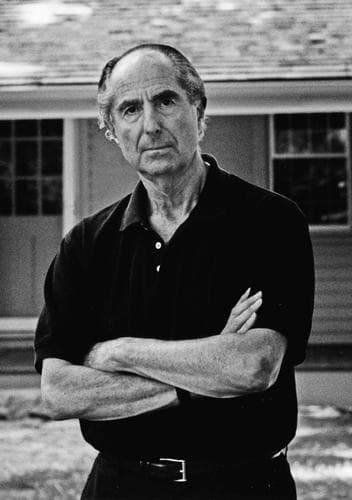
Philip Milton Roth was an American novelist and short story writer. Roth's fiction—often set in his birthplace of Newark, New Jersey—is known for its intensely autobiographical character, for philosophically and formally blurring the distinction between reality and fiction, for its "sensual, ingenious style" and for its provocative explorations of American identity. He first gained attention with the 1959 short story collection Goodbye, Columbus, which won the U.S. National Book Award for Fiction. Ten years later, he published the bestseller Portnoy's Complaint. Nathan Zuckerman, Roth's literary alter ego, narrates several of his books. A fictionalized Philip Roth narrates some of his others, such as the alternate history The Plot Against America.







