“All gods are born from the needs and beliefs of people. They are as real as you or I, and as mortal.”
— Wednesday explaining the nature of gods to Shadow Moon early in their journey.

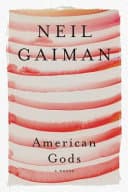
Neil Gaiman (2015)
Genre
Fantasy / Science Fiction
Reading Time
1200 min
Key Themes
See below
Sign in to track this book
An ex-convict finds a hidden world where ancient gods, forgotten by modern society, prepare for a war against new gods of technology and media across America's forgotten highways and roadside attractions.
Shadow Moon, a quiet and imposing ex-convict, is released from prison a few days early after serving a three-year sentence for aggravated assault. His early release is because his wife, Laura Moon, and his best friend, Robbie, died in a car accident. On his flight home to Eagle Point, Indiana, he meets a mysterious, one-eyed old man who introduces himself as Mr. Wednesday. Wednesday offers Shadow a job as his bodyguard and driver, hinting at a larger, more dangerous world than Shadow ever imagined. Despite his initial doubts and desire to return to a normal life, Shadow, with nothing left, accepts Wednesday's offer. He soon learns that Laura's death was not as simple as it seemed, and her ghost begins to appear, complicating his new, strange life.
Shadow's journey with Mr. Wednesday begins, taking them across America. Wednesday, a charismatic con artist, constantly recruits and haggles, his true nature slowly becoming clear. Shadow meets a variety of peculiar individuals: Czernobog, a grumpy Slavic god of darkness; the Zorya sisters, ancient Slavic goddesses of the stars; and a leprechaun named Mad Sweeney, who claims to have given Shadow a magic coin. Wednesday reveals that he is an old god, Odin, and that many other ancient deities, brought to America by immigrants, are still alive, though forgotten and diminished. Their goal is to gather these Old Gods for a war against the New Gods, who represent modern things like media, technology, and globalization. Shadow tries to understand this new reality, constantly questioning his sanity.
Laura Moon's ghost appears to Shadow, saying Mad Sweeney's coin resurrected her after her death. She confesses she was having an affair with Robbie, Shadow's best friend, and that their car crash was due to a sexual act. Her love for Shadow, however, seems to have intensified in death, and she becomes his protector, with supernatural strength and a decaying body. Her presence creates a dilemma for Shadow, as she continues to follow him, sometimes saving him from danger. This further involves Shadow in Wednesday's world, as Laura's resurrection is tied to the magical forces, and she tries to understand her purpose in this spectral existence, often clashing with Wednesday and his plans.
Wednesday's recruitment efforts lead him and Shadow to meet the New Gods. Technical Boy, the internet and technology god, and Media, the television god, confront them. These New Gods try to recruit Shadow, offering him a comfortable life if he leaves Wednesday. Shadow refuses, deepening his commitment to the Old Gods' cause. Wednesday plans a heist to get Gungnir, Odin's spear, from a heavily guarded vault. The plan involves Shadow breaking in, but it goes wrong. Shadow is captured by the New Gods, who believe he is Wednesday's accomplice in bank robberies. He is interrogated and tortured, but Laura rescues him, brutally dispatching his captors. This shows her supernatural abilities and loyalty to Shadow.
After his escape, Wednesday tells Shadow to hide in the quiet, snowy town of Lakeside, Wisconsin, using the name 'Mike Ainsel.' Shadow finds temporary peace, getting a job at a hardware store and befriending local residents like Hinzelmann, an elderly German man, and Chad Mulligan, the sheriff. But Lakeside has a dark secret: a child goes missing every year, at the start of spring. Shadow, despite trying to stay hidden, becomes involved in the mystery, noticing strange things and the town's odd isolation. He also continues to receive cryptic messages and visits from various entities, reminding him that he cannot escape the coming war between the gods, even in this seemingly peaceful place.
Shadow, while living in Lakeside, becomes more suspicious of the town's annual disappearances and the strange behavior of its residents. He eventually confronts Hinzelmann, who says he is a kobold, an ancient German house spirit. Hinzelmann confesses that he has been sacrificing a child each year to ensure the town's prosperity and keep himself strong. This ritual has been happening for decades, with the townspeople involved, either actively or through their silence, in exchange for good fortune. Shadow is horrified by this and the human cruelty he has seen, further understanding that the world is full of ancient, powerful beings who demand sacrifice and worship, regardless of morals.
Wednesday summons Shadow to Rock City, a tourist attraction in Georgia, for a large meeting of the Old Gods. Here, Shadow meets many deities from various mythologies — Norse, Egyptian, Slavic, African, and more — all diminished but still powerful. The atmosphere is tense, filled with ancient grudges and fading faith. The New Gods also arrive, represented by Media, Technical Boy, and Mr. World, the leader of the New Gods. They attempt a fragile truce, but Mr. World, a master manipulator, shows his knowledge of Wednesday's past and tries to cause trouble among the Old Gods. The meeting ends with no resolution, only a deeper sense of dread and the certainty of conflict, with both sides preparing for the final battle.
The tension grows as Wednesday continues to rally the Old Gods. During a confrontation with the New Gods, a shadowy figure brutally murders Wednesday with a spear. His death energizes the Old Gods, who see it as a declaration of war. Shadow, devastated by the loss of his employer and mentor, feels a deep sense of responsibility. He realizes that Wednesday's death was a planned move, a sacrifice meant to start the war he had been planning. This act puts Shadow in a central role, as he is now bound by Wednesday's will and the ancient traditions of sacrifice and vengeance, making him accept his destiny among the gods.
After Wednesday's death, the remaining Old Gods tell Shadow to undergo a ritualistic hanging from the World Tree, Yggdrasil, for nine days and nights, like Odin's own sacrifice to gain knowledge. This act is to honor Wednesday, revive him, and ensure spring's arrival. During his ordeal, Shadow has visions, meets various entities, and journeys through different realms, including the land of the dead where he briefly reunites with Laura. He endures great suffering, cold, and hunger, his body slowly dying. This spiritual journey helps him understand the gods, their power, and his connection to their world, shedding his human limits.
After his nine-day ordeal, Shadow is rescued and revived. He realizes that the war between the Old Gods and New Gods was a deception. Mr. World is Loki, and he, along with Wednesday (Odin), planned the entire conflict. Wednesday's death was a necessary sacrifice, an illusion to draw power from the belief of both sides. Shadow also learns his true parentage: he is Wednesday's son, making him a demigod. This explains his connection to the gods' world and his role in their schemes. The entire conflict was a con, meant to empower Odin and Loki through the belief and sacrifice from the 'war'.
With the deception exposed, the war between the Old Gods and New Gods is stopped. Loki is trapped, and the remaining gods, both old and new, disperse, their power lessened by the truth of the fraud. Shadow confronts Mr. Nancy and Czernobog, who explain the gods' existence and their reliance on human belief and sacrifice. Laura, having found peace after getting revenge on Loki for his role in her death, leaves. Shadow, now fully aware of his heritage and the world's true nature, travels to Iceland. There, he offers a prayer to his father, Odin, and begins to explore his new identity as a son of a god, finding a quiet purpose in his existence, no longer just a pawn but an active part of the hidden world of the divine.
The Protagonist
Shadow transforms from a passive, grieving ex-con into a demigod who understands and accepts his place in the world of the divine.
The Major Supporting / Antagonist (initially disguised)
Wednesday appears as a leader of the Old Gods, but is revealed to be a manipulative co-conspirator, using Shadow and others for his own gain.
The Supporting
Laura's journey from a guilty, protective ghost to finding peace and purpose by avenging her death and Shadow's suffering.
The Supporting
Sweeney goes from a drunken, complaining leprechaun to making a sacrificial act that aids Laura and Shadow.
The Antagonist
Mr. World is revealed to be Loki, the true co-conspirator behind the 'war' between the Old and New Gods.
The Antagonist
Media consistently works to sway Shadow and consolidate the power of the New Gods.
The Antagonist
Technical Boy represents the aggressive, evolving face of modern technology and its clash with the old world.
The Supporting
Czernobog reluctantly joins the Old Gods' cause, becoming a powerful but cynical ally to Shadow.
The Supporting
Mr. Nancy serves as a wise and compelling voice for the Old Gods, using his storytelling to explain their plight.
The Supporting
Mr. Ibis provides historical and mythological context, helping Shadow understand the world of the gods.
The main theme of 'American Gods' explores the link between human belief and the power of deities. Old Gods, brought to America by immigrants, are dying because their followers have forgotten them or stopped believing. The New Gods, representing modern things like media and technology, thrive because humans implicitly 'worship' them through their attention and reliance. The book shows how even mundane acts can be worship, and how the loss of faith lessens the gods. This is clear in Wednesday's desperate attempts to gather belief and the New Gods' thriving existence.
“You're going to have to make a decision, Shadow. Are you going to believe, or are you going to not believe?”
This theme drives the plot: the coming war between the Old Gods (ancient mythologies, nature, tradition) and the New Gods (technology, media, globalization). The Old Gods struggle to survive in a land that has little memory or respect for their origins, while the New Gods embody the changing nature of modern society. The conflict shows the tension between preserving cultural heritage and embracing progress, and the sacrifices made on both sides. The novel suggests that while the old may fade, the new is often built on similar foundations of human desire and attention.
“This is a bad land for Gods. It isn't the land that's bad, it's the people. Or the lack of people. The people are all stuck in their boxes, and they don't look up, and they don't look out.”
Shadow's journey is one of identity. He begins as a man without a past or purpose, a 'shadow' of his former self. As he travels with Wednesday, he must face strange realities, question his sanity, and eventually learn about his own divine parentage. His hanging on the World Tree is a symbolic and literal act of self-sacrifice and rebirth, leading to the truth of his nature as a son of Odin. This theme is also in the gods themselves, who struggle with their fading identities in a land that no longer recognizes them, forcing them to adapt or perish.
“You are a god. You were always a god. And I was always your father.”
Sacrifice appears repeatedly, from Wednesday's ritualistic death to Shadow's hanging from the World Tree. The book explores the idea that sacrifice, whether literal or metaphorical, is needed for power, knowledge, and rebirth. Odin's original sacrifice to gain wisdom is mirrored in Shadow's ordeal, which ultimately reveals his true identity and purpose. The gods themselves demand sacrifice, either as worship or offerings, to sustain their existence. The theme suggests that endings are often necessary for new beginnings, and that big change often costs a lot.
“All sacrifice is a gift. All gifts are a form of worship.”
Gaiman uses America's landscape, particularly its forgotten towns and roadside attractions, as a character. The novel explores the idea that America is a mix of cultures and beliefs, but also a land that quickly forgets its past. The Old Gods are immigrants; their stories and powers lessened by the vastness and indifference of the new world. The book critiques American consumerism, materialism, and the fleeting nature of modern attention. It suggests that beneath modernity lies a complex history, populated by the lingering echoes of ancient beliefs and the sacrifices made to build a nation.
“America is a bad land for gods. It's a land of immigrants, and they don't remember their gods.”
A journey across America used to explore its hidden mythological landscape.
The novel is structured as a road trip, with Shadow and Wednesday traveling across the diverse landscapes of America. This device allows Gaiman to introduce a wide array of Old Gods from various mythologies, each residing in a place that reflects their origins or the beliefs of their immigrant followers. The constant movement prevents Shadow from settling, mirroring his internal state of displacement and forcing him to confront the strangeness of the world. It also highlights the vastness and cultural patchwork of America, showing both its forgotten corners and its bustling modern centers where the New Gods thrive.
The story begins abruptly, with information revealed slowly to the protagonist and reader.
The novel drops the reader directly into Shadow's life just as he is released from prison, with no prior explanation of his past or the world he is about to enter. Information about the gods, their existence, and the impending war is revealed gradually, mirroring Shadow's own bewilderment and slow acceptance. This technique creates a sense of mystery and keeps the reader engaged in piecing together the larger narrative. It allows the fantastical elements to unfold organically from Shadow's perspective, making the transition from mundane reality to mythological warfare more impactful and believable.
Short, standalone chapters detailing how various gods arrived in America.
Throughout the book, Gaiman intersperses the main narrative with short, standalone chapters titled 'Coming to America.' These vignettes recount the arrival of different deities (e.g., Bilquis, Anansi, a band of Vikings carrying Odin) to the new continent, often detailing the hardships faced by their human followers and the initial struggles of the gods themselves. This device provides crucial background, illustrating the central theme of how belief fuels divine power and how various cultures contributed to America's mythological tapestry. It broadens the scope of the novel beyond Shadow's immediate journey, reinforcing the idea of a hidden, ancient history beneath modern America.
A symbolic and literal link between worlds, representing sacrifice and knowledge.
The World Tree, Yggdrasil, serves as a powerful symbol and a literal plot device. It is the tree from which Odin hung himself to gain knowledge, and Shadow's ritualistic hanging from a symbolic Yggdrasil in America mirrors this sacrifice. This act is central to his transformation and the revelation of his true identity. The tree represents the interconnectedness of all things, the cycle of death and rebirth, and the ultimate source of ancient wisdom. It is the place where profound changes occur and where the boundaries between life, death, and different realms become permeable, allowing Shadow to access deeper truths.
A seemingly simple object with profound consequences, representing fate and divine intervention.
Mad Sweeney's magic coin, initially presented as a mundane trinket, becomes a pivotal plot device. Shadow inadvertently keeps it, and it is this coin that resurrects Laura, bringing her back as a ghost. The coin represents the unpredictable nature of fate and the subtle ways in which divine power can alter human lives. It is a catalyst for many events, linking Shadow's personal tragedy to the larger conflict of the gods. Its loss by Sweeney and its subsequent use highlight the interweaving of human and divine actions, and how seemingly small magical objects can have monumental consequences.
“All gods are born from the needs and beliefs of people. They are as real as you or I, and as mortal.”
— Wednesday explaining the nature of gods to Shadow Moon early in their journey.
“Everywhere in America, there are gods. They have been brought here by the immigrants, and they have been forgotten. And they have been changed.”
— Wednesday's overarching thesis about the old gods in America.
“The thing about America is, it’s like a dog. You can teach it to do all sorts of tricks, but it’s still a dog. And it’ll still bite you if you get too close.”
— Mr. Nancy offering his perspective on the nature of America.
“And the point is, if you are a god, and you’re in America, then you’re not really a god anymore. You’re just a forgotten dream.”
— Shadow contemplating the fate of the old gods.
“What are the new gods, you ask? They are the gods of media, of the internet, of celebrity, of credit cards and highways.”
— Mr. World introducing the concept of the New Gods to Shadow.
“The land remembers. The land remembers everything. And the people remember nothing.”
— A recurring theme about the deep memory of the land versus human forgetfulness.
“You're a god, Shadow. You just haven't figured out what kind yet.”
— Whispered to Shadow by a mysterious figure, hinting at his true parentage.
“There are no good guys and bad guys. There are just guys. And they all want something.”
— Wednesday's cynical view of the motivations behind the coming war.
“It’s not a war, not really. It’s a sacrifice. And someone has to be the sacrifice.”
— The true nature of Wednesday's plan for the gods.
“The safest place for a god is in the minds of people. Once they're out, they're vulnerable.”
— A reflection on the source of a god's power and vulnerability.
“To die is to wake up from the dream of life.”
— Laura Moon's perspective on her own death and existence as a revenant.
“Gods don't die. They just... fade. Or they get forgotten.”
— A common explanation for the decline of the old gods.
“Every town has its share of secrets, and its share of gods.”
— Shadow observing the hidden layers of small-town America.
“The future is a thing that is about to happen. It is not something that is waiting for you.”
— A moment of philosophical reflection on the nature of time.
Ready to see how well you understood this book? Take our interactive quiz with 10 questions.
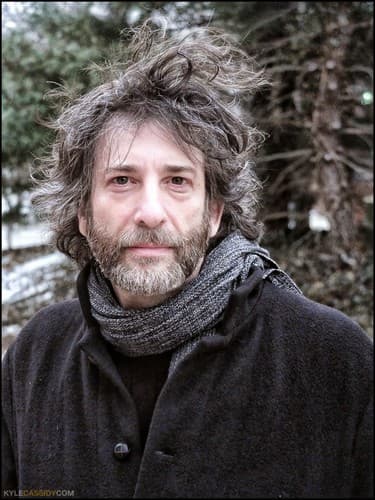
Neil Richard MacKinnon Gaiman is an English author of short fiction, novels, comic books, graphic novels, audio theatre, and a screenwriter. His works include the comic book series The Sandman and the novels Good Omens, Stardust, Anansi Boys, American Gods, Coraline, and The Graveyard Book. He has won numerous awards, including the Hugo, Nebula, and Bram Stoker awards, as well as the Newbery and Carnegie medals. He is the first author to win both the Newbery and the Carnegie medals for the same work, The Graveyard Book (2008). In 2013, The Ocean at the End of the Lane was voted Book of the Year in the British National Book Awards. It was later adapted into a critically acclaimed stage play at the Royal National Theatre in London.







