“He knew that what was born in him was a geologic fault in the earth itself and he felt a kinship with it and he knew that it was his to bear.”
— John Grady Cole's deep, almost fated connection to horses and a certain way of life.

Cormac McCarthy (2010)
Genre
Literary Fiction / Historical Fiction
Reading Time
6-8 hours
Key Themes
See below
Sign in to track this book
In post-WWII Texas, sixteen-year-old John Grady Cole, the last in a ranching family, rides south with his friends into a beautiful but brutal Mexico. There, the romantic ideal of the cowboy clashes with the harsh realities of fate and violence.
In 1949, sixteen-year-old John Grady Cole lives on his grandfather's ranch in San Angelo, Texas. When his grandfather dies, John Grady learns his mother, who lives separately and has remarried, plans to sell the ranch. This news devastates him; the ranch represents his heritage and the only life he has known. He tries to appeal to his mother's lawyer, but the decision is final. Feeling lost and disappointed with the changing American West, John Grady decides to leave Texas. He seeks a life where horses and traditional values still matter, looking to Mexico as a place of opportunity and adventure. He tells his best friend, Lacey Rawlins, about his plan.
John Grady Cole and Lacey Rawlins, both sixteen, pack their few belongings, saddle their horses, and head for Mexico. Their journey starts with youthful hope as they explore the vast, wild land. Along the way, they meet a younger boy, Jimmy Blevins, riding a magnificent but nervous horse. Blevins is clearly disturbed, carrying a pistol and speaking strangely. Despite their concerns about his unstable nature, John Grady and Rawlins reluctantly let Blevins join them. This is partly out of responsibility and partly because Blevins seems to have nowhere else to go. This decision adds a risky element to their otherwise peaceful travels.
During a severe thunderstorm, lightning strikes Jimmy Blevins. His horse bolts and disappears, along with his pistol. Deeply upset and convinced he will die without his horse, Blevins becomes agitated and insists they go back to search for it. John Grady and Rawlins, though worried about the delay and danger, agree to help him. They eventually find the horse and pistol, but Blevins's reckless and violent actions during the retrieval, including shooting a man he believes stole his items, attract unwanted attention. Fearing the consequences, John Grady and Rawlins are forced to leave Blevins behind.
John Grady and Rawlins continue south and arrive at a large, successful hacienda, La Purísima, owned by Don Héctor Rocha y Villarreal. They impress Don Héctor with their expert horsemanship and are hired as vaqueros. John Grady quickly proves to be an exceptional horse trainer, earning the respect of other vaqueros and Don Héctor. Life at the hacienda is pleasant, a return to the traditional cowboy life John Grady values. He thrives there, feeling a sense of belonging and purpose he lost in Texas. This time is a brief, almost perfect part of their adventure.
While working at La Purísima, John Grady meets Alejandra, Don Héctor's beautiful and cultured daughter. Despite their large social and economic differences, and the clear understanding that a relationship would be forbidden, John Grady and Alejandra are drawn to each other. Their romance unfolds in secret, with hidden meetings and stolen moments. Alejandra, educated and worldly, appeals to John Grady in a new way. Their affair, though passionate, is dangerous. Don Héctor's strict moral code and his family's societal expectations make their relationship a risky violation. This secret love affair becomes central to John Grady's emotional life at the hacienda.
The peaceful life at La Purísima ends when Mexican authorities suddenly arrest John Grady and Rawlins. They are accused of murder and other crimes. They soon realize these charges come from Blevins's earlier violent actions and his return to the hacienda to get his pistol. Don Héctor, despite his previous respect for John Grady, abandons them, unwilling to risk his family's reputation. Stripped of their horses and belongings, John Grady and Rawlins are thrown into a brutal Mexican prison, facing harsh conditions and constant danger. Their arrest marks a dramatic shift from freedom to extreme confinement and peril.
Inside the prison, John Grady and Rawlins face extreme violence, corruption, and the constant threat of death. Other prisoners target them, forcing them into brutal fights for survival. Rawlins is badly wounded in an attack. John Grady, to protect himself and his friend, kills several men in self-defense. The experience is terrifying, taking away their innocence and showing them the darkest parts of human nature. They see Blevins, also imprisoned, taken away and executed by the corrupt captain. This time in prison changes John Grady deeply, hardening him and forcing him to face the world's harsh realities.
Through Alejandra's great-aunt, Alfonsa, John Grady and Rawlins are eventually released from prison, though Rawlins is still very ill. Alfonsa reveals she paid a large bribe for their freedom but makes it clear that John Grady must never see Alejandra again. John Grady manages to meet Alejandra one last time. She confirms that her family's honor and her own future are most important. Despite her lingering feelings, she tells him they cannot be together. This conversation, full of regret and the weight of their different worlds, marks the definite end of their romance, leaving John Grady heartbroken and alone.
After Rawlins returns to Texas, John Grady, still affected by Alejandra's rejection and the injustice of his imprisonment, decides he cannot leave Mexico until he gets back what was stolen from him: his and Rawlins's horses and Blevins's pistol, which he feels responsible for. He confronts the corrupt captain who oversaw their imprisonment and Blevins's execution. Through cleverness, negotiation, and implied threats, John Grady manages to get back the horses and the pistol. This act shows his resilience and determination to correct wrongs, reclaiming some of his lost honor.
With the horses he got back, John Grady begins his long journey back to Texas. The ride is solitary and thoughtful, a sharp contrast to his hopeful departure. He meets various people along the way; some are kind, others suspicious. He shares his story with a judge, who listens with skepticism and understanding. John Grady's experiences in Mexico have matured him, but they have also left him with deep scars. He has lost his innocence, his love, and some of his belief in a romanticized West. He returns to a world that has changed irreversibly, both within himself and in his home landscape, now without the ranch he once cherished.
The Protagonist
John Grady transforms from an idealistic, naive youth into a hardened but still principled man, losing his innocence but gaining a deeper understanding of the world's harshness and the nature of justice.
The Supporting
Rawlins's youthful optimism is shattered by the horrors of prison, leading him to prioritize safety and return to the familiar, contrasting with John Grady's continued quest for justice.
The Supporting
Alejandra grapples with her desire for John Grady and her duty to her family, ultimately choosing the latter and reinforcing the social barriers that separate them.
The Supporting
Blevins's brief arc demonstrates the destructive power of unaddressed trauma and the swift, brutal consequences of violence in the unforgiving landscape.
The Supporting
Don Héctor remains a static character, representing the unyielding social structures and traditional values that ultimately dictate the fate of John Grady's dreams.
The Supporting
Alfonsa's arc reinforces the power of tradition and social order, acting as the wise, albeit stern, arbiter of fate for John Grady and Alejandra.
The Antagonist
The Captain's static character serves as a persistent force of corruption and injustice that John Grady must overcome to reclaim his honor and property.
The Mentioned
The Judge provides a brief, non-judgmental space for John Grady to process his experiences, offering a symbolic moment of closure and transition.
The novel shows the fading time of the traditional cowboy and the closing of the frontier. John Grady's journey begins with the sale of his family ranch, which symbolizes the end of a way of life. Mexico at first offers a romantic escape, a chance to live the cowboy ideal. However, the brutal realities of prison and losing Alejandra force John Grady to face the truth: innocence and idealism cannot survive unharmed. He returns to Texas a changed man, having seen and taken part in violence, losing his youthful innocence, and facing a world where his values are becoming obsolete.
“What he loved in horses was what he loved in men, the blood and the heat of them, the something that was beyond all training and all restraint.”
McCarthy often compares formal legal systems with a more basic, often violent, form of justice. In Mexico, John Grady and Rawlins face a corrupt legal system where accusations are random, and innocence means nothing. Blevins is executed without a fair trial. John Grady, however, follows his own code of justice. He takes matters into his own hands to get back his and Rawlins's horses and Blevins's pistol from the corrupt captain. This act, though outside the law, is deeply moral for John Grady. It highlights the novel's question of whether true justice can exist in a world without fair laws.
“The world is not a place where people are paid for their good intentions.”
The characters, especially John Grady and Alfonsa, often discuss fate and whether people truly control their lives. Alfonsa believes in an almost predetermined path, influenced by family and circumstances, suggesting John Grady's love for Alejandra was always doomed. John Grady, however, consistently makes choices that move him forward, even into danger. This shows a strong will to shape his own life and seek his own justice. The novel suggests a complex interaction: outside forces may dictate circumstances, but individual character and choices ultimately define one's response.
“The world is not a game of cards. You are not dealt a hand and then you play it. There is a deck of cards, yes, but you are not dealt a hand. You are dealt a hand and then you play it, yes. But you also play the cards of others. And you play the cards of God.”
The romance between John Grady and Alejandra is key to the novel's emotional heart. Their love is passionate and real but ultimately fails due to huge social and cultural barriers. Losing Alejandra leaves John Grady heartbroken. It represents the painful truth that love alone cannot overcome deep societal divisions. This theme extends to the loss of the ranch, Rawlins's innocence, and Blevins's tragic death. The novel portrays love as a powerful, transforming force, but also one vulnerable to the world's harsh realities, often ending in deep and lasting sorrow.
“He knew that in the end, it was not the world that was in question but his own heart.”
A physical and spiritual journey into the unknown.
The literal journey from Texas to Mexico and back serves as the central structural element of the novel. This physical journey mirrors John Grady's spiritual and psychological transformation. As he travels south, he encounters different landscapes, cultures, and moral complexities, which strip away his innocence and force him to confront the harsh realities of life. The return journey is one of reflection and reckoning, marking his coming-of-age and his understanding of the world's unforgiving nature. The journey is not just about reaching a destination but about the profound changes experienced along the way.
Subtle hints and warnings of future danger and tragedy.
McCarthy employs subtle foreshadowing throughout the narrative, often through the landscape itself or the dialogue of minor characters. The initial encounter with Blevins, and Rawlins's immediate apprehension about him, hints at the trouble he will bring. The stark, often brutal descriptions of the Mexican landscape and the casual mentions of violence by the vaqueros subtly prepare the reader for the darker events to come. Alfonsa's philosophical discussions about fate also foreshadow the predetermined end of John Grady's relationship with Alejandra, creating a sense of impending doom that permeates the narrative.
Horses represent freedom, purity, and a vanishing way of life.
Horses are central to John Grady's identity and symbolize the purity, freedom, and traditional values he seeks. They represent the last vestiges of the untamed West and a connection to a more authentic existence. John Grady's exceptional skill with horses signifies his innate goodness and his understanding of a natural order. The loss of the horses, their eventual reclamation, and the very act of riding across vast landscapes are all deeply symbolic of John Grady's quest for identity, his struggles with injustice, and his enduring connection to a world that is rapidly disappearing. They are both tools and spiritual companions.
A pervasive force of arbitrary power and violence in Mexico.
The Mexican justice system functions as a major plot device, driving the conflict and shaping John Grady's experiences. It is portrayed as arbitrary, violent, and deeply corrupt, contrasting sharply with John Grady's inherent sense of fairness. His imprisonment, the unjust accusations, and Blevins's execution are direct consequences of this system. This device forces John Grady to adapt, to fight for survival, and ultimately to seek his own form of justice outside of official channels, highlighting the novel's themes of morality and the harsh realities of the world.
“He knew that what was born in him was a geologic fault in the earth itself and he felt a kinship with it and he knew that it was his to bear.”
— John Grady Cole's deep, almost fated connection to horses and a certain way of life.
“The world of men is a hard school, and what it teaches is a hard lesson.”
— Reflecting on the harsh realities and brutal experiences the young men face.
“Scars have the strange power to remind us that our past is real.”
— Thinking about the physical and emotional scars left by their journey.
“He thought that in the beauty of the world were hid a secret which would explain for him all things that were dark, and that he would be able to find it.”
— John Grady's youthful idealism and search for meaning amidst beauty.
“The wind was a cold ghost on the plain.”
— Describing the desolate and atmospheric landscape of the Texas/Mexico border.
“It was a good horse and it was a good country and they were good men. And the world was all of a piece.”
— John Grady's simple yet profound appreciation for life on the ranch before it ends.
“What he loved in horses was what he loved in men, the blood and the heat of them.”
— John Grady's intense connection to the raw, vital essence of life.
“But a man's at odds to know what to do. Every which way you look at it you lose.”
— A character's reflection on the difficult choices and inevitable losses in life.
“He understood that the world was a thing of blood and of fire and that they were but playthings in it.”
— A stark realization of humanity's vulnerability in a brutal world.
“The closest he'd come to human law was the law of the horse.”
— Highlighting John Grady's primary moral compass, derived from his life with horses.
“He stood for a long time watching the country and the slow darkening of the sky and he thought that perhaps the world had been made for this.”
— John Grady's contemplative moments, finding profound meaning in the landscape.
“He thought that the only thing that could be said of love was that it was a fierce and beautiful thing, and that it was a thing to be endured.”
— Reflecting on the painful and powerful nature of love experienced by the characters.
“There is no such thing as a last ride. There is only the ride you are on.”
— A philosophical outlook on life's continuous journey and the absence of finality.
“He saw that the world was not a thing to be known but a thing to be endured.”
— A shift in John Grady's perspective from youthful idealism to a more stoic acceptance of life's hardships.
Ready to see how well you understood this book? Take our interactive quiz with 10 questions.
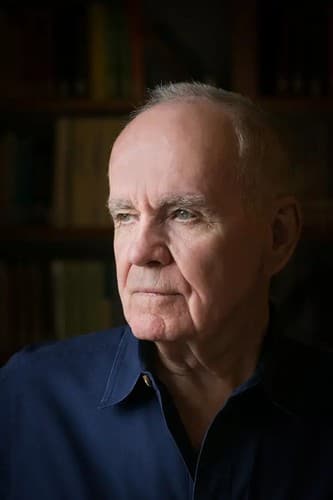
Cormac McCarthy was an American writer who authored twelve novels, two plays, five screenplays, and three short stories, spanning the Western and postapocalyptic genres. He was known for his graphic depictions of violence and his unique writing style, recognizable by a sparse use of punctuation and attribution. McCarthy is widely regarded as one of the greatest American novelists.







