“The greatest trick the Devil ever pulled was convincing the world he didn't exist. The greatest trick the Djinn ever pulled was convincing the world they were not human.”
— A reflection on the nature of the unseen and human perception.

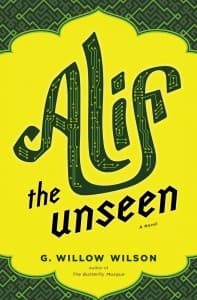
G. Willow Wilson (2012)
Genre
Fantasy / Spirituality / Science Fiction / Young Adult
Reading Time
10-12 hours
Key Themes
See below
Sign in to track this book
A young hacker in a Middle Eastern security state finds an ancient book of jinn, pulling him into a dangerous world of unseen forces and government surveillance as he fights to save himself and his clients.
Alif, a young Arab-Indian hacker in an unnamed Middle Eastern security state, protects dissidents and outlaws from the regime's surveillance. He uses the alias 'Alif' to stay anonymous. His world changes when state security breaches his computer systems, threatening to expose his clients and himself. At the same time, his aristocratic lover, Indrani, leaves him for a prince chosen by her parents. This double blow of professional danger and personal betrayal leaves Alif vulnerable, starting his desperate escape.
Alif discovers that Indrani's new fiancé is the 'Hand of God,' the head of state security who has been hunting him. This news makes Alif's situation worse, as the Hand's personal vendetta now combines with the state's pursuit. Realizing the immediate danger, Alif leaves his apartment and goes into hiding. He seeks refuge in the city's hidden alleys, using his street smarts and network of contacts from his hacking work to avoid capture by the Hand's agents.
While on the run, Alif seeks help from his childhood friend, Vikram, a computer technician. During his escape, he meets Dina, his conservative veiled neighbor, who unexpectedly offers him shelter. Through Dina, Alif finds a mysterious, ancient book called 'The Thousand and One Days.' This book is an old manuscript rumored to contain the secrets of the jinn, supernatural beings from Islamic mythology. Alif, at first doubtful, starts to realize the book has power beyond human understanding, drawing the attention of both human and unseen forces.
As Alif studies 'The Thousand and One Days,' he and Dina become more exposed to the hidden world of the jinn. They meet various jinn, some good, some bad, who live in the city's hidden spaces. Alif learns that the jinn follow different laws of physics and perception, and their world often crosses into the human world in subtle ways. Dina, with her strong faith and cultural knowledge, is a guide in this new, frightening reality. Alif struggles to connect his logical, tech-focused view with the ancient magic around him.
The Hand of God is also obsessed with 'The Thousand and One Days.' He believes the book holds not just old stories, but the key to a new level of information technology, a way to achieve complete surveillance and control over all information and communication in the state. His hunt for Alif is now tied to his desire to own the book and unlock its secrets. The Hand's technological skill and ruthless methods make him a strong opponent, as he uses the state's resources to track Alif and the book, unaware of the true, supernatural nature of what he seeks.
Following clues in 'The Thousand and One Days' and advice from the jinn they meet, Alif and Dina begin a dangerous journey. Their quest leads them to a legendary 'City of Jinn,' a hidden place where human and jinn worlds meet. This journey is full of danger, both from the Hand's pursuit and from the unpredictable jinn. Along the way, Alif starts to rely less on pure logic and technology, opening himself to the spiritual and mystical parts of existence, while Dina faces her own faith and courage.
In the City of Jinn, Alif and Dina meet with the ancient jinn elders, hoping to understand the true purpose and power of 'The Thousand and One Days.' They learn that the book is not just for technology, but a bridge between worlds, a way to control reality itself through language and belief. The elders explain the great responsibility that comes with such knowledge and warn of disaster if it falls into the wrong hands, especially those driven by human ambition and control like the Hand.
Indrani, who at first seems like a disloyal lover, has a more complex role. She is not just a pawn in her parents' political games but has her own reasons for marrying the Hand, perhaps to gain access or information. Her actions, though painful to Alif, come from a deeper understanding of the political situation and the Hand's plans. She eventually plays a key, though morally unclear, part in Alif's fight against the Hand, showing that her loyalties are not as simple as they first appeared, and suggesting a chance for redemption or a darker goal.
The story's climax brings Alif, Dina, and their jinn allies into a direct fight with the Hand of God and his state security forces. The battle is not only physical; it is a clash of ideas, ancient magic versus modern technology, and freedom versus absolute control. The Hand tries to use his understanding of the book, which is superficial, to turn information and surveillance into weapons. Alif, now more connected to the jinn's world, must use his hacking skills with the jinn's spiritual power to counter the Hand's pursuit of power and stop him from starting a terrifying new era of digital totalitarianism.
In a final struggle, Alif and Dina, with help from the jinn, defeat the Hand of God. The victory is hard-won and involves sacrifices. The Hand's attempts to control the book's power lead to his downfall, as he cannot grasp or control the jinn's true, spiritual magic. Alif, having traveled through both digital and spiritual realms, is changed. He no longer hides behind his alias but embraces his identity, understanding that real power comes not from anonymity or control, but from connection, faith, and accepting the unseen.
The Protagonist
Alif transforms from a cynical, tech-dependent hacker into a spiritual seeker who bridges the gap between the digital and the mystical, accepting the unseen forces that shape his world.
The Supporting
Dina steps out of her sheltered life to become a brave and essential companion, using her faith and intuition to guide Alif through the jinn world.
The Antagonist
The Hand remains static in his ambition for absolute control, ultimately leading to his downfall when he misinterprets and misuses the jinn's power.
The Supporting
Indrani's character arc reveals her as more than just a jilting lover, hinting at a deeper, more complicated involvement in the political machinations and a potential for subtle acts of resistance.
The Supporting
Vikram remains consistently loyal and rational, serving as a foil to Alif's spiritual journey while still providing essential support.
The Supporting
The Vizier acts as a consistent guide and source of ancient wisdom, facilitating Alif's understanding of the jinn world without undergoing significant personal change.
The Supporting
Newmark introduces a modern, digital facet to the jinn world, demonstrating how ancient concepts can manifest in new technological forms without a distinct personal arc.
The Supporting
The Caller serves as a mystical guide through sensory experiences, facilitating Alif's connection to the jinn world.
The novel explores the meeting of advanced hacking and ancient jinn lore. Alif, a hacker, first relies on logic and code, but his journey makes him see that information and control can also exist in spiritual, unseen realms. The Hand sees 'The Thousand and One Days' as a tech blueprint, while Alif learns it is a key to understanding reality through language and belief. This theme is shown by jinn like Newmark, who exists within the internet, demonstrating how the spiritual adapts to and influences the digital, blurring the lines between science fiction and fantasy.
“What is the internet, after all, but a net that has caught every human being on the planet? A net that has caught the jinn, too.”
A main conflict is the fight for individual freedom against state control. Alif, as a hacker, supports privacy and anonymity, protecting those targeted by the regime. The Hand of God represents the desire for control, aiming to surveil and manipulate every part of his citizens' lives through technology. The jinn, as ancient, untamable forces, contrast with this desire for human control, suggesting that some parts of existence will always be beyond human authority. The battle for 'The Thousand and One Days' becomes a symbol for this larger ideological war.
“All information wants to be free. And all information wants to be controlled. Those are the two great forces of the universe.”
Alif's alias, 'Alif,' shows his wish for anonymity and his role as a hidden part of the digital resistance. Throughout the story, he deals with the consequences of hiding his true self versus being open about his identity. The jinn, who often operate unseen and in disguise, further explore this theme, showing the power and risks of hidden identities. By the end, Alif's journey is about letting go of the need for anonymity, recognizing that real strength comes from being authentic and connected, not from hiding behind a digital mask or an alias.
“I was Alif, the first letter of the alphabet, the first thing, the thing you could not do without. And I was nothing.”
The novel highlights the power of language, especially Arabic and sacred texts. 'The Thousand and One Days' is not just information but a living text, whose words can shape reality and open doors to other dimensions. The jinn themselves are often linked to words and spells. Dina's strong faith and understanding of religious texts help her navigate the jinn world more easily than Alif, showing how belief systems and the language used to express them can be strong tools for understanding and interacting with the unseen. The act of reading and interpreting the book becomes a transformative experience.
“Words are not just sounds, Alif. They are living things. They have power.”
The book mixes Islamic mysticism, Middle Eastern folklore, and modern technology. It shows a world where ancient jinn exist with the internet, where deep religious beliefs guide interactions with supernatural beings, and where traditional customs like the veil (Dina) are presented alongside modern issues of surveillance and hacking. This blend enriches the story, showing that spirituality and folklore are not just from the past but continue to shape the present. It offers a unique view on how different cultural and religious elements can intertwine in a modern fantasy setting.
“The jinn were here before us, Alif. They will be here after us. And they are everywhere in between, if you only know where to look.”
An ancient, mystical book that serves as the central MacGuffin.
This ancient manuscript is the central plot device driving the narrative. It is initially introduced as a legendary text containing the secrets of the jinn. For Alif, it becomes a guide to an unseen world and a source of profound spiritual revelation. For the Hand of God, it represents the ultimate tool for information control and a new frontier in surveillance technology. The book acts as a bridge between the digital and the mystical, a source of conflict, and a catalyst for the characters' transformations, constantly revealing new layers of its power and meaning.
A literal and metaphorical symbol of unseen presence and protection.
The veil, worn by Dina, functions both literally as a piece of clothing and metaphorically. Literally, it allows Dina to move through the world with a degree of anonymity and protection, particularly from the male gaze. Metaphorically, it represents the unseen, the hidden, and the spiritual dimensions that Alif initially dismisses. It also symbolizes the 'unseen' world of the jinn, which often remains hidden from human perception. The veil thus becomes a symbol of spiritual insight and a reminder that not everything is visible or immediately apparent.
The primary skill of Alif, representing modern forms of power and resistance.
Hacking and encryption are Alif's primary tools and define his initial identity. They represent the modern equivalent of magic or power in the digital age, allowing him to protect the vulnerable and resist the oppressive state. This device highlights the novel's blend of technology and fantasy, suggesting that manipulating code can be as potent as ancient spells. As the story progresses, Alif's hacking skills become paralleled with the 'hacking' of reality by the jinn, demonstrating that control over information, whether digital or spiritual, is a form of immense power.
A dystopian setting that provides the backdrop for the conflict.
The unnamed Middle Eastern security state serves as a crucial plot device, creating the oppressive atmosphere and the initial conflict. Its pervasive surveillance and ruthless 'Hand of God' antagonist establish the stakes for Alif's fight for freedom and privacy. The anonymity of the state allows it to represent any authoritarian regime, making the themes of surveillance and control universally resonant. The setting grounds the fantastical elements in a recognizable, albeit heightened, political reality, making the struggle feel immediate and relevant.
“The greatest trick the Devil ever pulled was convincing the world he didn't exist. The greatest trick the Djinn ever pulled was convincing the world they were not human.”
— A reflection on the nature of the unseen and human perception.
“Every human being has a Djinn twin. A qareen. They are born with us, and they die with us, and they see everything we do.”
— Explaining the concept of the qareen, a spiritual companion.
“The internet was a vast and wild forest, full of hidden paths and dangerous creatures.”
— Alif's perspective on the digital world he navigates.
“What is freedom, after all, but the right to choose your own chains?”
— A cynical observation on the nature of liberty and limitations.
“Stories were like water. They found the cracks, they seeped in, they eroded the foundations.”
— Discussing the power and subversive nature of narratives.
“Sometimes the most powerful magic is just the truth, spoken at the right time.”
— Alif realizing the impact of honesty in a world of deception.
“The city itself was a kind of Djinn, ancient and watchful, full of secrets.”
— Describing the mystical atmosphere of the unnamed Middle Eastern city.
“There are some things that even the most advanced technology cannot understand, cannot replicate. The human heart is one of them.”
— Contrasting the limitations of technology with human emotion.
“To be truly unseen is not to be invisible, but to be overlooked. To be dismissed.”
— A poignant reflection on the feeling of being marginalized.
“The world was full of signs, if you only knew how to read them.”
— Alif's growing awareness of the spiritual and hidden layers of reality.
“Love was a language, and like any language, it could be learned, forgotten, or spoken badly.”
— A metaphorical take on the complexities of romantic relationships.
“Sometimes the greatest acts of rebellion are the quietest.”
— Highlighting subtle forms of resistance against oppression.
“You cannot fight a ghost with a gun. You fight a ghost with a name.”
— Emphasizing the importance of understanding and identity in confronting the unknown.
“The future was not a straight line, but a tangled web, where every choice sent ripples.”
— A meditation on the interconnectedness of decisions and destiny.
Ready to see how well you understood this book? Take our interactive quiz with 10 questions.

Biography coming soon.







