“Why, sometimes I've believed as many as six impossible things before breakfast.”
— The White Queen to Alice about practicing believing impossible things.

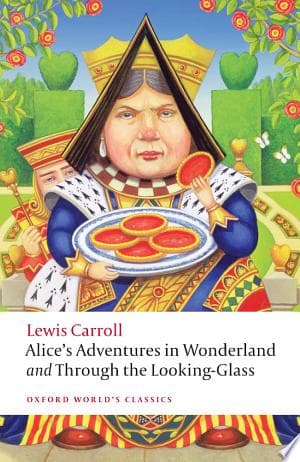
Lewis Carroll (2015)
Genre
Fantasy / Children's / Young Adult
Reading Time
120 min
Key Themes
See below
Sign in to track this book
A curious girl falls down a rabbit hole into a whimsical world of mad tea parties, talking animals, and a tyrannical queen, all while trying to make sense of her fantastical surroundings.
One warm summer afternoon, young Alice sits on the riverbank with her sister, bored as her sister reads a book without pictures or conversations. Suddenly, a White Rabbit with pink eyes, dressed in a waistcoat and muttering to himself about being late, runs past her. Curious, Alice follows the Rabbit as he pops down a large rabbit-hole. Without thinking, she tumbles down after him, falling for a surprisingly long time. During her fall, she notices shelves, maps, and even a jar of marmalade, wondering if she will ever reach the bottom or if she will fall through the Earth to the Antipathies. She eventually lands in a long, low hall with many locked doors.
In the hall, Alice finds a tiny golden key that fits a small door, showing a beautiful garden. However, she is too large to fit through. She then finds a bottle labeled 'DRINK ME,' which makes her shrink enough for the door, but she forgets the key on the table. Frustrated, she eats a cake labeled 'EAT ME,' causing her to grow very large, hitting her head on the ceiling. Overwhelmed, Alice starts to cry, making a large pool of tears. She shrinks again, this time from fanning herself with a fan she found, and nearly drowns in her own tears. She meets a Mouse, who is also swimming in the pool.
Alice, the Mouse, and other animals and birds — including a Dodo, a Lory, and an Eaglet — struggle out of the Pool of Tears onto the bank. To dry everyone off, the Dodo suggests a 'Caucus-race.' The race involves everyone running around in a circle as they please, for an arbitrary amount of time, with no clear winner or loser, until the Dodo says it is over. After the race, everyone wins and gets a thimble from Alice. The Mouse then tries to tell a long, confusing story about why he hates cats and dogs, which Alice interrupts with tales of her own cat, Dinah, scaring off the other animals.
The White Rabbit reappears, frantically looking for his gloves and fan, mistaking Alice for his maid, Mary Ann, and telling her to get them from his house. Alice, confused but obedient, goes to his small cottage. Inside, she finds another bottle and, despite her earlier experiences, drinks from it. This makes her grow so large that her arm shoots out the window and her leg up the chimney, completely filling the house and trapping her. The White Rabbit and his gardener, Pat, try to get her out by throwing pebbles, which turn into small cakes. Alice eats one, shrinks, and escapes, only to be chased by a crowd of animals.
After escaping the Rabbit's house, Alice wanders into a wood and meets a large blue Caterpillar sitting on a mushroom, smoking a hookah. The Caterpillar is rude and philosophical, asking Alice who she is and why she keeps changing size. He asks her to recite 'You Are Old, Father William,' which she does incorrectly. Before crawling away, the Caterpillar tells Alice that one side of the mushroom will make her grow taller and the other side will make her grow shorter. Alice tries the mushroom pieces, shrinking and growing erratically, almost losing her temper, until she gets back to her normal height.
Alice finds herself outside a house, where a Fish-Footman delivers an invitation to a Frog-Footman. She enters to find a chaotic scene in the Duchess's kitchen: a cook throwing dishes, a baby sneezing constantly because of pepper, and the Duchess singing a lullaby while rocking the screaming infant. The Cheshire Cat is also there, grinning. The Duchess is rude and violent, eventually tossing the baby to Alice. Alice takes the baby outside, only for it to change into a pig in her arms. She then meets the Cheshire Cat again, who tells her to go to the Mad Hatter's tea party.
Alice approaches a long table set for a tea party, where the Mad Hatter, the March Hare, and a sleeping Dormouse are seated. They tell her there's 'no room,' despite plenty of space. The party is chaotic, always stuck at six o'clock (tea-time) because the Hatter had a fight with Time. They ask Alice unanswerable riddles, tell nonsensical stories, and offer her imaginary tea. The Dormouse occasionally speaks up with irrelevant remarks about treacle. Alice finds their conversation frustrating and illogical, eventually giving up on trying to understand it and leaving in disgust, calling it the stupidest tea-party she has ever attended.
Alice wanders into a beautiful garden where she sees three gardeners painting white roses red, fearing the Queen of Hearts' anger if she finds out they planted the wrong color. The Queen of Hearts, a tyrannical and short-tempered monarch, arrives with her group, often ordering 'Off with his head!' for small mistakes. Alice is invited, or rather commanded, to play croquet. The game is utterly chaotic: the mallets are flamingos, the balls are hedgehogs, and the hoops are soldiers bent double. Everyone cheats, the Queen constantly threatens beheadings, and the game quickly becomes pandemonium, with no one following any rules.
The Queen, still angry and demanding beheadings, orders Alice to be taken by the Gryphon to meet the Mock Turtle. The Gryphon is friendly but equally nonsensical. They find the Mock Turtle, who is always sad and sighs mournfully. The Mock Turtle tells about his 'education' at a school under the sea, describing strange subjects like 'Reeling and Writhing,' 'Ambition, Distraction, Uglification, and Derision.' He also sings the sad song 'Turtle Soup.' Alice finds his stories and songs confusing and full of puns, but listens patiently, though she struggles to understand the logic behind his tales.
Alice is suddenly called to a courtroom where the Knave of Hearts is on trial, accused of stealing the Queen's tarts. The King of Hearts serves as judge, helped by the White Rabbit as herald. The jury has various animals who are easily distracted. Witnesses include the Mad Hatter, who gives confusing and irrelevant testimony about tea, and the Duchess's cook, who only says that tarts are made of pepper. Alice, having grown very large again, feels stifled and is called as a witness, but her testimony is dismissed as unimportant. The King tries to introduce a nonsensical 'Rule 42' to condemn the Knave.
During the trial, the King tries to apply a nonsensical rule, and the White Rabbit reads some anonymous verses that implicate the Knave, though the logic is weak. Alice, now huge and feeling angry about the absurdity of the trial, says they are 'nothing but a pack of cards!' The entire deck of cards rises into the air and flies down upon her. Alice screams and finds herself awake on the riverbank, with her head in her sister's lap. Her sister gently brushes away some leaves, and Alice tells her extraordinary dream. Her sister then dreams of Alice's adventures herself, thinking about the 'simple and loving heart' of her little sister.
The Protagonist
Alice begins as a bored child and develops into a more assertive character who challenges the absurdity around her, ultimately rejecting it as a dream.
The Supporting
Remains consistently anxious and hurried, serving as a catalyst and minor authority figure throughout Alice's journey.
The Antagonist
Remains a consistently tyrannical and irrational ruler, serving as the primary source of conflict and threat.
The Supporting
Serves as a recurring, unchanging source of philosophical and perplexing commentary.
The Supporting
Remains static in his madness, perpetually hosting the tea party.
The Supporting
Remains static in his madness, perpetually attending the tea party.
The Supporting
Remains sleepy and contributes nonsensical remarks throughout the tea party.
The Supporting
Offers a moment of guidance and philosophical questioning before disappearing.
The Supporting
Transforms from a violent, ill-tempered figure to an overly moralizing one.
The Supporting
Remains a consistently mournful and nostalgic figure.
Alice's journey focuses on her struggle with identity. Her constant changes in size make her question 'Who am I?', forcing her to re-evaluate her sense of self. Characters like the Caterpillar directly ask 'Who ARE you?' Alice's internal thoughts show her attempts to keep a consistent sense of self amidst the external chaos and physical changes. This theme explores how identity changes in childhood and the search for self amidst confusing experiences.
“'Who are YOU?' said the Caterpillar. This was not an encouraging opening for a conversation. Alice replied, rather shyly, 'I—I hardly know, sir, just at present—at least I know who I WAS when I got up this morning, but I think I must have been changed several times since then.'”
The main conflict of the book is Alice's attempts to apply her Victorian-era logic and common sense to the illogical world of Wonderland. From the Caucus-race to the Mad Hatter's tea party and the Queen's croquet game, every interaction defies rational understanding. Alice's frustration at the lack of rules, consistency, and polite conversation highlights the clash between her ordered world and Wonderland's chaotic absurdity. This theme explores the limits of logic and the freeing, yet confusing, power of imagination and nonsense.
“'It's a poor sort of memory that only works backwards,' the Queen remarked.”
The entire adventure is a dream of Alice's, blurring the lines between fantasy and reality. The fantastical elements, the sudden shifts in scenery, the illogical events, and the ultimate awakening all point to the dreamlike nature of the story. The book explores how dreams can show internal anxieties, desires, and the subconscious processing of everyday experiences, though in a distorted way. Alice's sister's final thoughts on Alice's dream further emphasize the interplay between imagination and the real world, suggesting the dream's lasting impact.
“Lastly, she pictured to herself how this same little sister of hers would, in a future day, be herself a grown woman; and how she would keep, through all her riper years, the simple and loving heart of her childhood: and how she would gather about her other little children, and make their eyes bright and eager with many a wonderful tale, perhaps even with the dream of Wonderland of long ago: and how she would feel with all their simple sorrows, and find a pleasure in all their simple joys, remembering her own child-life, and the happy summer days.”
Wonderland is full of arbitrary and often tyrannical authority figures, especially the Queen of Hearts and, to a lesser extent, the King of Hearts. Their rules are nonsensical, their judgments are irrational, and their punishments are extreme ('Off with his head!'). Alice repeatedly challenges this absurd authority, particularly during the trial of the Knave of Hearts. This theme critiques the arbitrary nature of power, the misuse of authority, and the dangers of a society where logic and fairness are ignored for whim and emotion.
“'Stuff and nonsense!' said Alice loudly. 'The idea of having the sentence first and the verdict afterwards!'”
Alice's physical changes, especially her changes in size, are a central element. These literal growths and shrinkages symbolize the tumultuous and often confusing experience of growing up and navigating the world. They reflect the feeling of being too small to control one's environment and then suddenly too large to fit in. This theme explores the challenges of physical and emotional development, the loss of childhood innocence, and the constant adaptation needed during the transition from childhood to adolescence.
“'I wish I hadn't cried so much!' said Alice, as she swam about, trying to find her way out. 'I shall be punished for it now, I suppose, by being drowned in my own tears! That will be a queer thing, to be sure! However, everything is queer to-day.'”
Giving human characteristics to animals and inanimate objects.
Lewis Carroll extensively uses anthropomorphism to create the bizarre inhabitants of Wonderland. Animals like the White Rabbit, the Mouse, the Dodo, the March Hare, and the Dormouse all speak, dress, and behave with human-like qualities and social roles. Even playing cards are personified as soldiers and royalty. This device makes the fantastical world relatable yet utterly alien, as these familiar creatures behave in wildly unpredictable and illogical ways, challenging Alice's (and the reader's) expectations.
The use of illogical language, puns, and absurd riddles.
Nonsense is a pervasive element in Wonderland, manifesting through illogical dialogue, unanswerable riddles (like 'Why is a raven like a writing-desk?'), and extensive wordplay and puns. The Mock Turtle's 'education' is a prime example, with subjects like 'Reeling and Writhing.' This device creates a constant sense of disorientation for Alice and the reader, highlighting the breakdown of conventional communication and the subversion of language itself. It emphasizes the dreamlike quality where meaning is fluid and often absent.
Framing the entire story as a vivid dream.
The entire adventure in Wonderland is explicitly revealed to be a dream at the story's end. This narrative device allows for the suspension of disbelief, justifying the fantastical and illogical events without needing rational explanations. It provides a convenient framework for the episodic structure, the arbitrary character appearances, and the ultimate return to reality. The dream vision also allows for deeper psychological interpretations, as the events can be seen as reflections of Alice's subconscious anxieties and desires.
Alice's frequent and drastic alterations in physical size.
Alice's recurrent changes in size are a central plot device that physically manifests her feeling of powerlessness and disorientation. Being too large or too small constantly alters her perspective on her environment and her interactions with others. This device creates immediate obstacles and forces Alice to adapt, symbolizing the challenges of childhood development and the feeling of being out of sync with the world. It also serves as a source of physical comedy and visual absurdity, reinforcing the dreamlike nature of her journey.
“Why, sometimes I've believed as many as six impossible things before breakfast.”
— The White Queen to Alice about practicing believing impossible things.
“Curiouser and curiouser!”
— Alice's reaction after shrinking and growing in the rabbit hole.
“We're all mad here. I'm mad. You're mad.”
— The Cheshire Cat explaining the nature of Wonderland to Alice.
“It's no use going back to yesterday, because I was a different person then.”
— Alice reflecting on her changing size and experiences.
“Off with their heads!”
— The Queen of Hearts' frequent command during the croquet game.
“I can't go back to yesterday because I was a different person then.”
— Alice's realization about her evolving self in Wonderland.
“Begin at the beginning and go on till you come to the end: then stop.”
— The King of Hearts' advice on how to tell a story.
“If everybody minded their own business, the world would go round a deal faster than it does.”
— The Duchess sharing her opinion on social behavior.
“Who in the world am I? Ah, that's the great puzzle.”
— Alice questioning her identity after her size changes.
“Sentence first—verdict afterwards.”
— The Queen of Hearts during the trial of the Knave of Hearts.
“I give myself very good advice, but I very seldom follow it.”
— Alice's reflection on her own behavior and decisions.
“Everything's got a moral, if only you can find it.”
— The Duchess commenting on the lessons in stories and life.
“Twinkle, twinkle, little bat! How I wonder what you're at!”
— The Mad Hatter's nonsensical song at the tea party.
“I'm not a mile high, but I'm very well brought up.”
— Alice defending her manners to the Caterpillar.
Ready to see how well you understood this book? Take our interactive quiz with 10 questions.
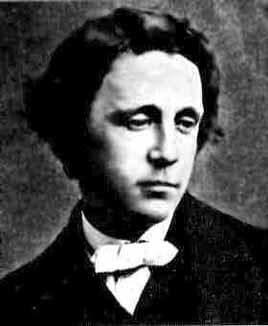
Charles Lutwidge Dodgson, better known by his pen name Lewis Carroll, was an English author, poet and mathematician. His most notable works are Alice's Adventures in Wonderland (1865) and its sequel Through the Looking-Glass (1871). He was noted for his facility with word play, logic, and fantasy. His poems Jabberwocky (1871) and The Hunting of the Snark (1876) are classified in the genre of literary nonsense.







