“Perhaps I should have been a writer, I think. Then I would have had a place for all the words that stay locked inside my head.”
— Alice reflects on her unexpressed thoughts and desires.

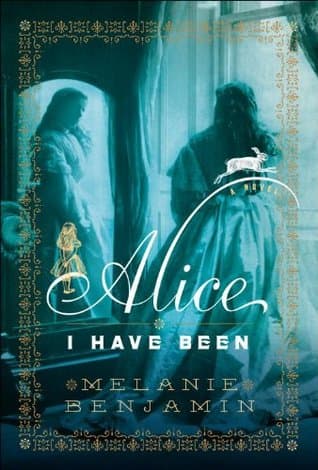
Melanie Benjamin (2010)
Genre
Fantasy / Historical Fiction / Romance
Reading Time
6-7 hours
Key Themes
See below
Sign in to track this book
Alice Liddell Hargreaves lived a life of passion, privilege, and wartime tragedy, always touched by the whimsical world she inspired and the professor who immortalized her.
The novel begins with an elderly Alice Liddell Hargreaves thinking about her life and the constant presence of 'Alice in Wonderland.' We go back to her childhood in Oxford, a spirited, imaginative girl living with her family at Christ Church College. She first meets Charles Dodgson, a shy, stuttering mathematics lecturer and photographer, during a picnic. Interested by her lively spirit and how easily she talks with him, Dodgson starts spending more time with Alice and her sisters, Lorina and Edith. During a boating trip on the Isis River, Alice, then ten, asks Dodgson to tell one of his fantastical stories, specifically asking him to write it down. This moment leads to the creation of 'Alice's Adventures Under Ground,' which later became 'Alice's Adventures in Wonderland.'
Dodgson's connection with Alice deepens, becoming the main focus of his world. He often visits the Liddell home, taking photographs of Alice, sometimes in costumes or partially dressed, which, even then, makes Mrs. Liddell uneasy. Alice enjoys the attention and the break from her strict Victorian upbringing, finding a like-minded spirit in Dodgson's imagination. Their relationship, while seeming innocent to Alice, is viewed with growing suspicion by her parents, especially her mother, who becomes uncomfortable with the intensity of Dodgson's affection for their daughter. This time is known for the famous photographs that fixed Alice's image in Dodgson's mind and, eventually, in the public's.
The 'cut' refers to the sudden and unexplained stop of Dodgson's visits to the Liddell home. The novel suggests that Mrs. Liddell, worried by Dodgson's increasingly possessive behavior and perhaps his photographic subjects, ended the friendship. Alice is devastated and confused by the sudden loss of her dear friend, unable to understand the adult reasons behind it. Dodgson, equally heartbroken, is left to deal with his feelings and the emptiness Alice's absence created. This event marks the end of Alice's happy childhood with Dodgson and hints at the complicated relationship she will have with her own identity as 'Alice' throughout her life. The exact reasons for the 'cut' remain unclear, like the historical uncertainties.
As Alice grows into a young woman, she is introduced to society, entering a world of balls, social expectations, and potential husbands. Her beauty and wit draw attention, including that of Prince Leopold, Queen Victoria's youngest son, who is studying at Oxford. Alice and Leopold grow fond of each other, sharing intellectual interests and a real connection. Their romance, however, faces challenges from their different social standings and the expectations placed on a royal prince. Alice experiences the excitement of first love, but also the painful understanding that their relationship faces impossible obstacles due to Leopold's royal duties and his mother's disapproval of a commoner marriage.
Despite her feelings for Prince Leopold, Alice eventually accepts a proposal from Reginald Hargreaves, a wealthy and respected cricketer. Their marriage has mutual respect and affection, even if not the passionate love she felt for Leopold. Alice takes on her role as wife and mother, raising three sons: Alan, Leopold, and Caryl. She finds satisfaction in creating a stable home and raising her children, experiencing the joys and challenges of family life. This period shows Alice's strength and ability to adapt, as she moves from being the focus of Dodgson's interest and Leopold's affection to a woman building her own life and finding purpose in her home, mostly separate from her 'Alice in Wonderland' persona.
Even as Alice builds her own life, the presence of 'Alice's Adventures in Wonderland' is strong. The book becomes a global success, and Alice, as the inspiration, is constantly reminded of her past. She receives letters from fans, attends events, and is often introduced as 'the original Alice.' This constant link is a source of both pride and frustration. She values the memory of her friendship with Dodgson and the magic of the stories, but dislikes being defined only by her childhood self, feeling that her adult life and achievements are overlooked. This inner conflict is a recurring theme, highlighting her struggle for a personal identity beyond the fictional character.
Alice experiences deep grief and financial hardship after Reginald's death. The family's situation, though comfortable at first, worsens, forcing Alice to make difficult choices to support her sons. This period shows her resilience and practical nature. She takes on the responsibility of managing their estate and ensuring her children's futures, showing a strength of character that goes beyond her earlier, more protected life. This hardship deepens her understanding of the world and her own abilities, further shaping her into the capable woman she becomes, different from the whimsical child of Wonderland.
World War I brings terrible tragedy to Alice. All three of her beloved sons — Alan, Leopold, and Caryl — enlist to fight. The novel clearly shows Alice's worries and fears as she waits for news from the front. Her greatest fears come true as two of her sons, Alan and Leopold, are killed in action. This period is the most heartbreaking of Alice's life, as she deals with the deep grief of losing her children. Her strength is tested severely, but she finds comfort in her remaining son, Caryl, and her continued connection to the memory of her lost boys, showing the resilience of a mother facing the ultimate sacrifice.
Facing ongoing financial difficulties, Alice decides to sell the original manuscript of 'Alice's Adventures Under Ground,' which Dodgson had given her. She travels to America, specifically to New York City and Philadelphia, to attend the manuscript's exhibition and sale. This journey is a big event, bringing her face-to-face with the book's lasting legacy and the public's interest in her. She is treated as a celebrity, a living example of the beloved character. The trip is both a financial necessity and an emotional journey, making her come to terms with her past and her public image on an international stage.
During her American tour and in her later years, Alice thinks deeply about her relationship with Charles Dodgson and what 'Alice in Wonderland' means in her life. She revisits old memories, photographs, and letters, trying to understand their complex bond and the true nature of his affection. While she acknowledges the discomfort and ambiguity surrounding parts of their past, she ultimately accepts her role as his muse and the deep impact he had on her life. She accepts that 'Alice' is a part of her, but not all of her, finding peace in her varied identity as a woman, wife, mother, and the inspiration for a literary classic.
As Alice nears the end of her life, she finds a sense of peace and acceptance about her extraordinary past. She recognizes her unique place in literary history and the joy 'Alice in Wonderland' has brought to many readers. While she once wanted to be seen as more than just 'Alice,' she ultimately embraces the legacy, understanding that the fictional character and the real woman are closely linked. Her final thoughts show her lasting spirit, her resilience through great loss, and her ultimate success in defining herself, even as the world continued to define her by the beloved story she inspired.
The Protagonist
Alice evolves from an innocent muse to a woman who grapples with her iconic status, endures immense personal tragedy, and ultimately finds peace and self-acceptance in her multifaceted identity.
The Supporting
Dodgson remains largely static in his personality but experiences profound heartbreak and artistic fulfillment through his connection with Alice.
The Supporting
Leopold represents a path not taken for Alice, his love for her constrained by societal and familial duty.
The Supporting
Reginald provides Alice with a sense of normalcy and family, a stark contrast to the fantastical world of her youth.
The Supporting
Her protective instincts lead her to make a crucial decision that forever alters Alice's relationship with Dodgson.
The Supporting
His life and death underscore the tragic impact of war on Alice's family.
The Supporting
His death further deepens Alice's experience of wartime loss and maternal grief.
The Supporting
Caryl's survival provides a glimmer of hope and continuity for Alice after enduring the loss of his brothers.
The Supporting
Lory remains a consistent sibling figure, offering a counterpoint to Alice's more unique experiences.
The Supporting
Edith represents the innocence of childhood and the family unit from which Alice emerged.
The main theme is Alice Liddell's lifelong effort to define herself beyond her public image as 'the original Alice.' From childhood, she is tied to Charles Dodgson's famous book, causing constant inner conflict. She loves the magic of the stories but dislikes being always seen as her ten-year-old self. This is clear in her thoughts as an elderly woman, where she says, 'I am tired of being Alice in Wonderland.' Her journey through marriage, motherhood, widowhood, and wartime loss are all attempts to build an identity separate from the fictional character, eventually leading to a balanced acceptance of both parts of herself.
“But oh my dear, I am tired of being Alice in Wonderland. Does it sound ungrateful?”
The novel explores the complex relationship between muse and creator, specifically between Alice Liddell and Charles Dodgson. It shows how Alice's lively personality, imagination, and even her looks inspired Dodgson's creativity. However, it also questions who owns the story — how much of Wonderland truly belongs to Alice, and how much to Dodgson? The 'cut' from the Liddell family and Dodgson's subsequent heartbreak highlight the unclear ethics of their very personal artistic partnership. The book suggests that while Dodgson wrote the story, Alice was the living essence that made Wonderland possible, a truth she struggles with throughout her life.
“He did not simply write a story for me, he wrote me into a story.”
Alice's life is full of intense love and deep loss, showing her remarkable resilience. She experiences passionate, forbidden love with Prince Leopold, the steady affection of her marriage to Reginald Hargreaves, and deep, lasting love for her three sons. However, she also endures the heartbreak of her separation from Dodgson, the unfulfilled romance with Leopold, the grief of her husband's death, and the terrible tragedy of losing two sons in World War I. Each loss tests her spirit, but she consistently shows an ability to adapt, endure, and find purpose amid sorrow, embodying the strength of the human spirit when facing great difficulty, much like the 'undaunted Alice' of the story.
“Life beyond the rabbit hole was an astonishing journey, filled with its own wonders and its own terrible darkness.”
The novel clearly shows the social expectations and limits placed on women in Victorian England, especially those of Alice's social standing. Alice navigates strict rules of conduct, the pressure to make a good marriage, and the defined roles of wife and mother. Her romance with Prince Leopold is stopped by royal rules and class differences. Even the 'cut' from Dodgson comes from Mrs. Liddell's concern for social properness and reputation. Alice's desire for independence and self-expression often clashes with these social norms, highlighting the struggle for personal control within a rigid social structure. She finds freedom in imagination, but must follow reality.
“A woman's place, I was told, was not in a book, but in a well-ordered home.”
Memory plays a key role, as the elderly Alice reflects on her past, often blurring the lines between what was real and what has been colored by the fame of 'Wonderland.' The story often moves between her present thoughts and clear flashbacks, creating a feeling of nostalgia, regret, and a desire to understand her own history. Time passing is a constant force, as Alice experiences the fleeting nature of childhood, the bloom of youth, and the inevitable sorrows of old age. She deals with how time has shaped her, changed her relationships, and immortalized her in a way she never fully controlled, making her journey a moving exploration of how we build our own stories over a lifetime.
“Time, I learned, was not a river, but a series of eddies, circling back to moments you thought were long past.”
The narrative is framed by the protagonist's introspection in old age
The novel begins and ends with an elderly Alice Liddell Hargreaves reflecting on her life from her perspective as an octogenarian. This framing device allows for a retrospective and often melancholic tone, providing a filter through which the past events are viewed. It emphasizes Alice's lifelong struggle with her identity as 'the original Alice' and allows her to offer mature insights and emotional gravitas to her childhood experiences and later tragedies. The present-day reflections anchor the historical narrative in a deeply personal, introspective voice, giving the entire story a sense of wisdom and earned perspective.
Blends historical accounts with fictionalized emotional lives
Melanie Benjamin masterfully weaves together documented historical facts about Alice Liddell's life and her interactions with Charles Dodgson, Prince Leopold, and her family, with richly imagined emotional lives, internal monologues, and speculative conversations. While the major plot points (meeting Dodgson, the 'cut,' marrying Hargreaves, losing sons in WWI, the American trip) are historically based, the motivations, feelings, and intimate details are fictionalized. This device allows the author to explore the 'why' behind historical events and create a compelling emotional journey for Alice, making her a relatable character despite her extraordinary circumstances.
The fictional world mirrors and contrasts Alice's real life
Wonderland serves as a powerful symbol throughout the novel. Initially, it represents the magic, imagination, and escape of Alice's childhood, a world created just for her. As she ages, it becomes a cage, a public identity that overshadows her true self, a place she feels 'tired of being.' The 'rabbit hole' symbolizes both the entry into a fantastical world and the inescapable pull of her past. The whimsical, sometimes unsettling, nature of Wonderland also subtly mirrors the ambiguities and complexities of her relationship with Dodgson, and the often illogical and unpredictable nature of her own life's journey.
The abrupt end of Alice and Dodgson's close friendship is left ambiguous
The sudden cessation of Charles Dodgson's visits to the Liddell home, known historically as 'the cut,' is presented as a pivotal and somewhat mysterious event. The novel, like history, doesn't offer a definitive, clear-cut explanation, instead implying Mrs. Liddell's growing discomfort with Dodgson's intense attachment to Alice. This ambiguity serves to heighten the emotional impact on Alice, who is left confused and heartbroken. It also adds a layer of psychological depth to Dodgson's character and underscores the lasting, unresolved questions surrounding his relationship with Alice, leaving the reader to ponder the true nature of their bond.
“Perhaps I should have been a writer, I think. Then I would have had a place for all the words that stay locked inside my head.”
— Alice reflects on her unexpressed thoughts and desires.
“He saw me, truly saw me, not just the child, but the girl, the woman I was becoming.”
— Alice describes Lewis Carroll's unique perception of her.
“The world of a child is a very small one, but it is also infinite.”
— Alice ponders the vastness and limits of childhood.
“Some stories are meant to be lived, not just told.”
— Alice reflects on her experiences and the narrative surrounding her life.
“It is a cruel thing, to be remembered for something you barely recall.”
— Alice contemplates her fame as the inspiration for Alice in Wonderland.
“He created a world where I was brave and clever and everything I wished I could be.”
— Alice describes the impact of Lewis Carroll's stories on her self-perception.
“Love, I learned, was not always a gentle thing. Sometimes it was a sharp, insistent ache.”
— Alice's evolving understanding of romantic love.
“To be a muse is to be a ghost in someone else's dream.”
— Alice reflects on her role as an inspiration to Lewis Carroll.
“The past is never truly past; it is always there, breathing down your neck.”
— Alice's struggle with her history and its lingering effects.
“Perhaps the greatest adventure is simply to live, truly live, in the skin you are given.”
— Alice's ultimate realization about finding meaning in her own life.
“I was not a character in his book; I was a girl, and I wanted to be loved for that.”
— Alice's desire to be seen as an individual, not just an inspiration.
“There are some secrets that even time cannot quite erase, only soften at the edges.”
— Alice reflects on the enduring nature of certain truths and hidden feelings.
“The world was full of grown-ups who wanted to put children into neat little boxes.”
— Alice's perspective on the restrictive expectations placed on children.
“Sometimes, the most ordinary moments are the ones that echo loudest in the heart.”
— Alice appreciating the simple, profound moments of her life.
Ready to see how well you understood this book? Take our interactive quiz with 10 questions.

Biography coming soon.







