“No one is more dangerously insane than one who is able to reason logicaly about his own insanity.”
— Grace muses on the nature of madness and self-perception.

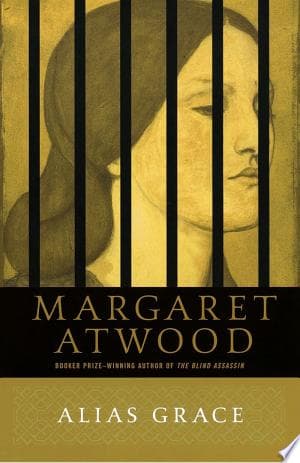
Margaret Atwood (2011)
Genre
Literary Fiction / Historical Fiction / Mystery
Reading Time
540 min
Key Themes
See below
Sign in to track this book
In 19th-century Canada, a domestic servant convicted of a double murder claims amnesia, so a doctor must unravel her memory to learn if she is a killer, a victim, or mentally ill.
In 1859, Dr. Simon Jordan, a young American mental health expert, arrives in Kingston, Canada, to interview Grace Marks, a domestic servant convicted of the 1843 murders of her employer, Thomas Kinnear, and his housekeeper, Nancy Montgomery. Grace, now a prisoner working as a domestic in the Kingston Penitentiary warden's house, says she does not remember the murders. Dr. Jordan is hired by a group of spiritualists and reformers, led by Reverend Verringer and Mr. Mackenzie, who think Grace may be innocent or suffering from a mental illness, hoping to get her a pardon. Dr. Jordan plans to record Grace's story to find the truth behind her alleged amnesia and her role in the double homicide.
Grace begins her story, describing her poor childhood in Ulster, Ireland, as the oldest of ten children in a struggling family. Her father, a violent alcoholic, often beat her and her siblings. At twelve, the family decided to move to Canada, enduring a difficult journey across the Atlantic on a crowded, disease-ridden ship. During the voyage, Grace's mother dies, and her body is thrown overboard, leaving Grace to care for her younger siblings. The harsh realities of their new life in Canada are clear, with the family struggling to find work and a home, forcing Grace to seek employment as a domestic servant.
Grace gets her first job as a housemaid at Mrs. Alderman Parkinson's home in Toronto. There, she befriends Mary Whitney, an older, lively housemaid who teaches Grace about domestic service and warns her about the dangers and expectations for young women. Mary becomes Grace's closest friend and guide, sharing her dreams of marriage and a better life. Grace is affected by Mary's sudden death from a botched abortion, an event that leaves her emotionally scarred and fearful. Mary's spirit, Grace believes, remains, and her influence continues to shape Grace's perceptions and decisions.
After the Parkinson family moves, Grace seeks new employment and, despite concerns about the isolated location, accepts a position at Thomas Kinnear's rural farm in Richmond Hill. She works alongside Kinnear's demanding and often cruel housekeeper, Nancy Montgomery, who is also Kinnear's mistress. Grace quickly notices the tense atmosphere in the house, especially the animosity between Nancy and the stable hand, James McDermott. McDermott, a resentful and aggressive man, often argues with Nancy and sees her as an obstacle to his own ambitions within the household.
Life at the Kinnear farm becomes difficult for Grace. Nancy Montgomery, jealous and insecure about her position, constantly criticizes Grace, overworks her, and treats her badly. Grace is often caught between Nancy and McDermott's bitter disputes, witnessing their growing hatred for each other. Kinnear, a weak man, mostly ignores the domestic problems, allowing Nancy's behavior. Grace, isolated and without allies, feels trapped in a situation where she is always watched and vulnerable to her superiors' whims. The tension in the house steadily builds, leading to a tragic outcome.
Grace's memory of the murder day is fragmented. She recalls McDermott's growing agitation and his threats against Nancy. She describes being ordered by McDermott to help him, though her exact involvement is unclear. Grace remembers Nancy being tied up and strangled, and Kinnear being shot. She says she was terrified and acted under duress, fearing for her own life. She describes a chaotic scene, the violence, and her flight with McDermott. Her account of these hours has significant gaps, which Dr. Jordan notes as he tries to understand the truth.
After the murders, Grace and McDermott flee the Kinnear farm, taking some of Kinnear's possessions, including money and a horse and buggy. They travel together for a short time, trying to avoid capture. Their flight is disorganized and desperate. Eventually, they are found and arrested in the United States. They are brought back to Canada, where they are both charged with the murders of Thomas Kinnear and Nancy Montgomery. The sensational nature of the crimes and the involvement of a young, seemingly innocent-looking servant girl quickly capture public attention.
McDermott and Grace are tried separately for the murders. McDermott's trial is quick; he is found guilty and hanged. Grace's trial is a public event, with much debate about her true nature – was she a willing accomplice, an innocent dupe, or a victim of coercion? Despite her claims of amnesia and coercion by McDermott, the jury finds her guilty. However, because of her youth and perceived vulnerability, her sentence is changed from hanging to life imprisonment. She is sent to Kingston Penitentiary, where she spends many years, sometimes working as a domestic in the warden's house, which is where Dr. Jordan finds her.
As Dr. Jordan continues his interviews, he becomes interested in Grace, finding her mysterious. He struggles with the inconsistencies in her story, her calm manner, and her continued amnesia about the murders. He tries various psychological techniques, including hypnosis, but Grace's memories remain elusive. At the same time, Dr. Jordan feels drawn to Grace, having unsettling dreams and developing an unprofessional attraction. His professional objectivity begins to waver as his personal life also becomes complicated, with a strained relationship with his landlady and an unfulfilled desire for a family. He is frustrated by his inability to understand Grace.
In a session, Reverend Verringer brings in a spiritualist, Dr. DuPont, to conduct a public hypnosis session with Grace. Under hypnosis, Grace's manner changes, and she begins speaking in a voice that claims to be Mary Whitney, Grace's deceased friend. 'Mary' describes the murders, stating that she, through Grace's body, killed Nancy Montgomery out of revenge for Nancy's mistreatment and for 'spoiling' Kinnear. 'Mary' also implies McDermott's involvement and his violent nature. This revelation, whether genuine possession or a manifestation of Grace's repressed trauma, affects everyone present, including Dr. Jordan, who is left more confused about Grace's true guilt or innocence.
Years later, after Dr. Jordan has left Kingston and his report is inconclusive, Grace is pardoned. This decision is influenced by the reformers' efforts, public interest in her case, and perhaps the ambiguity surrounding the hypnosis session. She goes to live in the United States with Mr. Jerome du Pont (the former Dr. DuPont, now a respected citizen), who takes her in as a domestic servant. She later marries Jamie Walsh, a man she knew from the Kinnear farm who had testified against her but later felt remorse. Grace finds peace and stability in her new life, living quietly. She never fully clarifies her role in the murders, leaving the truth unclear.
The Protagonist
From a bewildered, amnesiac prisoner, Grace navigates her past and public perception, eventually finding a quiet, albeit ambiguous, freedom.
The Supporting
Begins as an objective scientist, but becomes increasingly emotionally and professionally compromised by his obsession with Grace, ultimately failing to achieve his goals.
The Antagonist/Victim
Her character is primarily revealed through Grace's recollections, showing her descent into paranoia and cruelty, culminating in her violent death.
The Antagonist
His character is fixed in his resentment and aggression, leading directly to the murders and his execution.
The Supporting
Though deceased early in the narrative, her influence on Grace is profound and possibly extends beyond the grave, offering a potential explanation for the murders.
The Victim
His character is static, serving as the employer whose inability to manage his household leads to his demise.
The Supporting
Maintains his belief in Grace's possible innocence and works towards her pardon, embodying the humanitarian perspective.
The Supporting
Her character is largely static, serving to highlight Dr. Jordan's personal and emotional struggles outside his work with Grace.
The Supporting
From a young farmhand testifying against Grace, he eventually becomes her husband, offering her a path to a new life.
The Supporting
Transitions from a spiritualist medium to a benefactor for Grace, providing her with a new life.
The novel questions Grace Marks's identity: is she a killer, an innocent victim, or mentally ill? Her own amnesia and the conflicting testimonies make it impossible for Dr. Jordan, and the reader, to know the 'truth' of her involvement. The narrative explores how identity forms through storytelling, memory, and public perception, rather than being fixed. Grace's quiet demeanor often hides deeper complexities, challenging the simple labels society tries to put on her, leaving her true self and culpability unclear.
““I think of all the things that have been written about me, and all the things that have been said, and how I have been made over and over again into a patchwork girl, with a bit of this and a bit of that.””
Atwood explores the difficult position of women, especially working-class women like Grace, in 19th-century society. Grace's vulnerability as a domestic servant, her lack of legal rights, and societal double standards are central to her story. Her conviction is influenced by her gender and class; a 'pretty' servant girl is either an innocent dupe or a monstrous temptress. The novel critiques the justice system's biases and the limited options for women, showing how their lives often depend on men and societal expectations. The reformers' efforts to pardon Grace show the beginnings of social justice movements.
““A person can be a prisoner of the past, or she can be a prisoner of the present. But she cannot be both.””
Grace's story is presented as a series of recollections to Dr. Jordan, showing how subjective and often unreliable memory is. Her claims of amnesia for the murders make both Dr. Jordan and the reader question what is remembered, what is repressed, and what is made up. The novel shows how personal stories are shaped by the teller, the listener, and the context, becoming a performance rather than a direct account of events. The inconsistencies and gaps in Grace's story show that truth itself can be fluid, especially when filtered through trauma and time.
““But memory is a strange thing. It is not a record, but a storyteller.””
The novel contrasts the new field of psychology, shown through Dr. Jordan's scientific methods, with the spiritualist beliefs of the era. Dr. Jordan tries to find a rational, medical explanation for Grace's condition, while Reverend Verringer and Dr. DuPont seek answers through mesmerism and the possibility of spirit possession. The dramatic hypnosis scene, where Grace appears to channel Mary Whitney, blurs the lines between these two approaches, suggesting that the human mind may contain forces beyond scientific understanding or that psychological trauma can appear in seemingly supernatural ways. This tension reflects the intellectual debates of the 19th century.
““They want to know what is inside my head. They think my head is like a box, and if they can just find the key, it will open, and they will see what is in it.””
Grace Marks's narrative is subjective, incomplete, and potentially deceptive.
Grace Marks serves as the primary narrator, recounting her life story to Dr. Jordan. However, her claim of amnesia regarding the murders, coupled with subtle inconsistencies and her careful crafting of her own image, makes her an unreliable narrator. The reader is never entirely sure if Grace is truly innocent, a master manipulator, or genuinely suffering from fragmented memories. This device creates suspense and forces the reader to actively interpret her story, mirroring Dr. Jordan's own struggle to ascertain the truth.
Interspersed documents provide external perspectives and counterpoints to Grace's narrative.
The novel includes excerpts from letters, newspaper articles, medical reports, and Dr. Jordan's own notes and letters. These documents serve to provide external perspectives on Grace's case, revealing public opinion, legal details, and Dr. Jordan's internal thoughts and frustrations. They often contradict or complicate Grace's personal narrative, highlighting the multiple, often conflicting, 'truths' surrounding the murders and Grace's character. This device adds layers of historical context and critical distance to the story.
Grace's needlework symbolizes her crafting of identity and the piecing together of her fragmented life.
Grace is frequently depicted engaging in needlework, particularly quilting. This acts as a powerful symbol. The act of piecing together disparate fabric scraps to form a coherent whole mirrors Grace's attempt to piece together her fragmented memories and construct a coherent narrative of her life. It also symbolizes the 'patchwork' identity others impose on her. Her control over the needlework contrasts with her lack of control over her fate, and the intricate patterns can suggest both order and hidden complexities within her mind.
The presence of Mary Whitney's 'spirit' or alter ego complicates Grace's culpability.
The concept of a doppelgänger or spirit possession is introduced through Mary Whitney. Mary's influence on Grace is profound, and the dramatic hypnosis session where Grace appears to channel Mary's voice, confessing to the murder, introduces the possibility of a split personality or genuine possession. This device blurs the lines of individual responsibility, suggesting that another entity or a repressed part of Grace's psyche could be responsible for the crimes, further obscuring the question of Grace's true guilt.
“No one is more dangerously insane than one who is able to reason logicaly about his own insanity.”
— Grace muses on the nature of madness and self-perception.
“When you are in a story, you can't see the end of it. When you're outside a story, it's all clear.”
— Grace reflects on the difficulty of understanding events while living through them.
“A word after a word after a word is power.”
— Grace considers the cumulative effect of language and storytelling.
“I have been to the Land of the Dead, and I have seen the future, and it is a city.”
— Grace describes a vivid, unsettling dream or vision.
“The past is a mirror, it reflects your present.”
— Grace ponders how past events shape current reality.
“We are all of us in a story, and we cannot get out.”
— Grace's fatalistic view on human existence and destiny.
“To be a woman, you must be a storyteller, a weaver of narratives.”
— Grace connects female identity with the act of creating stories.
“Knowledge is a dangerous thing, but ignorance is worse.”
— Grace weighs the risks and benefits of knowing the truth.
“Sometimes I think I am the story, or the story is me.”
— Grace blurs the lines between her identity and the narrative surrounding her.
“It is not the truth that matters, but the story that is told.”
— Grace's cynical view on how public perception overrides factual accuracy.
“The things that are not said are often the most important.”
— Grace highlights the significance of silences and unspoken truths.
“Memory is a strange thing. It can be a comfort, or a torment.”
— Grace reflects on the dual nature of remembering past events.
“All stories are ghost stories.”
— Grace suggests that narratives inherently carry echoes of the past and the absent.
“You can never tell what is going on inside another person.”
— Grace expresses the ultimate unknowability of others' inner lives.
Ready to see how well you understood this book? Take our interactive quiz with 10 questions.
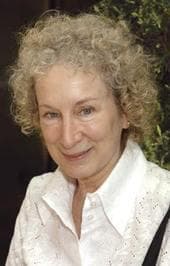
Margaret Eleanor Atwood is a Canadian poet, novelist, literary critic, essayist, teacher, environmental activist, and inventor. Since 1961, she has published eighteen books of poetry, eighteen novels, eleven books of non-fiction, nine collections of short fiction, eight children's books, two graphic novels, and a number of small press editions of both poetry and fiction. Atwood has won numerous awards and honors for her writing, including two Booker Prizes, the Arthur C. Clarke Award, the Governor General's Award, the Franz Kafka Prize, Princess of Asturias Awards, and the National Book Critics and PEN Center USA Lifetime Achievement Awards. A number of her works have been adapted for film and television.







