“Love is not to be found in the marketplace. It is a gift, a grace, a blessing from Allah.”
— Ali's traditional, spiritual view on love, contrasting with modern ideas.

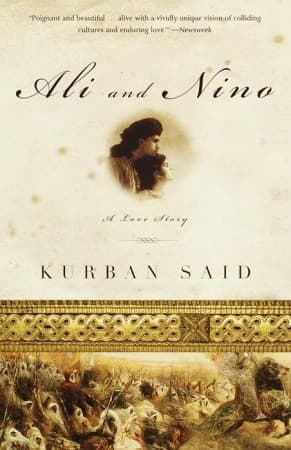
Kurban Said (1972)
Genre
Historical Fiction / Romance
Reading Time
360 min
Key Themes
See below
Sign in to track this book
In a city between East and West, a Muslim aristocrat and a Christian princess fight for their love during war, cultural divides, and the landscapes of Azerbaijan and Persia.
Ali Khan Shirvanshir, a young Muslim nobleman in early 20th-century Baku, loves Nino Kipiani, a Christian Georgian princess. Their love is complicated by their different cultures and religions, a reflection of Baku itself, a city between East and West. Ali, a student, deals with his traditional heritage and European influences, shown by Nino's Western upbringing. Despite societal pressures, Ali wants to marry Nino. They spend their days talking about their cultural differences and how to bridge the gap, showing the tension between old customs and new ideas in their changing city.
The romance between Ali and Nino changes when an Armenian, Melik Nahararyan, kidnaps Nino. This insults Ali's honor and his family, calling for a blood feud. Ali, driven by duty and love, chases Melik with his dagger. He finds Melik and kills him to get Nino back and restore his family's honor. This act forces Ali to flee Baku, as the blood feud's consequences would follow him, separating him from Nino and his home.
After killing Melik, Ali goes into exile to avoid the blood feud's fallout. He travels to Persia, staying with his uncle, Fetteh Khan, in a traditional village. This time in Persia is a cultural immersion for Ali, strengthening his connection to his Muslim heritage. He lives in a society untouched by European influence, sees old customs, and thinks about his identity. Nino, showing her love, later joins him in Persia, choosing Ali's world despite its difference from her own. They marry in a traditional ceremony, solidifying their bond in the desert.
After exile, Ali and Nino return to Baku. The city is no longer the same peaceful place they left. World War I has started, and its effects are felt, making Baku a political hotbed. The Russian Empire is falling, and various groups, including Turkish, British, and Bolshevik forces, want control of the oil-rich region. Ali, an Azerbaijani nationalist, worries about his homeland's future. He struggles to protect his family and country, while trying to live normally with Nino amid the chaos.
The Bolshevik Revolution grows, and their forces move toward Baku, threatening communist rule. Ali faces a choice: protect Nino and their daughter, Tamar, by fleeing to a safer, more European region, or stay and fight for an independent Azerbaijan with Muslim forces. Nino, with her European ways, urges him to prioritize their family's safety and escape the conflict. Ali, however, feels a strong duty to his people and land, torn between his love for Nino and his loyalty to his nation's fight for self-rule.
Facing Baku's fall to the Bolsheviks, Ali sends Nino and their daughter, Tamar, to Persia for safety. He believes Persia, though traditional, offers refuge from the war-torn Caucasus. This separation is painful for Ali and Nino, showing their situation's harshness. Ali cannot leave his homeland. He stays in Azerbaijan, choosing to fight for its independence against the Soviet power, knowing this decision might be a permanent goodbye to his family.
Ali joins the Azerbaijani national army, fighting with his countrymen against the Bolsheviks. The fighting is desperate, a last effort to keep their independence. Ali is on the front lines, seeing the war's realities and his world's rapid change. He fights with courage and patriotism, hoping for a free Azerbaijan, even as the odds grow against them. His battlefield experiences strengthen his identity as a Muslim Azerbaijani warrior, ready to sacrifice for his land.
Despite Ali's wishes for her safety in Persia, Nino, unable to bear the separation and driven by love, returns to Azerbaijan, looking for Ali. She finds him amid the war's chaos, and they have a sad reunion. Their time together is brief, overshadowed by the coming final battle. Nino's return shows her devotion and her refusal to live without him, even in danger. This moment shows their lasting love, a short break before Ali must face the front lines again, knowing it could be their last goodbye.
In a heroic but losing effort, Ali Khan Shirvanshir dies defending the Ganja bridge against the Bolsheviks. His death marks the end of his story and the defeat of the Azerbaijani independence movement. The Bolsheviks conquer Azerbaijan, bringing it into the Soviet Union. Ali's sacrifice, though not changing history, makes him a patriot who died fighting for his homeland and culture. His death leaves Nino and Tamar to live in a world changed by war and the loss of their husband and father.
After Ali's death and the Soviet takeover of Azerbaijan, Nino, with her daughter Tamar, flees her homeland. She goes to Europe, a world more like her own culture, carrying the grief of losing Ali and the memories of their love story. Her journey shows the displacement caused by war. While her future is uncertain, Nino is resilient, determined to build a new life for Tamar, ensuring Ali's legacy and their love continue despite the tragedy that tore their world apart.
The Protagonist
Ali evolves from a passionate young lover navigating cultural divides to a dedicated patriot who ultimately sacrifices his life for his homeland's independence.
The Protagonist
Nino transforms from a somewhat naive princess to a resilient woman who sacrifices her familiar world for love and faces immense loss with courage.
The Antagonist/Mentioned
Melik's arc is brief and tragic, serving primarily to instigate the blood feud that propels Ali and Nino's story forward.
The Supporting
Fetteh Khan remains a consistent figure of tradition and wisdom, not undergoing significant personal change but influencing Ali's understanding of his heritage.
The Supporting
Tamar's arc begins as a symbol of hope and ends as a symbol of the future, a child of two worlds destined to live on after her father's sacrifice.
The Supporting
Seyd remains a loyal and unchanging figure, serving as a steadfast companion to Ali throughout his journey.
The Supporting/Mentioned
Ilyas Beg remains a consistent voice for Azerbaijani nationalism and friendship, supporting Ali's political convictions.
The main theme explores the tension and blend of Eastern (Muslim, traditional, Asian) and Western (Christian, modern, European) cultures. Ali represents the East, tied to his traditions, while Nino represents the West, with her European education. Their love story bridges these two worlds, challenged by differences but strengthened by their attempts to understand each other. This theme appears in their talks about marriage customs, women's roles, and their different reactions to political changes, especially in Baku and Ali's exile in traditional Persia.
“My country is Asia. My soul is Asia. My body is European. The East is a thing of the heart, a thing of the blood.”
The novel shows Ali and Nino's love as a strong force that overcomes obstacles: religious differences, cultural clashes, family disapproval, blood feuds, and war. Their willingness to sacrifice—Nino embracing Ali's traditional world in Persia, Ali risking his life for their future—shows their deep commitment. Despite the tragic end, their love lasts, showing human connection in the face of pressures, proving love can unite even in a broken world. Their journey is a constant fight to keep their bond during societal and political upheaval.
“Love is stronger than custom, stronger than a father's anger, stronger than the sword.”
The characters, especially Ali, deal with questions of personal and national identity. Ali constantly considers what it means to be an Azerbaijani Muslim in a world quickly westernizing and threatened by foreign powers. His time in Persia reinforces his Eastern roots, while his love for Nino pulls him toward a more global view. The fight for Azerbaijani independence mirrors Ali's personal search to define his place and loyalty. This theme also appears in Nino's adaptation to Ali's world and both characters' displacement, showing how war can take away belonging and force people to redefine themselves.
“I am not a Russian, not a Persian, not a Turk. I am an Azerbaijani. My country is Azerbaijan.”
The novel shows how political events—World War I, the Russian Revolution, and the rise of Bolshevism—shape and destroy individual lives. Political instability changes Baku, forcing Ali and Nino to flee, return, and face sacrifice. The war disrupts their happiness, forcing them to make impossible choices between love, family, and national loyalty. Azerbaijan's fall to the Bolsheviks sets a tragic background to their personal story, showing the human cost of large conflicts and the loss of national independence.
“The war came and swept away all our dreams. It left us nothing but the dust of our illusions.”
A traditional custom that instigates a major plot point and forces Ali into exile.
The blood feud is a crucial plot device rooted in Ali's traditional Eastern culture. When Melik Nahararyan kidnaps Nino, Ali is honor-bound to avenge the insult by killing Melik. This act, while restoring Ali's honor and reclaiming Nino, forces him into exile in Persia. The blood feud not only drives the narrative by separating the lovers and pushing them into a new environment but also highlights the stark cultural differences between Ali's world and Nino's more Westernized one, where such an act would be seen purely as a crime rather than a matter of honor.
A recurring narrative pattern that emphasizes cultural shifts and political instability.
The motif of exile and return is central to the narrative structure. Ali is forced into exile in Persia after the blood feud, providing a period of deep cultural immersion and strengthening his connection to his Eastern roots. Their subsequent return to Baku underscores the city's transformation by war. This pattern repeats when Nino and Tamar are sent to Persia for safety during the Bolshevik advance. Each instance of exile and return highlights the characters' evolving understanding of their identities and the profound impact of external political forces on their lives, emphasizing the ephemeral nature of home and stability.
A dynamic setting that acts as a character, symbolizing the clash of East and West.
Baku itself functions as a character in the novel, a vibrant and volatile crossroads of East and West, tradition and modernity. Its oil-rich landscape attracts diverse cultures and political interests, making it a microcosm of the larger geopolitical struggles of the era. The city's transformation from a bustling, somewhat peaceful hub to a war-torn battleground mirrors the personal turmoil experienced by Ali and Nino. Baku's unique identity, caught between empires and ideologies, directly influences the characters' choices and ultimately dictates their fate, making it far more than just a backdrop.
Objects that represent key aspects of Eastern and Western identity.
Various cultural symbols are used to underscore the themes of East and West. The veil, for instance, represents traditional Muslim female modesty, which Nino briefly adopts. The dagger symbolizes Ali's honor, his warrior heritage, and the traditional justice of the blood feud. Horses represent freedom, nomadic heritage, and the swiftness of action in the Eastern world. These objects are not merely props but potent symbols that deepen the cultural context, highlight character choices, and emphasize the contrasting values and traditions that shape Ali and Nino's world.
“Love is not to be found in the marketplace. It is a gift, a grace, a blessing from Allah.”
— Ali's traditional, spiritual view on love, contrasting with modern ideas.
“Europe is a woman. Asia is a man. And between them is the Caspian Sea, like a mirror.”
— Ali's metaphorical description of the cultural divide and connection between East and West.
“To be a man, one must live like a man and die like a man.”
— Ali's philosophy on honor, duty, and masculinity, particularly in the face of conflict.
“The East is not a geographical concept, it is a spiritual one.”
— Ali's reflection on the essence of Eastern identity beyond mere location.
“We are not Turks, we are Azerbaijanis. We are not Europeans, we are Caucasians.”
— Ali asserting his distinct national and ethnic identity amidst broader regional labels.
“A woman's place is in her husband's house, not in the café.”
— A traditional view on gender roles, often expressed by characters upholding older customs.
“When a man loves a woman, he wants to protect her, not to change her.”
— Ali's perspective on love and respect within a relationship.
“The desert teaches you patience and the mountains teach you pride.”
— A reflection on the influence of the Azerbaijani landscape on its people's character.
“Marriage is a bridge between two families, not just two people.”
— Highlighting the communal and familial importance of marriage in traditional society.
“There are some things a man must do, even if his heart breaks.”
— Ali facing difficult decisions, prioritizing duty and honor over personal desires.
“The wind carries the scent of freedom and the dust of history.”
— A poetic description of the atmosphere in Azerbaijan during a period of change.
“A man without a homeland is a tree without roots.”
— Emphasizing the profound connection between identity and one's native land.
“Happiness is a moment, not a lifetime. And we must seize it when it comes.”
— A pragmatic view on joy and the fleeting nature of happiness in turbulent times.
“To love is to understand, to forgive, and to be silent.”
— A complex and mature understanding of love, implying patience and unspoken acceptance.
“Our love was a bridge over the abyss, and it held.”
— A powerful metaphor for Ali and Nino's love enduring through immense cultural and political turmoil.
Ready to see how well you understood this book? Take our interactive quiz with 10 questions.

Biography coming soon.







