“I didn't know how to explain to her that my dad had just died and I was more alone than I had ever been in my entire life.”
— Moon is trying to process his father's death and a social worker's questions.

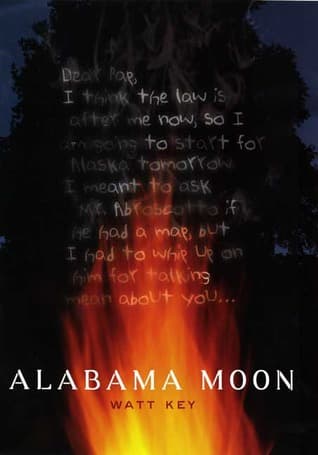
Watt Key (2006)
Genre
Children's / Young Adult
Reading Time
300 min
Key Themes
See below
Sign in to track this book
After his father's death, a resourceful boy raised in the Alabama wilderness must navigate the complexities of civilization and evade government capture on his journey to Alaska.
Ten-year-old Moon Blake has spent his entire life in the Alabama wilderness, living in a homemade shelter with his father, Oliver. They live off the land, hunting and trapping for food, and avoiding all contact with the outside world, especially the government. Oliver taught Moon to distrust society and gave him extensive survival skills. Their only interaction with civilization is an occasional trip to a general store for supplies. Moon's father is his only companion and teacher, shaping his view of the world and preparing him for a self-sufficient life far from modern society.
Moon's father, Oliver, becomes very ill and dies, leaving Moon alone in the wilderness. Before he dies, Oliver tells Moon his final wish: to travel to Alaska and find other independent people like them, who live free from government interference. Moon is heartbroken but determined to honor his father's wishes. He buries his father and, despite his grief, begins to prepare for the difficult journey north, using the survival skills his father taught him and their few belongings.
While on his journey, Moon is seen by a local boy named Hal and then confronted by Constable Sanders. Sanders, curious about Moon's wild appearance and unusual manner, questions him. Moon, following his father's lessons to avoid authorities, tries to escape, but his inexperience with societal rules makes him an easy target. He is eventually caught by Constable Sanders and taken into custody, marking his first forced interaction with the 'outside world' he was taught to avoid.
Moon is placed in a juvenile detention facility, a sharp contrast to his life in the woods. Here, he meets Kit Slip, a sickly but kind boy, and Hal, the boy who first reported him to Constable Sanders. Hal, though at first unfriendly, begins to respect Moon's resilience. Moon struggles to adapt to the rules and confined spaces of the facility, often clashing with the staff and showing his wild instincts. He also sees the harsh realities of institutional life and the different backgrounds of the other children.
Frustrated by being confined and wanting freedom, Moon plans an escape. He gets help from Kit and Hal, promising them a free life in the wilderness. Using his outdoor knowledge and resourcefulness, Moon arranges their breakout. The three boys successfully escape the facility, leaving the structured environment for the unknown challenges of the outside world, with Moon leading the way and relying on his survival skills.
After their escape, Moon, Kit, and Hal try to live off the land, but Kit's worsening health and Hal's inexperience with wilderness survival create immediate problems. Moon tries to teach them, but their situation is harder than expected. Constable Sanders, persistent in his pursuit, is close behind them. The boys face hunger, exposure, and the constant fear of recapture, forcing them to rely heavily on Moon's skills and their growing friendship.
Kit's illness quickly gets worse, reaching a point where Moon realizes he cannot treat him in the wilderness. Despite his father's warnings about society, Moon makes the difficult decision to seek medical help for Kit, knowing it will likely lead to their recapture. He carries Kit to a nearby town, where they are eventually found by Constable Sanders. This act shows Moon's growing empathy and his willingness to go against his ingrained beliefs for a friend.
Back in custody, Moon faces legal proceedings and the possibility of being sent to a more permanent institution. However, a lawyer named Mr. Wellington becomes interested in Moon's case. Mr. Wellington sees past Moon's wild appearance, recognizing his intelligence and the unique circumstances of his upbringing. He works to understand Moon's story and advocate for his best interests, challenging the system's plan to simply institutionalize him.
Moon's fate is decided in court, where he must testify about his life and his father's beliefs. This is a difficult experience for Moon, who has never been in such a formal setting. He struggles to explain his experiences in a way the court can understand, but Mr. Wellington guides him. The testimony highlights the sharp contrast between Moon's wilderness upbringing and the complexities of the legal system, forcing Moon to confront the societal norms he was taught to reject.
Against expectations, Moon is placed in the care of Mr. Wellington, who offers him a chance at a normal life. Moon begins to adjust to living in a house, attending school, and interacting with people regularly. He still deals with his wild instincts and his father's lessons, but he also starts to form new connections and understand the benefits of society. His relationship with Hal also improves, and they begin to form a genuine friendship, symbolizing Moon's slow integration into the world he once avoided.
Later, Moon revisits his old wilderness home, bringing Hal with him. This journey helps Moon reconcile his past with his present. He thinks about his father's teachings and the life they shared, but also acknowledges the new opportunities and friendships he has found. He finds peace, understanding that he can carry the spirit of the wilderness within him while also embracing the complexities and relationships of the outside world, creating his own path forward.
The Protagonist
Moon transforms from an isolated, purely survival-driven boy into a more empathetic individual who learns to navigate and appreciate aspects of society while retaining his core values.
The Supporting/Mentioned
His arc is largely complete before the story begins, but his legacy and influence on Moon evolve as Moon navigates the world.
The Supporting
Kit's presence acts as a catalyst for Moon's emotional development, ultimately leading to a tragic but impactful end that shapes Moon's future actions.
The Supporting
Hal evolves from a troublemaking antagonist to a loyal and supportive friend, learning to appreciate Moon's unique perspective and the value of true companionship.
The Antagonist
Sanders remains steadfast in his role, serving as a consistent force of authority that Moon must contend with.
The Supporting
He serves as a pivotal figure in Moon's integration into society, offering him a chance at a new life and a positive adult role model.
The Supporting
Her decision is a turning point for Moon, allowing him to avoid institutionalization and begin a new life.
The Mentioned
Her character provides a subtle counterpoint to Oliver's extreme distrust of society, hinting at the potential for positive human connection.
This theme explores the tension between a life of complete self-sufficiency in nature and the structured complexities of human society. Moon's entire existence is initially defined by the wilderness, where survival skills are most important. When forced into civilization, he struggles with its rules, confinement, and social norms, showing the stark differences. His journey involves learning to navigate and reconcile these two opposing worlds, as seen when he is confused by a detention facility or when he returns to the woods with Hal, embodying a mix of both worlds.
“Pap said he even figured I could whip somebody three times my size. He wasn't worried about me.”
The novel deeply examines what it means to be truly free. For Moon and his father, freedom means absolute independence from government and societal control, living without laws or institutions. This is contrasted with the 'freedom' offered by society, which, while providing safety and community, comes with restrictions. Moon's escape from the detention facility with Kit and Hal is a pursuit of his father's definition of freedom, but the challenges they face on the run show that true freedom might also involve responsibilities and connections to others, as Moon learns when he seeks help for Kit.
“For as long as ten-year-old Moon can remember, he has lived out in the forest in a shelter with his father. They keep to themselves, their only contact with other human beings an occasional trip to the nearest general store.”
Moon's journey is a coming-of-age story, where he must forge his own identity apart from his father's rigid teachings. He starts as a direct reflection of his father's beliefs but gradually develops his own moral compass and understanding of the world. His experiences with Kit, Hal, and Mr. Wellington force him to question his ingrained prejudices and accept new perspectives. He learns to balance his wilderness instincts with the need for human connection, ultimately deciding who he wants to be rather than just who his father raised him to be, as shown by his decision to seek help for Kit.
“I could trap my own food and make my own clothes. I could find my way by the stars and make fire in the rain.”
Initially, Moon's life lacks peer relationships, but his interactions with Kit and Hal become essential to his development. His friendship with Kit, in particular, teaches him empathy and selflessness, leading him to make a life-altering decision to seek help for his friend, even if it means sacrificing his own freedom. The evolving relationship with Hal shows how trust and shared experience can overcome initial animosity, showing Moon the value of human connection beyond his father's isolated worldview. These bonds highlight that even the most independent individuals need companionship.
“Moon is soon caught and entangled in a world he doesn't know or understand, apparent property of the government he has been avoiding all his life.”
The legal system's response to Moon highlights the tension between strict adherence to the law and compassionate understanding of individual circumstances. While Constable Sanders represents the unyielding arm of the law, figures like Mr. Wellington and the Judge embody the potential for justice to be tempered with empathy. Moon's case forces the system to confront a unique situation, leading to a resolution that prioritizes his well-being and potential over simply punishing his defiance of societal norms, showing that true justice requires looking beyond superficial appearances.
“As the spirited and resourceful Moon encounters constables, jails, institutions, lawyers, true friends, and true enemies, he adapts his wilderness survival skills and learns to survive in the outside world, and even, perhaps, make his home there.”
The natural environment that shapes Moon's identity and provides his primary survival skills.
The Alabama wilderness is more than just a setting; it's a formative force in Moon's life. It represents freedom, self-sufficiency, and his father's anti-establishment ideals. The forest provides Moon with all his survival skills – hunting, tracking, shelter building – and instills in him a deep connection to nature. When Moon is removed from this environment, he struggles, but his inherent understanding of the wilderness becomes his greatest asset in navigating the outside world, from escaping the detention center to finding solace and clarity in nature during his later visits.
Moon's physical and metaphorical journey from isolation to integration.
The entire novel is structured around Moon's journey. Initially, it's a literal journey to Alaska, following his father's dying wish. This physical journey quickly transforms into a metaphorical one as Moon travels through different social environments – detention centers, courtrooms, a lawyer's home. Each stage of the journey exposes him to new experiences and challenges his worldview, leading to his personal growth and eventual integration into society, while still retaining elements of his wilderness identity. It's a classic hero's journey, adapted for a young protagonist.
Characters who highlight Moon's unique traits through contrast.
Kit Slip and Hal serve as effective foil characters to Moon. Kit, physically weak and accustomed to society, highlights Moon's rugged strength and wilderness resilience. Conversely, Moon's naivete about social norms is emphasized by Hal's street smarts and cynicism. These contrasts not only make Moon's unique background more apparent but also create opportunities for him to learn and grow, as he helps Kit and is helped by Hal, forcing him to adapt his skills and worldview to accommodate others.
A representation of Moon's independence, skill, and connection to his past.
Moon's bow and arrow are recurring symbols throughout the story. They represent his self-sufficiency, his exceptional hunting skills learned from his father, and his deep connection to his wilderness upbringing. When he is separated from his bow, he feels a loss of identity and power. The bow is a tangible link to his past and his father's teachings. Its presence or absence often reflects Moon's sense of freedom and control, and it becomes a symbol of his unique identity that he eventually learns to integrate into his new life.
“I didn't know how to explain to her that my dad had just died and I was more alone than I had ever been in my entire life.”
— Moon is trying to process his father's death and a social worker's questions.
“The woods were my home, my school, my church. They were all I knew.”
— Moon reflects on his life growing up in the wilderness.
“A man's got to be free, Moon. Never forget that.”
— Moon's father imparts a core philosophy to him.
“It was strange to be inside a building with so many people, all making so much noise. It was like a giant beehive.”
— Moon's first experience in a town, specifically a store.
“I knew what it was like to be hunted. I knew what it was like to be scared.”
— Moon empathizes with a deer he is tracking.
“Sometimes you just gotta do what you gotta do, even if you don't want to.”
— Moon grapples with difficult decisions and responsibilities.
“He taught me how to read the stars, how to find water, how to build a fire with nothing but two sticks. He taught me everything.”
— Moon remembers his father's wilderness teachings.
“The hardest part wasn't the hunger or the cold. It was the not knowing.”
— Moon describes the psychological toll of uncertainty during his journey.
“I had never seen so many books in my life. It was like a treasure chest.”
— Moon's reaction to seeing a library for the first time.
“Maybe freedom wasn't just about being alone in the woods. Maybe it was about having choices.”
— Moon begins to question his father's definition of freedom.
“It was a strange feeling, being safe. Like I'd been holding my breath for a long time and finally let it out.”
— Moon experiences a moment of peace and security after his ordeal.
“You can't live your life running from things, Moon. Sooner or later, you gotta face them.”
— A mentor figure gives Moon advice about confronting his past.
“The world was a lot bigger than I thought, and a lot more complicated.”
— Moon's growing understanding of society and life beyond the wilderness.
“I wasn't just Moon anymore. I was Moon, who had seen the world, and knew things.”
— Moon reflects on his personal growth and experiences.
Ready to see how well you understood this book? Take our interactive quiz with 10 questions.

Biography coming soon.

Dan Gemeinhart
4.5

Kate O'Hearn
4.4

Jeanne Birdsall
4.4

Jen Wang
4.4

Wendelin Van Draanen
4.3

John Marsden
4.3

Chris Van Allsburg
4.3
Jennifer A. Nielsen
4.2