“We're not the only ones who live here. This is an island, remember? It's like a big boat, and we're all on it together.”
— Moose explaining the island's community to Natalie.

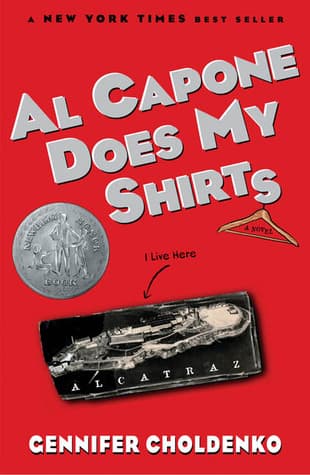
Gennifer Choldenko (2004)
Genre
Children's / Historical Fiction / Young Adult
Reading Time
225 min
Key Themes
See below
Sign in to track this book
Moose Flanagan's new home on Alcatraz Island is a strange world of famous convicts, island kids, and the constant challenge of protecting his autistic sister, Natalie, while navigating a prison-bound childhood.
Ten-year-old Matthew 'Moose' Flanagan and his family move to Alcatraz Island in 1935. His father, Frank Flanagan, works as an electrician and correctional officer. The move is mainly for Moose's older sister, Natalie, who has autism. Their mother, Helen Flanagan, hopes to enroll her in a special school in San Francisco. Moose resents the move, leaving behind his friends and baseball team. He must care for Natalie, which often stops him from having his own life and social chances. The isolated, prison environment of Alcatraz feels suffocating and dangerous to Moose, who struggles to adjust.
Moose quickly meets the few children living on Alcatraz, all of whom have parents working at the prison. He meets Theresa Mattaman, a friendly and talkative girl who guides him, and her older brother Jimmy. He also meets Piper Williams, the manipulative daughter of the Assistant Warden, Mr. Trixle. Piper immediately tries to control things, inviting Moose to play baseball but making him feel like an outsider. Moose learns the island's unwritten rules, including forbidden areas and the constant presence of convicts, which creates tension for everyone.
Helen Flanagan enrolls Natalie in the Esther P. Marinoff School in San Francisco, a school for children with special needs. However, Natalie's behavior, with her repetitive actions, routines, and difficulty communicating, proves too hard for the school. After just a few days, the school asks Natalie to leave. This devastates Helen and adds to the family's financial and emotional stress. This setback strengthens Moose's role as Natalie's main caregiver, further limiting his freedom and increasing his resentment. The family's hopes for Natalie's progress are gone, leaving them to look for other options.
Piper, always looking for an advantage, plans to sell the convicts' laundered shirts to tourists as souvenirs, claiming famous inmates like Al Capone wore them. She gets Moose, Theresa, Jimmy, and other island kids to help her collect shirts from the laundry. Moose is unsure, knowing the dangers and what could happen if they get caught, especially by his father. Despite his worries, Piper pressures him, and he agrees to join. The plan is risky and shows Piper's rebellious nature and the unique situation of growing up on Alcatraz.
The children start Piper's shirt-selling plan. They collect a few shirts and try to sell them to tourists. However, the plan quickly fails. A guard catches them, and the scheme is exposed. The children are not severely punished, but the incident causes trouble for Moose and his father, who gets a warning. The event makes Moose distrust Piper more and complicates his life on Alcatraz. He realizes the serious results of breaking rules in such a strict place. The incident also creates tension between the children and their parents, who worry about their safety and behavior.
On Natalie's birthday, they have a small party. During the party, Natalie acts strangely, showing a fascination with buttons and an unexpected interaction with a convict. While playing outside, Natalie wanders off near the prison grounds. Moose finds her sitting with a convict, who is calmly talking to her, seeming to understand her in a way others do not. This unsettling meeting disturbs Moose and shows the constant threat the convicts pose, even as it hints at a strange connection Natalie might have. Moose becomes more protective of Natalie, recognizing her unique vulnerabilities in this environment.
Moose's love for baseball offers an escape from the pressures of his life on Alcatraz. He organizes games with the other island kids, finding a sense of normal life and friendship. However, his responsibility for Natalie often gets in the way. During one important game, he has to leave to check on her, frustrating his teammates. This ongoing conflict between his wish for personal freedom and his duty to his sister is a repeated theme. The baseball games reflect his larger struggle, where he tries to create his own identity while constantly being pulled back to family duties.
After another school rejects Natalie because of her age, Helen becomes desperate. Moose, hearing his parents' despair and feeling the weight of his sister's future, decides to take a risky step. He writes a letter to Al Capone, the famous gangster in Alcatraz, asking for his help to get Natalie into the Esther P. Marinoff School. Moose knows the huge risk of talking to a convict, especially Capone, but he feels it is his only choice to help his sister and ease his family's burden. This act shows Moose's growing maturity and his deep, though sometimes unwilling, love for Natalie.
Days after sending his letter, Moose finds a small, folded handkerchief among Natalie's laundry. Inside, embroidered with a single word, is 'DONE.' Moose immediately understands this is Al Capone's answer to his request for help with Natalie's school. The subtle message, delivered in an unexpected way, confirms that Capone has acknowledged his request. This incident leaves Moose both relieved and deeply uneasy, realizing the power Capone still holds, even from prison. It also highlights the strange, connected world of Alcatraz, where the lives of guards' families and inmates can unexpectedly cross paths.
Soon after Moose receives the 'DONE' handkerchief, his mother, Helen, gets a letter from the Esther P. Marinoff School. To her surprise and relief, Natalie is re-admitted, despite her earlier rejection and the school's strict age rule. The letter states that an anonymous donor has made a large gift to the school, ensuring Natalie's place. Moose knows this is Al Capone's doing. This outcome brings great relief to the Flanagan family, especially Helen, and allows Moose to feel a sense of accomplishment and a temporary break from his constant responsibility for Natalie. It confirms the strange and powerful influence of the prison and its inmates.
With Natalie now enrolled at the Esther P. Marinoff School, a significant weight is lifted from Moose and his family. While he still has frustrating moments and the unique challenges of living on Alcatraz remain, Moose starts to see his life differently. He continues to play baseball and navigate his friendships, but helping Natalie has matured him. He understands his parents' sacrifices and the complex nature of love and responsibility. The ending leaves Moose with cautious hope, ready for the future on Alcatraz, knowing he played a key role in his sister's well-being and the family's stability.
The Protagonist
Moose initially resents his family's move and his sister's needs, but through his experiences on Alcatraz, he grows to accept his responsibilities and acts decisively to secure Natalie's future, demonstrating maturity and deep familial love.
The Supporting
Natalie's character doesn't undergo a traditional arc but rather her circumstances change through the family's efforts, leading to her successful admission into a specialized school, offering her a chance for appropriate care and development.
The Supporting
Helen struggles with despair and hope regarding Natalie's future; by the end, she finds relief and renewed hope with Natalie's admission to a specialized school, easing her long-standing burden.
The Supporting
Frank consistently tries to balance his professional duties with his family's needs, demonstrating steadfastness and quiet support amidst the unique challenges of Alcatraz.
The Supporting
Piper remains largely unchanged, consistently demonstrating her manipulative and enterprising nature, serving as a catalyst for much of the children's mischief.
The Supporting
Theresa serves as a consistent, supportive presence, helping Moose navigate the island's social landscape without undergoing significant personal transformation.
The Mentioned/Supporting
Capone's character remains a powerful, mysterious presence, but his unexpected act of charity subtly challenges Moose's perception of good and evil.
The Supporting
Jimmy remains a consistent supporting character, participating in the children's activities without a pronounced personal arc.
The Supporting
Mr. Trixle remains a symbol of authority and the prison's strict rules, serving as a foil to the children's mischief.
The novel explores family responsibility through Moose's constant duty to care for his sister, Natalie. Her needs often dictate his life, forcing him to give up his desires for friends, baseball, and freedom. Helen's search for proper care for Natalie, even moving the family to Alcatraz, shows parental sacrifice. This theme appears in Moose's thoughts about the unfairness of his situation, his frequent need to leave baseball games for Natalie, and his desperate act of writing to Al Capone for Natalie's future. It highlights the complex mix of love, duty, and resentment within a family facing unique challenges.
“My sister, Natalie, except she doesn't count. And there are twenty-three other kids who live on the island because their dads work as guards or cook's or doctors or electricians for the prison, like my dad does.”
Living on Alcatraz, a prison for serious criminals, forces Moose to see the unclear lines between good and bad. The convicts are 'bad,' yet Al Capone, the most famous, performs an act of surprising kindness for Natalie. Conversely, Piper, a warden's child, is manipulative and often selfish, showing that 'good' people can also be morally complex. This theme is explored through Moose's initial fear of the convicts, his unsettling observation of Natalie's interaction with a convict, and the deep impact of Capone's unexpected help. It questions the simple idea of good vs. bad, suggesting that morality is complex and can appear in unexpected ways, even in unlikely places.
“You get to Alcatraz by being the worst of the worst. Unless you're me. I came here because my mother said I had to.”
The unique setting of Alcatraz Island shapes the children's experiences. The constant presence of dangerous criminals, strict rules, and isolation create a childhood unlike any other. This theme is clear in the children's games, their understanding of 'off-limits' areas, and their access to the prison's inner workings. Piper's plans, such as selling convict-worn shirts, come directly from this environment. Moose's struggle to find normal life, through baseball or friendships, against the prison backdrop shows how an unusual upbringing shapes their views and strength. It emphasizes how children adapt and find their way even in unconventional circumstances.
“Today I moved to a twelve-acre rock covered with cement, topped with bird turd and surrounded by water.”
The novel addresses acceptance and understanding, especially for Natalie's autism. In a time when the condition was poorly understood, the family struggles to find proper care and acceptance for her. Moose initially resents Natalie's differences and the demands they place on him, but he grows to understand and deeply protect her. The school's rejection of Natalie, followed by Capone's unexpected help, highlights society's different responses to those who are different. The theme suggests the importance of empathy and finding places where individuals like Natalie can do well, even if those solutions come from unexpected sources.
“Natalie is going to a special school. A school for children who are like her.”
The story is told entirely from Moose's perspective.
The novel uses first-person narration through Moose Flanagan's eyes, allowing readers direct access to his thoughts, feelings, and frustrations. This perspective is crucial for understanding the burden of his responsibilities, his internal conflicts about Natalie, and his unique observations of life on Alcatraz. It immerses the reader in his pre-teen world, making his struggles and eventual growth relatable, while also filtering the complex adult world of the prison through a child's understanding, often highlighting its absurdity or danger.
The isolated, prison-dominated island serves as a unique backdrop and driving force.
The setting of Alcatraz Island in the 1930s is more than just a backdrop; it is a central plot device. Its isolation, the constant presence of notorious criminals, and the strict rules directly influence the characters' lives and the plot's conflicts. It creates a specific social dynamic among the children, inspires Piper's schemes, and magnifies Moose's responsibilities. The prison's inherent danger and the need for secrecy surrounding the convicts (like Capone) create tension and drive Moose's desperate act to help Natalie, making the setting integral to the story's unique challenges and resolutions.
A letter to a convict leads to a mysterious and impactful exchange.
Moose's decision to write a letter to Al Capone, and Capone's subsequent response via a handkerchief, serves as a pivotal plot device. This unlikely communication directly resolves the central conflict of Natalie's school placement, providing a surprising and impactful turning point. It also serves to highlight the theme of unexpected kindness from unlikely sources and the pervasive influence of the convicts. The ambiguity of Capone's 'DONE' message adds to the mystery and power of the event, leaving a lasting impression on Moose and the reader about the complex nature of the island and its inhabitants.
Natalie's condition acts as the primary catalyst for the family's challenges and Moose's arc.
Natalie's undiagnosed autism (as it would be termed today) is a central plot device, driving the family's move to Alcatraz, Helen's desperate search for schools, and Moose's constant burden of care. Her specific behaviors, routines, and communication challenges create obstacles that the family must overcome, leading to moments of frustration, despair, and ultimately, Moose's decisive action. Her condition is the primary source of conflict and motivation for the Flanagan family, shaping their decisions and forcing Moose into a mature role beyond his years.
“We're not the only ones who live here. This is an island, remember? It's like a big boat, and we're all on it together.”
— Moose explaining the island's community to Natalie.
“Sometimes you just have to do what's right, even if it's hard.”
— Moose contemplating helping a convict.
“It's hard to be normal when your sister isn't.”
— Moose reflecting on his life with Natalie's autism.
“Every time I think things are going to be normal, something happens.”
— Moose dealing with the unpredictability of his life on Alcatraz.
“Rules are for people who can follow them.”
— Piper explaining her disregard for certain rules.
“Having a sister like Natalie is like having a secret. A big, loud, sometimes embarrassing secret.”
— Moose's internal thoughts about Natalie.
“Alcatraz is a rock. A prison. And it's home.”
— Moose's conflicting feelings about living on Alcatraz.
“When you live on an island with a bunch of criminals, you learn to look out for yourself.”
— Moose's developing street smarts.
“Sometimes the things you don't say are the most important.”
— Moose observing the unspoken rules and tensions on the island.
“You can't always fix everything, but you can try.”
— Moose's persistent efforts to help Natalie.
“Being a kid on Alcatraz is different. It just is.”
— Moose acknowledging the unique circumstances of his childhood.
“We all have our own troubles, even the ones who seem to have it all.”
— Moose realizing that even Piper has her own struggles.
“Sometimes you have to break the rules to do what's right.”
— Moose considering the ethical dilemmas of his situation.
“It's not about being perfect. It's about being good enough.”
— A lesson learned by Moose about self-acceptance.
Ready to see how well you understood this book? Take our interactive quiz with 10 questions.

Biography coming soon.

Dan Gemeinhart
4.5

Kate O'Hearn
4.4

Jeanne Birdsall
4.4

Jen Wang
4.4

Wendelin Van Draanen
4.3

John Marsden
4.3

Chris Van Allsburg
4.3
Jennifer A. Nielsen
4.2