“The airport was a world in itself, a microcosm of human aspirations and anxieties, a place where lives intersected with the speed and unpredictability of a jet stream.”
— Opening description of the airport's significance.


Arthur Hailey (1900)
Genre
Thriller / Mystery
Reading Time
9-10 hours
Key Themes
See below
Sign in to track this book
A blizzard traps passengers and crew at Chicago's Lincoln International, where an airport manager and an arrogant pilot race against time to prevent disaster, both on the ground and in the air, over seven intense hours.
The novel begins on a Friday evening at Lincoln International Airport, a major Chicago hub. A blizzard starts, quickly covering runways and disrupting flight schedules. Mel Bakersfeld, the airport general manager, is already under great pressure. His marriage to Cindy is failing, his work life is a constant fight against rules and public opinion, and now he faces a major operational crisis. He tries to keep the airport open despite worsening conditions and increasing strain on his staff and resources. The weather quickly turns from a problem into a full emergency, with snowplows struggling and visibility dropping low.
Meanwhile, D.O. Guerrero, a failed building contractor facing financial ruin and a breakdown, plans to commit suicide by blowing up a Trans America Airlines Boeing 707, Flight Two, flying to Rome. His goal is for his wife, Inez, to receive a large life insurance payout, as the policy has a double indemnity clause for accidental death. Inez, unaware of his true intentions or the bomb, tries to stop him from boarding, fearing he is having another mental health crisis. Guerrero, however, is set on his plan, driven by a twisted desire to provide for his family.
Despite Inez's urgent pleas and the general chaos of the blizzard, D.O. Guerrero boards Trans America Flight Two. He gets past security, carrying a briefcase with a homemade nitroglycerin bomb. Captain Vernon Demerest, Mel Bakersfeld's brother-in-law and an experienced but arrogant pilot, commands Flight Two. Demerest's affair with Gwen Meighen, the chief stewardess on his flight, adds another layer of personal drama. As the plane gets ready to leave, the ground crew, led by Joe Patroni, struggles to clear a path for takeoff in the accumulating snow.
A critical event happens on Runway 30, the airport's longest and main runway. A small commuter plane, Global Air 42, piloted by a nervous young captain, goes off the taxiway because of poor visibility and snow. It gets stuck in a snowdrift, blocking the runway. This creates a severe bottleneck, as all other runways are either too short or not properly equipped for large jetliners. Mel Bakersfeld, with help from his operations team, including Tanya Livingston, his sharp assistant, must find a way to move the stranded aircraft quickly and safely. This task is made harder by the blizzard and the size of the equipment needed.
Inez Guerrero, after failing to stop her husband from boarding, finds a note he left detailing his suicide-bombing plan. Horrified, she immediately contacts airport authorities. News of the bomb threat on Trans America Flight Two reaches Mel Bakersfeld and his team, adding a terrifying new problem to the already critical situation. The FBI is immediately told and takes over the investigation, pressing Mel to find the aircraft and prevent the disaster. The threat forces tense coordination among airport management, airline officials, and federal agents, all racing against time.
On Flight Two, Captain Demerest and Gwen Meighen learn about the bomb threat. Gwen, using her calm manner and sharp observation skills, identifies D.O. Guerrero as the likely suspect. She confronts him in the lavatory, where he has locked himself to detonate the bomb. During the struggle, the bomb explodes early, critically injuring Guerrero and blowing a hole in the fuselage, causing a rapid decompression. Gwen is also seriously injured. The aircraft is significantly damaged, but Captain Demerest, despite the chaos and loss of cabin pressure, manages to control the crippled plane.
With a large hole in its fuselage and critical systems damaged, Trans America Flight Two must abandon its Rome destination and attempt an emergency return to Lincoln International. Captain Demerest expertly flies the damaged aircraft, while the crew tends to the injured and tries to keep order among the panicked passengers. Back at the airport, Mel Bakersfeld and his team, now fully aware of the damage, prepare for the extremely dangerous landing. The main challenge remains the blocked Runway 30, which must be cleared at all costs to give Flight Two its only viable landing option.
Joe Patroni, the tough and resourceful maintenance chief, takes charge of the huge task of moving Global Air 42 from Runway 30. Despite the blizzard, the stranded plane's immense weight, and the lack of proper equipment for such a maneuver, Patroni creates a bold plan. He uses a combination of heavy snowplows, tugs, and sheer force, pushing safety limits. The operation is full of danger, with equipment breaking down and time running out as the damaged jetliner approaches. Patroni's determination and cleverness are the only hope for clearing the runway in time.
In a tense sequence, Captain Demerest, against all odds, brings the crippled Trans America Flight Two in for an emergency landing at Lincoln International. The runway has been cleared just in time, thanks to Patroni's heroic efforts. Demerest performs a perfect landing, despite the aircraft's damaged landing gear and compromised control surfaces. Emergency services are ready to help as the plane touches down. The successful landing shows the pilot's skill and nerve and the coordinated efforts of everyone on the ground.
In the immediate aftermath, passengers and crew are safely evacuated, and the injured, including Gwen Meighen and the dying D.O. Guerrero, receive medical attention. Mel Bakersfeld reflects on the day's events, the immense pressure, and the human cost. His personal life also changes: his wife, Cindy, begins to understand the demands of his job, and there is hope for their reconciliation. The airport, though scarred, has survived the storm and the crisis, showing the resilience of its staff and the complex workings of modern aviation. The novel ends with a sense of exhausted relief and the ongoing challenges of managing a large international airport.
The Protagonist
Mel learns to prioritize his personal life more while reaffirming his professional capabilities and resilience in the face of crisis.
The Supporting
Vernon's arrogance is challenged by the life-or-death emergency, forcing him to rely on his skill and courage above all else.
The Supporting
Patroni proves his indispensable value through his daring and successful efforts to clear the blocked runway.
The Supporting
Gwen's bravery and quick thinking in a crisis elevate her from a personal drama to a heroic figure.
The Antagonist
Guerrero's desperate plan culminates in his own death and the near-destruction of the aircraft, solidifying his role as the catalyst for disaster.
The Supporting
Cindy gains a new perspective on Mel's demanding career, leading to a potential reconciliation in their marriage.
The Supporting
Inez's desperate actions inadvertently trigger the airport's awareness of the bomb threat, shifting her from a passive observer to an active, albeit unwilling, participant in the crisis.
The Supporting
Tanya proves herself an invaluable asset during the crisis, solidifying her professional and personal connection with Mel.
The novel explores human resilience, showing how people react to extreme pressure and life-threatening situations. Mel Bakersfeld's dedication to keeping the airport open despite the blizzard and bomb threat, Joe Patroni's efforts to clear the runway, and Gwen Meighen's bravery in confronting Guerrero all show this theme. Their ability to adapt, innovate, and perform under stress highlights the strength of the human spirit when facing overwhelming odds. The entire airport staff, from air traffic controllers to snowplow operators, shows remarkable strength.
“''In the final analysis, it was human beings, not machines, who mastered the crisis.'”
Hailey shows the complex and fragile connections of modern technological systems, especially in a large operation like an international airport. The failure of one part – a blizzard, a stalled plane, a bomb – causes many effects across the entire system. The novel details how every department, from maintenance to air traffic control, security, and airline operations, must work together perfectly. The disruption of Runway 30, for instance, has far-reaching consequences for all flights, showing how one point of failure can endanger the entire network. This theme highlights the delicate balance needed to maintain complex infrastructure.
“''An airport, like a human body, was a collection of interdependent systems, and when one failed, others were inevitably affected.'”
The conflict between personal life and work duty appears often, most clearly in Mel Bakersfeld. His dedication to the airport has greatly strained his marriage, leading to loneliness and misunderstanding with Cindy. Similarly, Vernon Demerest's professional skill is contrasted with his personal infidelity. The novel explores the heavy toll that demanding jobs can take on personal lives and the often-unseen sacrifices made for duty. However, it also suggests that in a crisis, work duty can provide a strong sense of purpose and shared identity.
“''He knew the airport better than he knew his own wife, and sometimes, he suspected, loved it more.'”
While the novel shows advanced aviation technology, it always stresses that human factors – skill, decision-making, courage, and sometimes mistakes – ultimately determine outcomes. Despite advanced aircraft and ground equipment, a pilot's judgment, a maintenance chief's cleverness, a stewardess's bravery, or a desperate man's destructive act drive the story. The blizzard and the bomb are outside forces, but the characters' responses, their strengths and weaknesses, are central to both the crisis and its solution. This shows that technology is just a tool, and human actions remain most important.
“''Machines could be replaced, but human judgment, once lost, was irretrievable.'”
The relentless pressure of time accelerates the unfolding crisis.
The 'ticking clock' device is central to the novel's thriller aspect. The impending arrival of the damaged Flight Two, coupled with the urgent need to clear Runway 30, creates intense temporal pressure. Every minute counts, amplifying the tension as characters race against time to prevent further disaster. The blizzard itself also functions as a natural ticking clock, constantly worsening conditions and limiting the window for effective action. This device keeps the reader on edge, emphasizing the urgency of each decision and action.
Subtle hints and early descriptions hint at future dangers.
Foreshadowing is used to build suspense and hint at the catastrophic events to come. Early descriptions of D.O. Guerrero's erratic behavior and financial desperation, combined with the detailed explanation of his life insurance policy, subtly prepare the reader for his desperate act. Similarly, discussions about runway capacity and the potential for a blocked runway lay the groundwork for the later crisis with Global Air 42. These hints create a sense of impending doom, engaging the reader's anticipation without revealing the full plot too soon.
Misleading clues or suspects divert attention from the real threat.
While not a strong red herring, the initial chaos of the blizzard and the myriad of minor incidents (like the old woman trying to sneak her cat on board, or the minor runway incursions) serve to distract from the truly catastrophic event unfolding with Guerrero. These smaller problems, while real challenges for Mel Bakersfeld, momentarily divert the reader's attention and resources of the airport staff from the hidden, more sinister threat of the bomb, making its revelation more impactful.
The central crisis forces characters to confront their personal and professional issues.
The blizzard and the bomb threat act as a powerful catalyst, forcing many characters to confront their personal and professional dilemmas. Mel Bakersfeld's strained marriage is brought into sharper focus, leading to a potential reconciliation. Vernon Demerest's arrogance is put to the ultimate test, requiring him to rely solely on his piloting skills. The crisis strips away superficial concerns, revealing the true character and capabilities of the individuals involved, and often leading to personal growth or resolution.
“The airport was a world in itself, a microcosm of human aspirations and anxieties, a place where lives intersected with the speed and unpredictability of a jet stream.”
— Opening description of the airport's significance.
“There was a special kind of loneliness in an airport, even when surrounded by thousands of people. It was the loneliness of departure, of arrival, of being in transit.”
— Thoughts on the emotional atmosphere of the airport.
“Duty was a hard taskmaster, but it was also a shield against the chaos of personal feelings.”
— Mel Bakersfeld's internal struggle between personal life and professional obligations.
“The best pilots, like the best surgeons, were those who could remain calmest when the unexpected happened.”
— Joe Patroni's observations on the qualities of good pilots.
“In the air, you were alone. On the ground, you had a thousand people to tell you what to do.”
— Gwen Meighen's reflection on the difference between flying and ground operations.
“Human error, like metal fatigue, was an ever-present, insidious threat.”
— Thoughts on the inherent dangers and vulnerabilities in aviation.
“Marriage, he reflected, was a series of small, tactical compromises.”
— Mel Bakersfeld's cynical view of his failing marriage.
“A man's worth was often measured not by what he accomplished, but by what he survived.”
— Reflecting on the resilience required in challenging situations.
“The greatest danger was not knowing what you didn't know.”
— Thoughts on the importance of knowledge and preparedness in a crisis.
“Panic was a contagion, spreading faster than any virus.”
— Describing the rapid spread of fear among passengers during an emergency.
“Every problem had a solution, though sometimes the solution was worse than the problem.”
— A pragmatic, albeit bleak, outlook on problem-solving in a crisis.
“The true test of leadership was not in avoiding mistakes, but in recovering from them.”
— Mel Bakersfeld's thoughts on effective leadership under pressure.
“Time, in an emergency, seemed to both accelerate and crawl.”
— Describing the distorted perception of time during a high-stakes crisis.
“He understood then that sometimes, the only way to move forward was to let go of the past, even if it meant letting go of a dream.”
— Mel Bakersfeld's realization about his personal life after the crisis.
Ready to see how well you understood this book? Take our interactive quiz with 10 questions.
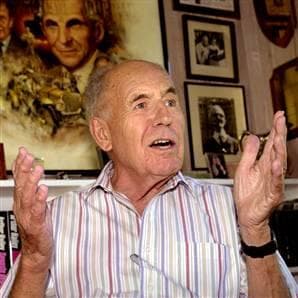
Arthur Hailey was a British-Canadian novelist renowned for his meticulously researched, fast-paced thrillers often set in specific industries. His major works, including 'Airport,' 'Hotel,' and 'Strong Medicine,' became international bestsellers, captivating readers with their detailed portrayals of complex professional environments and gripping narratives.







