“The cloud cat was a creature of myth, a ghost of the air, and yet there it was, sleek and powerful, its fur shimmering like moonlight on water.”
— Matt encounters the legendary cloud cat for the first time.

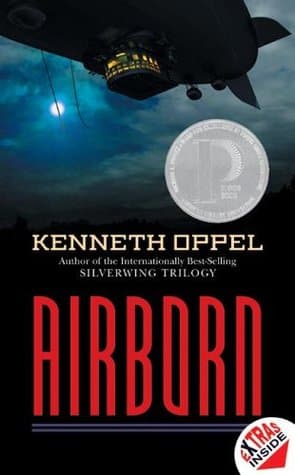
Kenneth Oppel (1997)
Genre
Fantasy / Children's / Science Fiction / Young Adult
Reading Time
501 min
Key Themes
See below
Sign in to track this book
A cabin boy on a luxurious airship dreams of the sky. After a dying balloonist's last words spark a grand adventure, he and the balloonist's granddaughter go on a quest for mythical creatures.
Matt Cruse, a fifteen-year-old cabin boy on the luxury airship Aurora, is on night watch when he sees a damaged hot-air balloon. The Aurora's crew rescues the only person inside, an old man named Benjamin Molloy. Before he dies, Molloy tells Matt about magnificent, winged creatures that live in the sky, 'gossamer' beings he saw on a remote island. Matt is affected by this meeting, especially when Molloy gives him a small, carved wooden bird just before he dies. The captain is curious but says Molloy's story is from delirium. Matt feels a connection to the dying man's last words, which starts his imagination and a desire for discovery beyond his usual duties.
Six months after Molloy's death, the Aurora prepares for a transatlantic trip. One of the new passengers is Kate de Vries, a wealthy, determined girl Matt's age. To Matt's surprise, Kate is Benjamin Molloy's granddaughter. She has her grandfather's adventurous spirit and his interest in the sky creatures. She travels with her governess, Miss Nicely, but her real goal is to find the island her grandfather spoke of and prove his claims. Kate immediately has trouble with the ship's social rules and Matt's cabin boy status. However, her resolve to follow her grandfather's last clue starts to interest Matt, reminding him of Molloy's mysterious gift.
During the transatlantic crossing, air pirates led by Captain Zepheniah Walken ambush the Aurora. The pirates, in smaller, faster airships, board the Aurora to steal its valuable cargo and passenger belongings. In the confusion, Matt, who Kate just scolded for sneaking into the cargo hold, tries to secure the ship's skiffs. Kate, wanting to escape, finds him. Together, they launch one of the skiffs, but it gets damaged. They drift away from the fight, barely avoiding capture, and are left alone in the sky. Their survival is uncertain, and they do not know where they are going.
Matt and Kate, drifting in the damaged skiff, have fewer supplies and face a difficult situation. After days, they see land — an uncharted island, covered in mist and thick jungle. They make a rough landing, crashing the skiff on the island's shore. As they explore, they find strange, glowing plants and animals, unlike anything they have seen. They realize this must be the island Benjamin Molloy described, the home of his 'sky creatures.' Their relief at finding land is quickly replaced by wonder and a growing sense of the island's unique and possibly dangerous nature.
Exploring the island, Matt and Kate find a massive, old tree with branches reaching high into the sky. As they climb it, they finally see the creatures Benjamin Molloy spoke of: huge, jellyfish-like beings, glowing with an inner light, floating in the upper atmosphere. These 'aerofauna' are amazing, confirming Molloy's story and validating Kate's quest. However, their wonder comes with danger as they realize the creatures are not just passive but part of a complex ecosystem, and being on the island has risks. They watch the creatures, fascinated, from a safe distance, understanding the secret they have found.
The Aurora, damaged but fixed, eventually arrives at the island, having tracked Matt and Kate's distress beacon. Captain Szpyrka and his crew rescue them, relieved they are alive. However, their reunion is short. Captain Walken and his pirates, who also tracked the Aurora, come to the island. Walken, curious about the Aurora's detour and the island's unusual nature, wants to use any discoveries there, especially the 'sky creatures' for their possible value. The island, once a safe place, becomes a battleground, with Matt and Kate caught in a fight for its secrets.
Matt and Kate, watching the aerofauna more closely, realize the creatures come to the island to lay their eggs in the special 'cloud trees.' These eggs give the creatures buoyancy, containing concentrated hydrium gas. Walken, hearing their talks and seeing the creatures, quickly understands their value. He plans to capture the aerofauna, or at least their eggs, for their hydrium, to gain wealth and power. He confronts Matt and Kate, demanding they tell him the exact location of the eggs and how to capture them. He threatens them and the Aurora's crew if they refuse.
Realizing the harm Walken's plan would cause, Matt and Kate create a desperate strategy. They lead Walken and his pirates on a chase through the jungle and up the tall cloud trees, buying time. Their goal is not just to protect the aerofauna but also to disable Walken's airship, the 'Pandora,' which is docked on the island. They know that without his ship, Walken cannot move the creatures or their eggs. The story ends with a daring attempt to get into the Pandora, where they try to damage its engines and hydrium tanks, hoping to stop the pirate captain for good and save the sky creatures.
In a struggle aboard the Pandora, Matt and Kate manage to overload its hydrium engines and start a fire, causing the pirate airship to explode. Walken and his crew are killed or forced to leave the ship; their plans are stopped. The Aurora's crew, having fought off the remaining pirates, sees the Pandora's destruction. The aerofauna are saved, their ecosystem protected from human greed. Matt and Kate become heroes, their bond strong from their shared adventure and courage. The island's secret stays safe, protected by their actions and the silence they agree to keep, ensuring the creatures continue to exist.
With the danger gone, the Aurora leaves the island, its secrets safe. Matt and Kate return to their lives, but both are changed. Matt, no longer just a cabin boy, has shown his bravery and resourcefulness, earning respect from Captain Szpyrka and a new purpose. Kate, having confirmed her grandfather's legacy, understands her place in the world better and appreciates Matt's courage and loyalty. Their adventure, though kept secret, connects them forever, and they promise to keep exploring the skies, perhaps even together, seeking new wonders and protecting the beauty of the airborn world they now know exists.
The Protagonist
Matt transforms from a diligent cabin boy with hidden dreams into a courageous, recognized hero, solidifying his path towards a life of adventure and discovery.
The Protagonist
Kate evolves from a sheltered, academically driven girl seeking to validate her grandfather into a brave explorer who experiences firsthand the wonders she sought, gaining a deeper understanding of the world and herself.
The Supporting
Though he dies early, Molloy's legacy and unverified discovery are validated by the protagonists, posthumously completing his quest.
The Supporting
Captain Szpyrka, initially rigid and skeptical, learns to trust the instincts of his young crew members and adapts to extraordinary circumstances, broadening his understanding of the world.
The Antagonist
Walken's arc is one of escalating ambition and greed, leading to his ultimate downfall and the destruction of his criminal enterprise.
The Supporting
Miss Nicely remains largely static in her beliefs, serving as a comedic foil and a representation of the societal norms that Kate pushes against.
The Supporting
Mr. Baz remains a steadfast and reliable officer throughout the narrative, demonstrating unwavering loyalty and competence.
The Mentioned
The aerofauna's existence is proven, and their species is ultimately protected from human exploitation, ensuring their continued survival.
The heart of 'Airborn' is about the excitement and responsibility of discovery. Matt and Kate are curious to uncover the secrets of their world, especially the aerofauna. Benjamin Molloy's first sighting starts their quest, pushing them beyond known limits and science. The uncharted island and its ecosystem represent the biggest reward of exploration, showing the wonder and danger of going into the unknown. The theme shows that real discovery is not just finding new things, but understanding and protecting them.
““The sky, Matt thought, was a place of endless secrets, and he had only just begun to scratch the surface.””
The novel shows the class structure on the Aurora, comparing Matt's position as a working-class cabin boy with Kate's wealthy background. Their first meetings show these social differences, with Kate often dismissing Matt because of his status. However, as they face dangerous situations together, these barriers disappear. This proves that courage, intelligence, and resourcefulness matter more than social standing. The shared adventure creates a bond of equality and respect, showing that true worth is in character, not birth or wealth.
““You're just a cabin boy,” she'd said, and the words had stung. But out here, in the sky, they were just two people, trying to survive.”
An important theme is protecting unique ecosystems and species from human use. The aerofauna and their home on the uncharted island are a fragile natural wonder. Captain Walken's desire to capture and use these creatures for their hydrium gas shows how destructive human greed can be. Matt and Kate's efforts to stop Walken and protect the aerofauna send a clear message about conservation. They advocate for preserving natural wonders rather than selling them. The choice to keep the island's location a secret strengthens this commitment to protection.
““Some things, Matt realized, were meant to be left alone, untouched by human hands, simply to exist in their own magnificent way.””
Throughout the story, both Matt and Kate show great courage and cleverness when facing danger. From escaping the pirate attack in a damaged skiff to surviving on an unknown island and finally damaging Walken's airship, their ability to think quickly and overcome problems is central to their survival and success. Matt's practical skills and airship knowledge combine with Kate's scientific mind and determination. This shows how different strengths help with problem-solving and bravery.
““It was amazing, Matt thought, what you could do when you had no choice but to do it.””
The whole idea of 'Airborn' is built on the appeal of the unknown. The sky itself is a vast, unexplored place, full of hidden wonders. Benjamin Molloy's stories, the discovery of the uncharted island, and the aerofauna, all create a sense of awe and possibility. The book encourages readers to believe there is always more to discover beyond what is known. This creates a sense of wonder and inspires a desire to look beyond familiar horizons. This theme often contrasts with the everyday or commercial parts of air travel.
““There were more things in heaven and earth, Matt knew, than had ever been dreamed of in his philosophy.””
A mysterious, previously undiscovered land that serves as the habitat for the aerofauna.
The uncharted island functions as a classic 'lost world' trope, a hidden sanctuary where the extraordinary exists untouched by civilization. It is the destination of Kate's quest and the setting for many of the story's most critical events. Its isolation and unique ecosystem, including the 'cloud trees' and bioluminescent flora, make it a character in itself, embodying the wonder and danger of the unknown. It is crucial for both the discovery of the aerofauna and the climactic confrontation with Captain Walken, serving as a crucible for Matt and Kate's development.
A small, symbolic gift from Benjamin Molloy that acts as a tangible link to the mystery.
The intricately carved wooden bird, given to Matt by the dying Benjamin Molloy, serves as a powerful symbol and a tangible plot device. It is a physical manifestation of Molloy's incredible story and a constant reminder for Matt of the sky creatures. For Kate, it is a piece of her grandfather's legacy and a clue. The bird acts as a beacon, drawing Matt into the mystery and solidifying his connection to Molloy's quest. It represents the truth of the unknown and the call to adventure, propelling the narrative forward and validating the protagonists' beliefs.
A luxury airship that serves as the primary setting and a symbol of human ingenuity and class divides.
The Aurora is more than just a mode of transport; it is a meticulously detailed setting that establishes the world of 'Airborn.' As a luxury vessel, it showcases the technological advancements and the social stratification of this alternate reality. It is a 'floating city' with its own rules and hierarchy, which Matt must navigate. The Aurora is central to the plot as the target of the pirate attack, the means of rescue, and a symbol of the human world that contrasts with the wild, untamed skies. Its vulnerability and resilience are key to the story's tension and resolution.
A formidable antagonist force that introduces conflict, danger, and a moral dilemma.
The air pirates, led by Captain Walken and his airship 'Pandora,' serve as the primary external conflict and antagonist force. They introduce immediate danger, forcing Matt and Kate into their adventure. Beyond simple villainy, Walken embodies the theme of greed and exploitation, contrasting sharply with the protagonists' desire for pure discovery. The pirates' existence highlights the lawlessness of the vast skies and the challenges faced by legitimate airships. Their threat forces Matt and Kate to develop their courage and resourcefulness, driving much of the plot's action and suspense.
“The cloud cat was a creature of myth, a ghost of the air, and yet there it was, sleek and powerful, its fur shimmering like moonlight on water.”
— Matt encounters the legendary cloud cat for the first time.
“There was a thrill to the wind, a wild, untamed joy that sang in his blood.”
— Matt reflects on his love for flying and the open air.
“The sky was not empty space. It was a sea, vast and deep, full of currents and storms, and its own strange, beautiful life.”
— Matt's perspective on the aerial world he inhabits.
“It’s not just about the destination, you know. It’s about the journey. The air, the clouds, the wind… that’s where the real story is.”
— A character reflecting on the experience of air travel.
“Sometimes, the most important discoveries are made by accident, by simply looking up when everyone else is looking down.”
— A reflection on serendipity and observation.
“Fear is a good thing, Matt. It keeps you alive. But don’t let it stop you from doing what you need to do.”
— Captain Walken offers advice to Matt.
“The airship was a living thing, a leviathan of the skies, groaning and sighing as it battled the wind.”
— Describing the airship 'Aurora' during a storm.
“There’s always a way, even when it seems like there isn’t. You just have to be clever enough to find it.”
— A character expressing optimism and resourcefulness.
“The world below was a patchwork quilt, a distant, silent land, while up here, the wind was a roaring symphony.”
— Matt's view from high above the ground.
“Some secrets are meant to stay hidden, for the good of everyone.”
— A character discussing the nature of certain discoveries.
“The wind was a sculptor, carving the clouds into fantastic shapes, ever-changing, never still.”
— Observing the dynamic nature of clouds.
“He knew then that true adventure wasn't about finding something new, but about seeing the familiar with new eyes.”
— Matt's realization about the essence of adventure.
“There are more things in heaven and earth, Horatio, than are dreamt of in your philosophy.”
— A character quoting Shakespeare, hinting at unknown wonders.
“Every creak and groan of the ship was a story, every gust of wind a whisper from the boundless sky.”
— Matt's intimate connection with the airship and its environment.
Ready to see how well you understood this book? Take our interactive quiz with 10 questions.

Biography coming soon.







