“There are no gods, only people with power.”
— Suri's early realization about the true nature of the Fhrey.

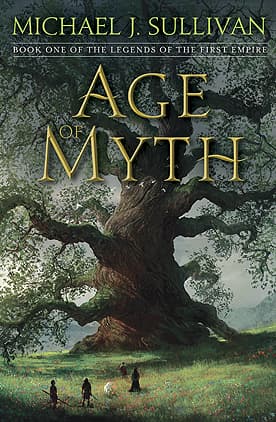
Michael J. Sullivan (2016)
Genre
Fantasy
Reading Time
430 min
Key Themes
See below
Sign in to track this book
After a human kills an immortal god, the fragile peace between mortals and their divine rulers shatters, starting a rebellion that will either bring freedom or doom humanity.
In the human village of Dunwyn, Raithe, known as the 'God Killer,' lives a quiet life. His peace ends when a Fhrey god, Nyphron, and other Fhrey arrive, looking for a powerful relic, the Horn of Gylfi, believed to be hidden in human lands. During a fight, Raithe uses the legendary sword 'Fhrey-killer' and kills Nyphron. This act is unheard of, as Fhrey gods were thought to be immortal. Nyphron's death shocks both humans and Fhrey, ending the belief in Fhrey invincibility and sparking fear and anger among the Fhrey.
After Nyphron's death, the Fhrey attack Dunwyn. During the chaos, Persephone, Chieftain Ronan's daughter, watches the brutal murder of her father and brother, Theron, by the Fhrey. Overwhelmed by grief and sudden loss, Persephone becomes the leader of her struggling human tribe. Despite her inexperience, she must quickly adapt to protect her people from more Fhrey attacks and help them survive in a world where their protectors are gone and their enemies are furious.
Suri, a young, gifted Fhrey seer in the secluded Fhrey city of Styric, begins to have vivid and terrifying visions of a coming war and widespread destruction. These visions are directly tied to Nyphron's death and the imbalance it causes. Guided by her visions and her mentor, an ancient Fhrey named Arion, Suri realizes that Raithe, the 'God Killer,' is central to the prophecy. She decides she must leave Styric and find him, believing he holds the key to avoiding or navigating the coming disaster, despite the dangers of human lands.
After Nyphron's death, Fhrey society falls into disarray. Lord Calis, a cunning and ambitious Fhrey lord, sees this as a chance to gain power. He calls a Grand Conclave of Fhrey lords, supposedly to discuss the human threat and plan their response. However, his real goal is to discredit rivals and make himself the supreme leader. Calis argues for the total destruction of humanity, using Nyphron's death as an excuse, despite warnings from more moderate Fhrey like Arion about the dangers of such an extreme plan. His tactics cause division among the Fhrey.
After the attack on Dunwyn, Raithe is an outcast, hunted by Fhrey and feared by some humans. Persephone, now leading her tribe's remnants, initially struggles to trust Raithe, given his reputation and the trouble he brings. However, as Fhrey attacks increase, they realize they share a common enemy and a desperate need to survive. They form an uneasy alliance. Raithe's fighting skills and knowledge of the Fhrey become important, while Persephone's leadership rallies the humans. Their alliance is born out of necessity, not friendship, but it marks a key moment for human resistance.
Believing the Horn of Gylfi is their only hope against the Fhrey, Persephone, guided by old legends and the need for a powerful item, convinces Raithe and a small group of human warriors to embark on a dangerous journey to find it. They are joined by the mysterious Suri, who appears to Raithe with warnings and cryptic advice. Their quest takes them through dangerous lands, old ruins, and into direct fights with Fhrey patrols hunting Raithe. The journey tests their resolve, strengthens their bonds, and reveals more about the world's true nature and history.
Lord Calis, having secured his position among the Fhrey, sends his best warriors, including the skilled fighter Maeve, to hunt Raithe and retrieve the Horn of Gylfi. The Fhrey pursuit is relentless, forcing Raithe, Persephone, and their group to constantly avoid capture and engage in skirmishes. Meanwhile, not all Fhrey agree with Calis's plans. Arion, Suri's mentor, secretly works to understand the real threat and tries to temper Calis's extremism, seeing the deeper meaning of the conflict. This internal Fhrey division shows the moral complexities of the war.
After overcoming many challenges, Raithe and his companions reach the Horn of Gylfi's hidden location. They discover it is not just a weapon, but a powerful item that can summon and control nature itself, a force that could level mountains and reshape landscapes. However, its immense power comes with a terrible cost, and using it could have unforeseen and devastating effects, potentially harming everyone. The group realizes that wielding such power requires great caution and understanding, far beyond what they first expected.
The Fhrey forces, led by Maeve and under Calis's orders, finally trap Raithe and Persephone's group at the Horn's site. A brutal and desperate battle follows, with both sides fighting for survival and control of the powerful item. Humans, outmatched in magic and numbers, rely on courage, cunning, and Raithe's fighting skill. The Fhrey are determined to reclaim what they see as theirs and punish the 'God Killer.' During the intense fighting, the Horn's devastating potential is glimpsed, as both sides try to keep it from falling into the wrong hands or being unleashed.
In the middle of the battle, Suri, seeing the growing destruction and foreseeing an even greater catastrophe, uses her abilities to project a powerful vision to both Fhrey and humans. Her vision reveals a shared, existential threat beyond their current conflict, hinting at a forgotten past and a greater evil. This intervention, along with the desperation of the battle, forces a temporary stop to fighting. A fragile, uneasy truce is made, driven by the realization that continued infighting will only lead to mutual destruction in the face of a larger, unseen danger. This truce is a temporary break, not a solution.
With the temporary truce in place, both humans and Fhrey retreat, battered but alive. The Horn of Gylfi remains a contested object, its power understood but not fully controlled. Persephone, though tired, has solidified her leadership, earning her people's respect and forming an unlikely bond with Raithe. Suri's visions continue, hinting at a deeper history and a coming disaster that threatens all life. The 'Age of Myth' – where Fhrey were unchallenged gods – is over. The 'Age of Rebellion' has begun, but it is clear that merely surviving the Fhrey will not be enough; a greater struggle awaits, requiring new alliances and a deeper understanding of their world.
The Protagonist
Raithe transitions from a solitary, guilt-ridden recluse to a pivotal figure in the human resistance, slowly accepting his role and the responsibility that comes with his unique abilities.
The Protagonist
Persephone evolves from a grieving daughter into a strong, respected leader, finding her voice and courage in the face of overwhelming odds.
The Supporting
Suri learns to harness and trust her prophetic abilities, becoming a vital guide and catalyst for understanding the deeper truths of the world.
The Antagonist
Calis begins as a dominant, manipulative force, successfully consolidating power, and solidifying his position as the primary Fhrey antagonist.
The Supporting
Arion strives to maintain a fragile peace and uncover ancient truths, working against the tide of Fhrey aggression.
The Supporting
Maeve remains a loyal warrior, but her experiences begin to sow seeds of doubt about the absolute righteousness of her cause.
The Mentioned
N/A (legendary figure).
The Mentioned
N/A (dies early in the narrative).
The main theme is the irreversible change in the world order. The 'Age of Myth,' where Fhrey were unchallenged gods, ends with Raithe's action. This forces both humans and Fhrey to face a new reality where power structures are reversed. For humans, it is a terrifying but also freeing realization that they are not powerless. For Fhrey, it is a shocking loss of their perceived immortality and superiority, leading to anger and a desperate fight to regain control. This theme appears in the collapse of old norms and the rise of new, uncertain futures, as seen in Persephone's leadership and the Fhrey's internal conflicts.
“The Age of Myth is over. The time of rebellion has begun.”
The conflict is driven by deep prejudice and misunderstanding between humans and Fhrey. The Fhrey see humans as lesser beings, 'apes,' while humans have long worshipped the Fhrey as gods, fearing their power. This ingrained bias prevents peace and fuels violence. Calis embodies Fhrey prejudice, wanting to exterminate humans, while many humans initially fear Raithe because he killed a god. The story explores how these prejudices stop both sides from seeing each other's humanity and understanding their shared history.
“They call us 'apes,' but we are more than that. We are survivors.”
The story focuses on how individuals become leaders during extreme crises. Persephone, an inexperienced chieftain's daughter, must lead her traumatized people after losing her family. Her journey shows the great pressure, hard decisions, and personal sacrifices needed to guide a community facing destruction. Raithe, though reluctant, also becomes a leader through his actions. The Fhrey also deal with leadership, with Calis's ambition contrasting with Arion's wisdom, showing different ways to handle crises and their results.
“I am not my father, but I will lead you. I will not abandon you.”
This theme explores the tension between fate and individual choice. Suri's prophetic visions suggest a predetermined path, yet characters constantly make choices that affect events. Raithe's identity as the 'God Killer' seems fated, but his reluctance and decisions shape his journey. The Fhrey believe in their superiority and destiny to rule, but Nyphron's death challenges this. The story questions whether characters are just pawns in a larger plan or if their choices can change history, especially concerning powerful items like the Horn of Gylfi.
“The threads of fate are tangled, but a single choice can unravel them all.”
A legendary artifact with immense power over nature, sought by both humans and Fhrey.
The Horn of Gylfi serves as a MacGuffin and a symbol of ancient power. Initially, its exact capabilities are unknown, making it a mysterious object of desire that drives Persephone's quest. As the story progresses, its true nature as a tool capable of manipulating natural forces is revealed, elevating it beyond a simple weapon. It represents both humanity's potential for defense and the terrifying danger of wielding uncontrollable power, becoming the focal point of the climactic battle and a catalyst for understanding the deeper magical history of the world.
Suri's glimpses into the future, guiding characters and hinting at larger conflicts.
Suri's prophetic visions act as a form of foreshadowing and a narrative guide. They provide cryptic clues, warn of impending dangers, and reveal deeper truths about the world's history and the true nature of the conflict. These visions create a sense of urgency and mystery, pushing characters like Suri and Raithe towards specific actions. They also serve to expand the scope of the narrative beyond the immediate human-Fhrey war, hinting at a forgotten past and a greater, existential threat that both races will eventually have to confront.
Raithe's ancestral weapon, uniquely capable of harming Fhrey.
The 'Fhrey-killer' sword is a magical artifact and a symbol of Raithe's unique destiny. Its ability to harm the seemingly invincible Fhrey is central to the plot, as it is the weapon that allows Raithe to kill Nyphron, shattering the myth of Fhrey immortality. The sword is more than just a weapon; it represents a forgotten lineage, a legacy of defiance against Fhrey dominance, and acts as a constant reminder of Raithe's 'God Killer' status. Its existence hints at a deeper history and a time when humans were not so powerless against the Fhrey.
A formal assembly of Fhrey lords, used as a political arena for power struggles.
The Grand Conclave is a political plot device that allows for exposition on Fhrey society, culture, and internal power dynamics. It serves as the primary setting for Lord Calis to consolidate his power, manipulate other Fhrey lords, and set the Fhrey's genocidal agenda against humanity. It highlights the Fhrey's arrogance and their inability to accept a challenge to their dominance, while also providing a stage for dissenting voices like Arion to be heard, albeit often dismissed. It is crucial for establishing the Fhrey's unified (though fragile) response to Raithe's actions.
“There are no gods, only people with power.”
— Suri's early realization about the true nature of the Fhrey.
“The greatest weapon against an enemy is to make him your friend.”
— Persephone's diplomatic approach and wisdom.
“Sometimes the only way to save someone is to let them go.”
— Raithe's internal struggle and painful choices.
“Fear makes monsters of us all.”
— A reflection on how fear drives destructive actions.
“It is not the size of the dog in the fight, but the size of the fight in the dog.”
— A common idiom used to describe the courage of characters like Suri.
“Life is a series of choices, and every choice has a consequence.”
— Persephone's musings on fate and free will.
“Even the smallest spark can ignite the greatest fire.”
— Referring to Suri's potential and the start of the rebellion.
“Truth is a weapon, and like all weapons, it can be used for good or ill.”
— Discussing the power and danger of revelation.
“The world is not as it seems. There are always secrets hidden beneath the surface.”
— The unfolding mystery of the Fhrey and their history.
“To truly lead, one must first learn to serve.”
— Persephone's leadership philosophy.
“Sometimes the strongest among us are the ones who show their pain.”
— Raithe's vulnerability and strength.
“What is a god but a being with enough power to make others believe?”
— Another quote reinforcing the theme of false gods and power.
“It's easy to hate those who are different, harder to understand them.”
— Addressing the conflict between the Rhunes and the Fhrey.
“A promise made is a debt unpaid.”
— The importance of honor and keeping one's word.
Ready to see how well you understood this book? Take our interactive quiz with 10 questions.

Biography coming soon.







