“The world is a much more complicated place than you think, and there are many things going on that you don't know about.”
— A general observation about the hidden complexities of the world, a recurring theme.

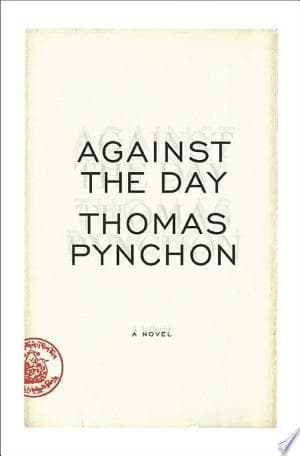
Thomas Pynchon (2007)
Genre
Literary Fiction / Historical Fiction / Science Fiction
Reading Time
2700 min
Key Themes
See below
Sign in to track this book
Pynchon's sweeping novel follows mathematicians, spies, and revolutionaries across the late 19th and early 20th centuries, from anarchist bombings in Colorado to early film sets, as they pursue theoretical physics and ancient conspiracies while the world moves toward war.
The novel opens at the 1893 Chicago World's Columbian Exposition, where the Chums of Chance, a group of boy aeronauts, have an early adventure. The story then moves to Colorado mining towns, introducing Webb Traverse, a labor activist and bomb expert. Agents of powerful mining companies, specifically the industrialist Scarsdale Vibe, brutally murder him. Webb's four sons—Frank, Reef, Kit, and Zane—deal with their father's death. This event fuels their individual searches for revenge against Scarsdale Vibe and the powerful groups he represents. It sends them to different parts of the world and different social levels, from anarchist groups to scientific research.
Reef Traverse, driven by a strong desire for revenge, enters the world of anarchism. He becomes a skilled bomb-maker and operative, taking part in various acts of sabotage and political violence across Europe. His journey takes him through revolutionary groups in Paris, the changing politics of the Balkans, and near figures like the secret agent Renfrew. Reef's actions are part of the complex pre-World War I spying and political maneuvering, often involving the hidden interests of industrialists like Scarsdale Vibe, who seems to be involved everywhere. Reef's path is full of danger and moral choices as he seeks justice for his father.
Frank Traverse, the most intellectual brother, becomes interested in the Tøndelhorn, a theoretical device that might control time and reality, possibly allowing travel 'against the day'—into the past or future. His search leads him to academic groups, occult societies, and meetings with unusual scientists and mathematicians who explore the limits of physics and metaphysics. He meets figures like the mathematician Merle Rideout and the mystical Yashmeen, whose knowledge of old traditions and esoteric science is important. Frank's journey is less about direct revenge and more about understanding the forces that shape their world, believing that controlling these forces might correct the wrongs done to his family.
Kit Traverse, another intellectual brother, studies mathematics and theoretical physics, especially the work of Dr. Vormance. He explores ideas of higher dimensions, quantum mechanics, and the possibility of different timelines or parallel universes, called 'bifurcations.' Kit's academic work is not just abstract; he thinks understanding these theories might help him understand or change the 'day' that led to his father's death. His path crosses with various academics and scientists, including the scientist Dally. He often debates the nature of reality and the flexibility of time, often in places like Göttingen and Venice.
Zane Traverse, the youngest and most adventurous brother, joins the Chums of Chance, a group of young airship fans who travel the world in their dirigible, the 'Inconvenience.' The Chums—including their leader Lindsay Nosegay, Miles Blundell, and Darby Suckling—have many adventures, meeting historical figures, secret societies, and strange events. Their missions often involve scientific discovery, spying, and navigating early 20th-century political tensions. While Zane's immediate search for revenge is less clear, his experiences with the Chums show him the vastness and strangeness of the world, often connecting indirectly to the larger actions of Scarsdale Vibe and global power.
The story often moves to the American Southwest and Mexico, especially during the Mexican Revolution. Reef Traverse becomes involved with revolutionary groups, including those led by Pancho Villa and Emiliano Zapata, often using his bomb-making skills. Zane and the Chums of Chance are also in the region, sometimes providing air support or scouting. This setting allows several characters to interact, sometimes unknowingly, with global capitalism and political manipulation, often arranged by figures like Scarsdale Vibe, who tries to use the region's resources and instability for his own gain. The desert and revolutionary energy create a setting for violence and moral uncertainty.
Dally, a mathematician and scientist, and Yashmeen, a mysterious figure with knowledge of esoteric traditions and 'against the day' travel, become important characters. Dally, often with Kit Traverse, explores quantum physics and parallel realities. Yashmeen, connected to Frank Traverse, has old wisdom and a practical understanding of manipulating time and space. Both women are intelligent, independent, and important to the brothers' understanding of the world. They represent different types of knowledge—scientific and mystical—and their interactions with the Traverse brothers challenge common ideas, offering other views on reality and the chance to go beyond linear time.
Scarsdale Vibe, the main antagonist, is a powerful industrialist whose empire includes mining, finance, and weapons. His agents and interests appear in almost every plotline, from labor disputes in Colorado to political plots in the Balkans and the Mexican Revolution. Vibe is not just a capitalist; he is a hidden figure who seems to control global events for his own power and profit, often using violence and lies. His constant pursuit of wealth and control makes him a widespread threat, and the Traverse brothers' individual quests for revenge against him become more complex as they learn about his vast influence and the real nature of his operations.
As the novel continues, World War I grows closer, slowly affecting the different plotlines. Political tensions in Europe increase, and scientific discoveries about explosives and higher dimensions become more serious. Characters like Reef Traverse find their anarchist actions mixing with national goals, while Kit and Frank's scientific work is increasingly seen for its military uses. The Chums of Chance see the changing global politics from their airship. The approaching war is a huge backdrop, threatening to remove the differences between individual quests and global conflict, and forcing characters to face the results of their actions and beliefs.
The different story threads start to come together, leading to confrontations with Scarsdale Vibe and his agents. Reef's violent path reaches its peak, while Frank and Kit explore the mysteries of the Tøndelhorn and the possibility of 'against the day' travel—the ability to move through time and other realities. The idea of the 'day' (the present, linear time) versus 'against the day' (a realm of possibilities and non-linear time) becomes central. The brothers' search for revenge becomes a deep exploration of fate, free will, and the nature of reality itself. The novel suggests that while direct revenge may be hard to get or unsatisfying, understanding and possibly changing the fabric of time offers a different kind of ending, or perhaps, an endless continuation of possibilities.
The Mentioned
His death transforms him from a living character into a powerful symbol of injustice and a driving force for his sons' epic journeys.
The Antagonist
He remains a constant, formidable antagonist, his power and influence growing as the world moves towards war, ultimately representing the forces of entropy and control.
The Protagonist
From a vengeful son, he evolves into a hardened operative caught in the complex web of pre-war international intrigue, questioning the efficacy of violence.
The Protagonist
His search for vengeance transforms into a profound intellectual and metaphysical journey into the nature of time and reality.
The Protagonist
He evolves from a studious academic into a pioneer of theoretical physics, grappling with the implications of his discoveries for the nature of existence and free will.
The Protagonist
From a wide-eyed adventurer, he becomes a witness to the world's complexities and absurdities, his experiences shaping his understanding of its underlying forces.
The Supporting
She maintains her intellectual independence while contributing significantly to the scientific understanding of the novel's complex theoretical concepts.
The Supporting
She serves as a mystical guide, revealing the deeper, non-scientific dimensions of reality and 'against the day' travel.
The Supporting
He consistently leads the Chums through their adventures, maintaining a sense of youthful optimism and resourcefulness.
The Supporting
He remains a mysterious and morally ambiguous figure, representing the shifting loyalties and hidden agendas of the intelligence world.
The Traverse brothers' journeys are about defining themselves after their father's murder and within larger historical events. Each brother chooses a different path—revenge, science, mysticism, adventure—to understand his place and deal with his inherited past. Frank and Kit find identity through intellectual work, Reef through political action, and Zane through exploration. All seek purpose and meaning in their chaotic era. Their quests are not only for revenge but for self-discovery.
““For what is a man, what has he got? If not himself, then he has naught.””
Pynchon explores linear versus non-linear time, parallel universes, and how reality can change. Ideas like 'against the day' travel, the Tøndelhorn, and 'bifurcations' question common understandings of existence. Characters like Frank and Kit explore scientific and mystical theories that suggest time is not fixed and other realities might exist. This theme questions fate, free will, and the chance to change past events, making the novel a metaphysical exploration as well as historical. The story itself often moves non-linearly, reflecting this idea.
““The Day, it is a day of reckoning, a day of wrath, a day against which all other days must be measured.””
The novel shows the ideological conflicts of the late 19th and early 20th centuries. The Traverse brothers' search for revenge comes from their father's murder by agents of industrial capitalism (Scarsdale Vibe). Reef Traverse adopts anarchism and political violence to fight oppression, while powerful corporations and governments are shown manipulating global events, leading to labor disputes, revolutions, and eventually, world war. The novel examines the effectiveness and morality of these different approaches to power and justice.
““There is no justice, there is only us.””
Pynchon blurs the lines between new scientific discovery and old mystical traditions. Theoretical physics, higher mathematics, and explosives exist alongside talks of the Tøndelhorn, psychic events, and secret societies. Characters like Frank and Kit explore scientific aspects, while Yashmeen represents the occult. This theme suggests that different kinds of knowledge, whether rational or intuitive, might offer ways to understand the universe's deeper secrets. It shows an era where scientific advances often mixed with esoteric beliefs.
““The science of our age, it is the magic of another.””
Spanning from the 1893 Chicago World's Fair to the end of World War I, the novel captures a key moment in history—the shift from the Victorian age to the modern era. It shows rapid technological advances (airships, cinema, advanced explosives), the rise of global capitalism, and the increasing complexity of international politics that led to World War I. This theme explores the hope of progress along with the worries of social change, the loss of innocence, and the major changes that reshaped the world, often through the eyes of characters trying to adapt.
““The world was ending, but it was also beginning.””
A theoretical device capable of manipulating time and reality.
The Tøndelhorn is a mythical or theoretical device that becomes a central object of pursuit for Frank Traverse. It is described as a means to access or manipulate 'against the day' travel, allowing for movement outside of linear time and possibly into alternate realities. While its physical existence is ambiguous, it functions as a powerful symbol of humanity's desire to transcend the limitations of time and fate. It drives much of the scientific and metaphysical inquiry in the novel, embodying the quest for ultimate knowledge and control over the fabric of existence.
A group of boy aeronauts whose adventures provide a fantastical counterpoint.
The Chums of Chance are a recurring group of young airship adventurers, including Zane Traverse, who travel the world in their dirigible, the 'Inconvenience.' They function as a narrative device to introduce elements of pulp adventure, scientific discovery, and a more lighthearted tone amidst the novel's darker themes of political violence and complex physics. Their escapades allow Pynchon to explore various geographical locations and historical events from a unique, often whimsical, perspective. They represent a sense of youthful wonder and the boundless possibilities of exploration at the dawn of the 20th century.
Theoretical scientific concepts suggesting divergent timelines and realities.
Bifurcations are a key theoretical concept explored by Kit Traverse and other scientists, referring to points in time where reality splits, creating divergent timelines or parallel universes. This device allows Pynchon to playfully (and seriously) explore 'what if' scenarios and the inherent uncertainty of quantum mechanics. It underpins the novel's larger theme about the nature of time and reality, suggesting that the past is not fixed and that multiple outcomes might exist for any given event. It blurs the line between historical fact and speculative fiction, making the narrative itself feel like a series of branching possibilities.
A recurring motif representing both destruction and scientific advancement.
Bombs and explosives are a pervasive motif throughout the novel, symbolizing both the destructive potential of human conflict and the cutting edge of scientific and technological advancement. Webb Traverse is a bomb expert, Reef Traverse becomes an anarchist bomb-maker, and the development of new explosives is a significant aspect of the scientific discussions leading up to World War I. The bomb serves as a tangible manifestation of the era's volatile political climate and the dangerous intersection of science, industry, and warfare. It represents sudden, irreversible change and the ultimate consequence of unchecked power.
A recurring symbol of observation, manipulation, and the dawn of a new medium.
Early cinema and photography appear frequently, from the Chicago World's Fair to the nascent film industry. This device symbolizes the emerging power of observation, documentation, and manipulation of reality. The camera captures events, but also distorts them, creating illusions and propaganda. It reflects the shift in how people perceive and record their world, moving towards a more mediated and constructed reality. The idea of being 'watched' or 'recorded' also ties into themes of surveillance and control, particularly in the context of political espionage and industrial power.
“The world is a much more complicated place than you think, and there are many things going on that you don't know about.”
— A general observation about the hidden complexities of the world, a recurring theme.
“Every age has its peculiar fancy, and ours is for the end of the world.”
— A reflection on the prevalent anxieties and apocalyptic fascinations of the early 20th century.
“History is not a ledger, it's a dream.”
— Suggesting that historical narratives are subjective and often more akin to collective fantasies than objective records.
“There are no accidents, only events that haven't been explained yet.”
— A character's belief in an underlying order or conspiracy behind seemingly random occurrences.
“To be innocent is to be without a story.”
— Implying that experience and engagement with the world inevitably lead to a complex, perhaps compromised, personal narrative.
“Light, as we know, is a form of energy. But what if it's also a form of consciousness?”
— A speculative question posed by a scientist, blending physics with metaphysics.
“The past is an infinite regress of explanations, each one leading to another.”
— Highlighting the elusive and endlessly interpretable nature of historical understanding.
“When you have to choose between two evils, always choose the one you haven't tried before.”
— A cynical piece of advice offered by a character, reflecting a world of difficult choices.
“The world is not just what we see, but what we fail to see, what we are not allowed to see.”
— Emphasizing the hidden aspects of reality, including intentional concealment and perceptual limitations.
“Time is an illusion, but a very persistent one.”
— A classic philosophical statement on the nature of time, echoing Einsteinian physics and Eastern philosophy.
“There is no freedom without the freedom to choose your own chains.”
— A paradoxical statement on liberty, suggesting that even in choosing one's constraints, a form of freedom exists.
“Every object in the universe is connected to every other object, by forces we barely comprehend.”
— A scientific and mystical assertion about the interconnectedness of all things.
“The future is always arriving, but never quite here.”
— A poetic observation on the elusive nature of the future, always anticipated but perpetually just out of reach.
“What is evil? Only a certain kind of failure to imagine.”
— A thought-provoking definition of evil, linking it to a lack of empathy and understanding.
Ready to see how well you understood this book? Take our interactive quiz with 10 questions.
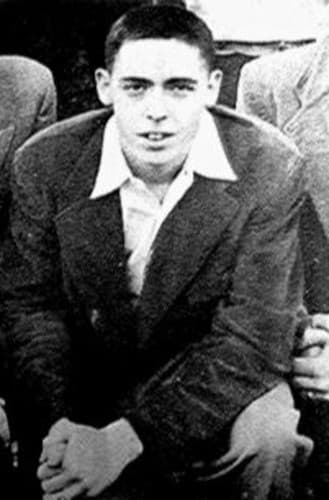
Thomas Ruggles Pynchon Jr. is an American novelist noted for his dense and complex novels. His fiction and non-fiction writings encompass a vast array of subject matter, genres and themes, including history, music, science, and mathematics. For Gravity's Rainbow, Pynchon won the 1973 U.S. National Book Award for Fiction.







